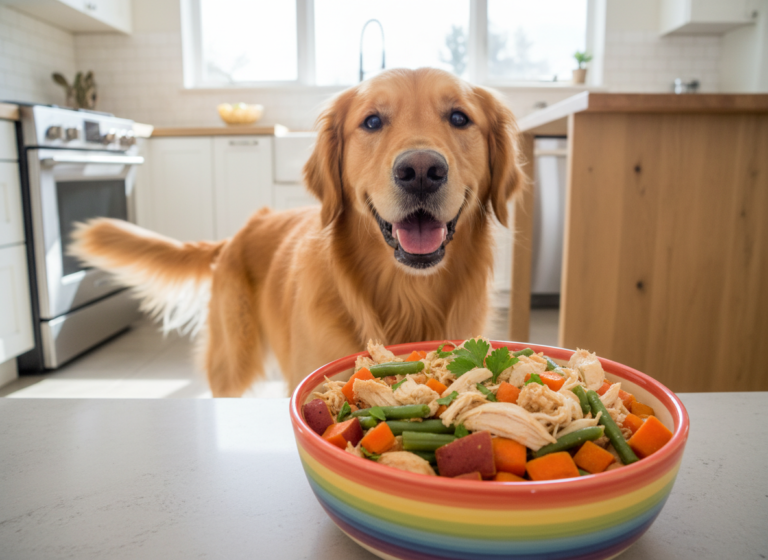
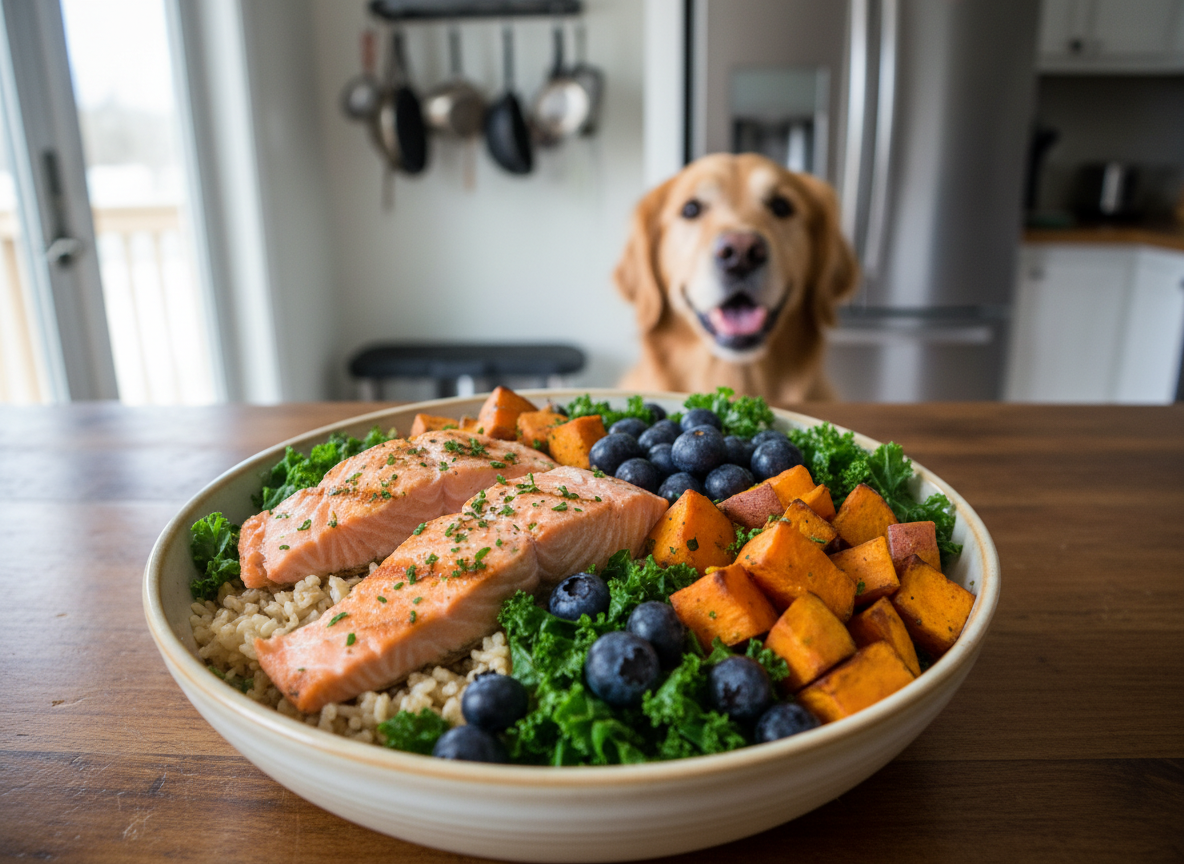
7 Anti-Inflammatory Dog Food Recipes for Joint Pain
Hey there, fellow dog parent! Does it break your heart a little to see your best friend struggle to get up from their nap, hesitate before jumping on the couch, or lag behind on your daily walks? That familiar stiffness and soreness is often a sign of joint pain, a common issue, especially in our senior companions. The culprit is usually inflammation, and while we can’t turn back the clock, we have a powerful tool at our disposal: their food bowl.
Commercial dog foods have their place, but crafting a meal specifically for your dog’s needs allows you to pack it with nature’s best anti-inflammatory ingredients. Think of it as a delicious, comforting hug for their joints from the inside out. We’ve rounded up seven fantastic, vet-approved (in principle, but always check with your own!) recipes that are not only easy to make but are also designed to combat inflammation and support joint health. Let’s get cooking for our canine companions!
Quick Recipe Comparison
| Recipe | Primary Protein | Key Anti-Inflammatory | Best For |
|---|---|---|---|
| Turmeric Golden Paste Power Bowl | Chicken | Turmeric (Curcumin) | A powerful, targeted boost |
| Salmon & Sweet Potato Supper | Salmon | Omega-3 Fatty Acids | Skin, coat, and joint health |
| Blueberry & Ginger Beef Stew | Beef | Antioxidants & Gingerol | Picky eaters who love rich flavors |
| Sardine & Kale Mash | Sardines | Omega-3s & Vitamin K | Maximum joint and bone support |
| Turkey & Lentil Loaf | Turkey | Coconut Oil (MCTs) | Weight management and steady energy |
| Pumpkin & Chia Seed Porridge | Ground Turkey | Chia Seeds (Omega-3s) | Sensitive stomachs and digestive health |
| Green-Lipped Mussel Medley | Chicken | Green-Lipped Mussels | Dogs needing serious joint support |
1. Turmeric Golden Paste Power Bowl
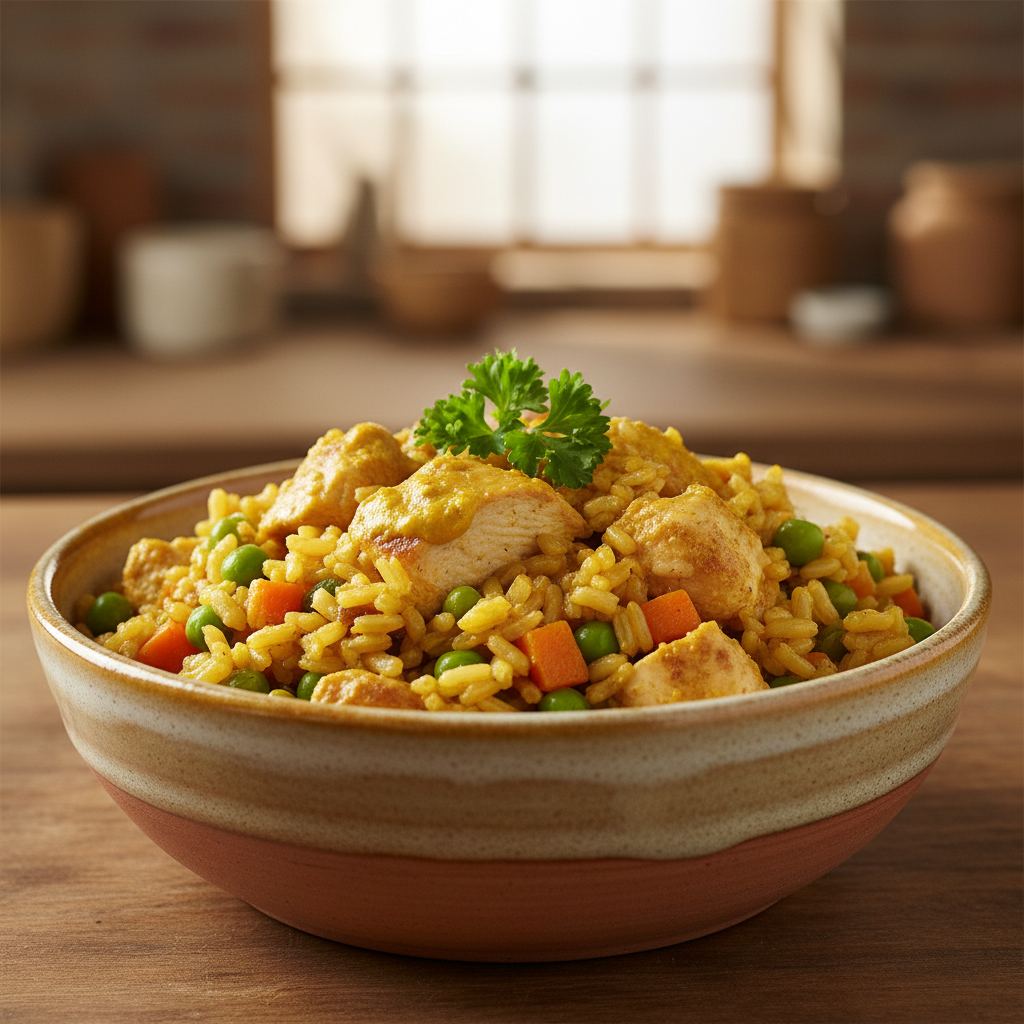
This recipe is a fantastic starting point, harnessing the incredible power of turmeric. The active compound in turmeric, curcumin, is a well-researched, potent anti-inflammatory. We combine it with chicken for lean protein and some healthy veggies for a balanced, joint-soothing meal.
Ingredients:
- 1 lb ground chicken or turkey
- 1 cup cooked brown rice
- 1/2 cup chopped carrots
- 1/2 cup peas (fresh or frozen)
- 1/4 cup chopped spinach
- 1 tablespoon of ‘Golden Paste’ (see note below)
- 1 tablespoon olive oil or coconut oil
- 2 cups water or low-sodium chicken broth
Golden Paste Note: To make golden paste, gently heat 1/2 cup turmeric powder, 1 cup of water, 1/4 cup of cold-pressed coconut or olive oil, and 1.5 teaspoons of freshly ground black pepper. The pepper is crucial as it enhances curcumin absorption by up to 2000%! Stir until it forms a thick paste, let it cool, and store it in the fridge for up to two weeks.
Instructions:
- In a large pot or Dutch oven, cook the ground chicken in olive oil over medium heat until browned.
- Add the carrots, water or broth, and cooked brown rice. Bring to a simmer.
- Reduce the heat, cover, and let it cook for about 15-20 minutes, or until the carrots are tender.
- Stir in the peas and spinach and cook for another 2-3 minutes until the spinach is wilted.
- Remove from heat and let it cool down to a warm temperature.
- Stir in your pre-made Golden Paste thoroughly. Never cook the golden paste, as high heat can reduce its effectiveness.
- Serve once completely cooled.
Pros & Cons
| Pros | Cons |
|---|---|
| ✓ Highly potent anti-inflammatory action from turmeric. | ✗ Turmeric can stain bowls and surfaces. |
| ✓ Lean protein source is great for muscle maintenance. | ✗ Some dogs may not like the taste of turmeric initially. |
| ✓ Easy to prepare in a single pot. | ✗ Requires making the ‘Golden Paste’ separately. |
Verdict:
This is the go-to recipe for pet parents who want to introduce a powerful, targeted anti-inflammatory agent into their dog’s diet. It’s excellent for dogs showing clear signs of arthritis and who aren’t picky eaters.
2. Salmon & Sweet Potato Supper
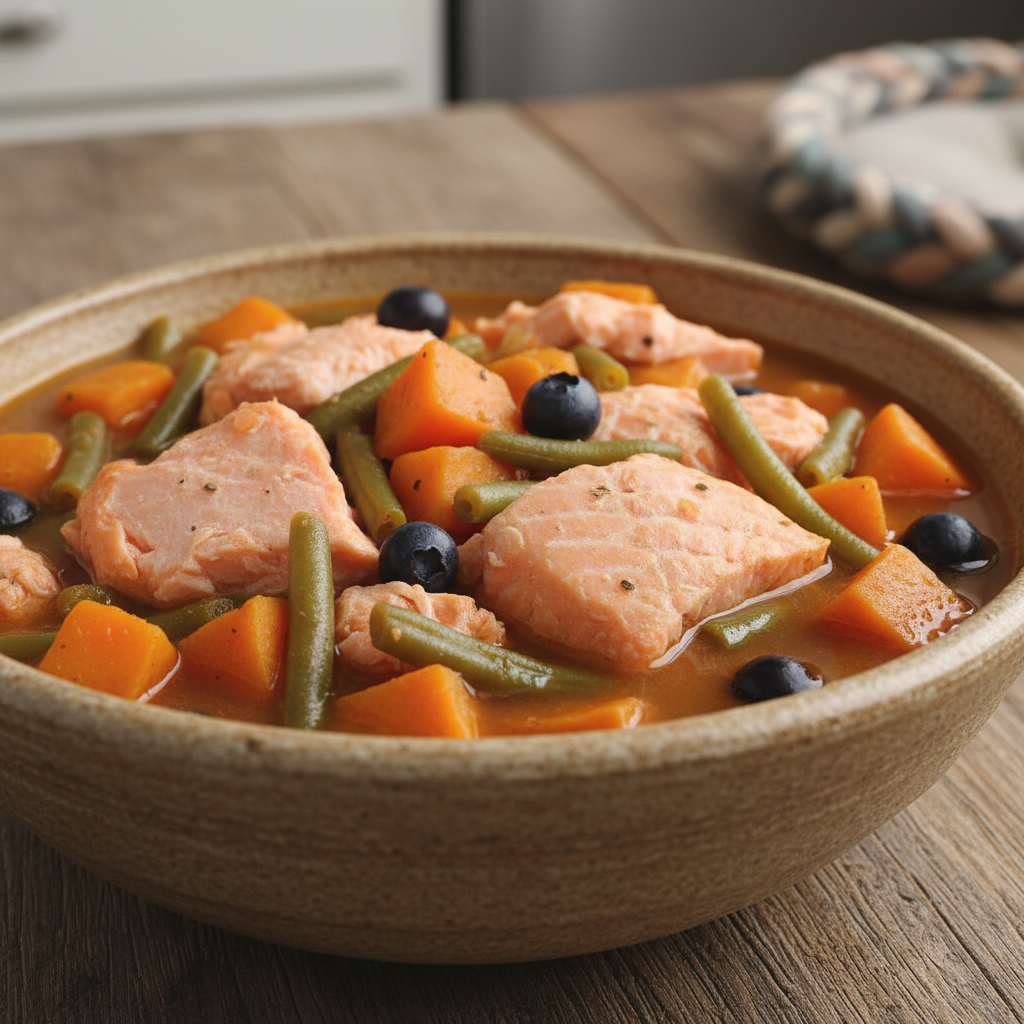
When you think of anti-inflammatory foods, fatty fish like salmon should be at the top of your list. It’s packed with Omega-3 fatty acids (specifically EPA and DHA), which are superstars at reducing inflammation throughout the body. Paired with vitamin-rich sweet potato, this meal is as nutritious as it is delicious.
Ingredients:
- 1 lb salmon fillet, skinless and deboned
- 1 large sweet potato, peeled and cubed
- 1 cup chopped green beans
- 1/2 cup blueberries (a great antioxidant!)
- 1 tablespoon flaxseed oil
- Water for boiling/steaming
Instructions:
- Boil or steam the cubed sweet potato until it’s fork-tender, which usually takes about 15-20 minutes. Drain and mash it lightly.
- While the sweet potato is cooking, bake or poach the salmon fillet until it’s cooked through and flakes easily with a fork. Avoid adding any salt or seasonings.
- Steam the green beans until they are tender-crisp, about 5-7 minutes.
- In a large bowl, flake the cooked salmon into bite-sized pieces.
- Add the mashed sweet potato, steamed green beans, and fresh blueberries to the bowl.
- Drizzle the flaxseed oil over the top.
- Gently mix everything together, being careful not to turn it into a complete mush.
- Allow it to cool to room temperature before serving.
Pros & Cons
| Pros | Cons |
|---|---|
| ✓ Extremely high in beneficial Omega-3s. | ✗ Good quality salmon can be expensive. |
| ✓ Great for both joint health and promoting a shiny coat. | ✗ Has a strong fishy smell that might linger in your kitchen. |
| ✓ Sweet potato is a gentle, complex carbohydrate for energy. | ✗ Must be very careful to remove all bones from the fish. |
Verdict:
This recipe is perfect for dogs who need a dual-action boost for their joints and their skin/coat. The natural sweetness of the sweet potato and blueberries makes it highly palatable for most dogs.
3. Blueberry & Ginger Beef Stew
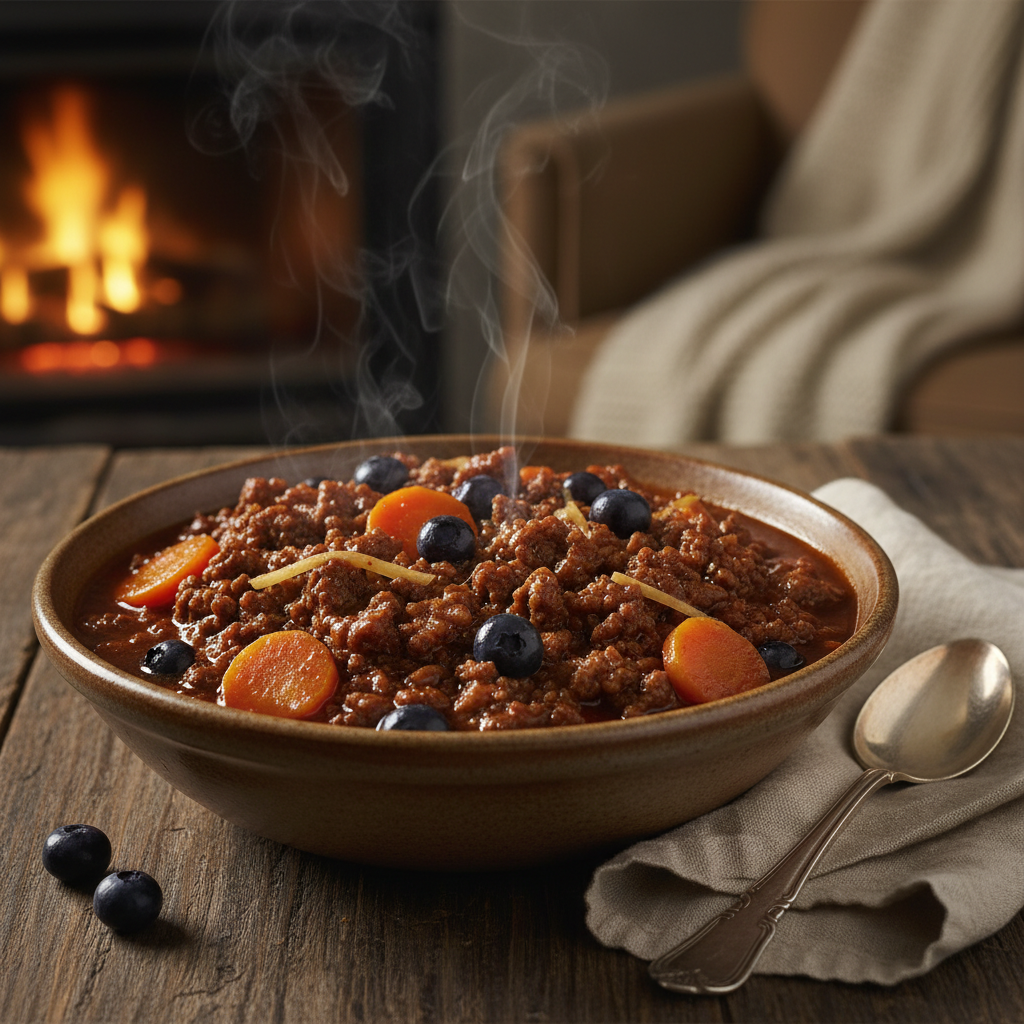
Let’s get hearty! This beef stew is pure comfort food for your pup, but with a secret mission. We’ve loaded it with blueberries, which are bursting with antioxidants called anthocyanins that fight oxidative stress and inflammation. We’ve also added a touch of ginger, a warming spice known for its ability to soothe achy joints.
Ingredients:
- 1 lb lean ground beef
- 1 cup chopped carrots
- 1 cup chopped celery
- 1/2 cup rolled oats (uncooked)
- 1/2 cup fresh or frozen blueberries
- 1 teaspoon freshly grated ginger
- 4 cups low-sodium beef broth
- 1 tablespoon olive oil
Instructions:
- In a large pot, heat the olive oil and brown the ground beef. Drain off any excess fat.
- Add the chopped carrots, celery, and grated ginger to the pot. Sauté for 5 minutes until the vegetables begin to soften.
- Pour in the beef broth and add the rolled oats. Bring the mixture to a boil.
- Reduce the heat to low, cover the pot, and let it simmer for about 20 minutes, stirring occasionally, until the oats are cooked and the stew has thickened.
- Remove from the heat and stir in the blueberries. The residual heat will soften them slightly.
- Let the stew cool completely before serving. It will thicken further as it cools.
Pros & Cons
| Pros | Cons |
|---|---|
| ✓ Rich, savory flavor that appeals to picky eaters. | ✗ Beef is higher in fat than poultry or fish; choose lean ground. |
| ✓ Packed with antioxidants from blueberries. | ✗ Oats may not be suitable for all dogs, especially those with grain sensitivities. |
| ✓ Ginger adds a powerful, natural anti-inflammatory kick. | ✗ Can be a bit heavy for dogs who need to lose weight. |
Verdict:
This is the ultimate recipe for the dog who turns their nose up at blander foods. The rich beefy flavor combined with the subtle sweetness of the berries makes it a winner for even the fussiest of canines needing joint support.
4. Sardine & Kale Mash

Don’t underestimate the humble sardine! These tiny fish are nutritional giants. They are one of the best sources of Omega-3s and are also packed with calcium and Vitamin D for bone health. We’re pairing them with kale, a leafy green full of antioxidants and Vitamin K, which plays a role in bone metabolism and can help prevent arthritis.
Ingredients:
- 2 cans (approx. 3.75 oz each) of sardines packed in water, no salt added
- 1 cup cooked quinoa
- 1 cup finely chopped kale (stems removed)
- 1/2 cup chopped zucchini
- 1 tablespoon chopped parsley
Instructions:
- Cook the quinoa according to package directions and let it cool.
- While the quinoa cooks, lightly steam the chopped kale and zucchini until tender, about 5-7 minutes. This makes them easier to digest.
- In a mixing bowl, open the cans of sardines and mash them up with a fork, including the soft, edible bones (they’re a great source of calcium!). Do not drain the water from the can; it’s full of nutrients.
- Add the cooked quinoa, steamed kale and zucchini, and chopped parsley to the bowl with the mashed sardines.
- Mix everything together until well combined.
- Serve at room temperature.
Pros & Cons
| Pros | Cons |
|---|---|
| ✓ Exceptionally high in Omega-3s, calcium, and Vitamin D. | ✗ Very strong fishy odor. Your dog will love it; you might not! |
| ✓ Kale provides powerful vitamins for bone and joint health. | ✗ The texture can be a bit uniform or ‘mushy’ for some dogs. |
| ✓ Inexpensive and incredibly easy to assemble. | ✗ Ensure you buy sardines packed in water, not oil or sauce. |
Verdict:
This is a budget-friendly powerhouse meal for maximum joint and bone support. It’s especially good for senior dogs who need the extra calcium and Vitamin D, and for owners who want a quick, no-cook (aside from the quinoa) recipe.
5. Turkey & Lentil Loaf

Who says meatloaf is just for humans? This canine-friendly version uses lean ground turkey and fiber-rich lentils to create a satisfying, sliceable meal. The star anti-inflammatory ingredient here is coconut oil. The Medium-Chain Triglycerides (MCTs) in coconut oil have been shown to have anti-inflammatory effects and can also provide a source of easily metabolized energy for older dogs.
Ingredients:
- 1 lb lean ground turkey
- 1 cup cooked lentils (brown or green)
- 1/2 cup finely grated carrots
- 1/2 cup rolled oats
- 2 eggs, beaten
- 2 tablespoons melted coconut oil
- 1 tablespoon chopped fresh rosemary
Instructions:
- Preheat your oven to 350°F (175°C).
- In a large bowl, combine the ground turkey, cooked lentils, grated carrots, rolled oats, beaten eggs, melted coconut oil, and rosemary.
- Use your hands to mix all the ingredients together until they are just combined. Don’t overmix.
- Press the mixture evenly into a standard loaf pan.
- Bake for 45-55 minutes, or until the loaf is cooked through and firm to the touch.
- Let the loaf cool completely in the pan before slicing and serving. This is important, or it may fall apart.
- Store slices in an airtight container in the refrigerator.
Pros & Cons
| Pros | Cons |
|---|---|
| ✓ Easy to make in a batch and portion out for several days. | ✗ Baking time makes this a less ‘instant’ meal. |
| ✓ Lentils provide excellent fiber for digestive health. | ✗ Some dogs can be sensitive to lentils or oats. |
| ✓ Coconut oil provides anti-inflammatory MCTs. | ✗ The loaf can be a bit dry if overcooked. |
Verdict:
This recipe is fantastic for busy pet parents who love to meal prep. It’s a great option for dogs who need help with weight management, as the high fiber content promotes a feeling of fullness. The firm texture is also great for dogs who enjoy chewing.
6. Pumpkin & Chia Seed Porridge

Sometimes a sore tummy can accompany joint pain, especially if a dog is on medication. This recipe is designed to be incredibly gentle on the digestive system while still delivering anti-inflammatory benefits. Pumpkin is a well-known digestive aid, and chia seeds are tiny but mighty, swelling up to provide soothing fiber and a plant-based source of Omega-3 fatty acids (ALA).
Ingredients:
- 1 lb ground turkey
- 1 cup pumpkin puree (100% pure pumpkin, not pie filling)
- 1/2 cup cooked quinoa or brown rice
- 2 tablespoons chia seeds
- 1 cup bone broth or water
- 1/2 cup chopped spinach
Instructions:
- In a saucepan, cook the ground turkey over medium heat until browned. Drain any excess fat.
- Stir in the pumpkin puree, cooked quinoa/rice, and bone broth/water. Bring to a gentle simmer.
- Sprinkle in the chia seeds and stir well to combine. Let the mixture simmer for 5-10 minutes, allowing the chia seeds to absorb liquid and ‘gel’ up.
- Turn off the heat and stir in the chopped spinach until it wilts.
- Let the porridge cool completely before serving. It will have a thick, comforting consistency.
Pros & Cons
| Pros | Cons |
|---|---|
| ✓ Very gentle on the digestive system. | ✗ The texture is soft, which might not be ideal for all dogs. |
| ✓ Chia seeds provide a plant-based Omega-3 boost. | ✗ Lower in Omega-3s than fish-based recipes. |
| ✓ Pumpkin is excellent for promoting regular digestion. | ✗ Make sure to use pure pumpkin, not sugary pie filling. |
Verdict:
This is the perfect meal for senior dogs or any pup with a sensitive stomach. If your dog is on medication for their joints that can cause digestive upset, this soothing, nutrient-packed porridge is an excellent choice.
7. Green-Lipped Mussel Medley
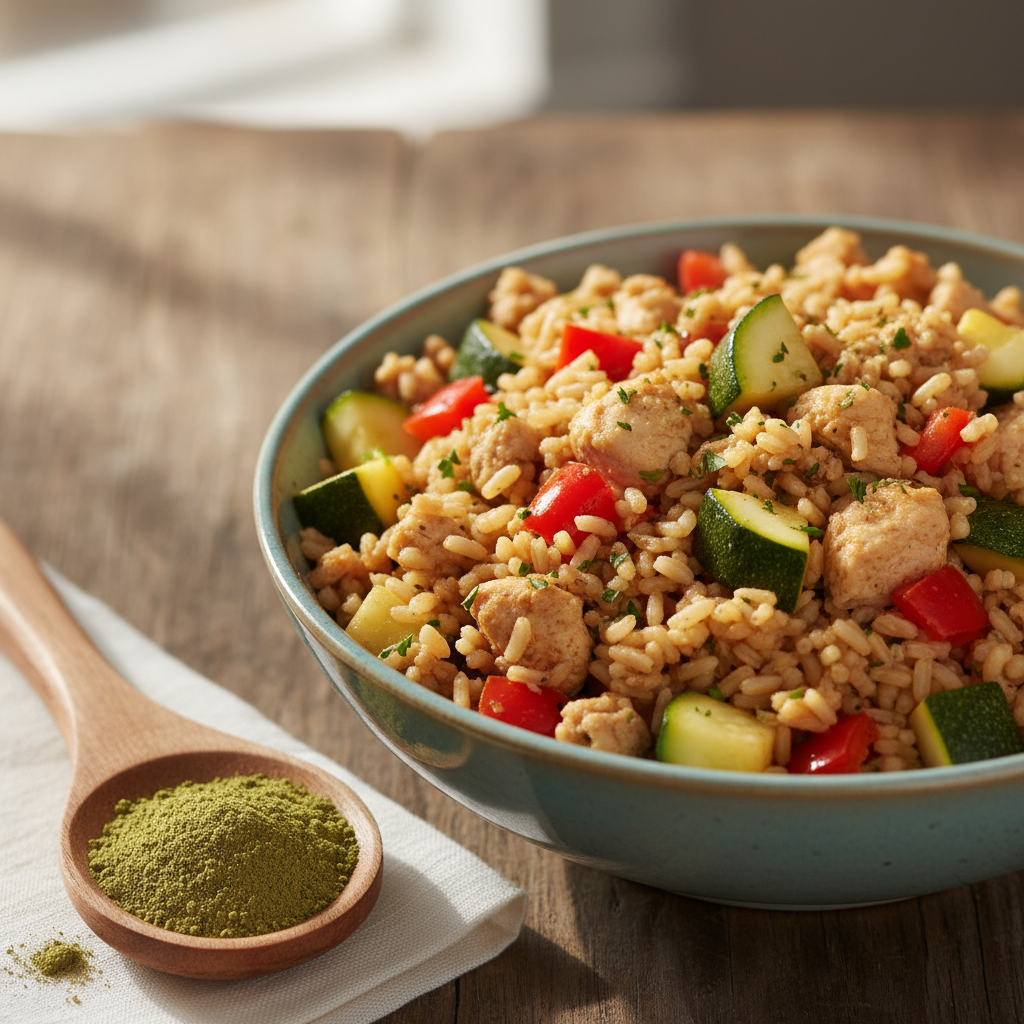
Ending with a true joint-support superstar! Green-lipped mussels, native to New Zealand, are a superfood for joints. They are a rich natural source of glycosaminoglycans (GAGs), which include chondroitin sulfate, as well as unique omega-3 fatty acids. These compounds are the building blocks for cartilage and synovial fluid, making this recipe a therapeutic meal.
Ingredients:
- 1 lb ground chicken
- 1 cup cooked brown rice
- 1/2 cup chopped zucchini
- 1/2 cup chopped red bell pepper
- 2-3 teaspoons of green-lipped mussel powder (dosage depends on brand and dog’s weight)
- 1 tablespoon olive oil
- 2 cups water or low-sodium chicken broth
Instructions:
- In a large pot, cook the ground chicken in olive oil until browned.
- Add the zucchini, red bell pepper, and cooked brown rice. Sauté for a few minutes.
- Pour in the water or chicken broth, bring to a simmer, and cook for 10-15 minutes until the vegetables are soft.
- Remove the pot from the heat and let it cool to a warm temperature. It’s very important that the mixture is not hot.
- Sprinkle the green-lipped mussel powder over the food and stir thoroughly to combine. High heat can destroy the delicate fatty acids in the powder.
- Serve once fully cooled.
Pros & Cons
| Pros | Cons |
|---|---|
| ✓ One of the most effective natural ingredients for joint health. | ✗ Green-lipped mussel powder can be expensive and hard to find. |
| ✓ Provides building blocks for cartilage repair. | ✗ Has a distinct sea-like smell some dogs might need to get used to. |
| ✓ A well-rounded, balanced meal. | ✗ The powder must be added after cooking, an extra step to remember. |
Verdict:
This recipe is for the dog that needs serious, targeted joint support. If your dog has a diagnosis of moderate to severe arthritis, incorporating green-lipped mussel powder is one of the most effective dietary changes you can make. This meal delivers it in a delicious, easy-to-digest format.
A Pet Parent’s Guide to Anti-Inflammatory Ingredients

Stepping into the world of canine nutrition can feel overwhelming, but you don’t need a Ph.D. to make a difference. Focusing on a few key categories of ingredients can turn your dog’s food bowl into a powerful tool against inflammation. Here’s what to look for:
Omega-3 Fatty Acids
These are the undisputed champions of the anti-inflammatory world. They work on a cellular level to reduce the production of inflammatory chemicals. While plant-based sources like flax and chia seeds are good, the most potent forms (EPA and DHA) come from marine sources.
- Top Sources: Salmon, sardines, mackerel, flaxseed oil, chia seeds, green-lipped mussels.
Antioxidant-Rich Fruits & Veggies
Inflammation creates oxidative stress, which damages cells. Antioxidants are like a clean-up crew, neutralizing these damaging free radicals. Colorful fruits and vegetables are your best bet.
- Top Sources: Blueberries, raspberries, spinach, kale, sweet potatoes, carrots, bell peppers.
Helpful Spices & Herbs
Certain spices contain powerful compounds that can have a significant impact on inflammation. They should be used in moderation but can be a great addition to your dog’s diet.
- Top Sources: Turmeric (with black pepper), Ginger, Parsley, Rosemary.
Healthy Fats
Not all fats are created equal. Healthy fats can support overall health and provide anti-inflammatory benefits. Coconut oil, in particular, contains MCTs which are easily digested and can help reduce inflammation.
- Top Sources: Coconut oil, olive oil, flaxseed oil.
Connective Tissue Support
Some ingredients provide the natural building blocks of cartilage, like glucosamine and chondroitin. These help to lubricate joints and support cartilage integrity.
- Top Sources: Green-lipped mussels, bone broth (especially from chicken or beef joints), cartilage from animal sources.
A Crucial Note: Always, always, always talk to your veterinarian before making significant changes to your dog’s diet. They can help you tailor these recipes to your dog’s specific health needs, age, and activity level, and ensure they are getting a fully balanced diet.
Frequently Asked Questions

How quickly will I see results from these recipes?
Patience is key. Diet-based changes work from the inside out and aren’t an overnight fix. You might start to notice subtle improvements in your dog’s mobility, energy levels, and overall comfort within 3 to 4 weeks, with more significant changes potentially taking a couple of months. Consistency is the most important factor.
Can I make these recipes in bulk and freeze them?
Absolutely! Most of these recipes are perfect for batch cooking. You can prepare a week’s worth of food, portion it into daily servings in freezer-safe containers or bags, and simply thaw a portion in the refrigerator the night before you need it. The meatloaf recipe is especially convenient for this.
Are there any ingredients I should absolutely avoid giving my dog?
Yes, many human foods are toxic to dogs. When cooking, never include onions, garlic, grapes, raisins, chocolate, macadamia nuts, or artificial sweeteners like xylitol. Also, avoid excessive salt, sugar, and processed fats. Stick to whole, fresh ingredients.
Do I need to add any supplements to these homemade meals?
This is a critical question to discuss with your vet or a veterinary nutritionist. While these recipes are nutrient-rich, long-term homemade diets can sometimes lack certain essential vitamins and minerals, like calcium. Your vet may recommend a high-quality canine multivitamin or a calcium supplement to ensure the diet is complete and balanced for your dog’s specific needs.
Conclusion
Making the switch to a homemade diet can feel like a significant commitment, but the potential rewards for your dog’s comfort and quality of life are immeasurable. Each bowl you prepare is not just food; it’s a personalized act of love, tailored to soothe their aches and nourish their body. By focusing on powerful, natural anti-inflammatory ingredients, you’re taking a proactive role in managing their joint pain and supporting their overall well-being.
Remember to introduce any new food slowly and always keep the lines of communication open with your veterinarian. They are your best partner in ensuring your furry family member lives the happiest, healthiest, and most comfortable life possible. Happy cooking, and here’s to more happy wags and pain-free zoomies!