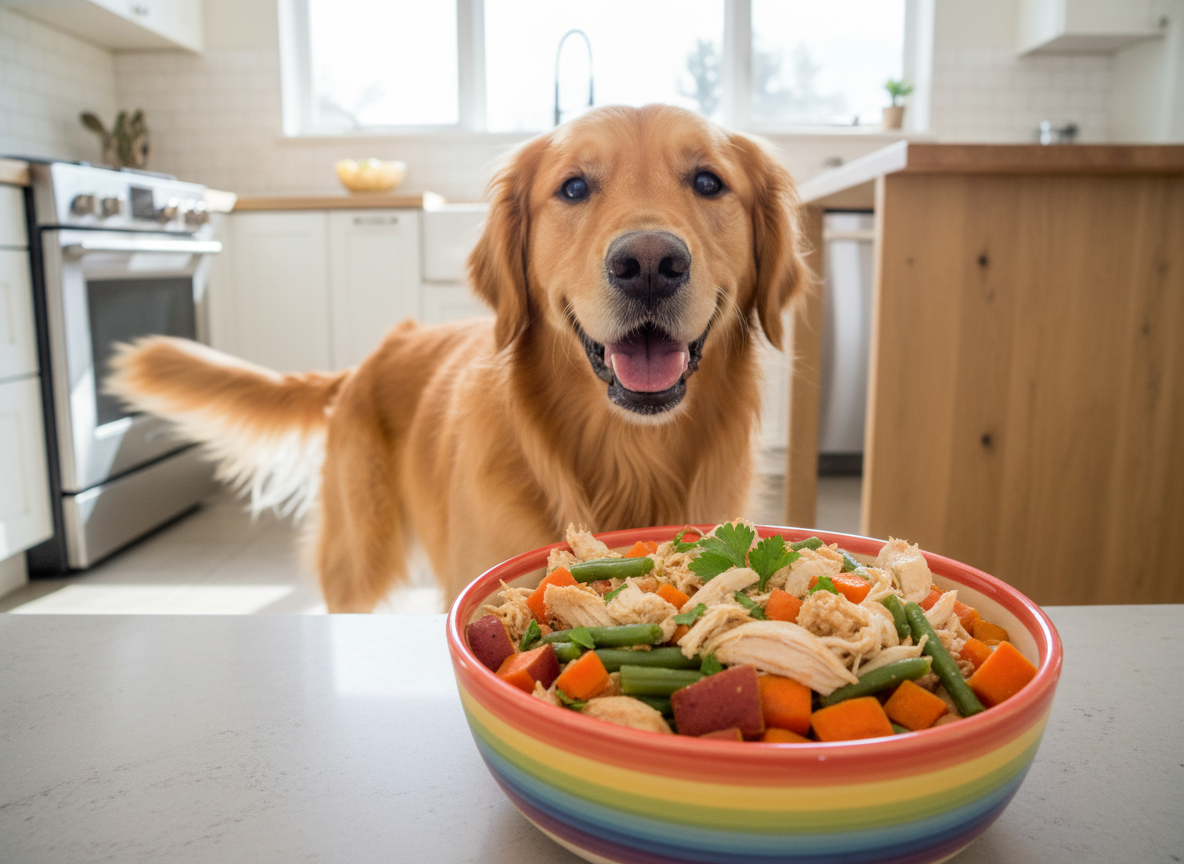
7 Balanced Homemade Dog Food for Cushing’s Disease Support
Hey there, fellow dog parent. Getting a Cushing’s disease diagnosis for your furry best friend can be a real gut-punch. It’s a journey filled with questions, vet visits, and a whole lot of love and concern. But here’s the good news: you’re not helpless. One of the most impactful ways you can support your pup through this is by taking control of their diet. Commercial dog foods, even the prescription ones, can sometimes contain hidden fats or ingredients that aren’t ideal for a Cushingoid dog. That’s where the magic of homemade dog food comes in.
Cushing’s disease (hyperadrenocorticism) causes the body to overproduce cortisol, a stress hormone. This can lead to increased thirst, appetite, and urination, as well as muscle weakness and a pot-bellied appearance. Diet plays a crucial role in managing these symptoms by focusing on a few key principles: low fat to prevent pancreatitis (a common risk), moderate fiber to aid digestion, and high-quality, easily digestible protein to maintain muscle mass. By preparing your dog’s meals at home, you become the master of every single ingredient, ensuring they get exactly what they need and nothing they don’t.
We’ve rounded up seven balanced, delicious, and supportive homemade recipes to get you started. Remember to always consult your veterinarian or a veterinary nutritionist before making any significant changes to your dog’s diet. They can help you tailor these recipes to your dog’s specific needs and recommend necessary supplements. Let’s get cooking for your canine companion!
Quick Comparison of Cushing’s-Friendly Recipes
| Recipe Name | Primary Protein | Key Benefits | Best For |
|---|---|---|---|
| Turkey & Green Bean Medley | Turkey | Extremely low-fat, high in fiber | Dogs needing strict fat restriction |
| Cod & Pumpkin Mash | Cod | Omega-3s, gentle on digestion | Dogs with sensitive stomachs |
| Chicken & Quinoa Power Bowl | Chicken Breast | Lean muscle support, complete protein | Active dogs needing muscle maintenance |
| Lean Beef & Broccoli Bake | Lean Ground Beef | Iron-rich, cancer-fighting properties | Dogs who enjoy red meat |
| Egg & Spinach Scramble | Eggs | Highly digestible, nutrient-dense | Picky eaters or as a meal topper |
| Sardine & Sweet Potato Mash | Sardines | Anti-inflammatory Omega-3s, skin health | Dogs with skin issues or joint pain |
| Lentil & Carrot Stew | Lentils | Plant-based, high-fiber, low-purine | Dogs with protein sensitivities or bladder stones |
1. Turkey & Green Bean Medley
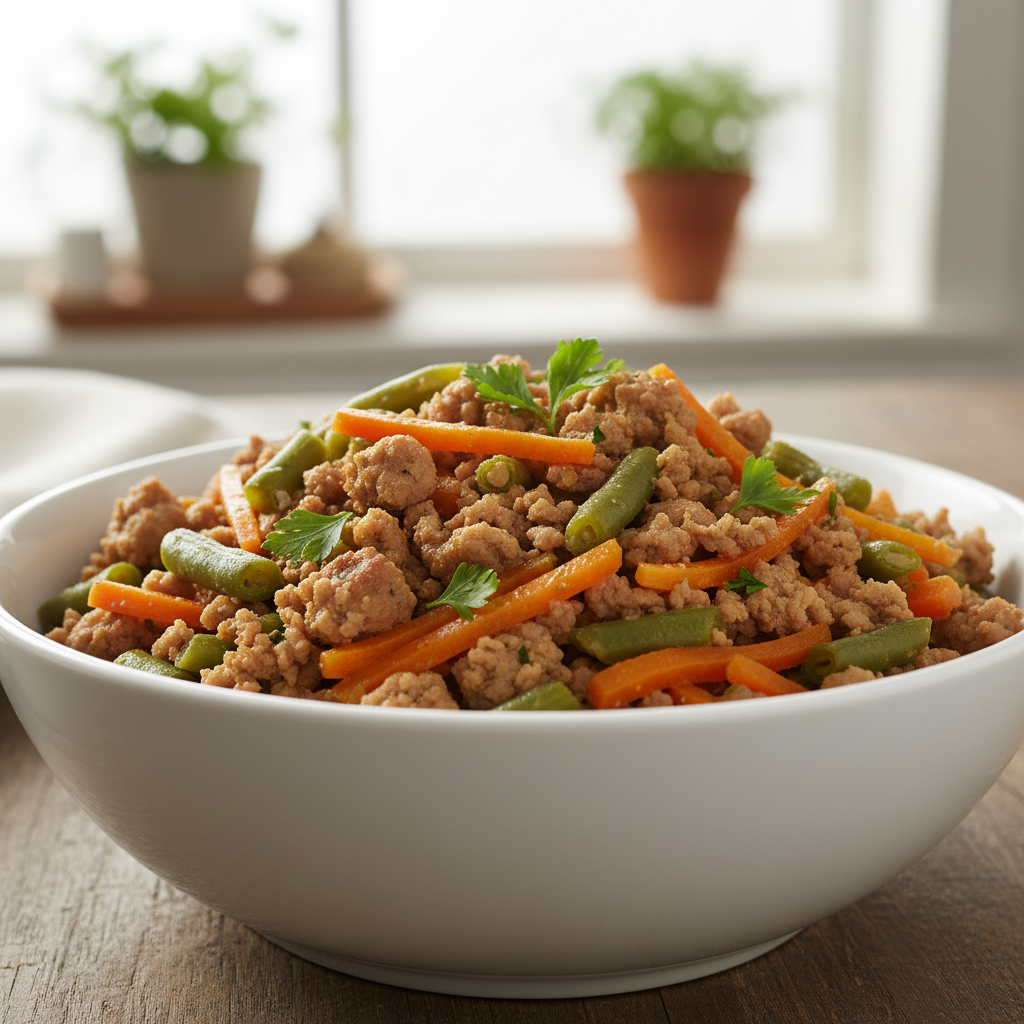
This recipe is a fantastic starting point for a Cushing’s diet. It’s incredibly simple, exceptionally low in fat, and packed with fiber to help your pup feel full and satisfied. Ground turkey is one of the leanest protein sources available, and green beans are a low-calorie, high-fiber superhero for dogs.
Ingredients:
- 1 lb 99% lean ground turkey
- 2 cups chopped green beans (fresh or frozen)
- 1 cup chopped carrots
- 1/2 cup brown rice, cooked
- 1 tablespoon flaxseed oil
- (Plus any vet-recommended calcium/vitamin supplement)
Instructions:
- Cook the ground turkey in a large skillet over medium heat until browned. Drain any excess fat thoroughly. This step is crucial!
- While the turkey is cooking, steam or boil the green beans and carrots until tender.
- In a large bowl, combine the cooked turkey, steamed vegetables, and cooked brown rice.
- Drizzle with the flaxseed oil and mix everything together gently.
- Allow the food to cool completely before serving.
Nutritional Spotlight:
The 99% lean turkey provides essential amino acids for muscle maintenance without the dangerous fat content. Green beans offer excellent fiber for digestive health, while flaxseed oil delivers a dose of anti-inflammatory omega-3 fatty acids.
Pros & Cons
Pros:
|
Cons:
|
Verdict:
This is the go-to recipe for dogs who are at high risk for pancreatitis or need a very strict, low-fat diet. It’s a clean, simple, and effective meal for managing Cushing’s symptoms.
2. Cod & Pumpkin Mash
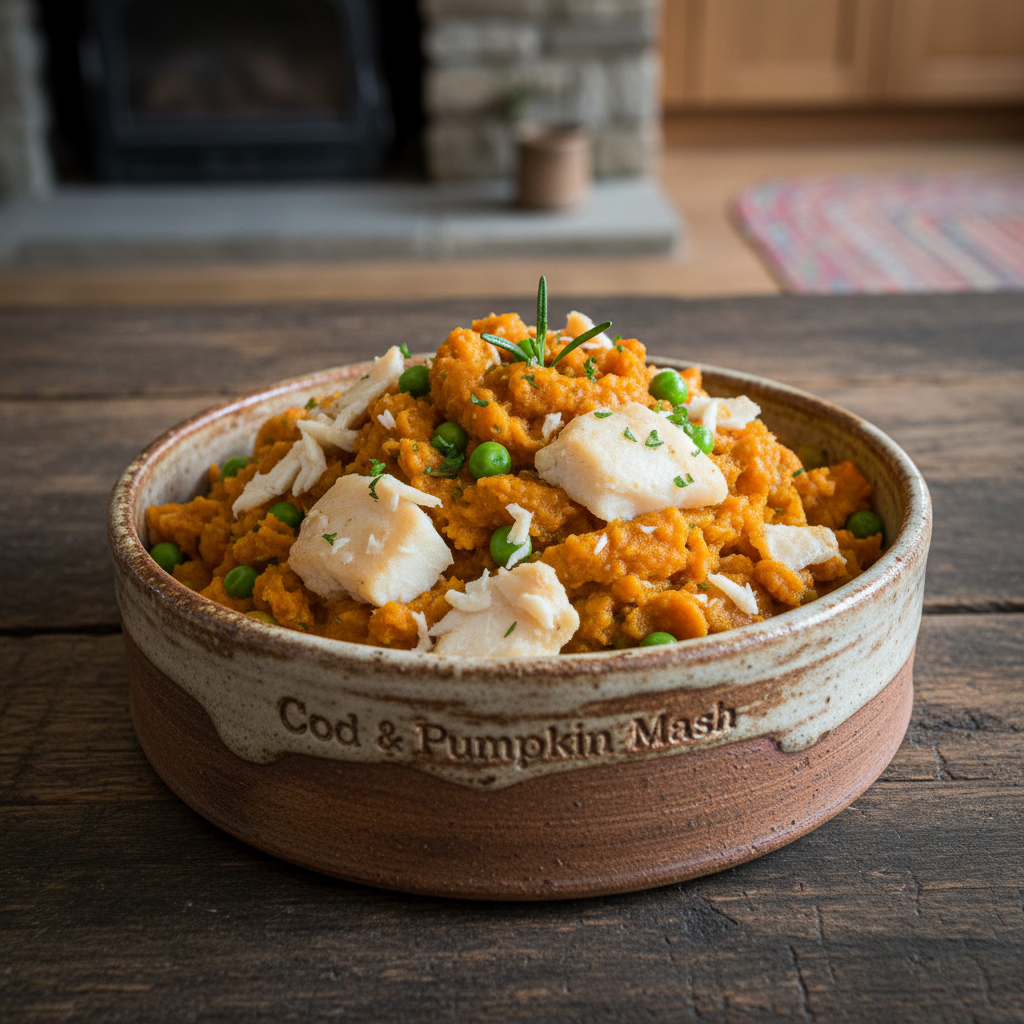
Fish is a wonderful protein source for dogs with Cushing’s, particularly fatty fish like cod or pollock (in moderation). They are rich in omega-3 fatty acids, which have natural anti-inflammatory properties that can help with common secondary issues like skin problems and arthritis. Pumpkin is a digestive miracle worker, helping to regulate bowel movements.
Ingredients:
- 1 lb cod fillets, boneless and skinless
- 1 cup plain pumpkin purée (NOT pie filling)
- 1 cup cooked oatmeal
- 1/2 cup peas (fresh or frozen)
- 1 teaspoon dried parsley
- (Plus any vet-recommended supplements)
Instructions:
- Poach or bake the cod fillets until they are cooked through and flake easily with a fork. Avoid using any oil or butter.
- Let the cod cool, then flake it into small pieces, ensuring there are no bones.
- In a large bowl, mix the flaked cod, pumpkin purée, cooked oatmeal, and peas.
- Sprinkle with parsley and stir to combine.
- Serve once the mixture has cooled to room temperature.
Nutritional Spotlight:
Cod provides a highly digestible protein source rich in omega-3s. Pumpkin offers soluble fiber, which is fantastic for gut health. Oatmeal is a gentle, low-glycemic carbohydrate that provides sustained energy.
Pros & Cons
Pros:
|
Cons:
|
Verdict:
This is an ideal choice for dogs with sensitive stomachs or those who also suffer from dry, itchy skin or joint discomfort. The anti-inflammatory benefits are a huge plus for senior dogs with Cushing’s.
3. Chicken & Quinoa Power Bowl
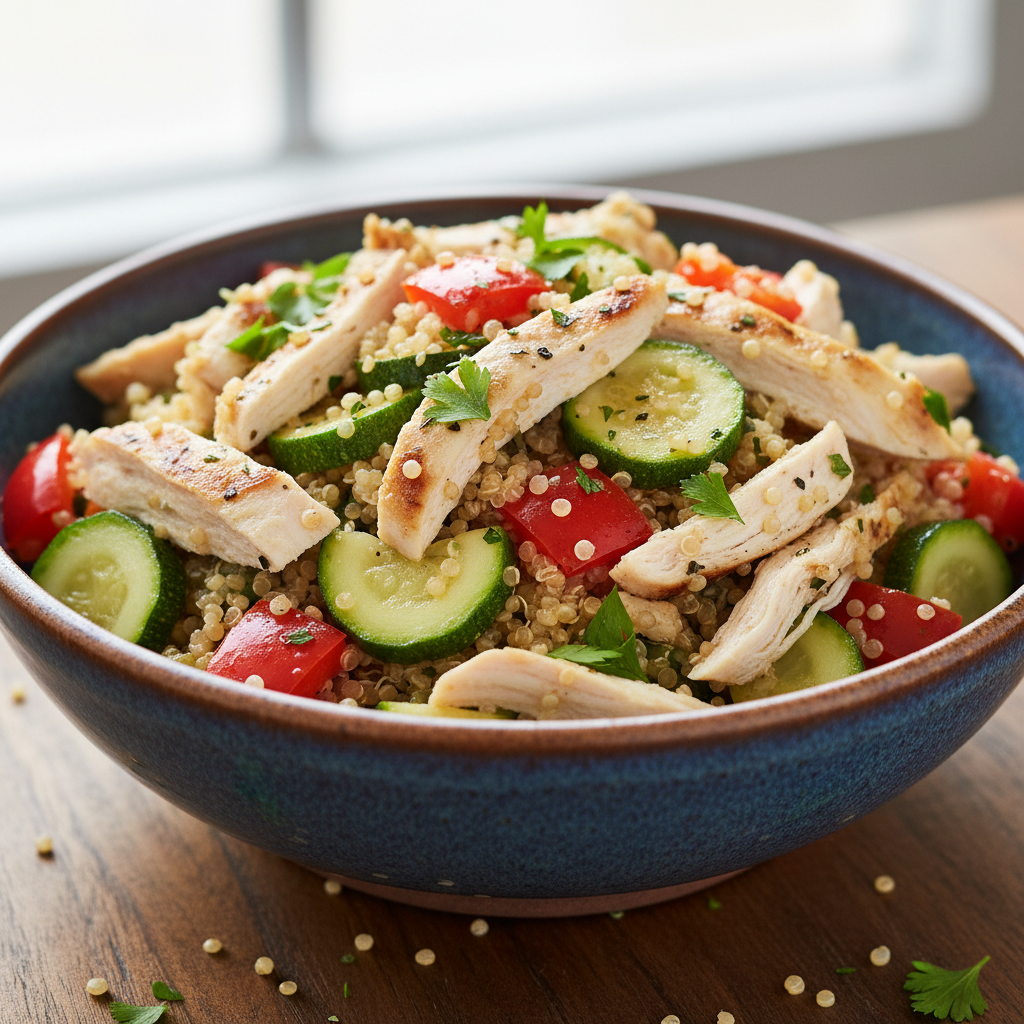
A classic for a reason! Skinless chicken breast is a lean, mean, protein-providing machine. Paired with quinoa, a complete protein that’s also a gluten-free seed, this meal supports muscle mass without adding unnecessary fat. Adding some Cushing’s-friendly veggies rounds out this powerful bowl.
Ingredients:
- 1 lb boneless, skinless chicken breast
- 1 cup cooked quinoa
- 1 cup chopped zucchini
- 1/2 cup chopped red bell pepper
- 1 tablespoon olive oil
- (Plus any vet-recommended supplements)
Instructions:
- Boil or bake the chicken breast until fully cooked. Let it cool, then shred or dice it into small, bite-sized pieces.
- Steam the zucchini and red bell pepper until tender-crisp.
- In a large mixing bowl, combine the shredded chicken, cooked quinoa, and steamed vegetables.
- Drizzle with olive oil and toss to coat everything evenly.
- Serve at room temperature.
Nutritional Spotlight:
Chicken breast is a premium, low-fat protein. Quinoa provides all nine essential amino acids, making it a fantastic carbohydrate source. Zucchini and bell peppers add essential vitamins and antioxidants with minimal calories.
Pros & Cons
Pros:
|
Cons:
|
Verdict:
This recipe is perfect for maintaining muscle tone in dogs who may be experiencing muscle wasting, a common symptom of Cushing’s. It’s a well-rounded, nutrient-dense meal that supports overall vitality.
4. Lean Beef & Broccoli Bake
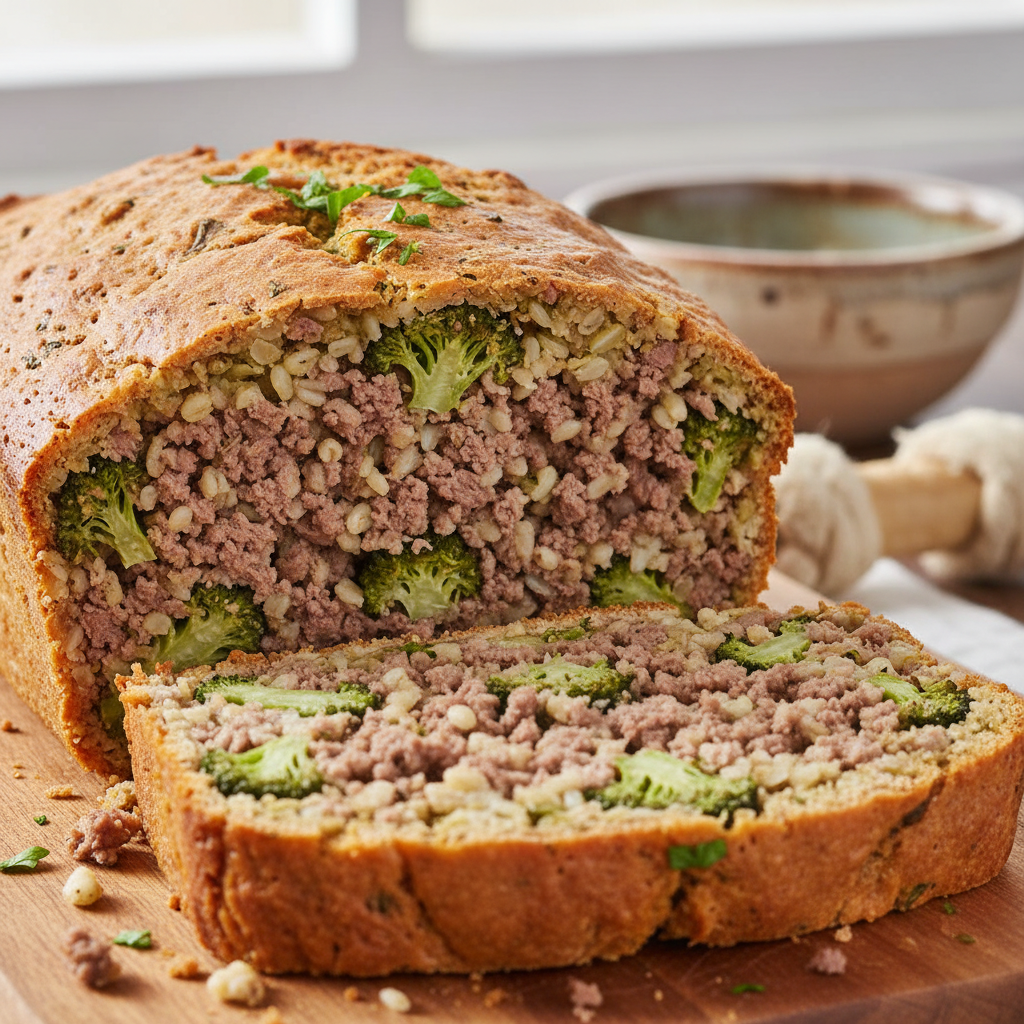
If your dog is a red meat lover, you don’t have to cut it out entirely. The key is choosing the leanest ground beef you can find (95% lean or more) and draining the fat meticulously. Beef provides iron and B vitamins, while broccoli is a cruciferous vegetable known for its fiber and potential cancer-fighting properties.
Ingredients:
- 1 lb 95% (or leaner) ground beef
- 2 cups broccoli florets, finely chopped
- 1/2 cup barley, cooked
- 1 egg, whisked
- (Plus any vet-recommended supplements)
Instructions:
- Preheat your oven to 375°F (190°C).
- In a skillet, cook the ground beef until browned. Transfer it to a colander and rinse with hot water to remove as much fat as possible. Drain well.
- Steam the broccoli florets until tender.
- In a large bowl, mix the drained beef, steamed broccoli, cooked barley, and the whisked egg.
- Press the mixture into a loaf pan or form into small meatballs on a baking sheet.
- Bake for 20-25 minutes, or until the egg is cooked through and the bake is firm.
- Let it cool completely before slicing and serving.
Nutritional Spotlight:
Lean beef offers a different amino acid profile than poultry and is rich in iron. Broccoli is packed with vitamins C and K, and fiber. The egg acts as a binder and adds another layer of high-quality protein.
Pros & Cons
Pros:
|
Cons:
|
Verdict:
This is a great option for dogs who turn their noses up at poultry or fish. The bake format makes it easy to portion and store, and it feels like a special treat while still being perfectly healthy for their condition.
5. Egg & Spinach Scramble
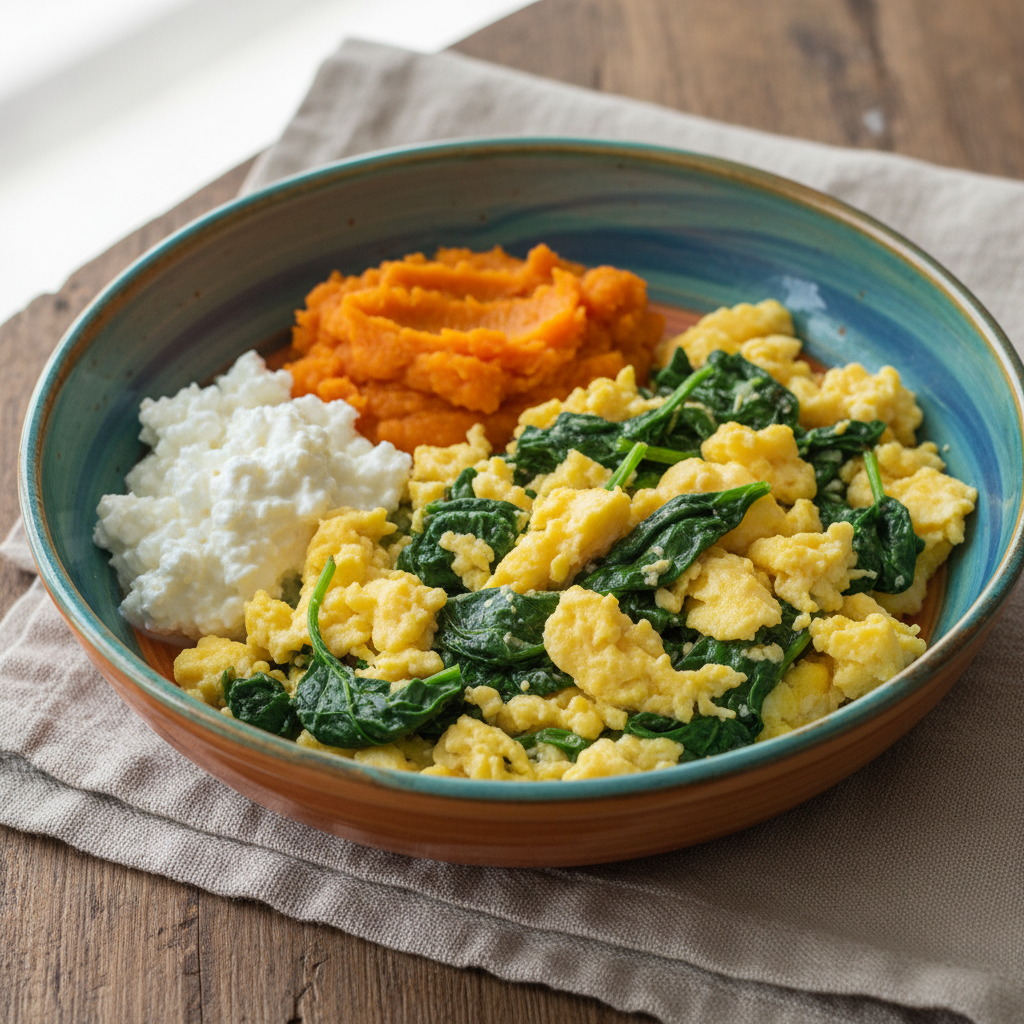
Don’t underestimate the power of the humble egg! Eggs are a powerhouse of nutrition, offering a highly digestible, complete protein. This recipe is fantastic for a light meal, a breakfast treat, or for picky eaters. Spinach adds iron and vitamins without adding fat.
Ingredients:
- 4 large eggs
- 1 cup fresh spinach, chopped
- 1/4 cup cottage cheese (low-fat)
- 1/2 cup cooked sweet potato, mashed
- A sprinkle of turmeric
- (Plus any vet-recommended supplements)
Instructions:
- In a non-stick skillet (no oil needed), scramble the eggs over low-medium heat.
- When the eggs are about halfway cooked, stir in the chopped spinach and continue to cook until the spinach is wilted and the eggs are fully cooked.
- Remove from heat and let it cool slightly.
- In your dog’s bowl, mix the egg and spinach scramble with the low-fat cottage cheese and mashed sweet potato.
- Sprinkle a small amount of turmeric on top for its anti-inflammatory benefits.
Nutritional Spotlight:
Eggs are nature’s perfect protein. Cottage cheese adds more protein and calcium with very little fat. Sweet potato is a low-glycemic carb that’s gentle on blood sugar, and turmeric is a celebrated natural anti-inflammatory.
Pros & Cons
Pros:
|
Cons:
|
Verdict:
Perfect for senior dogs who have trouble chewing, picky eaters who need their appetite stimulated, or as a nutritious topper to make other meals more exciting. It’s a gentle, comforting, and highly nutritious option.
6. Sardine & Sweet Potato Mash
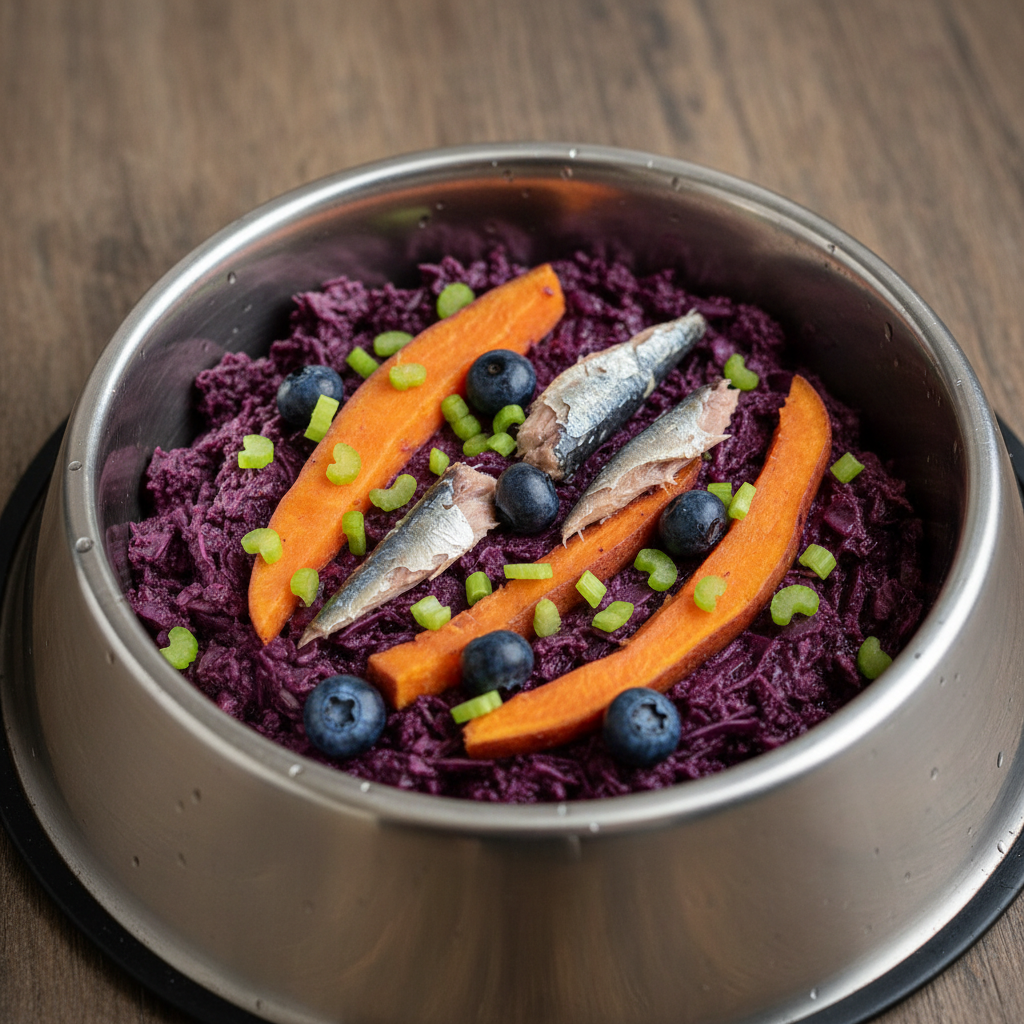
Sardines are tiny fish with a massive nutritional punch. They are one of the best sources of omega-3 fatty acids (EPA and DHA) and are naturally low in mercury because of their small size. This recipe is an anti-inflammatory powerhouse, ideal for supporting skin, coat, and joint health.
Ingredients:
- 1 can (3.75 oz) sardines packed in water, no salt added
- 1 large sweet potato, baked and mashed
- 1/2 cup chopped celery
- 1/2 cup blueberries (fresh or frozen)
- (Plus any vet-recommended supplements)
Instructions:
- Bake a sweet potato until it’s very soft. Let it cool, remove the skin, and mash the flesh in a large bowl.
- Drain the water from the can of sardines and add the whole sardines to the mashed sweet potato. Mash them into the potato with a fork.
- Finely chop the celery and add it to the bowl.
- Gently fold in the blueberries.
- Mix everything together and serve.
Nutritional Spotlight:
Sardines are off the charts in omega-3s, which help combat inflammation throughout the body. Sweet potatoes provide beta-carotene and low-glycemic carbs. Blueberries are packed with antioxidants, and celery adds a nice bit of fiber and crunch.
Pros & Cons
Pros:
|
Cons:
|
Verdict:
This is the ultimate recipe for dogs with Cushing’s who also struggle with arthritis, dull coat, or flaky skin. The anti-inflammatory and antioxidant combination is a powerful tool for improving their overall quality of life.
7. Lentil & Carrot Stew
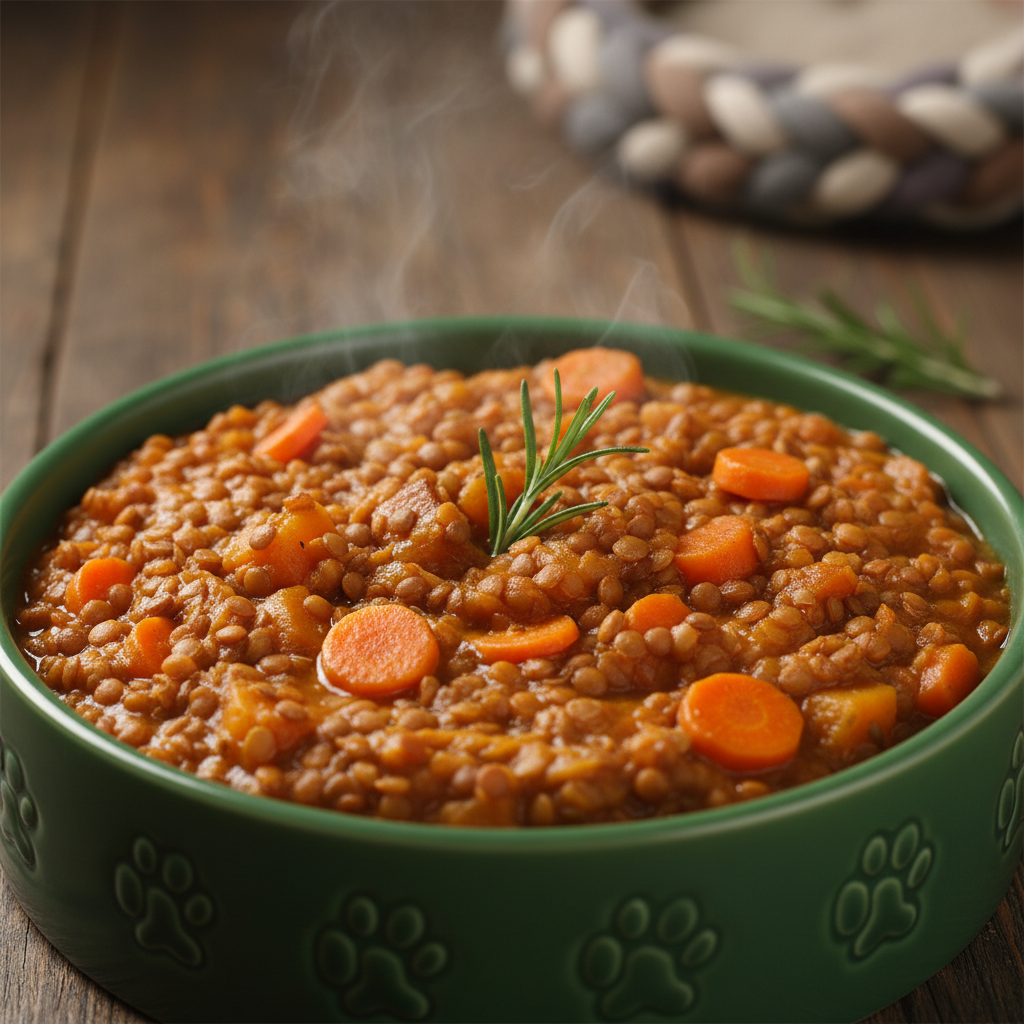
For some dogs, particularly those with concurrent issues like kidney or liver disease, or certain types of bladder stones, a lower-protein or plant-forward diet may be recommended. Lentils are a fantastic source of plant-based protein and fiber. This stew is hearty, warming, and gentle on the system.
Ingredients:
- 1 cup red or brown lentils, rinsed
- 4 cups low-sodium vegetable or chicken broth
- 2 cups carrots, diced
- 1 cup butternut squash, diced
- 1 teaspoon dried rosemary
- (Plus any vet-recommended supplements, especially amino acids like L-carnitine if going plant-based)
Instructions:
- In a large pot, combine the rinsed lentils, broth, diced carrots, and diced butternut squash.
- Bring the mixture to a boil, then reduce the heat to a simmer.
- Cover and cook for 25-30 minutes, or until the lentils and vegetables are very tender.
- Stir in the dried rosemary.
- Let the stew cool to a safe temperature before serving. You can mash it slightly for easier digestion.
Nutritional Spotlight:
Lentils provide protein and a huge amount of dietary fiber, which helps with satiety and blood sugar regulation. Carrots and butternut squash are loaded with beta-carotene (Vitamin A). This meal is naturally very low in fat and purines.
Pros & Cons
Pros:
|
Cons:
|
Verdict:
This recipe is a specialized option best used under the direct guidance of a vet or veterinary nutritionist. It’s an excellent choice for dogs who need a low-purine diet or have sensitivities to animal proteins, offering a warm and comforting meal.
A Pet Parent’s Guide to Crafting the Perfect Cushing’s Diet

Whipping up these recipes is a great start, but understanding the ‘why’ behind the ingredient choices will empower you to make the best decisions for your dog. Think of this as your nutritional cheat sheet for managing Cushing’s disease.
Focus on Low Fat Content
Dogs with Cushing’s are at a higher risk of developing pancreatitis, a painful and potentially fatal inflammation of the pancreas, often triggered by high-fat meals. Aim for recipes where the total fat content is low. This means choosing the leanest cuts of meat (95-99% lean), removing all skin from poultry, and draining fat meticulously after cooking.
Prioritize High-Quality, Digestible Protein
Cushing’s can cause muscle wasting, so providing high-quality protein is essential to help maintain your dog’s strength. ‘High-quality’ refers to how easily your dog can absorb and use the protein. Good sources include: skinless chicken or turkey breast, whitefish, eggs, and very lean beef. Avoid fatty meats, organ meats (which are high in purines), and processed proteins.
Embrace Moderate Fiber
Fiber is your friend! It helps your dog feel full (which is great for those with a Cushing’s-induced ravenous appetite), aids in digestion, and can help regulate blood sugar. Good fiber sources for dogs include pumpkin, green beans, broccoli, carrots, and sweet potatoes.
Avoid Problematic Ingredients
Certain foods can exacerbate issues associated with Cushing’s. It’s best to avoid:
- High-Glycemic Grains: Foods like corn and wheat can cause spikes in blood sugar. Opt for low-glycemic options like quinoa, barley, or brown rice in moderation.
- High-Purine Foods: Organ meats (liver, kidney) and some types of fish can contribute to the formation of bladder stones, another risk for Cushingoid dogs.
- Excessive Sodium and Unhealthy Fats: Avoid processed foods, fatty table scraps, and anything with a high salt content.
The Role of Supplements
A homemade diet, even a carefully planned one, will likely need supplementation to be complete and balanced. A calcium source is almost always necessary. Additionally, certain supplements are particularly beneficial for Cushing’s:
- Lignans & Melatonin: This combination is often recommended by holistic vets to help naturally lower cortisol levels.
- Omega-3 Fatty Acids: Fish oil or flaxseed oil can help combat inflammation.
- Probiotics: Support gut health, which is the cornerstone of the immune system.
Crucial Caveat: Never add supplements without your vet’s approval. They will guide you on the right products and dosages for your dog’s specific situation.
Frequently Asked Questions About Homemade Diets for Cushing’s
Is a homemade diet always better than commercial food for Cushing’s?
Not necessarily ‘better,’ but it offers more control. Prescription veterinary diets are formulated by nutritionists to be complete and balanced for specific conditions. However, a homemade diet allows you to use fresh, whole-food ingredients and completely avoid any fillers, preservatives, or specific ingredients your dog may be sensitive to. The best diet is the one that is balanced, meets your dog’s needs, and that you can prepare consistently, with your vet’s guidance.
How much of this food should I feed my dog?
This is a critical question to ask your veterinarian. Feeding amounts depend on your dog’s age, weight, activity level, and metabolic rate. As a very general guideline, an adult dog typically eats about 2-3% of their ideal body weight in fresh food daily. Your vet can calculate the precise caloric needs and help you determine the right portion sizes for these specific recipes to ensure your dog maintains a healthy weight.
Can I prepare these meals in advance?
Absolutely! Batch cooking is a huge time-saver. You can prepare a week’s worth of food at a time and store it in airtight containers in the refrigerator. Most of these recipes also freeze very well. You can portion them into individual servings in freezer-safe bags or containers for easy thawing and serving later on. This makes sticking to a homemade diet much more manageable for busy pet parents.
What are some ‘red flag’ foods I should absolutely avoid giving my dog with Cushing’s?
Beyond the general categories mentioned in the guide, there are a few specific things to keep on your ‘never’ list. Avoid fatty table scraps like bacon, sausage, or steak trimmings. Steer clear of processed foods high in salt and sugar. Grapes, raisins, onions, garlic, chocolate, and anything with the artificial sweetener xylitol are toxic to all dogs and should always be avoided.
Conclusion
Embarking on a homemade food journey for your dog with Cushing’s is a profound act of love. It’s about giving them the best possible support to live a happy, comfortable life. These seven recipes provide a wonderful starting point, showcasing how simple, whole ingredients can be combined to create meals that are both delicious and therapeutic. Remember, you’re not just filling their bowl; you’re actively participating in their healthcare plan. The most important ingredient in any of these recipes is your partnership with your veterinarian. Keep them in the loop, follow their guidance on portioning and supplements, and together, you can create a nutritional plan that will help your beloved companion thrive. You’ve got this!