7 Homemade Dog Food Recipes for Sensitive Stomachs
There’s nothing more worrying for a pet parent than seeing your best friend struggle with an upset stomach. The gurgling noises, the picky eating, the unfortunate clean-ups—it’s stressful for both of you. While there are many commercial dog foods for sensitive stomachs, sometimes the simplest solution is found right in your own kitchen. Taking control of your dog’s diet by preparing their meals yourself allows you to eliminate common irritants, fillers, and mysterious ingredients, focusing instead on whole, gentle, and nourishing foods.
Making the switch to homemade dog food can feel daunting, but it doesn’t have to be complicated. We’ve compiled seven easy-to-make recipes that are perfect for soothing a sensitive canine tummy. From the classic bland diet to more nutritionally-packed long-term meals, there’s something here to get your pup back on track. Always remember to consult with your veterinarian before making any significant changes to your dog’s diet to ensure their specific nutritional needs are met.
Quick Recipe Comparison
| Recipe Name | Main Protein | Primary Carb | Best For |
|---|---|---|---|
| Classic Chicken & Rice | Chicken | White Rice | Immediate digestive upset |
| Turkey & Pumpkin Purée | Turkey | Pumpkin | Constipation or diarrhea |
| Lean Beef & Sweet Potato | Lean Ground Beef | Sweet Potato | Long-term grain-free diets |
| Simple Salmon & Oatmeal | Salmon | Oatmeal | Skin and coat health |
| Cottage Cheese & Carrot Mash | Cottage Cheese | Carrots | Low-fat protein needs |
| Hearty Lamb & Barley Stew | Lamb | Barley | Dogs with poultry allergies |
| Scrambled Egg & Spinach Delight | Eggs | None (Low Carb) | Quick, single-meal recovery |
1. The Classic Bland Diet: Boiled Chicken and Rice

This is the go-to recipe recommended by veterinarians everywhere for dogs experiencing acute digestive distress. Its simplicity is its strength. Boneless, skinless chicken breast is a lean, easily digestible protein, while plain white rice provides quick energy without taxing the gut. It’s not meant for long-term feeding as it lacks essential vitamins and minerals, but it’s the perfect meal to calm an angry tummy for a few days.
Ingredients:
- 1 boneless, skinless chicken breast
- 1 cup white rice
- 2 cups water
Instructions:
- Place the chicken breast in a pot with enough water to cover it. Boil until cooked through (about 15-20 minutes).
- While the chicken is boiling, cook the white rice according to package directions, but do not add any salt or oil.
- Once the chicken is cooked, remove it from the water and let it cool. Shred the chicken into small, bite-sized pieces.
- Mix the shredded chicken with the cooked rice. A common ratio is 1 part chicken to 2 parts rice.
- Let the mixture cool completely before serving a small portion to your dog.
Pros and Cons
Pros
|
Cons
|
Verdict
This recipe is the ultimate first-aid meal for a dog with diarrhea or vomiting. It’s the perfect short-term solution to give their digestive system a much-needed break and help them recover.
2. Gentle Giant: Turkey & Pumpkin Purée
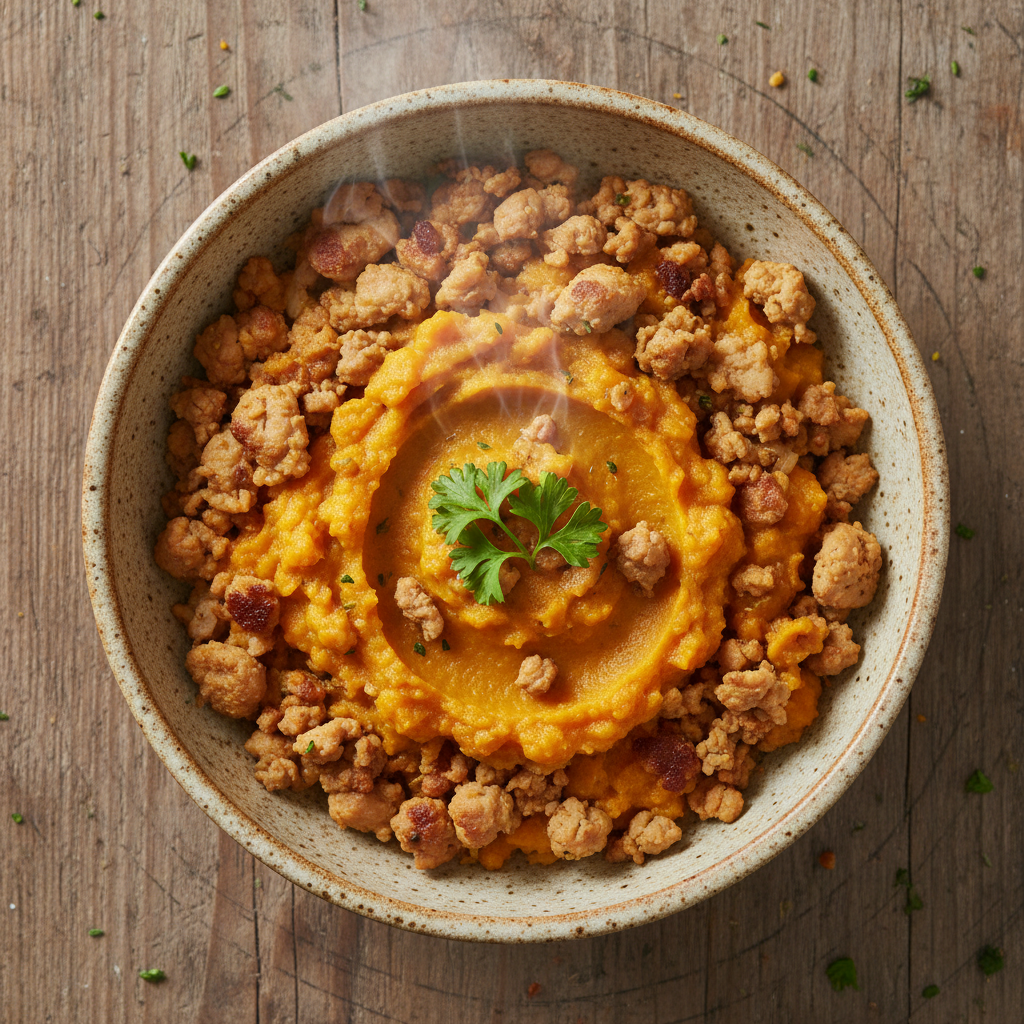
When your dog’s digestion is a little ‘irregular,’ pumpkin is your best friend. It’s a superfood for dogs, packed with soluble fiber that can help with both diarrhea (by absorbing water) and constipation (by adding bulk). Paired with lean ground turkey, another excellent protein for sensitive dogs, this recipe is a powerhouse for promoting healthy digestion.
Ingredients:
- 1 lb lean ground turkey
- 1 cup 100% pure pumpkin purée (NOT pumpkin pie filling)
- 1/2 cup cooked brown rice or quinoa (optional, for extra carbs)
- 1 tablespoon olive oil
Instructions:
- In a large skillet, cook the ground turkey over medium heat until browned. Drain off any excess fat.
- Stir in the pumpkin purée and the optional cooked grains.
- Cook for another 3-5 minutes, allowing the flavors to meld.
- Drizzle with a little olive oil for healthy fats.
- Allow the mixture to cool completely before serving.
Pros and Cons
Pros
|
Cons
|
Verdict
This is the ideal meal for dogs experiencing inconsistent stools. The fiber from the pumpkin provides gentle, effective support to get their digestive tract back in working order.
3. The Grain-Free Gourmet: Lean Beef & Sweet Potato
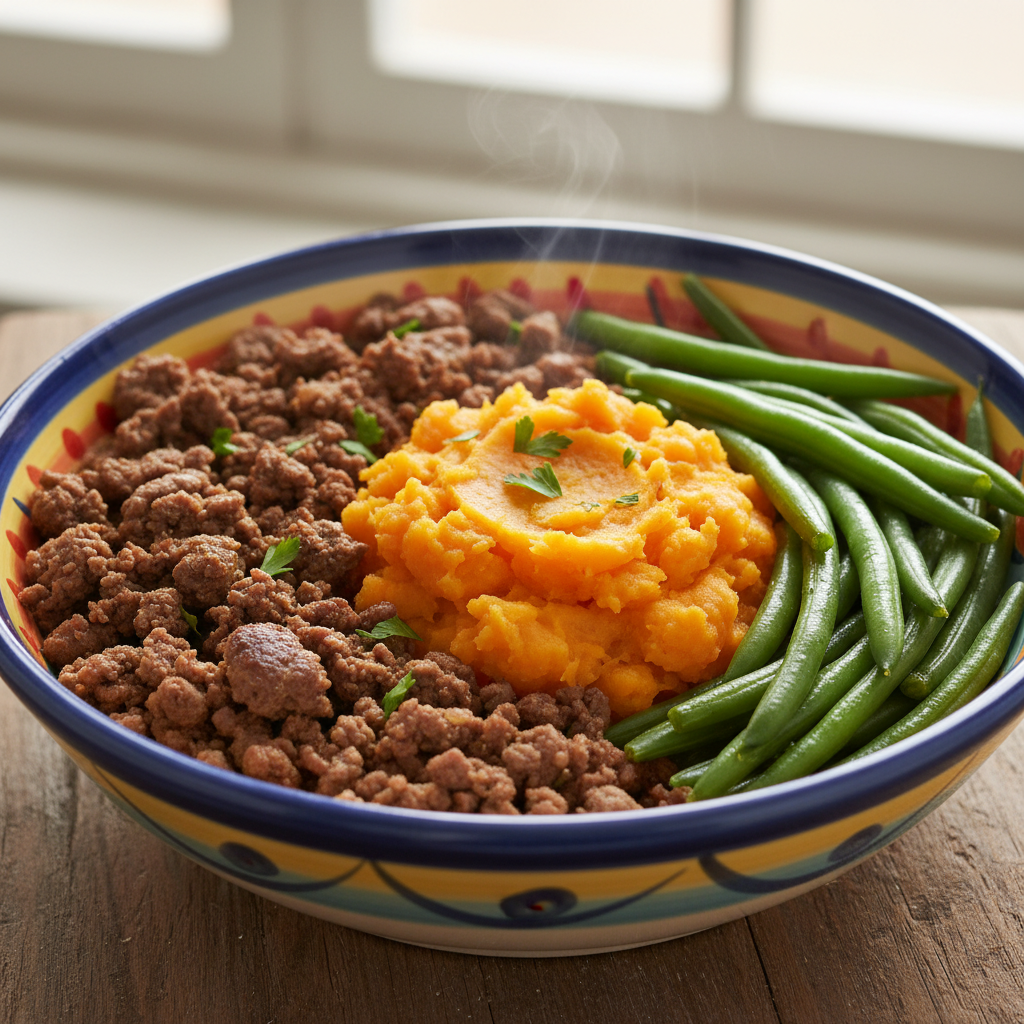
For dogs who are sensitive to grains, this recipe is a fantastic, nutrient-dense option. Lean ground beef provides iron and protein, while sweet potatoes are a highly digestible carbohydrate source packed with vitamins and fiber. This combination is not only gentle on the stomach but also incredibly tasty for picky eaters.
Ingredients:
- 1 lb 90% (or leaner) ground beef
- 1 large sweet potato, peeled and diced
- 1/2 cup green beans, chopped
- 1 tablespoon coconut oil
Instructions:
- Boil or steam the diced sweet potato until it’s tender enough to be easily mashed with a fork.
- While the sweet potato is cooking, brown the ground beef in a skillet. Drain the fat thoroughly.
- In the last few minutes of cooking the beef, add the chopped green beans to soften them slightly.
- In a large bowl, combine the cooked beef, green beans, and mashed sweet potato.
- Stir in the coconut oil for healthy fats and an extra flavor boost.
- Serve once cooled to a safe temperature.
Pros and Cons
Pros
|
Cons
|
Verdict
Perfect for long-term feeding for dogs with known grain sensitivities. It’s a balanced, flavorful meal that supports sustained energy and digestive health without the common grain-related irritants.
4. The Skin Soother: Simple Salmon & Oatmeal

Sometimes, a sensitive stomach is linked to skin issues and allergies. Salmon is a fantastic source of Omega-3 fatty acids, which are renowned for their anti-inflammatory properties that can soothe both the gut and the skin. Oatmeal is a gentle, high-fiber grain that can help regulate digestion and is often well-tolerated by dogs.
Ingredients:
- 1 salmon fillet (about 6 oz), skin removed
- 1 cup cooked oatmeal (cooked with water only)
- 1/2 cup peas, cooked
Instructions:
- Bake or poach the salmon fillet until it’s cooked through and flakes easily with a fork. Ensure there are no bones.
- Prepare the oatmeal according to package instructions, using only water.
- In a bowl, flake the cooked salmon into small pieces.
- Add the cooked oatmeal and peas to the bowl with the salmon.
- Gently mix everything together.
- Serve when cool.
Pros and Cons
Pros
|
Cons
|
Verdict
This is an excellent choice for dogs whose sensitive stomachs are accompanied by dry, itchy skin or a dull coat. The powerful Omega-3s work from the inside out to promote overall health.
5. The Low-Fat Lifesaver: Cottage Cheese & Carrot Mash
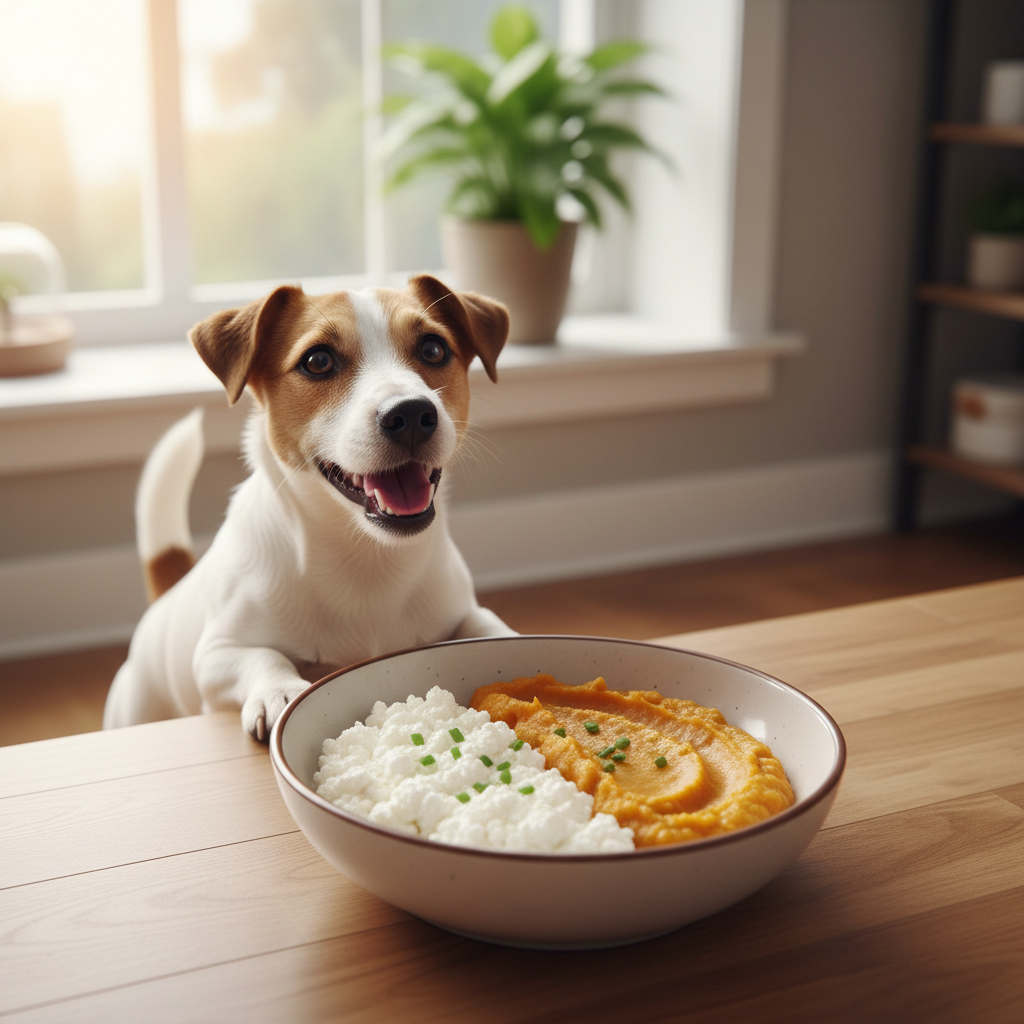
For dogs needing a low-fat diet due to conditions like pancreatitis or general sensitivity to rich foods, this recipe is a lifesaver. Low-fat cottage cheese is a surprising but excellent source of protein that’s very easy to digest. Carrots provide beta-carotene and gentle fiber, and when mashed, they are incredibly easy on the stomach.
Ingredients:
- 1 cup low-fat cottage cheese
- 2 medium carrots, peeled and chopped
- 1/2 cup cooked white rice (optional)
Instructions:
- Boil or steam the chopped carrots until they are very soft.
- Mash the cooked carrots with a fork or a potato masher until you have a smooth consistency.
- In a bowl, mix the mashed carrots with the low-fat cottage cheese.
- If you’re adding rice for extra substance, stir it in now.
- Serve immediately. This recipe is best served fresh.
Pros and Cons
Pros
|
Cons
|
Verdict
This recipe is perfect for dogs on a strict low-fat diet or as a very gentle meal during recovery from a bout of pancreatitis (with vet approval). It’s light, soothing, and surprisingly palatable.
6. The Poultry-Free Powerhouse: Hearty Lamb & Barley Stew
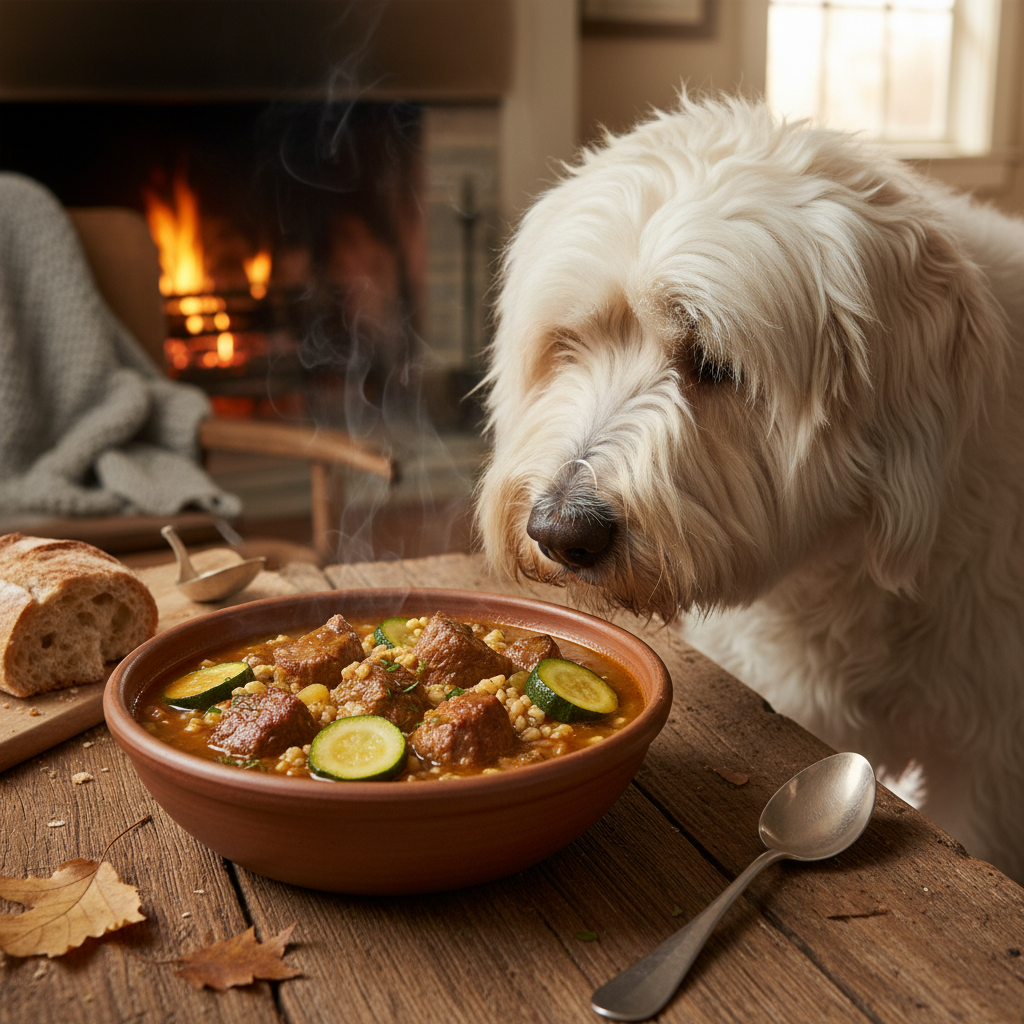
Chicken and turkey are common proteins, but they are also common allergens for some dogs. Lamb is a novel protein for many dogs, making it a great option if you suspect a poultry allergy is causing digestive upset. Barley is a nutritious, high-fiber grain that can aid in digestion when served in moderation.
Ingredients:
- 1 lb ground lamb
- 1/2 cup pearl barley
- 2 cups low-sodium beef or vegetable broth
- 1 cup chopped zucchini
Instructions:
- In a large pot or Dutch oven, brown the ground lamb over medium heat. Drain any excess fat.
- Add the broth and barley to the pot. Bring to a boil, then reduce heat, cover, and simmer for about 30-40 minutes, or until the barley is tender.
- Add the chopped zucchini in the last 10 minutes of cooking so it becomes tender but not mushy.
- Remove from heat and let the stew cool completely before serving.
Pros and Cons
Pros
|
Cons
|
Verdict
This is a wonderful, warming stew for dogs who can’t tolerate chicken or other poultry. It’s a substantial meal that’s still gentle enough for a sensitive system, making it great for long-term feeding.
7. The Quick Fix: Scrambled Egg & Spinach Delight
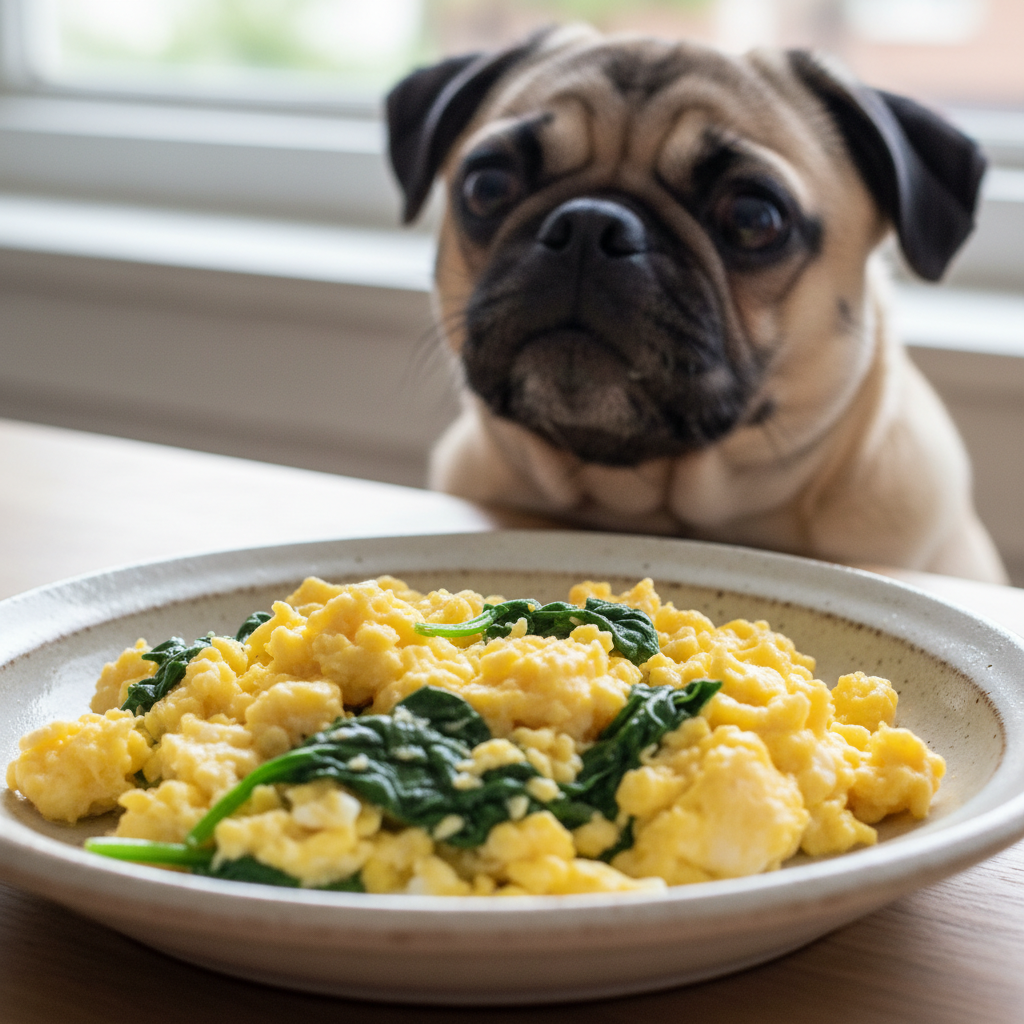
Need a gentle meal in a hurry? Eggs are a fantastic source of easily digestible protein and amino acids. This super-simple scramble is perfect for a single meal when your dog’s stomach is feeling a bit ‘off’ but they still need some substance. A little bit of spinach adds a touch of iron and vitamins without upsetting the balance.
Ingredients:
- 2 large eggs
- A small handful of fresh spinach, chopped
- 1 teaspoon of water or unsalted broth
- A tiny splash of olive oil for the pan
Instructions:
- Lightly coat a non-stick skillet with olive oil and heat over medium-low heat.
- In a small bowl, whisk the eggs with the water or broth.
- Pour the egg mixture into the pan. As the eggs begin to set, add the chopped spinach.
- Gently scramble the eggs until they are fully cooked but still soft.
- Transfer the scramble to a bowl and let it cool completely before your dog digs in.
Pros and Cons
Pros
|
Cons
|
Verdict
This is the ultimate emergency meal. When you’re out of other ingredients or need a quick, protein-packed, and gentle meal to settle a mildly upset stomach, this egg scramble is the perfect solution.
A Guide to Crafting Meals for Your Sensitive Pup

Navigating the world of homemade dog food can be empowering, but it’s important to do it safely. A dog’s nutritional needs are different from ours, and balance is key. Here’s what to keep in mind when preparing food for your sensitive companion.
Choose a Lean, Single-Source Protein
Start with one simple, lean protein like chicken, turkey, or lean beef. This makes it easier to identify any potential allergens or irritants. Cook the protein by boiling, baking, or poaching, and always remove skin and drain excess fat.
Select Digestible Carbohydrates
Carbs provide energy, but the wrong ones can cause trouble. White rice, sweet potatoes, and pumpkin are excellent, easily digestible options. They provide energy and fiber without overwhelming a sensitive gut. Oats and barley can also work well for dogs that are not grain-sensitive.
Don’t Forget Fiber and Veggies
Gentle vegetables can add crucial vitamins and fiber. Steamed carrots, green beans, and zucchini are great choices. As we’ve seen, pure pumpkin purée is a superstar for regulating digestion. Always cook vegetables to make them easier for your dog to digest.
The Importance of Balance and Supplements
While these recipes are great for short-term relief, long-term homemade diets require careful balancing to be nutritionally complete. They often lack crucial vitamins and minerals like calcium, zinc, and Vitamin D. It is absolutely essential to work with your veterinarian or a veterinary nutritionist to ensure your dog’s homemade diet is complete and balanced. They can recommend specific supplements or formulation software to fill any nutritional gaps.
Foods to ALWAYS Avoid
Many human foods are toxic to dogs. Never include the following in your dog’s meals: onions, garlic, chives, chocolate, grapes, raisins, macadamia nuts, avocado, alcohol, or anything sweetened with xylitol.
Frequently Asked Questions

How do I transition my dog to a homemade diet?
Transition slowly to avoid further digestive upset. Start by mixing a small amount of the new homemade food (about 25%) with their old food (75%). Over the course of 7-10 days, gradually increase the amount of homemade food while decreasing the amount of their old food until you’ve fully switched over.
Is homemade dog food nutritionally complete?
Not without careful planning. The recipes listed here are designed for intermittent or short-term feeding to soothe an upset stomach. For a long-term diet, you must consult with a veterinarian or veterinary nutritionist. They will help you formulate a recipe that includes the correct balance of protein, fats, carbohydrates, and essential micronutrients, often through the addition of specific supplements.
How much homemade food should I feed my dog?
This depends on your dog’s age, weight, breed, and activity level. A good starting point is to calculate their daily caloric needs (your vet can help with this). As a very general rule of thumb, a dog might eat 2-3% of their ideal body weight in fresh food daily, but this can vary widely. Monitor their body condition and adjust portions as needed.
Can I prepare these meals in advance?
Absolutely! You can cook larger batches of these recipes and store them in the refrigerator for up to 3-4 days. For longer storage, portion out the meals into airtight containers or freezer bags and freeze them. They can be stored in the freezer for up to 3 months. Just be sure to thaw the food completely before serving.
Conclusion
Switching to a homemade diet can feel like giving your furry friend a big, warm hug from the inside out. For dogs with sensitive stomachs, these simple, gentle recipes can make a world of difference, transforming mealtime from a source of stress into a moment of joy. By using whole, fresh ingredients, you’re providing them with a delicious meal that’s easy to digest and full of love.
Remember, you are your dog’s biggest advocate. The most crucial step in this journey is partnering with your veterinarian. They can help you diagnose the root cause of the sensitivity and guide you in creating a long-term feeding plan that is safe, balanced, and perfectly tailored to your unique companion. Here’s to happy tummies and even happier dogs!