7 Allergy-Friendly Homemade Food For Bichon Frise Recipes
That adorable white fluffball you call family deserves the best, but what happens when ‘the best’ store-bought food leads to endless scratching, licking, and discomfort? If you’re a Bichon Frise parent, you’re likely all too familiar with the breed’s predisposition to skin allergies. It’s heartbreaking to watch them suffer, and it often feels like a never-ending cycle of vet visits and expensive specialty foods.
But what if you could take control of every single ingredient that goes into their bowl? That’s the power of homemade dog food. By preparing your Bichon’s meals yourself, you can eliminate common triggers like chicken, beef, wheat, and corn, and instead focus on nourishing, anti-inflammatory ingredients that support a healthy coat and calm skin. It’s a journey of love that can transform your pup’s well-being from the inside out.
Important Note: Before you grab your apron, it’s crucial to consult with your veterinarian or a veterinary nutritionist. They can help ensure your homemade recipes are complete and balanced for your dog’s specific needs, age, and health status. This guide is a fantastic starting point, but professional advice is non-negotiable for your pet’s long-term health.
Quick Comparison of Our Allergy-Friendly Recipes
| Recipe Name | Main Protein | Key Benefit |
|---|---|---|
| Salmon & Sweet Potato Delight | Salmon | Rich in Omega-3s for skin and coat health |
| Turkey & Pumpkin Feast | Turkey | Excellent for sensitive stomachs |
| Lamb & Lentil Stew | Lamb | Great novel protein for common allergies |
| Duck & Quinoa Power Bowl | Duck | Rich, flavorful option for picky eaters |
| Rabbit & Butternut Squash Mash | Rabbit | Hypoallergenic and highly digestible |
| Pork & Pear Puree | Pork | Often well-tolerated when chicken/beef are not |
| Simple Sardine & Oatmeal Scramble | Sardines | Quick, easy, and packed with anti-inflammatory fats |
1. Salmon & Sweet Potato Delight
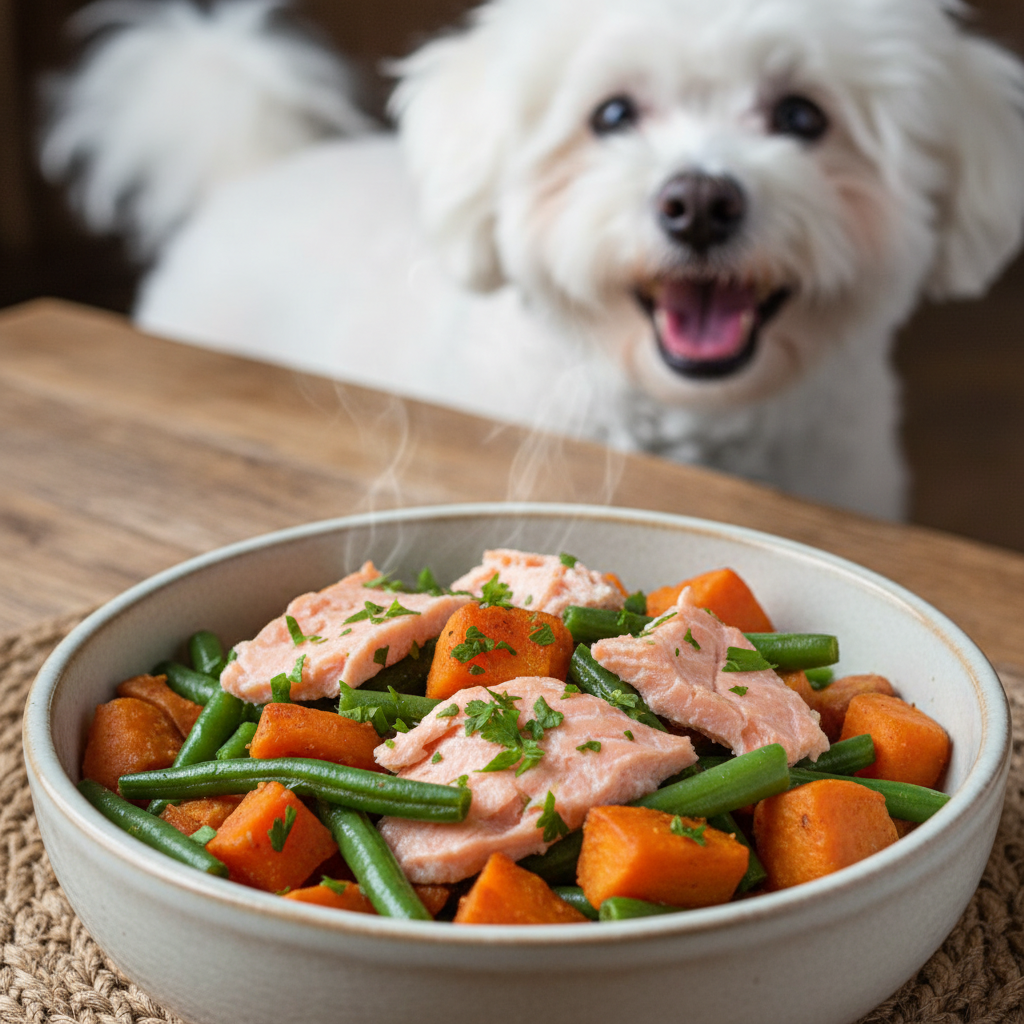
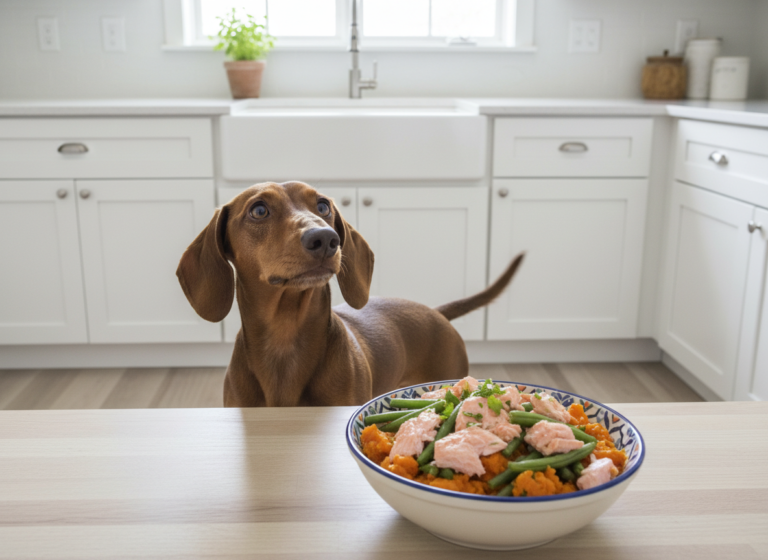
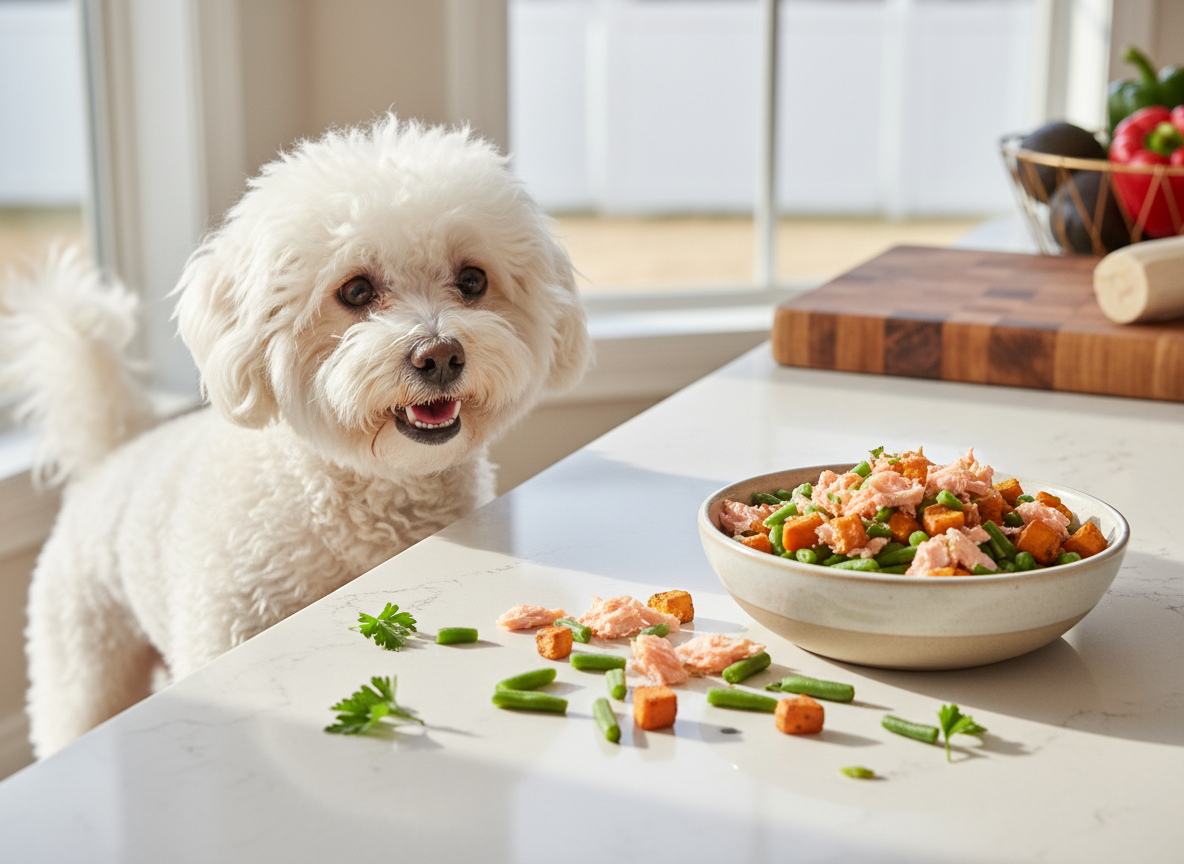
This recipe is a powerhouse for combating dry, itchy skin. Salmon is loaded with Omega-3 fatty acids, which are natural anti-inflammatories that work wonders for a dog’s coat and skin. Paired with sweet potato, a highly digestible carbohydrate packed with vitamins, this meal is as nutritious as it is delicious.
Ingredients:
- 1 pound boneless, skinless salmon
- 1 large sweet potato, peeled and cubed
- 1 cup green beans, trimmed and chopped
- 1 carrot, peeled and shredded
- 1 tablespoon olive oil or coconut oil
- 1/4 cup water
- (Optional) A balanced vitamin/mineral supplement for homemade diets, as recommended by your vet.
Instructions:
- Cook the cubed sweet potato by boiling or steaming until tender (about 15-20 minutes). Drain and set aside.
- While the sweet potato cooks, heat the olive or coconut oil in a large skillet over medium heat. Add the salmon and cook for 3-4 minutes per side, until it’s cooked through and flakes easily with a fork. Remove from the skillet and let it cool slightly before flaking it into bite-sized pieces.
- In the same skillet, add the green beans and shredded carrot. Add 1/4 cup of water, cover, and steam for 5-7 minutes until tender-crisp.
- In a large bowl, combine the flaked salmon, cooked sweet potato, and steamed vegetables. Mash the sweet potato slightly to bind the ingredients together.
- Allow the mixture to cool completely before serving. Store leftovers in an airtight container in the refrigerator for up to 3 days.
Pros & Cons:
| Pros | Cons |
|---|---|
| Excellent source of Omega-3s for skin health. | Salmon can be more expensive than other proteins. |
| Sweet potatoes are gentle on the digestive system. | Some dogs may not enjoy the fishy smell or taste. |
| Grain-free and free of common poultry allergens. | Requires careful deboning if using salmon with bones. |
Verdict:
This is the top choice for Bichons with significant skin issues like dryness, dandruff, or constant scratching. The high Omega-3 content directly targets inflammation, promoting a lustrous, healthy coat from the inside out.
2. Turkey & Pumpkin Feast
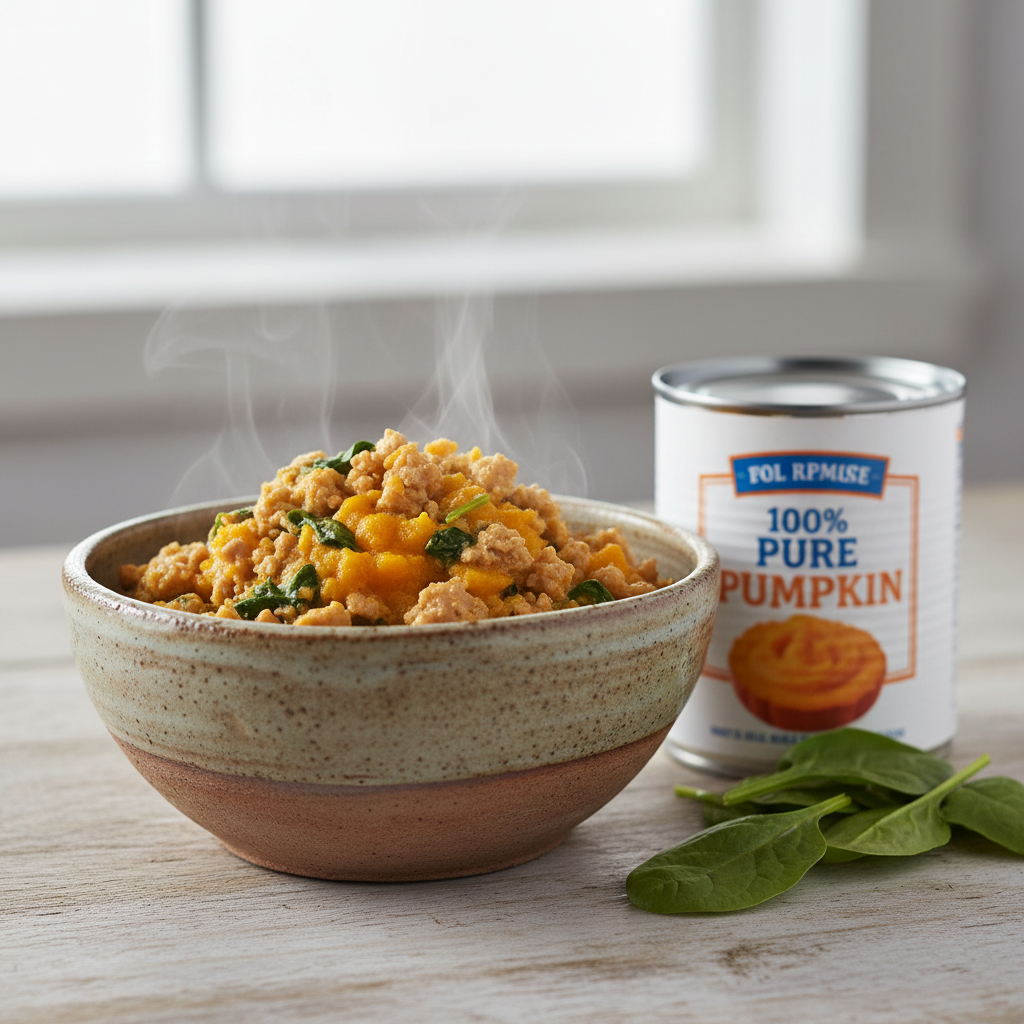
If your Bichon has a sensitive stomach in addition to skin allergies, this recipe is a fantastic choice. Ground turkey is a lean, easily digestible protein that’s less likely to cause a reaction than chicken. Pumpkin is a superstar for digestive health, helping with both constipation and diarrhea, making it a soothing choice for delicate tummies.
Ingredients:
- 1 pound ground turkey (93% lean)
- 1 cup plain, cooked pumpkin puree (NOT pie filling)
- 1/2 cup spinach, finely chopped
- 1/2 cup cooked brown rice or quinoa (ensure your dog tolerates grains)
- 1 tablespoon flaxseed oil
- A vet-approved calcium source (e.g., ground eggshells, as per vet guidance)
Instructions:
- In a large skillet, cook the ground turkey over medium heat until browned, breaking it up into small pieces. Drain off any excess fat.
- Reduce the heat to low and stir in the pumpkin puree, chopped spinach, and cooked rice/quinoa. Cook for another 3-5 minutes, until the spinach is wilted and everything is heated through.
- Remove from heat and stir in the flaxseed oil. This adds extra Omega-3s and should be added after cooking to preserve its nutrients.
- Mix in your vet-approved calcium source. This is critical for balancing the phosphorus in the meat.
- Let the food cool completely to room temperature before serving. Store in the fridge for up to 4 days.
Pros & Cons:
| Pros | Cons |
|---|---|
| Extremely gentle on the digestive system. | Turkey can still be an allergen for a small number of dogs. |
| Pumpkin provides excellent fiber for gut health. | Requires the addition of a calcium supplement to be balanced. |
| Lean protein helps with weight management. | Can be a bit bland for very picky eaters. |
Verdict:
This is the go-to recipe for the Bichon with a double-whammy of skin and tummy troubles. It’s bland enough to be soothing but packed with the nutrients they need to thrive.
3. Lamb & Lentil Stew
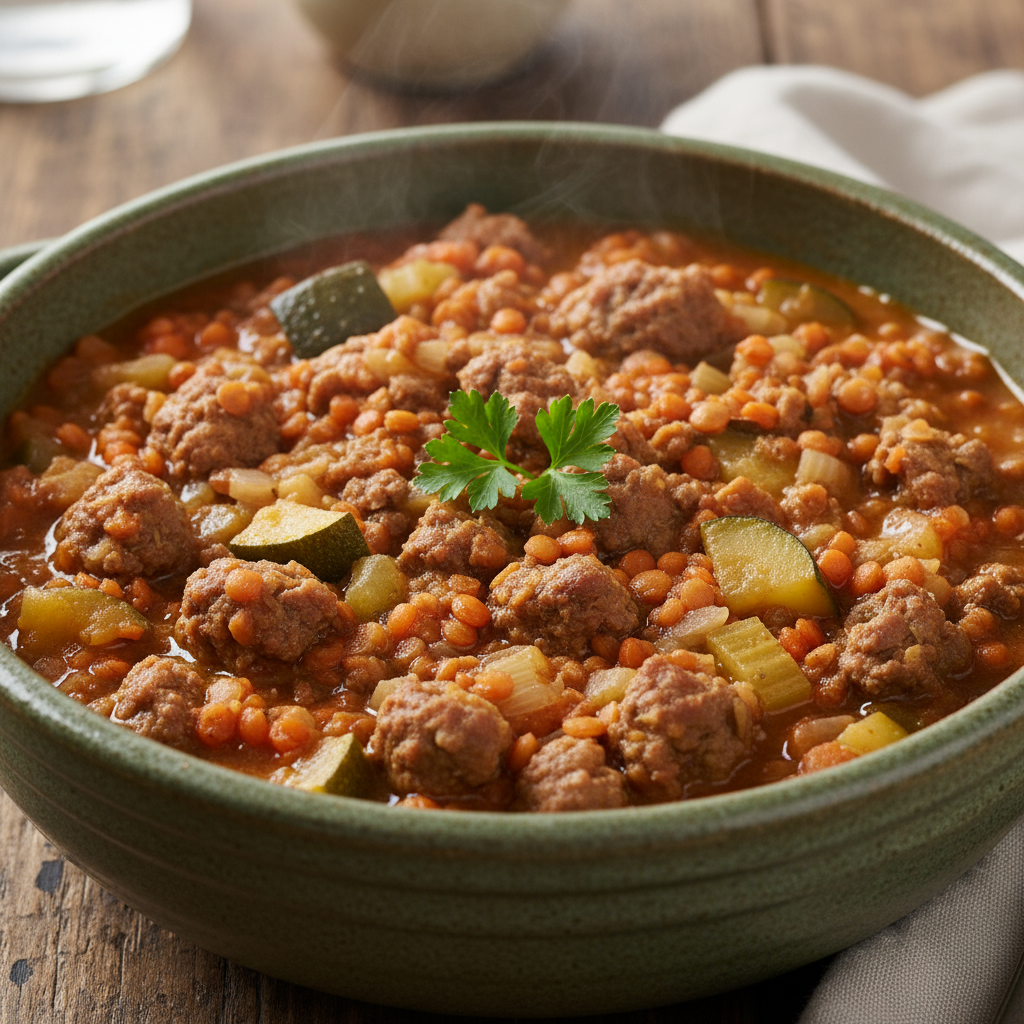
When your dog is allergic to common proteins like chicken and beef, you need to introduce a ‘novel’ protein—one they haven’t been exposed to before. Lamb is a fantastic option. It’s nutrient-rich and often well-tolerated. We’re pairing it with lentils, a grain-free source of fiber, protein, and iron, to create a hearty and satisfying stew.
Ingredients:
- 1 pound ground lamb
- 1/2 cup red lentils, rinsed
- 2 cups water or low-sodium beef broth
- 1 zucchini, chopped
- 2 celery stalks, chopped
- 1 tablespoon chopped fresh parsley
- A vet-approved multivitamin supplement.
Instructions:
- In a large pot or Dutch oven, brown the ground lamb over medium heat. Drain the excess fat.
- Add the rinsed lentils, water or broth, chopped zucchini, and celery to the pot.
- Bring the mixture to a boil, then reduce the heat to low, cover, and let it simmer for 25-30 minutes, or until the lentils are soft and have absorbed most of the liquid.
- Stir occasionally to prevent sticking. If the stew becomes too thick, add a little more water.
- Remove from heat, stir in the fresh parsley, and let it cool completely before serving.
Pros & Cons:
| Pros | Cons |
|---|---|
| Lamb is a great novel protein for allergy trials. | Lentils can cause gas in some sensitive dogs. |
| Grain-free and packed with fiber. | Ground lamb can be fatty; draining excess fat is important. |
| One-pot meal makes for easy cleanup. | Has a longer simmer time than other recipes. |
Verdict:
Perfect for the Bichon who has already shown sensitivities to chicken or beef. This hearty, grain-free stew introduces a new protein that is less likely to trigger an allergic reaction, making it ideal for an elimination diet under vet supervision.
4. Duck & Quinoa Power Bowl
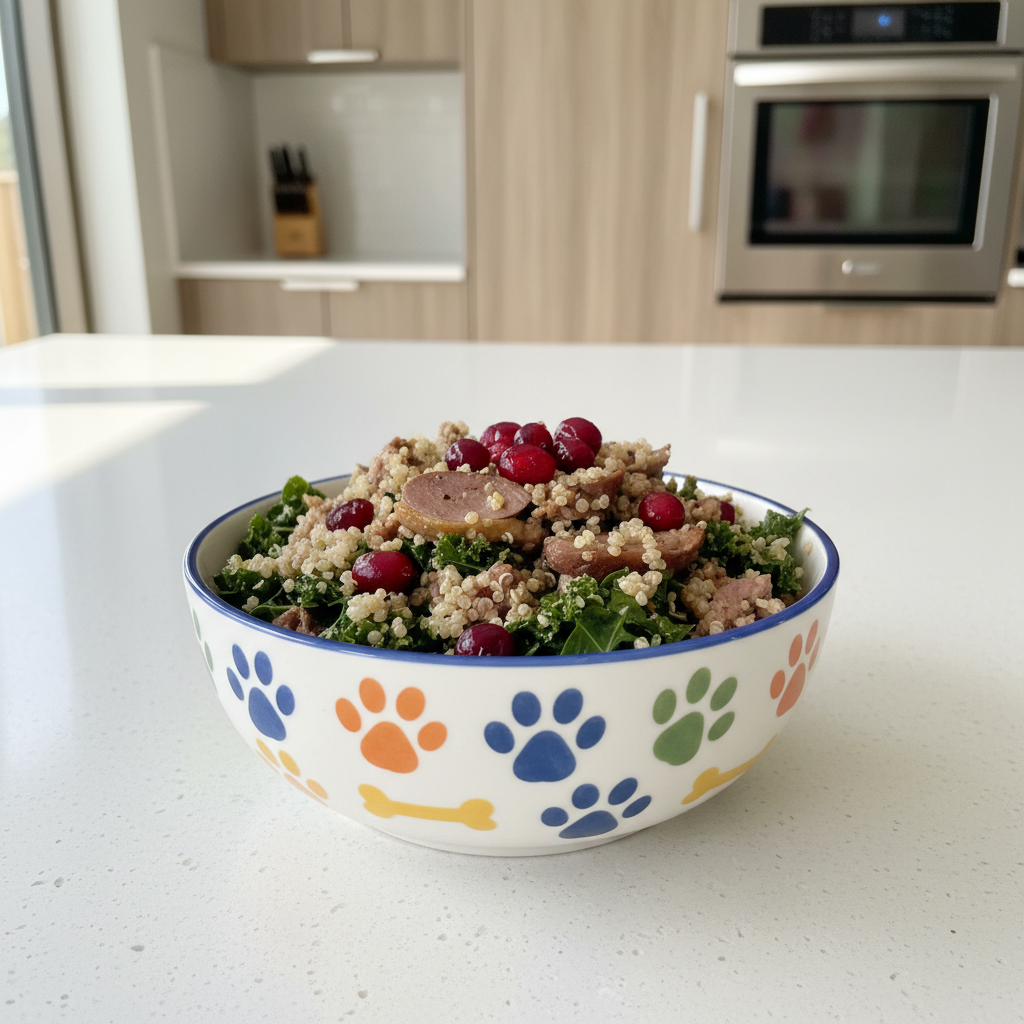
Feeling a bit gourmet? Your Bichon can be, too! Duck is another excellent novel protein that is rich in flavor and packed with iron and amino acids. It’s a slightly fattier meat, which can be great for adding shine to your pup’s coat. We pair it with quinoa, a seed that acts like a grain and is a complete protein, offering all nine essential amino acids.
Ingredients:
- 1 pound ground duck (or boneless duck breast, finely chopped)
- 1/2 cup quinoa, rinsed
- 1 cup water
- 1 cup chopped kale, stems removed
- 1/4 cup fresh or frozen cranberries
- 1 teaspoon coconut oil
Instructions:
- Cook the quinoa according to package directions (usually simmering 1/2 cup quinoa in 1 cup of water for about 15 minutes).
- While the quinoa cooks, heat the coconut oil in a skillet over medium-high heat. Add the ground duck and cook until browned. If using duck breast, cook until the internal temperature is safe. Drain most of the rendered fat, leaving about a teaspoon in the pan.
- Add the chopped kale to the skillet with the duck and cook until wilted.
- In a large bowl, combine the cooked duck and kale, the cooked quinoa, and the cranberries.
- Mix everything together and allow it to cool before serving.
Pros & Cons:
| Pros | Cons |
|---|---|
| Duck is a highly palatable, rich novel protein. | Duck can be difficult to find and is usually expensive. |
| Quinoa is a nutrient-dense, complete protein source. | The higher fat content may not be suitable for dogs with pancreatitis. |
| Cranberries provide antioxidants and support urinary health. | Some dogs may not like the texture of quinoa. |
Verdict:
This is the recipe for the discerning (or picky) Bichon. The rich flavor of duck is often irresistible, and it provides an alternative for dogs who have developed allergies to more common poultry and red meats.
5. Rabbit & Butternut Squash Mash
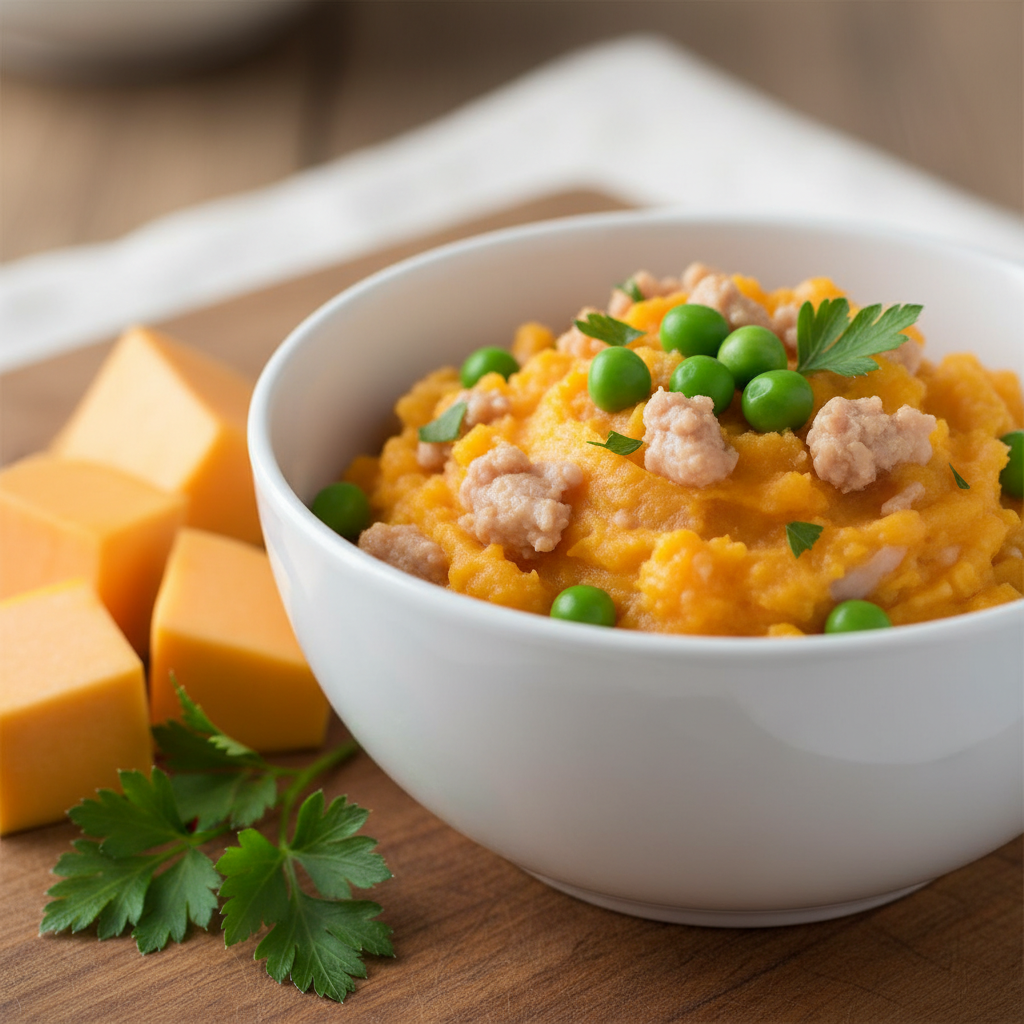
For dogs with severe or multiple allergies, rabbit is often considered a top-tier hypoallergenic protein. It’s extremely lean, easy to digest, and something most dogs have never eaten, making it a true novel protein. Butternut squash provides a sweet, vitamin-rich base that’s also gentle on the stomach.
Ingredients:
- 1 pound ground rabbit
- 2 cups butternut squash, peeled and cubed
- 1/2 cup frozen peas
- 1 tablespoon chopped fresh parsley (aids in fresh breath!)
- A balanced dietary supplement recommended by your vet.
Instructions:
- Steam or boil the butternut squash cubes until they are very tender and easily pierced with a fork. Drain well.
- While the squash is cooking, lightly brown the ground rabbit in a non-stick skillet over medium heat. Rabbit is very lean, so you may not need any oil. Cook until it’s no longer pink.
- In a large bowl, mash the cooked butternut squash.
- Add the cooked ground rabbit, frozen peas (the heat from the mixture will cook them), and fresh parsley to the mashed squash.
- Stir everything together until well combined. The consistency should be like a thick, chunky mash.
- Ensure the food has cooled to room temperature before serving it to your pup.
Pros & Cons:
| Pros | Cons |
|---|---|
| Rabbit is one of the most hypoallergenic proteins available. | Ground rabbit can be very expensive and hard to source. |
| Extremely low in fat, ideal for dogs needing weight management. | The very low-fat content may require supplementation with healthy fats. |
| Simple recipe with minimal ingredients reduces allergy risk. | The unique flavor might not appeal to all dogs initially. |
Verdict:
This is the ultimate elimination diet recipe for the Bichon who seems to be allergic to everything. Its simplicity and the hypoallergenic nature of rabbit make it the safest bet for identifying and calming severe food sensitivities.
6. Pork & Pear Puree
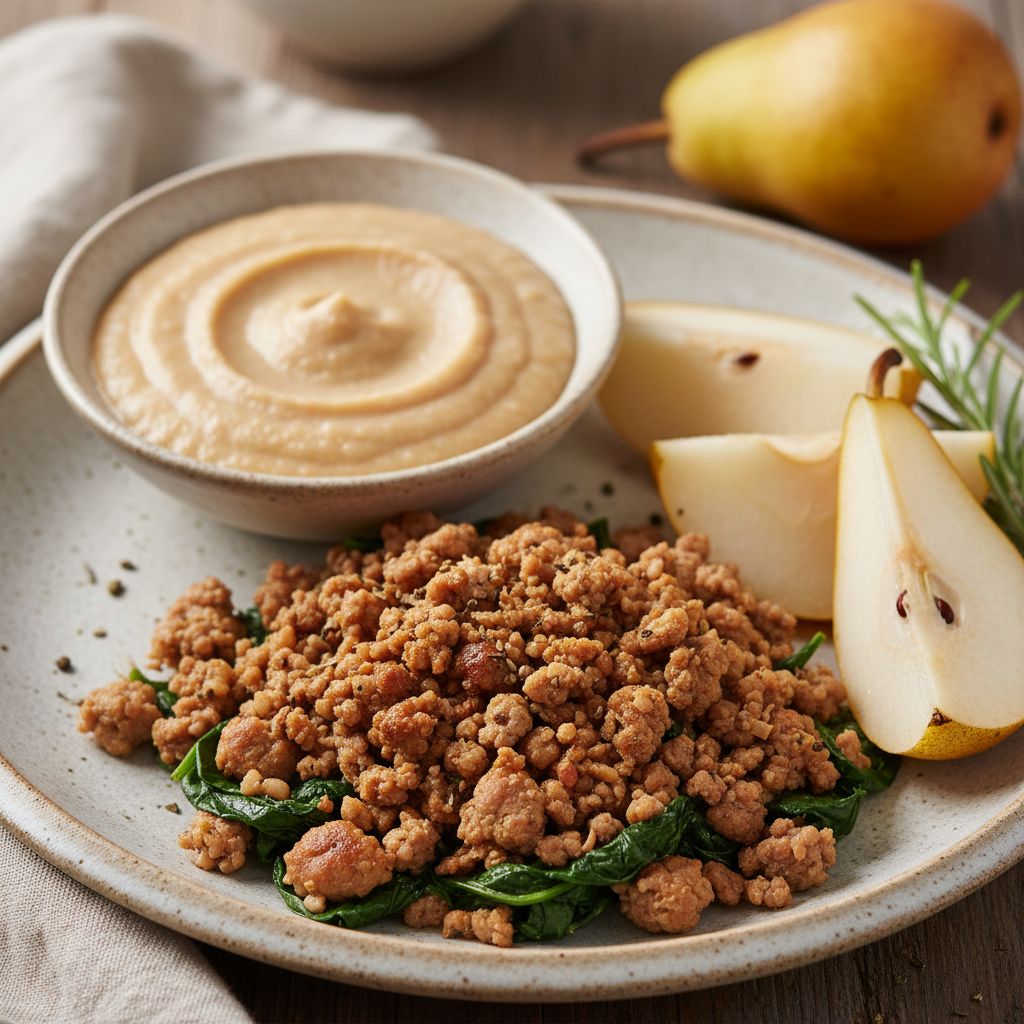
Pork is a surprisingly well-tolerated protein for many dogs who are sensitive to beef and chicken. It’s important to use a lean cut and cook it thoroughly. Pairing it with the gentle fiber of pears adds a touch of natural sweetness and aids digestion. This recipe is simple, savory, and a little bit different.
Ingredients:
- 1 pound ground pork (lean)
- 1 ripe pear (like Bartlett or Bosc), cored and chopped (no seeds!)
- 1 cup chopped broccoli florets, steamed or boiled until soft
- 1 tablespoon ground flaxseed
- Water as needed
Instructions:
- In a large skillet, cook the ground pork over medium heat until it’s fully cooked and no longer pink. Drain off all the excess fat.
- In a blender or food processor, combine the cooked pork, chopped pear, and softened broccoli.
- Add the ground flaxseed.
- Blend until you reach a puree or chunky puree consistency, adding a tablespoon of water at a time if needed to help it blend smoothly.
- Let it cool down completely before serving. This puree can also be frozen in ice cube trays for smaller, portioned treats.
Pros & Cons:
| Pros | Cons |
|---|---|
| Pork is a good alternative protein for many dogs. | Pork must be cooked thoroughly to be safe. |
| The puree texture is great for senior dogs or those with dental issues. | Broccoli can cause gas in some dogs if not introduced slowly. |
| Pears offer a gentle source of fiber and vitamins. | Requires a blender or food processor to prepare. |
Verdict:
This recipe is a great choice for owners looking for a beef/chicken alternative that isn’t as exotic (or expensive) as duck or rabbit. The soft texture also makes it perfect for older Bichons or those with sensitive mouths.
7. Simple Sardine & Oatmeal Scramble
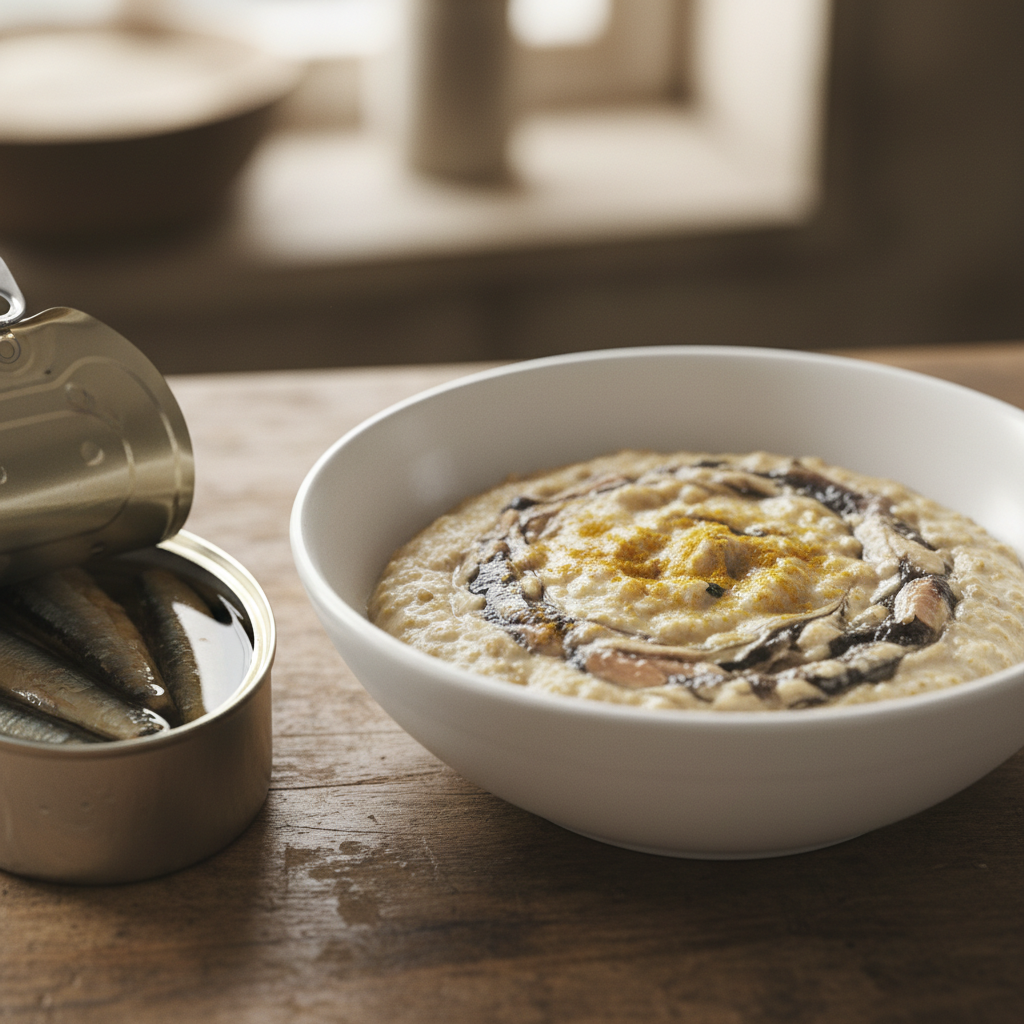
Need a quick, easy, and incredibly beneficial meal? Look no further. Canned sardines (packed in water, no salt added) are one of the best sources of anti-inflammatory Omega-3s you can find. They are tiny fish, low on the food chain, so they have lower levels of mercury. Paired with soothing oatmeal, this is a fast-food meal you can feel great about.
Ingredients:
- 1 can (3.75 oz) sardines in water, no salt added
- 1/2 cup rolled oats
- 1 cup water
- 1/4 teaspoon turmeric (a natural anti-inflammatory)
Instructions:
- In a small saucepan, bring the 1 cup of water to a boil.
- Stir in the rolled oats, reduce heat, and simmer for about 5 minutes, or until the water is absorbed and the oats are cooked.
- Remove the oatmeal from the heat.
- Drain the can of sardines and mash them lightly with a fork.
- Stir the mashed sardines and the turmeric into the warm oatmeal.
- Let the mixture cool to a safe temperature before serving. This makes a smaller meal, perfect for one serving or as a meal topper.
Pros & Cons:
| Pros | Cons |
|---|---|
| Extremely high in anti-inflammatory Omega-3s. | Has a very strong fishy smell that might linger. |
| Very quick and easy to prepare, no major cooking required. | Not a complete meal for long-term feeding without supplements. |
| Inexpensive and uses pantry staples. | Some dogs may be sensitive to grains, even soothing ones like oatmeal. |
Verdict:
This is the perfect recipe for busy pet parents or to use as a supplemental meal topper. It’s an incredible anti-inflammatory boost that you can whip up in under 10 minutes to give your Bichon’s skin some extra support.
A Bichon Owner’s Guide to Homemade Cooking

Switching to a homemade diet is a significant commitment, but it can be incredibly rewarding. To ensure you’re doing it safely and effectively for your allergy-prone Bichon, keep these key principles in mind.
1. Veterinary Consultation is Non-Negotiable
We’ve said it before, but it bears repeating. Before you start, have a detailed conversation with your vet. They know your dog’s health history and can screen for underlying issues. A veterinary nutritionist is even better, as they can formulate recipes that are 100% complete and balanced, often recommending specific supplements to fill any nutritional gaps.
2. The Importance of Balance
You can’t just mix meat and veggies in a bowl and call it a day. Dogs have specific nutritional requirements that differ from ours. The most common mistake in homemade diets is an improper calcium-to-phosphorus ratio. Meat is high in phosphorus, which must be balanced with calcium for bone health, nerve function, and more. This is why many recipes call for a vet-approved calcium source or a comprehensive vitamin/mineral supplement designed for homemade diets.
3. Identifying and Avoiding Common Allergens
While any ingredient can technically be an allergen, the most common culprits for dogs are proteins. Keep an eye out for reactions to:
- Chicken
- Beef
- Dairy
- Eggs
- Wheat
- Soy
- Corn
Our recipes focus on avoiding these, but always watch your dog closely when introducing any new food. Signs of an allergic reaction include itching, hives, swelling, gastrointestinal upset (vomiting/diarrhea), or chronic ear infections.
4. Safe Food Preparation and Storage
Treat your dog’s food with the same care you would your own. Cook all meats thoroughly to kill harmful bacteria. Let food cool completely before serving to prevent burns. Store leftovers in an airtight container in the refrigerator for 3-4 days. For larger batches, portion out meals and freeze them. You can thaw them in the fridge overnight for easy feeding.
Frequently Asked Questions

How much homemade food should I feed my Bichon Frise?
This depends entirely on your dog’s age, weight, activity level, and the specific caloric content of the recipe. A general guideline is to feed 2-3% of their ideal body weight daily, split into two meals. However, this is a rough estimate. Your veterinarian is the best person to help you calculate the exact portion size to maintain a healthy weight.
Can I just feed my dog meat and vegetables?
No, this would create a nutritionally unbalanced diet that could lead to serious health problems over time. A balanced canine diet requires a specific ratio of protein, fat, carbohydrates, and essential micronutrients like calcium, vitamins, and minerals. This is why working with a vet and using supplements designed for homemade diets is so crucial for long-term health.
How do I transition my Bichon to a new homemade diet?
A slow transition is key to avoiding digestive upset. Start by mixing a small amount of the new homemade food (about 25%) with their old food (75%). Over the course of 7-10 days, gradually increase the amount of new food while decreasing the amount of old food until they are eating 100% of the homemade diet. Watch for any signs of stomach upset during this period.
Is a grain-free diet always better for a Bichon with allergies?
Not necessarily. While food allergies are most often linked to proteins, some dogs can be sensitive to grains like wheat or corn. However, many dogs do perfectly well on healthy, whole grains like oatmeal or brown rice. The term ‘grain-free’ became a marketing trend, but it’s not inherently superior for every dog. The focus should be on high-quality, whole-food ingredients that your specific dog tolerates well.
Conclusion
Embarking on a homemade food journey for your Bichon Frise is an incredible act of love. It puts you in the driver’s seat, allowing you to provide fresh, wholesome meals free from the specific ingredients that cause your furry friend discomfort. From the skin-soothing power of salmon to the hypoallergenic properties of rabbit, these seven recipes offer a wonderful starting point to find the perfect match for your pup’s needs.
Remember, the goal is a happy, comfortable dog who spends more time playing and less time scratching. Always partner with your veterinarian to ensure your efforts result in a complete and balanced diet. Cooking for your Bichon can be more than just feeding them; it can be a joyful ritual that deepens your bond and dramatically improves their quality of life. Happy cooking!