7 Savory Homemade Salmon Dog Food Recipes for Shiny Coats
Hey there, fellow dog lover! We all want what’s best for our four-legged family members, right? From squeaky toys to cozy beds, we’re always on the lookout for ways to make their tails wag. But what about their diet? The food we put in their bowl is the foundation of their health, affecting everything from their energy levels to the luster of their coat.
If you’ve ever noticed your pup’s coat looking a little dull or their skin feeling a bit dry, you might be missing a key ingredient: Omega-3 fatty acids. And one of the best sources of this powerhouse nutrient is salmon! Making your own salmon dog food at home is a fantastic way to control exactly what your dog eats, ensuring they get fresh, high-quality ingredients without any of the fillers or preservatives found in some commercial foods.
In this guide, we’re sharing seven savory, simple, and dog-approved homemade salmon recipes that will not only have your pup drooling but will also work wonders for their skin and coat. Let’s get cooking!
Quick Comparison of Our Favorite Recipes
| Recipe Name | Prep & Cook Time | Key Benefit | Best For |
|---|---|---|---|
| The Classic Salmon & Sweet Potato Mash | 35 Minutes | Well-rounded nutrition | All-around health |
| Salmon & Quinoa Power Bowl | 40 Minutes | Complete protein & fiber | Active dogs |
| Simple Salmon & Rice for Sensitive Tummies | 30 Minutes | Gentle and easy to digest | Dogs with sensitive stomachs |
| Grain-Free Salmon & Veggie Medley | 45 Minutes | Low-allergen & vitamin-rich | Dogs with grain sensitivities |
| Frozen Salmon & Blueberry Pupsicles | 15 Mins + Freezing | Cooling & antioxidant-rich | A healthy summer treat |
| Slow Cooker Salmon Stew | 4-6 Hours (Slow Cooker) | Set-it-and-forget-it meal | Busy pet parents |
| Salmon & Egg Scramble Topper | 10 Minutes | Quick protein boost | Enhancing regular kibble |
1. The Classic Salmon & Sweet Potato Mash
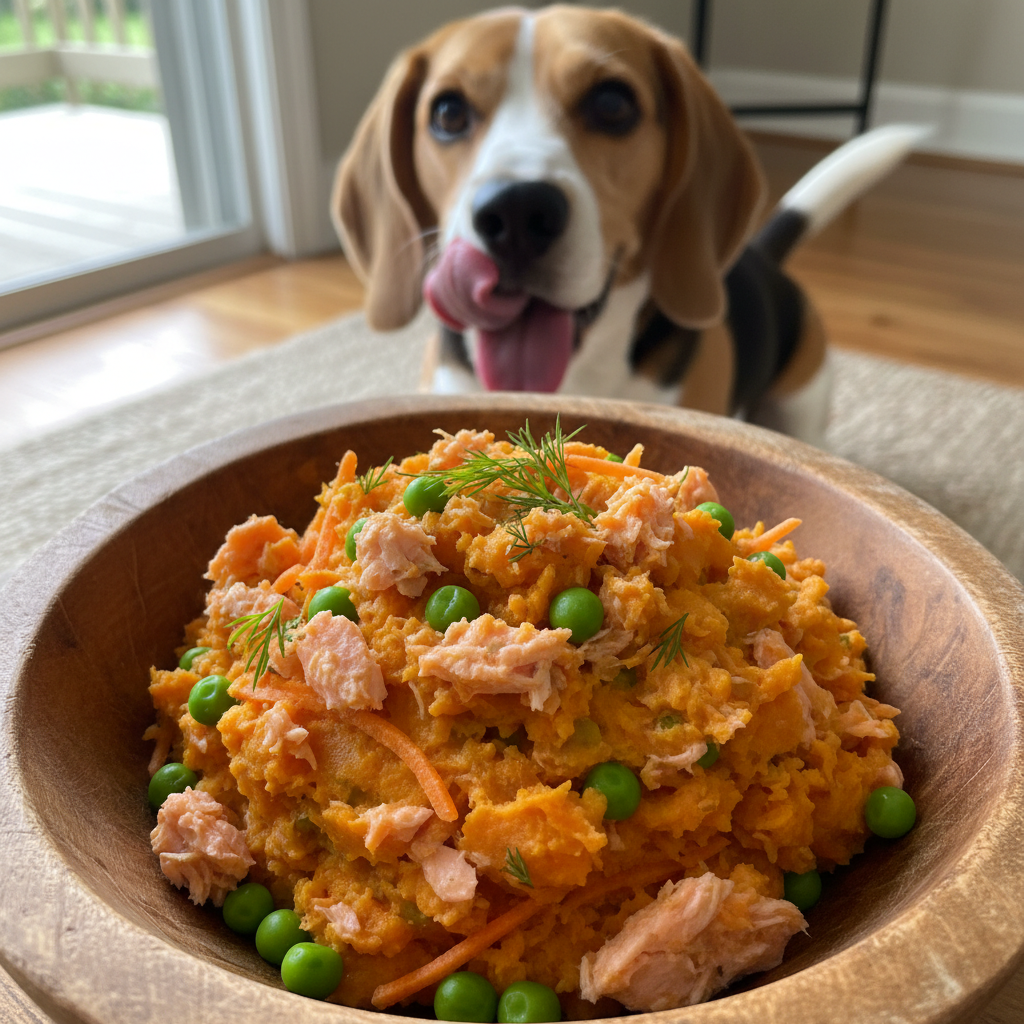
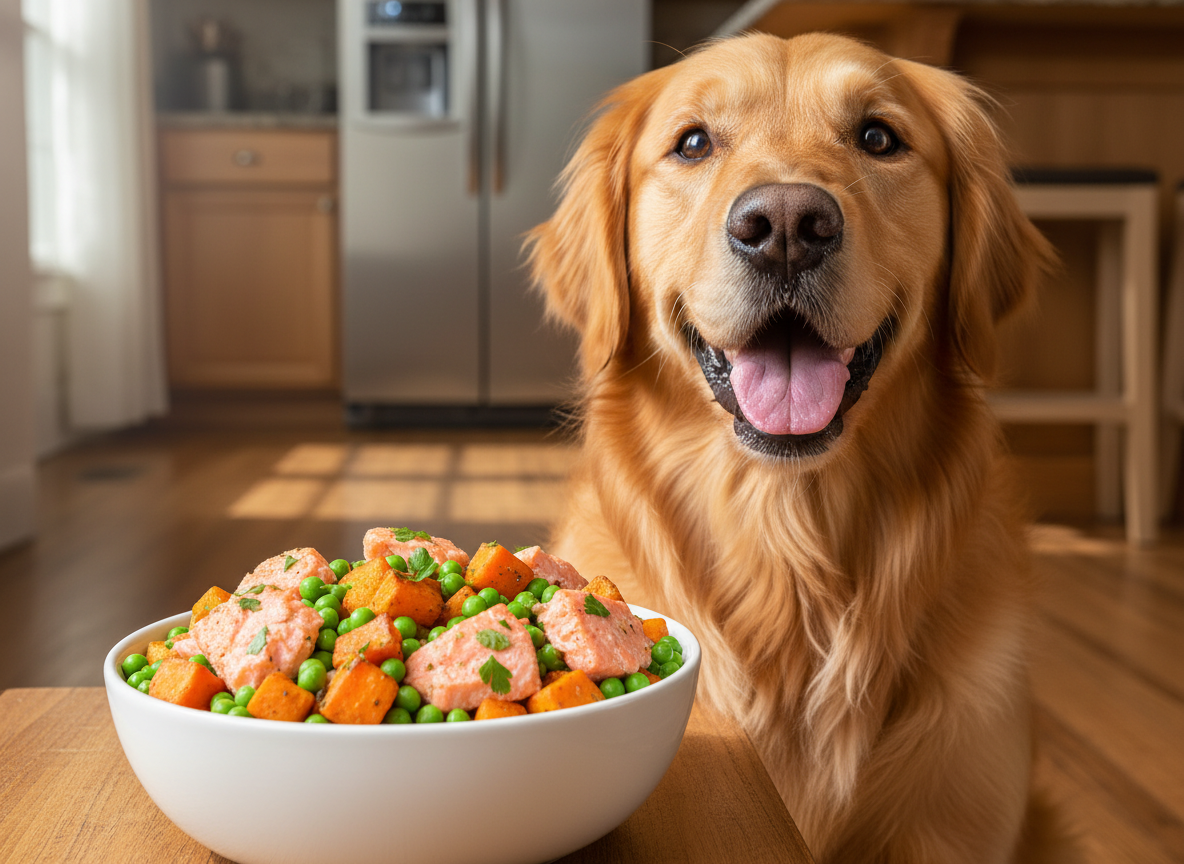
This recipe is a timeless classic for a reason. It combines the Omega-3 powerhouse of salmon with the vitamin-rich, fibrous goodness of sweet potatoes. Carrots and peas add extra nutrients and a touch of sweetness that dogs adore. It’s a well-balanced, hearty meal that’s perfect for any pup needing a coat and health boost.
Ingredients:
- 1 lb salmon fillet, skinless and boneless
- 2 medium sweet potatoes, peeled and diced
- 1 cup frozen peas
- 1 large carrot, shredded
- 1 tablespoon olive oil or coconut oil
- 4 cups of water or low-sodium chicken broth
Instructions:
- In a large pot, bring the water or broth to a boil. Add the diced sweet potatoes and cook for about 10-15 minutes, or until tender.
- Add the salmon fillet to the pot with the sweet potatoes. Let it simmer for another 8-10 minutes, or until the salmon is cooked through and flakes easily with a fork.
- Drain most of the liquid, reserving about a cup.
- Add the shredded carrot, frozen peas, and olive oil to the pot. The heat from the other ingredients will cook them perfectly.
- Use a potato masher or a large fork to mash everything together into a chunky, stew-like consistency. Add some of the reserved liquid if it seems too dry.
- Let the mixture cool completely before serving to your eager pup!
Pros & Cons
Pros:
|
Cons:
|
Verdict:
This is the perfect introductory recipe for pet parents new to homemade dog food. It’s nutritionally balanced, easy to make, and a surefire hit with most dogs. An excellent choice for supporting overall health and achieving that sought-after shiny coat.
2. Salmon & Quinoa Power Bowl

For the active dog in your life, this Power Bowl is packed with everything they need to refuel. Quinoa is a fantastic gluten-free grain that offers all nine essential amino acids, making it a complete protein. Paired with salmon, spinach, and blueberries, this meal is a true superfood celebration.
Ingredients:
- 1 lb salmon fillet, skinless and boneless, cut into chunks
- 1 cup quinoa, rinsed
- 2 cups water or low-sodium beef broth
- 2 cups fresh spinach
- 1/2 cup blueberries (fresh or frozen)
- 1 tablespoon flaxseed oil
Instructions:
- In a medium saucepan, bring the water or broth to a boil. Add the rinsed quinoa, reduce heat to low, cover, and simmer for 15 minutes.
- While the quinoa cooks, bake or pan-sear the salmon chunks until cooked through. This should take about 8-10 minutes.
- Once the quinoa is done, remove it from the heat and let it sit, covered, for 5 minutes. Then, fluff it with a fork.
- In a large mixing bowl, combine the cooked quinoa, salmon chunks, and fresh spinach. The residual heat will gently wilt the spinach.
- Stir in the blueberries and drizzle with flaxseed oil. Mix gently.
- Allow it to cool to room temperature before serving.
Pros & Cons
Pros:
|
Cons:
|
Verdict:
Ideal for athletic or highly active dogs who need sustained energy and muscle support. This recipe is a nutritional powerhouse that supports joint health, cognitive function, and, of course, a dazzling coat.
3. Simple Salmon & Rice for Sensitive Tummies
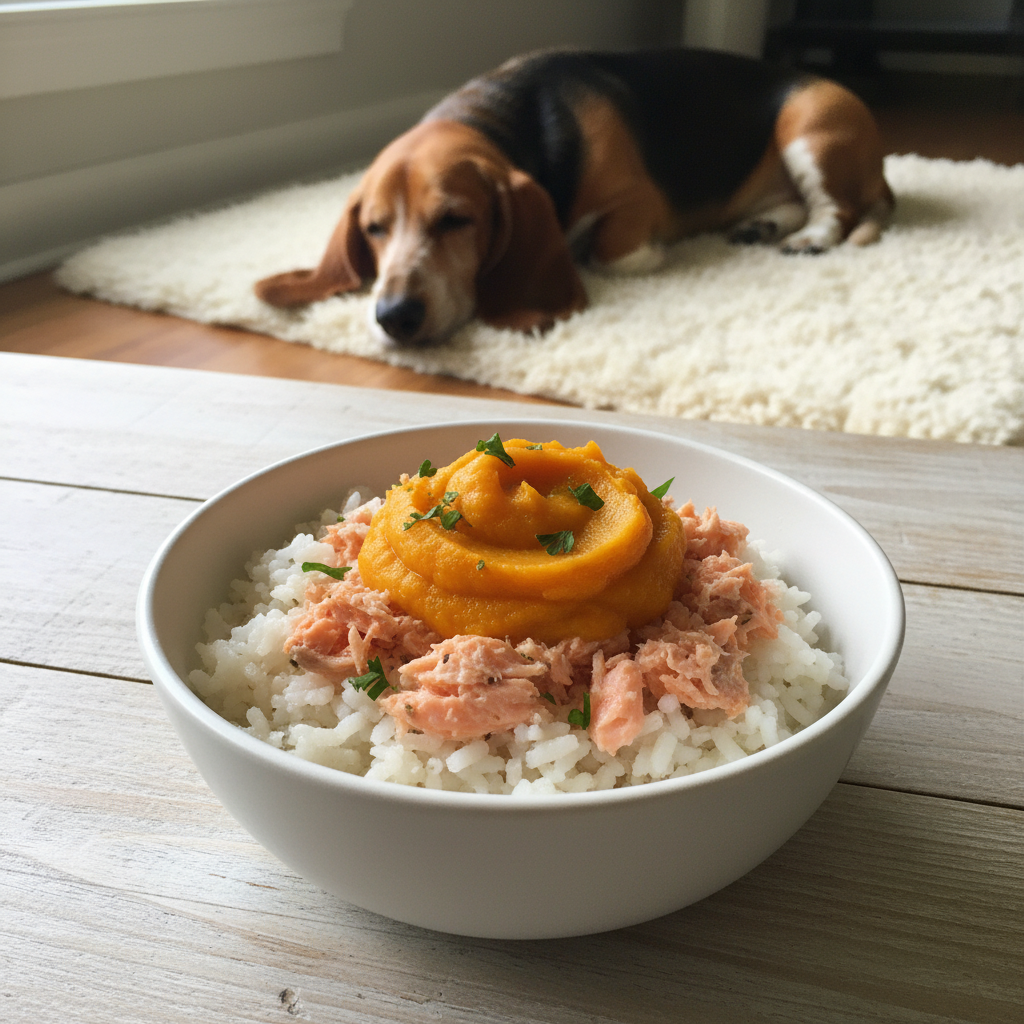
Sometimes, simple is best, especially for our pups with delicate digestive systems. This recipe strips it back to the basics: easily digestible white rice, gentle cooked salmon, and a little bit of pumpkin puree for digestive support. It’s a bland diet with a major nutritional upgrade.
Ingredients:
- 1/2 lb salmon fillet, skinless and boneless
- 1 cup white rice
- 4 cups water
- 1/4 cup plain pumpkin puree (not pie filling!)
Instructions:
- In a pot, bring the 4 cups of water to a boil.
- Add the white rice and the salmon fillet. Reduce the heat and let it simmer for about 20 minutes, or until the rice is soft and has absorbed most of the water.
- The salmon should be fully cooked and falling apart. Drain any excess water.
- Remove the pot from the heat and use a fork to flake the salmon and mix it thoroughly with the rice.
- Stir in the plain pumpkin puree until it’s evenly distributed.
- Let this mixture cool completely. It should be a porridge-like consistency. Serve in small portions.
Pros & Cons
Pros:
|
Cons:
|
Verdict:
This is the go-to recipe for a dog recovering from an upset stomach or for those with chronic digestive sensitivities. It provides the coat-boosting benefits of salmon in a bland, soothing, and easy-to-digest format. Always consult your vet if digestive issues persist.
4. Grain-Free Salmon & Veggie Medley
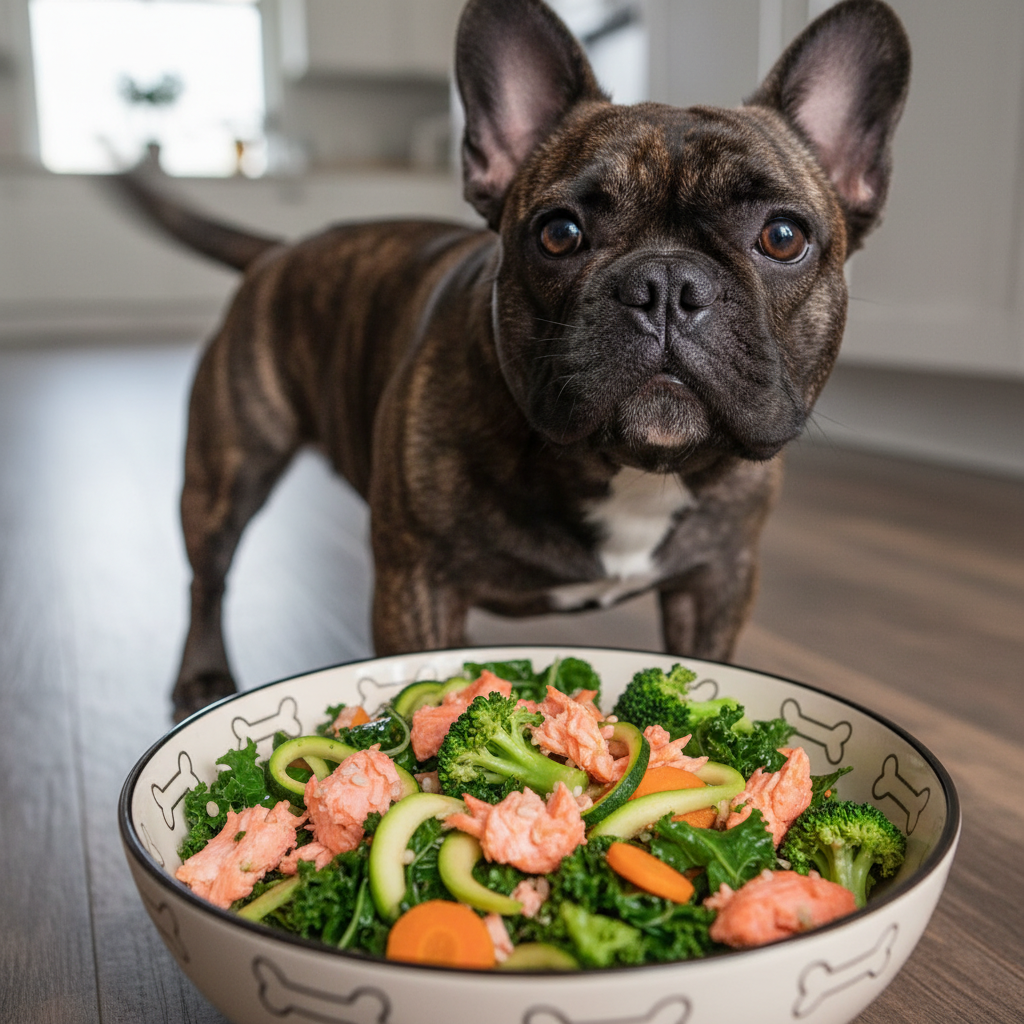
For pups who thrive on a grain-free diet, this recipe is a colorful and delicious dream. It replaces grains with nutrient-dense vegetables like zucchini, broccoli, and kale, providing vitamins, minerals, and fiber. It’s a light yet satisfying meal that’s full of goodness.
Ingredients:
- 1 lb salmon fillet, skinless and boneless
- 1 medium zucchini, chopped
- 1 cup broccoli florets, chopped small
- 2 cups chopped kale, stems removed
- 1 tablespoon coconut oil
- A small splash of water
Instructions:
- Bake or steam the salmon fillet until it’s cooked through, then flake it into small pieces with a fork.
- While the salmon is cooking, heat the coconut oil in a large skillet or pan over medium heat.
- Add the broccoli and zucchini and sauté for 5-7 minutes until they start to soften.
- Add the chopped kale and a small splash of water to the skillet. Cover and let it steam for 2-3 minutes until the kale is wilted and bright green.
- Remove the veggies from the heat and place them in a large mixing bowl.
- Add the flaked salmon to the bowl and toss everything together gently.
- Serve once it has cooled down to a safe temperature.
Pros & Cons
Pros:
|
Cons:
|
Verdict:
An excellent choice for owners who prefer to feed a grain-free diet. This veggie-packed meal provides a wide array of nutrients to support a healthy immune system and a glossy, beautiful coat, without the need for grains.
5. Frozen Salmon & Blueberry Pupsicles
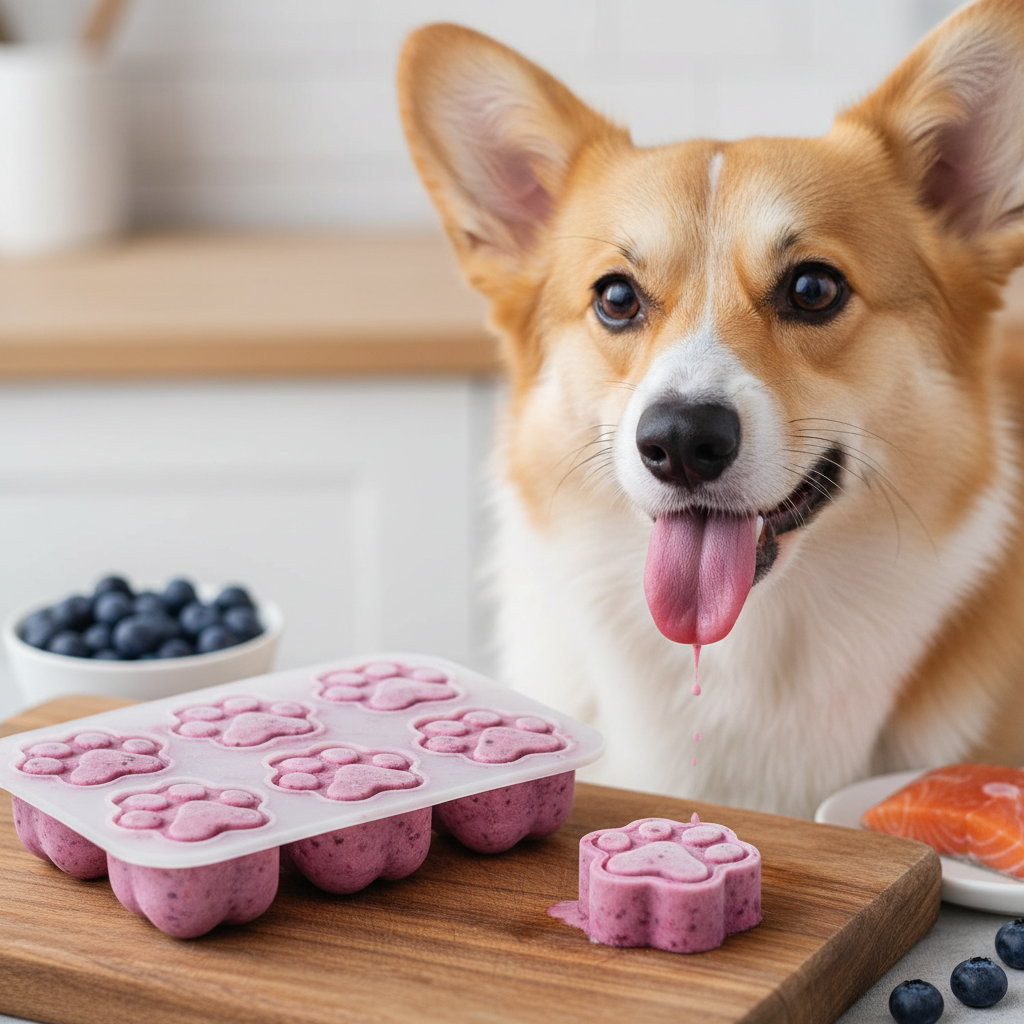
Who says healthy food can’t be a fun treat? These frozen pupsicles are perfect for a hot day or as a special reward. They combine the goodness of salmon with antioxidant-rich blueberries and creamy yogurt, which provides probiotics for gut health. They’re a treat you can feel great about giving!
Ingredients:
- 1/2 cup cooked, flaked salmon (chilled)
- 1/2 cup plain, unsweetened yogurt (ensure it contains no xylitol)
- 1/4 cup blueberries (fresh or frozen)
- 1/4 cup water
Instructions:
- In a blender, combine the cooked salmon, plain yogurt, blueberries, and water.
- Blend until the mixture is smooth. It will be a lovely purplish-pink color.
- Pour the mixture into silicone ice cube trays or small paper cups.
- For a fun touch, you can stick a dog-safe chew, like a carrot stick or a dental stick, into the center to act as a ‘popsicle stick’.
- Freeze for at least 4 hours, or until solid.
- Pop one out and serve it to your pup for a cooling, delicious, and healthy treat.
Pros & Cons
Pros:
|
Cons:
|
Verdict:
This recipe is for every pet parent who wants to spoil their dog with a treat that’s both fun and incredibly healthy. It’s a fantastic way to add some extra Omega-3s and antioxidants to their diet, especially during the summer months.
6. Slow Cooker Salmon Stew
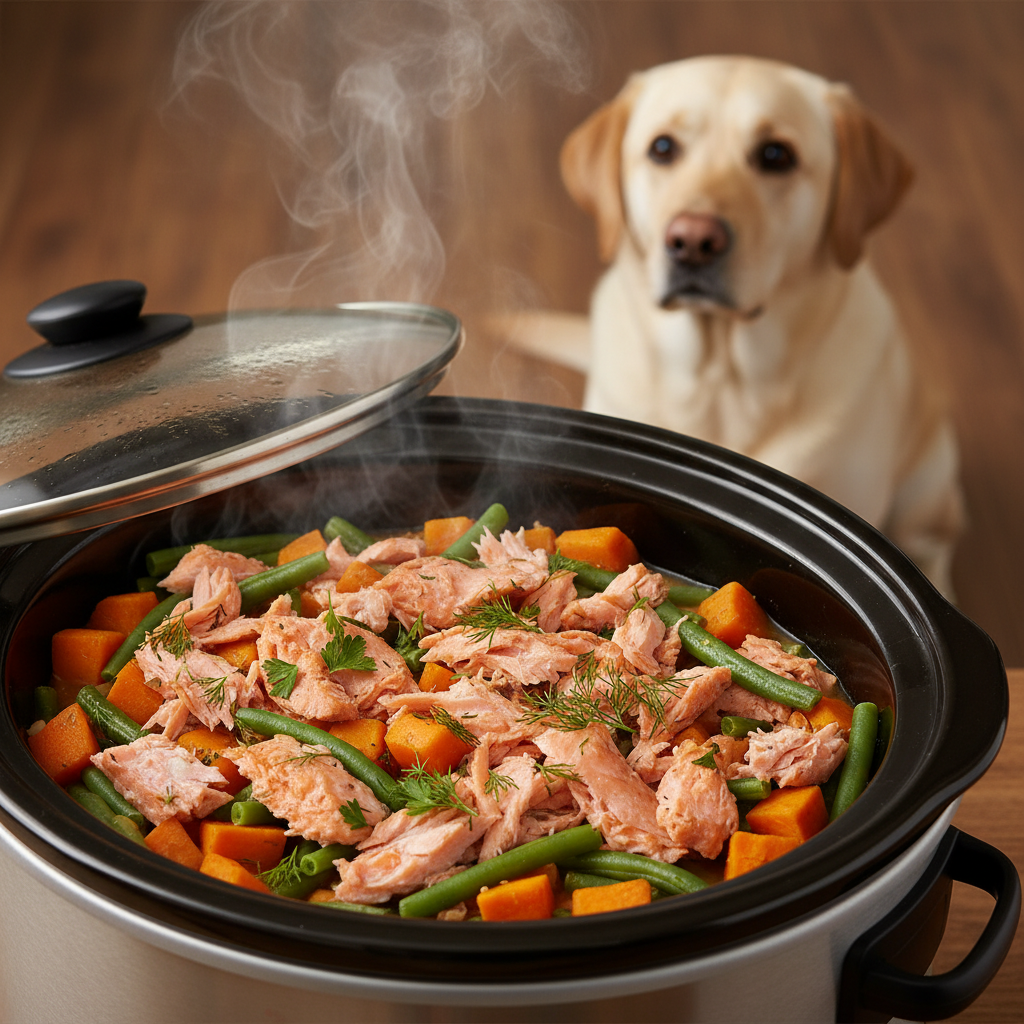
For the busy pet parent, the slow cooker is a lifesaver. This ‘set-it-and-forget-it’ recipe allows you to go about your day while a delicious, nutrient-rich stew simmers away for your pup. The slow cooking process makes the ingredients incredibly tender and creates a savory broth your dog will lap up.
Ingredients:
- 1 lb salmon fillet, skinless and boneless
- 2 sweet potatoes, peeled and cubed
- 2 carrots, peeled and sliced
- 1/2 cup green beans, trimmed and chopped
- 4 cups low-sodium chicken or vegetable broth
- 1 teaspoon dried parsley
Instructions:
- Place the sweet potatoes, carrots, and green beans in the bottom of your slow cooker.
- Lay the salmon fillet on top of the vegetables.
- Pour the broth over everything and sprinkle with dried parsley.
- Cover and cook on low for 6-8 hours or on high for 3-4 hours.
- About 30 minutes before serving, use two forks to shred the salmon and stir it into the stew.
- Let it cool down significantly before serving. This stew stores beautifully in the fridge for several days.
Pros & Cons
Pros:
|
Cons:
|
Verdict:
This recipe is a game-changer for busy dog owners who still want to provide a fresh, homemade meal. It’s a warm, comforting, and hydrating stew that’s packed with all the nutrients needed for a healthy, shiny coat.
7. Salmon & Egg Scramble Topper

Not ready to switch to a fully homemade diet? No problem! A meal topper is a perfect way to add a boost of fresh nutrients to your dog’s existing kibble. This quick scramble combines salmon and egg for a double dose of protein and healthy fats that will entice even the pickiest eaters.
Ingredients:
- 1/4 lb cooked salmon, flaked
- 2 eggs
- 1 teaspoon coconut oil
- A pinch of turmeric (optional, for anti-inflammatory benefits)
Instructions:
- Heat the coconut oil in a small non-stick skillet over medium heat.
- Crack the eggs into a small bowl and whisk them lightly.
- Pour the eggs into the skillet and cook, stirring gently, as you would for scrambled eggs.
- When the eggs are almost set, add the flaked salmon and the pinch of turmeric (if using).
- Continue to stir for another minute until the eggs are fully cooked and the salmon is heated through.
- Let it cool, then serve a spoonful or two over your dog’s regular food.
Pros & Cons
Pros:
|
Cons:
|
Verdict:
Perfect for pet parents who want to supplement their dog’s diet with the benefits of salmon without committing to a full homemade meal. It’s a fast, easy, and delicious way to make any bowl of kibble more exciting and nutritious.
Your Guide to Making Safe & Nutritious Homemade Dog Food
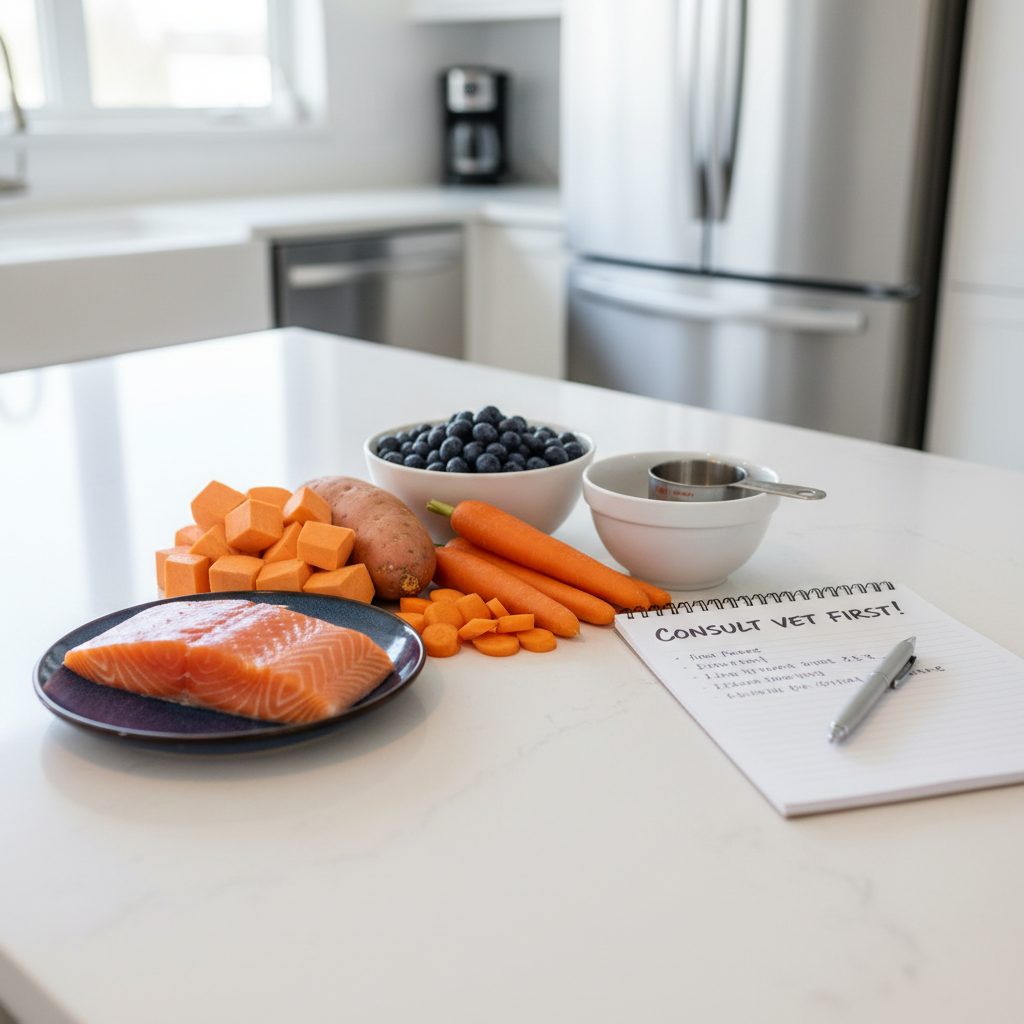
Switching to homemade dog food is an amazing act of love, but it comes with responsibility. Unlike commercial kibble, which is formulated to be nutritionally complete, homemade meals require careful planning to ensure your dog gets everything they need. Here are some essential tips to follow:
Always Talk to Your Vet
This is the most important step. Before you make any significant changes to your dog’s diet, consult your veterinarian or a board-certified veterinary nutritionist. They can help you formulate recipes that are balanced and appropriate for your dog’s specific age, breed, size, and health condition. They can also recommend necessary supplements, like calcium, which are often lacking in homemade diets.
Focus on Balance
A shiny coat is great, but it’s just one piece of the health puzzle. A balanced canine diet requires a mix of protein (like our salmon), healthy fats, carbohydrates, and essential vitamins and minerals. The recipes above are great starting points, but for long-term feeding, they will likely need to be adjusted or supplemented to be complete. A veterinary nutritionist can provide guidance on adding things like calcium (from eggshells or supplements), zinc, and other vital nutrients.
Know Your Unsafe Ingredients
While we’re adding lots of good stuff, it’s crucial to know what to leave out. Many human foods are toxic to dogs. Never include the following in your dog’s food:
- Onions, garlic, chives
- Chocolate
- Grapes and raisins
- Avocado
- Macadamia nuts
- Xylitol (an artificial sweetener found in many products)
- Cooked bones (they can splinter and cause serious injury)
Proper Cooking and Storage
Always cook fish and meat thoroughly to kill any harmful bacteria like Salmonella or Listeria. Homemade dog food doesn’t have preservatives, so it’s perishable. Store it in an airtight container in the refrigerator for up to 3-4 days. For larger batches, portion out the food and freeze it. It can be stored in the freezer for up to 3 months. Just be sure to thaw it completely in the refrigerator before serving.
Frequently Asked Questions

Can I use canned salmon instead of fresh?
Yes, you can! Canned salmon is a convenient and often more affordable option. Just make sure to choose salmon packed in water, not oil, and with no added salt. If it’s bone-in, the bones are typically very soft and edible, providing a great source of calcium. Just mash them up well.
How much homemade food should I feed my dog?
This depends entirely on your dog’s age, weight, metabolism, and activity level. A general guideline is to feed 2-3% of their ideal body weight in total food per day. However, this is just a starting point. The best approach is to consult your vet for a precise recommendation and monitor your dog’s weight and body condition, adjusting portions as needed.
Is salmon skin safe for dogs to eat?
Yes, cooked salmon skin is safe for dogs in moderation. It’s rich in the same Omega-3 fatty acids as the flesh. However, it is very high in fat, so it should be given as a small treat. Never feed your dog raw salmon skin, and ensure it is unseasoned.
How often can my dog eat salmon?
While salmon is very healthy, variety is key to a balanced diet. Serving salmon two to three times a week is a great way to incorporate its benefits without overdoing it. Rotating proteins (like chicken, turkey, or beef) can help provide a broader range of nutrients and prevent the development of food sensitivities.
Conclusion
There you have it! Seven delicious, healthy, and tail-waggingly good homemade salmon recipes to give your best friend the gift of a glowing coat and a happy tummy. Cooking for your dog is more than just feeding them; it’s a profound way to connect and show them how much you care. By taking control of their bowl, you’re providing them with fresh, wholesome nutrition that can make a visible difference in their health.
Remember to start slow, introduce new foods gradually, and always keep your vet in the loop. Whether you try the classic mash, the fun pupsicles, or the convenient slow cooker stew, you’re taking a wonderful step towards a healthier, happier life for your furry companion. Happy cooking!