13 Diabetic-Friendly Low Glycemic Dog Food Recipes
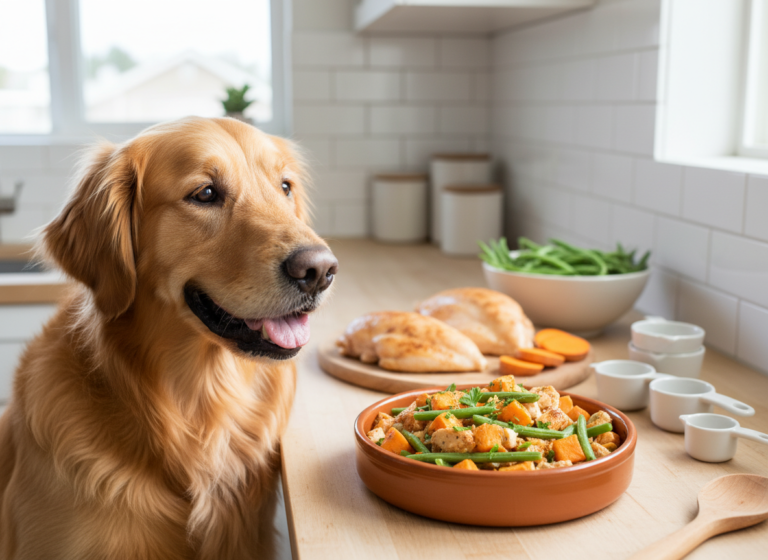
Hearing the words ‘your dog has diabetes’ can feel overwhelming. Suddenly, you’re not just a pet parent; you’re a caregiver, a nurse, and a chef, all rolled into one. Your dog’s diet becomes the cornerstone of their treatment, and finding the right food is crucial. The goal is to manage their blood sugar levels, keeping them stable to avoid dangerous spikes and dips. That’s where low-glycemic foods come in—they release glucose slowly, providing sustained energy without the rollercoaster effect.
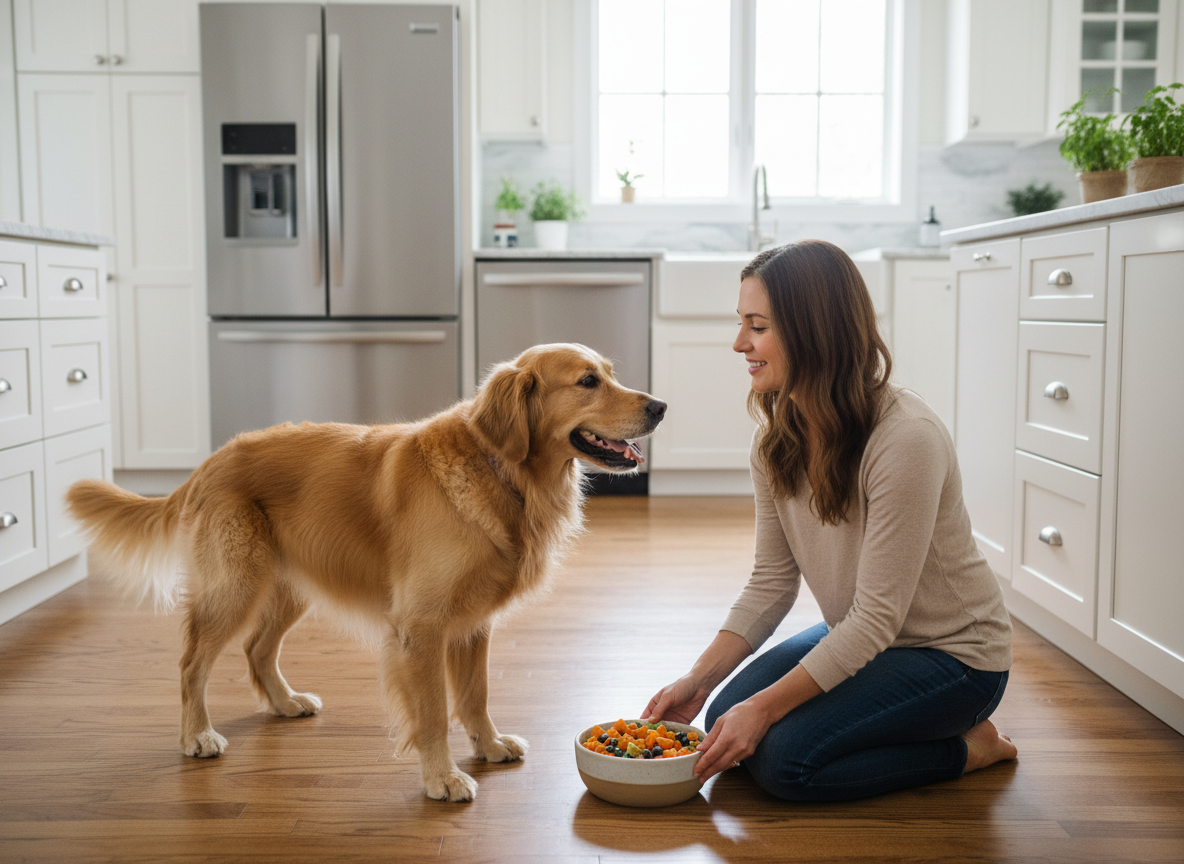
While many commercial diabetic dog foods exist, cooking for your dog at home gives you complete control over every single ingredient. You can ensure there are no hidden sugars, fillers, or artificial additives. Plus, it’s an act of love that can strengthen your bond. We’ve compiled 13 delicious, diabetic-friendly, and low-glycemic recipes that are packed with nutrients to support your dog’s overall health.
Important Note: Before making any changes to your dog’s diet, it is absolutely essential to consult with your veterinarian or a veterinary nutritionist. They can help you tailor these recipes to your dog’s specific needs, including portion sizes and caloric intake.
Quick Recipe Comparison
| Recipe | Primary Protein | Key Low-GI Carb | Best For |
|---|---|---|---|
| Lean Turkey & Quinoa Delight | Turkey | Quinoa | Dogs needing a lean, high-protein meal. |
| Chicken & Lentil Stew | Chicken | Lentils | Dogs who enjoy a hearty, stew-like texture. |
| Beef & Barley Mash | Beef | Barley | Active dogs needing sustained energy. |
| Salmon & Sweet Potato Bake | Salmon | Sweet Potato | Improving skin and coat health. |
| Cod & Green Bean Scramble | Cod | Green Beans | Sensitive stomachs and weight management. |
| Bison & Pumpkin Power Bowl | Bison | Pumpkin | Dogs with poultry allergies. |
| Venison & Cauliflower Rice | Venison | Cauliflower | A novel protein for food sensitivities. |
| Egg & Spinach Frittata Muffins | Eggs | Spinach | Easy portion control and meal prep. |
| Sardine & Broccoli Mash | Sardines | Broccoli | A budget-friendly omega-3 boost. |
| Lamb & Green Lentil Loaf | Lamb | Green Lentils | Picky eaters who like a meatloaf texture. |
| Duck & Asparagus Medley | Duck | Asparagus | Another great novel protein option. |
| Rabbit & Zucchini Stir-Fry | Rabbit | Zucchini | Extremely lean and hypoallergenic choice. |
| Chicken Liver & Kale Pâté | Chicken Liver | Kale | Nutrient-dense meal for extra vitality. |
1. Lean Turkey and Quinoa Delight
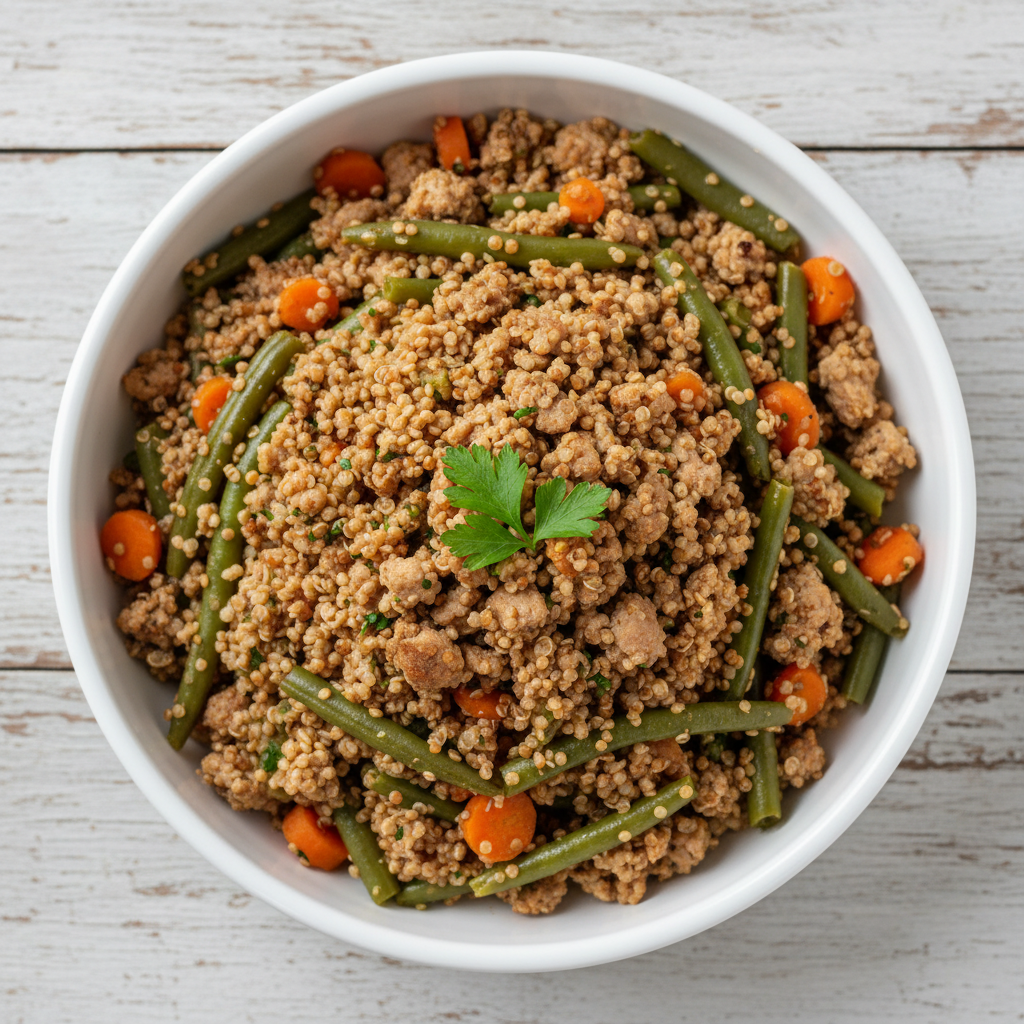
This recipe is a fantastic starting point for any pet parent new to homemade dog food. Ground turkey is incredibly lean, making it great for weight management, which is often a concurrent goal for diabetic dogs. Quinoa, often mistaken for a grain, is actually a seed packed with protein and fiber, boasting a low glycemic index.
Ingredients:
- 1 lb ground turkey (93% lean or higher)
- 1 cup cooked quinoa
- 1 cup chopped green beans
- 1/2 cup chopped carrots
- 1 tablespoon olive oil
- 1/4 cup water
Instructions:
- Cook the quinoa according to package directions and set aside.
- In a large skillet or pot, heat the olive oil over medium heat. Add the ground turkey and cook until browned, breaking it up with a spoon.
- Drain off any excess fat from the turkey.
- Add the chopped green beans, carrots, and water to the skillet. Cover and simmer for 10-15 minutes, or until the vegetables are tender.
- Remove from heat and stir in the cooked quinoa.
- Let the mixture cool completely before serving.
Pros & Cons
Pros
|
Cons
|
Verdict:
An excellent, well-rounded meal for dogs who need a lean, high-protein diet to manage both their diabetes and their weight. It’s simple to make and stores well in the fridge for several days.
2. Chicken & Lentil Stew
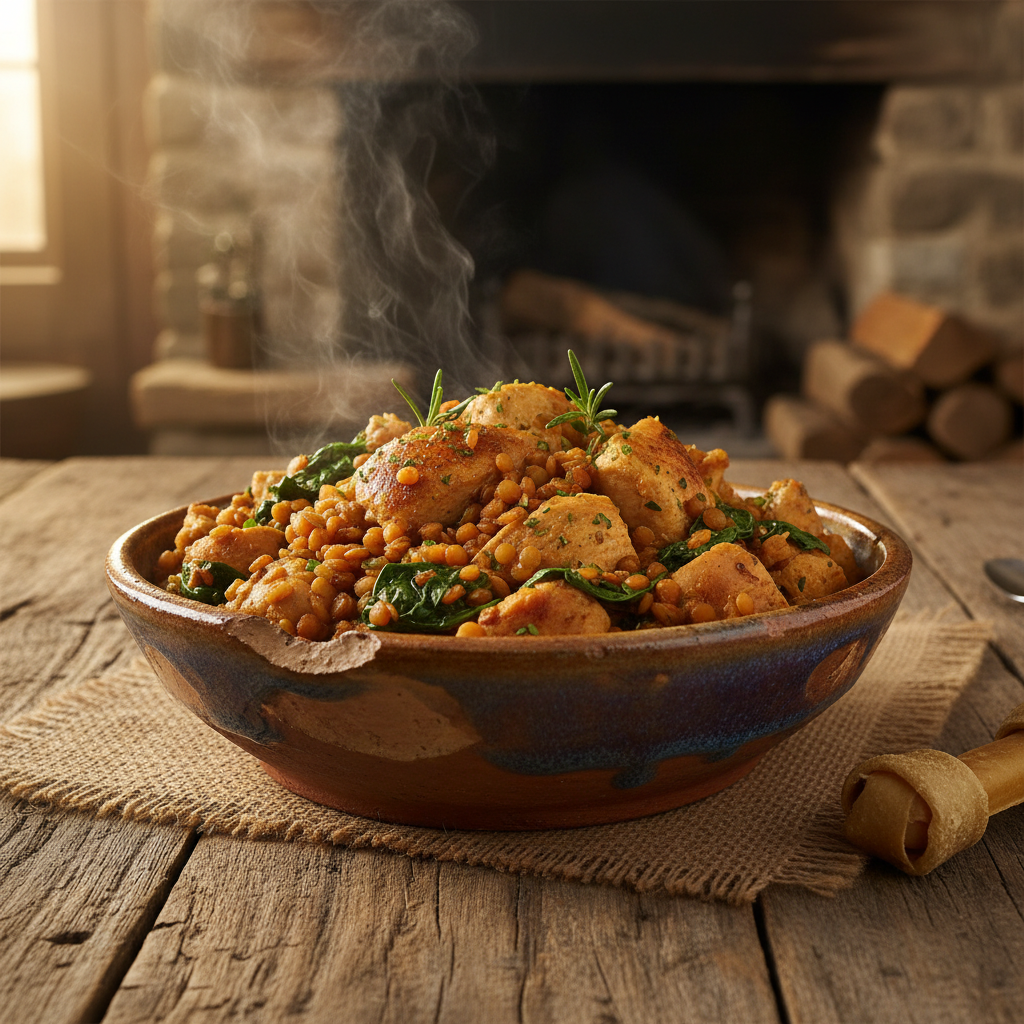
A warm, hearty stew that feels like a comfort meal for your pup. Chicken breast is a classic lean protein, while lentils are a fiber-powerhouse. This high-fiber content helps slow down digestion and the absorption of sugar, preventing sharp spikes in blood glucose.
Ingredients:
- 1 lb boneless, skinless chicken breast, cubed
- 1 cup brown or green lentils, rinsed
- 4 cups low-sodium chicken broth (or water)
- 1 cup chopped celery
- 1 cup chopped spinach
- 1 teaspoon dried parsley
Instructions:
- In a large pot, combine the chicken broth, rinsed lentils, and cubed chicken.
- Bring to a boil, then reduce heat and simmer for 25-30 minutes, or until the lentils are tender and the chicken is cooked through.
- Stir in the chopped celery and spinach, and cook for another 5 minutes until the spinach has wilted.
- Remove from heat and stir in the parsley.
- Allow the stew to cool to a safe temperature before serving. You can mash it slightly for smaller dogs.
Pros & Cons
Pros
|
Cons
|
Verdict:
Perfect for dogs who enjoy a softer, wetter food. The high fiber content makes it exceptionally good for blood sugar regulation, but be sure to introduce it slowly to allow your dog’s digestive system to adjust.
3. Beef & Barley Mash
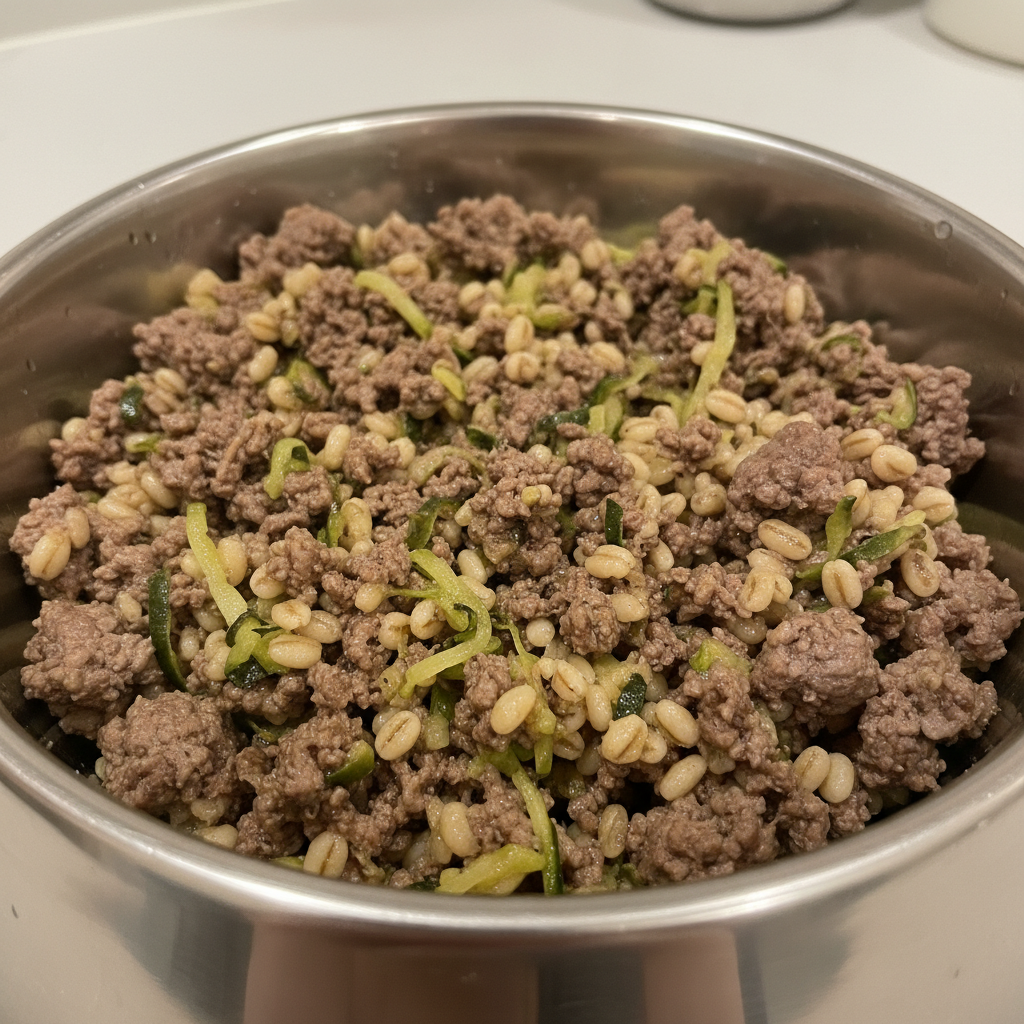
For the more active diabetic dog, this recipe provides robust flavor and sustained energy. Lean ground beef offers iron and protein, while barley is a fantastic low-glycemic whole grain that’s packed with soluble fiber, which aids in slowing sugar absorption.
Ingredients:
- 1 lb lean ground beef (90% lean or higher)
- 1 cup cooked pearl barley
- 1 cup finely grated zucchini
- 1/2 cup beef broth (low-sodium)
- 1 tablespoon flaxseed oil
Instructions:
- Cook the barley according to package directions and set aside.
- In a large skillet, cook the ground beef over medium heat until browned. Drain all fat.
- Add the grated zucchini and beef broth to the skillet. Cook for 5-7 minutes until the zucchini is soft.
- Remove from heat. Stir in the cooked barley and the flaxseed oil.
- Mix everything thoroughly and let it cool before serving.
Pros & Cons
Pros
|
Cons
|
Verdict:
A great choice for active dogs without poultry sensitivities who need a little extra energy. The combination of protein, fiber, and healthy fats makes this a satisfying and stabilizing meal.
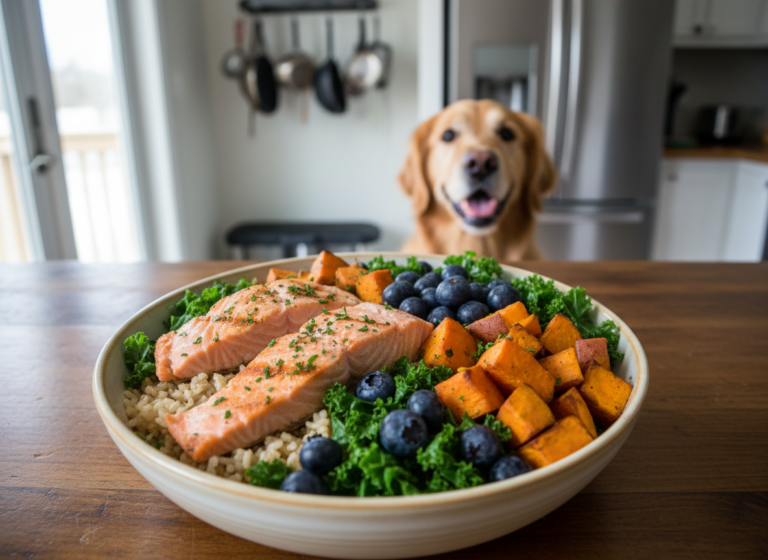
4. Salmon & Sweet Potato Bake
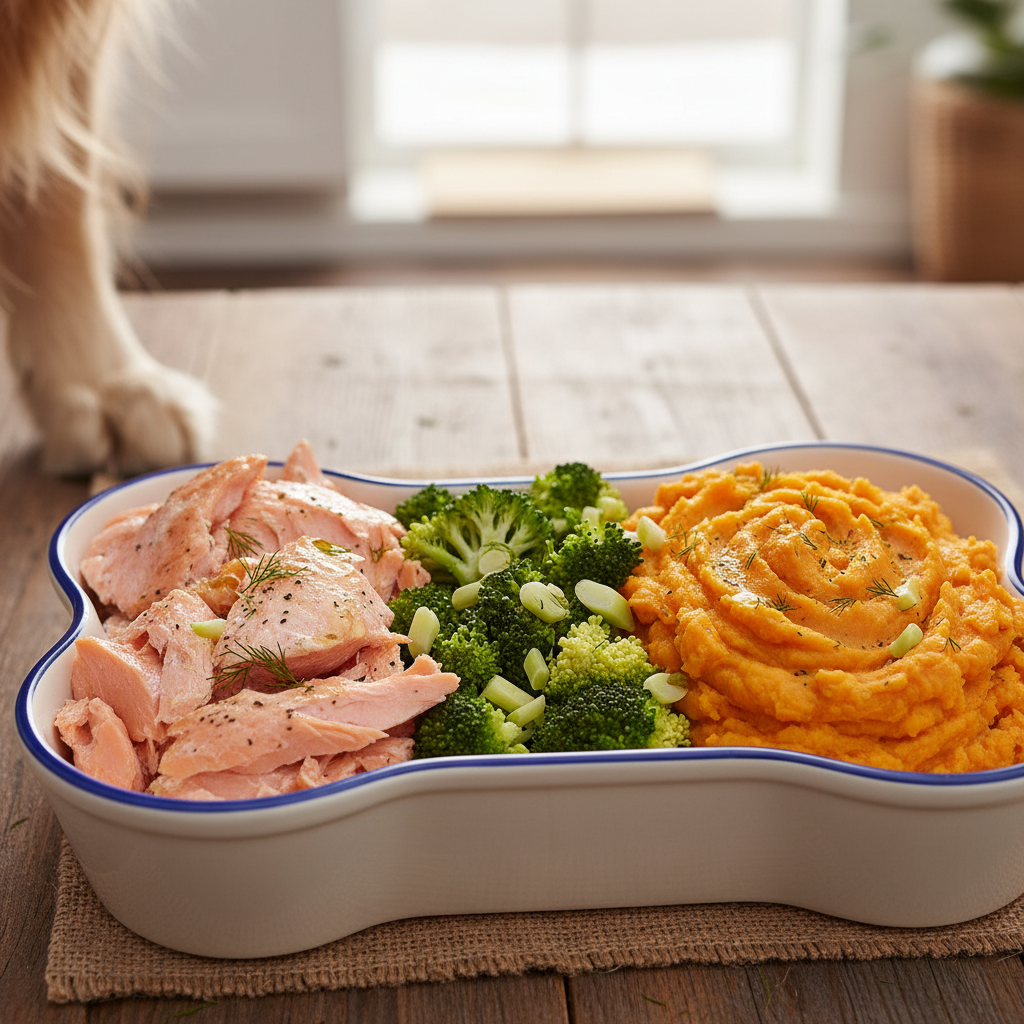
This recipe is a powerhouse of anti-inflammatory omega-3 fatty acids, thanks to the salmon. Sweet potatoes, when boiled and served in moderation, have a lower glycemic index than white potatoes and are full of vitamins and fiber. This bake is fantastic for skin, coat, and joint health.
Ingredients:
- 1 lb salmon fillet, skin removed
- 1 large sweet potato, peeled and cubed
- 1 cup broccoli florets
- 1 tablespoon coconut oil, melted
Instructions:
- Preheat your oven to 400°F (200°C).
- Boil the cubed sweet potato for 15-20 minutes until tender. Drain and mash it.
- While the potato boils, place the salmon fillet and broccoli florets on a baking sheet lined with parchment paper.
- Drizzle the melted coconut oil over the salmon and broccoli.
- Bake for 12-15 minutes, or until the salmon is cooked through and flakes easily.
- Let the salmon and broccoli cool, then flake the salmon into small pieces and chop the broccoli.
- In a large bowl, gently combine the mashed sweet potato, flaked salmon, and chopped broccoli.
- Serve once fully cooled.
Pros & Cons
Pros
|
Cons
|
Verdict:
An ideal meal for dogs with dry skin, dull coats, or joint stiffness. The anti-inflammatory properties are a huge bonus for overall diabetic health management.
5. Cod & Green Bean Scramble
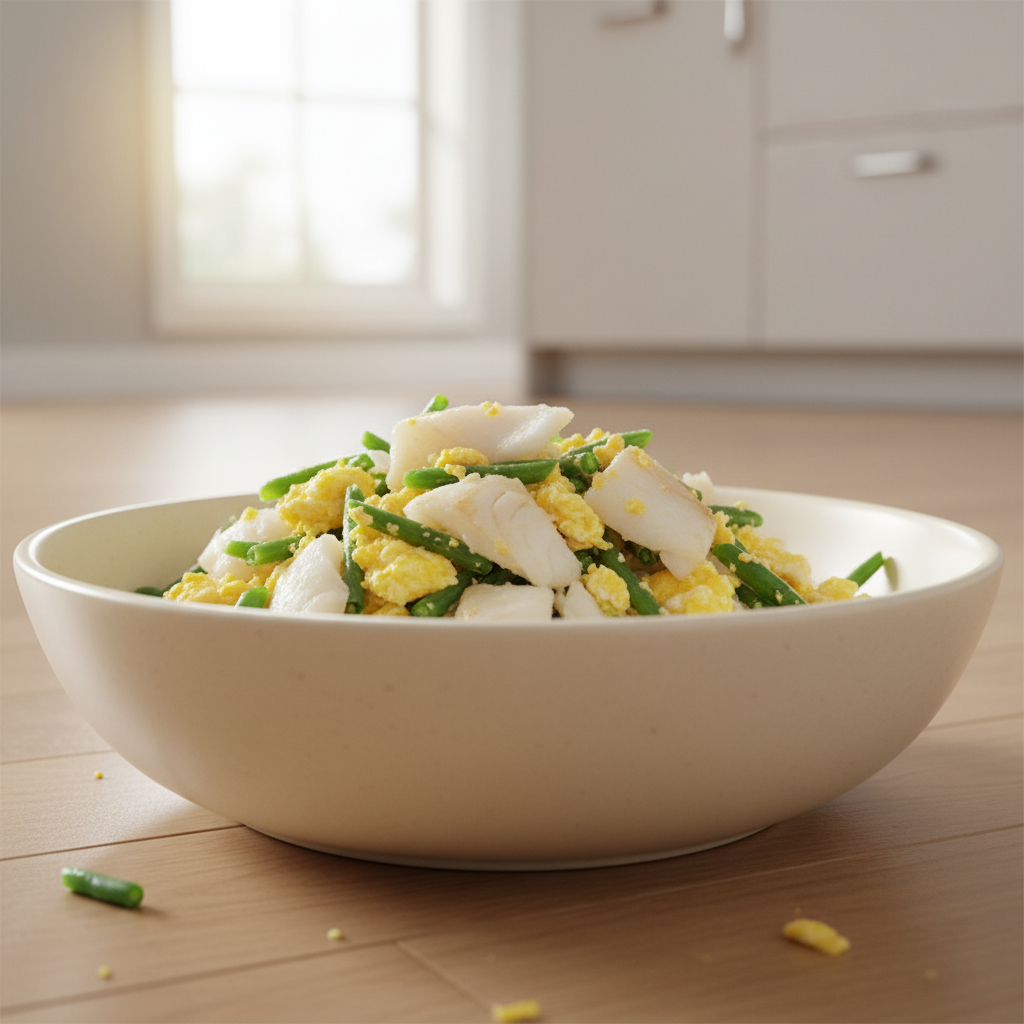
Whitefish like cod is extremely low in fat and easy to digest, making it a perfect choice for dogs with sensitive stomachs or pancreatitis, a condition that can sometimes accompany diabetes. Green beans are a wonderful low-calorie, high-fiber filler that helps dogs feel full.
Ingredients:
- 1 lb cod fillets
- 2 cups chopped green beans (fresh or frozen)
- 2 large eggs
- 1 teaspoon olive oil
Instructions:
- Steam or poach the cod fillets until they are white and flake easily. This takes about 8-10 minutes. Let cool and then flake with a fork.
- While the cod is cooking, steam the green beans until they are tender-crisp.
- In a small non-stick pan, scramble the two eggs without any butter or salt.
- In a large bowl, combine the flaked cod, steamed green beans, and scrambled eggs. Drizzle with olive oil and toss gently.
- Serve when cool.
Pros & Cons
Pros
|
Cons
|
Verdict:
This is the go-to recipe for overweight dogs or those with sensitive digestive systems. It’s light, nutritious, and helps with satiety, which is key for managing weight and blood sugar.
6. Bison & Pumpkin Power Bowl
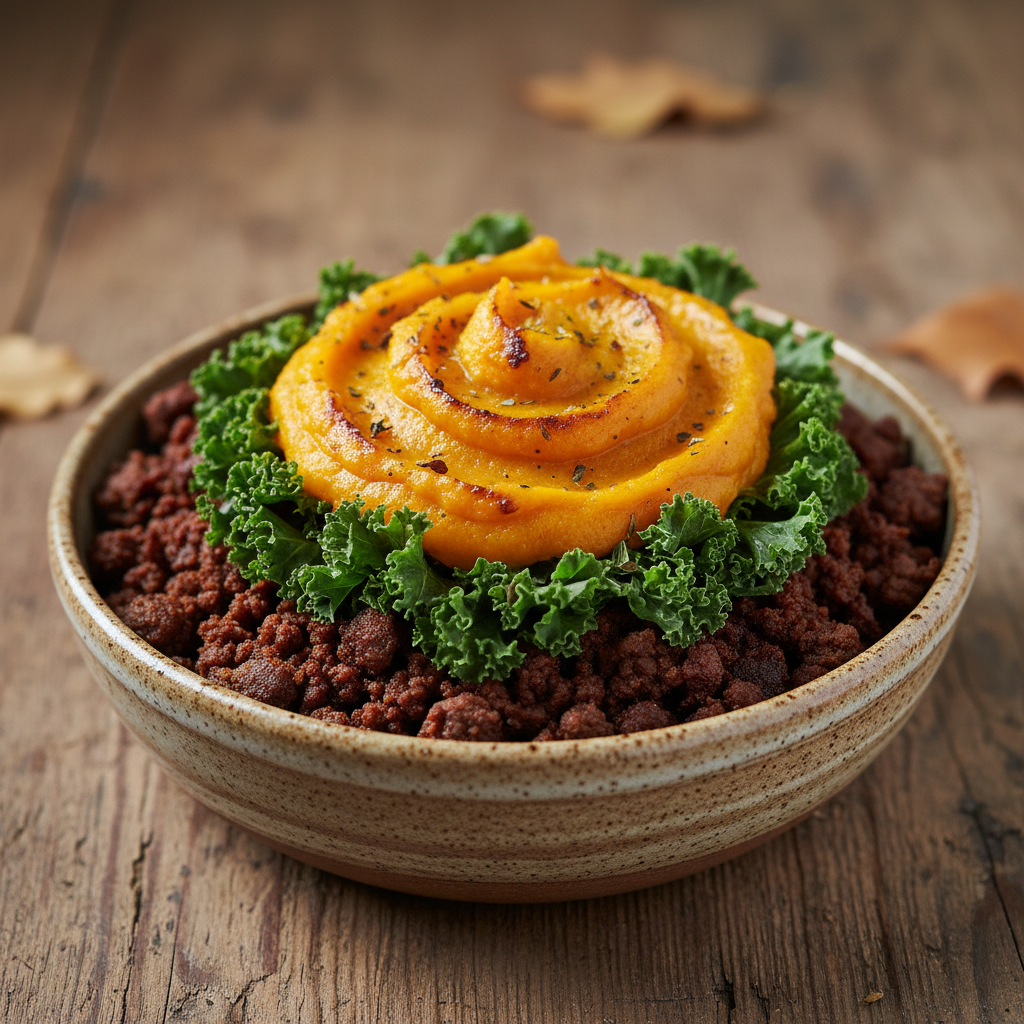
Bison is a fantastic novel protein, meaning it’s less likely to cause allergic reactions than common proteins like chicken or beef. It’s also leaner than beef. Pumpkin puree (100% pure, not pie filling!) is a superstar for digestive health, packed with fiber that aids in blood sugar regulation.
Ingredients:
- 1 lb ground bison
- 1 cup 100% pure pumpkin puree
- 1 cup chopped kale, stems removed
- 1/2 cup cooked chickpeas, mashed
- 1 tablespoon coconut oil
Instructions:
- In a large skillet, heat the coconut oil and cook the ground bison until browned. Drain any excess fat.
- Add the chopped kale to the skillet and sauté for a few minutes until it wilts.
- Remove the skillet from the heat.
- In a bowl, combine the cooked bison and kale mixture with the pumpkin puree and mashed chickpeas.
- Stir until everything is well incorporated. Serve at room temperature.
Pros & Cons
Pros
|
Cons
|
Verdict:
A top-tier choice for dogs with food allergies or sensitivities to common meats. The combination of lean bison and fiber-rich pumpkin makes it a digestive health champion.
7. Venison & Cauliflower Rice
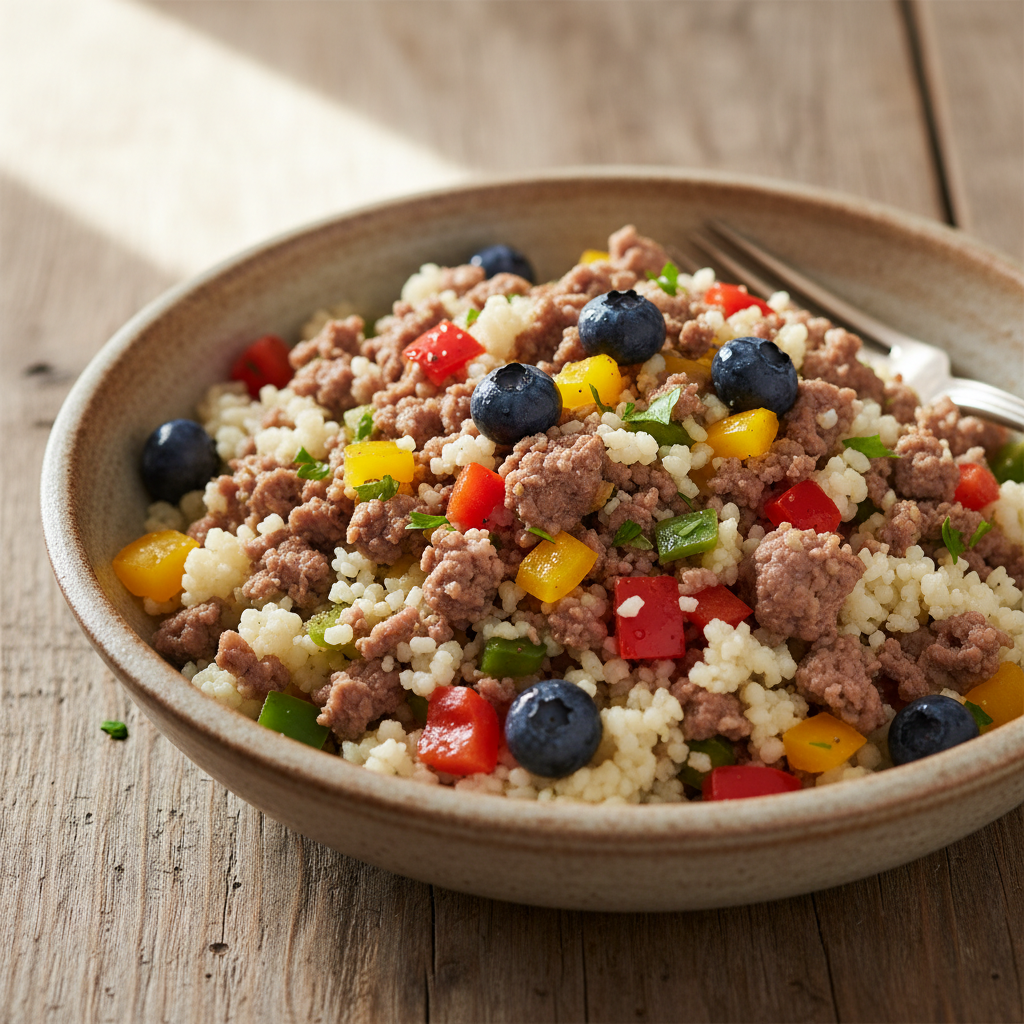
Another excellent novel protein, venison is naturally lean and rich in iron and B vitamins. We’re swapping traditional grains for cauliflower rice, an incredibly low-carb, low-glycemic vegetable that provides bulk and nutrients without impacting blood sugar.
Ingredients:
- 1 lb ground venison
- 2 cups cauliflower rice (fresh or frozen)
- 1/2 cup blueberries (a low-glycemic fruit)
- 1 cup chopped bell peppers (any color)
- 1 tablespoon olive oil
Instructions:
- Heat olive oil in a skillet and cook the ground venison until browned. Drain fat.
- Add the cauliflower rice and chopped bell peppers to the skillet. Cook for 5-7 minutes, stirring occasionally, until the vegetables are tender.
- Remove from heat and let it cool slightly.
- Gently stir in the fresh blueberries just before serving.
Pros & Cons
Pros
|
Cons
|
Verdict:
This grain-free recipe is perfect for pet parents looking for a low-carb, high-protein meal for their dogs, especially those with known grain or poultry sensitivities.
8. Egg & Spinach Frittata Muffins

These muffins are a game-changer for portion control and meal prep. Eggs are a complete source of protein and are very low in carbs. Spinach adds iron and vitamins. You can make a big batch and store them in the fridge or freezer for quick, perfectly-portioned meals.
Ingredients:
- 6 large eggs
- 1 cup chopped spinach (fresh or frozen, thawed and squeezed dry)
- 1/2 cup cottage cheese (low-fat)
- 1/4 cup grated carrots
- A sprinkle of turmeric (for its anti-inflammatory properties)
Instructions:
- Preheat your oven to 375°F (190°C). Lightly grease a 12-cup muffin tin.
- In a large bowl, whisk the eggs thoroughly.
- Stir in the spinach, cottage cheese, grated carrots, and turmeric. Mix well.
- Pour the mixture evenly into the muffin cups, filling each about two-thirds full.
- Bake for 15-20 minutes, or until the muffins are set and slightly golden on top.
- Let them cool completely in the tin before removing.
Pros & Cons
Pros
|
Cons
|
Verdict:
A fantastic option for small dogs or for owners who value convenience and precise portioning. These can also be used as a meal topper to add a protein boost.
9. Sardine & Broccoli Mash
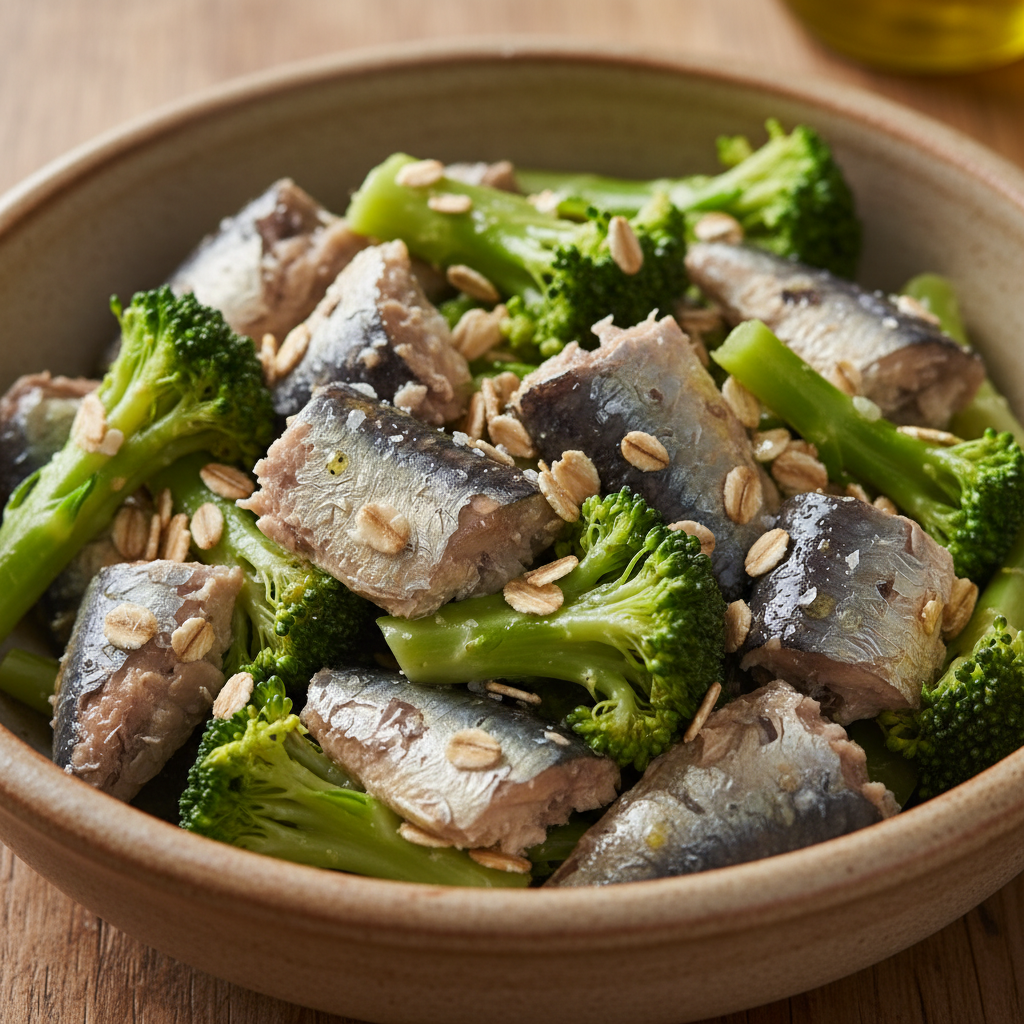
Don’t turn your nose up at this one! Sardines are one of the best sources of omega-3 fatty acids you can give your dog. They are also packed with calcium since the tiny, soft bones are edible. This recipe is budget-friendly, incredibly nutritious, and great for joint and brain health.
Ingredients:
- 2 cans (3.75 oz each) sardines packed in water, no salt added
- 2 cups broccoli florets, steamed until very tender
- 1/2 cup cooked oatmeal (slow-cook oats, not instant)
Instructions:
- In a bowl, mash the entire contents of the sardine cans (fish, water, and bones) with a fork.
- Add the well-steamed broccoli and mash it into the sardines.
- Stir in the cooked oatmeal to bind the mixture together.
- Serve at room temperature.
Pros & Cons
Pros
|
Cons
|
Verdict:
The ultimate budget-friendly superfood meal. It’s perfect for pet parents wanting to boost their dog’s omega-3 intake for cognitive function and anti-inflammatory benefits, as long as they can handle the smell!
10. Lamb & Green Lentil Loaf
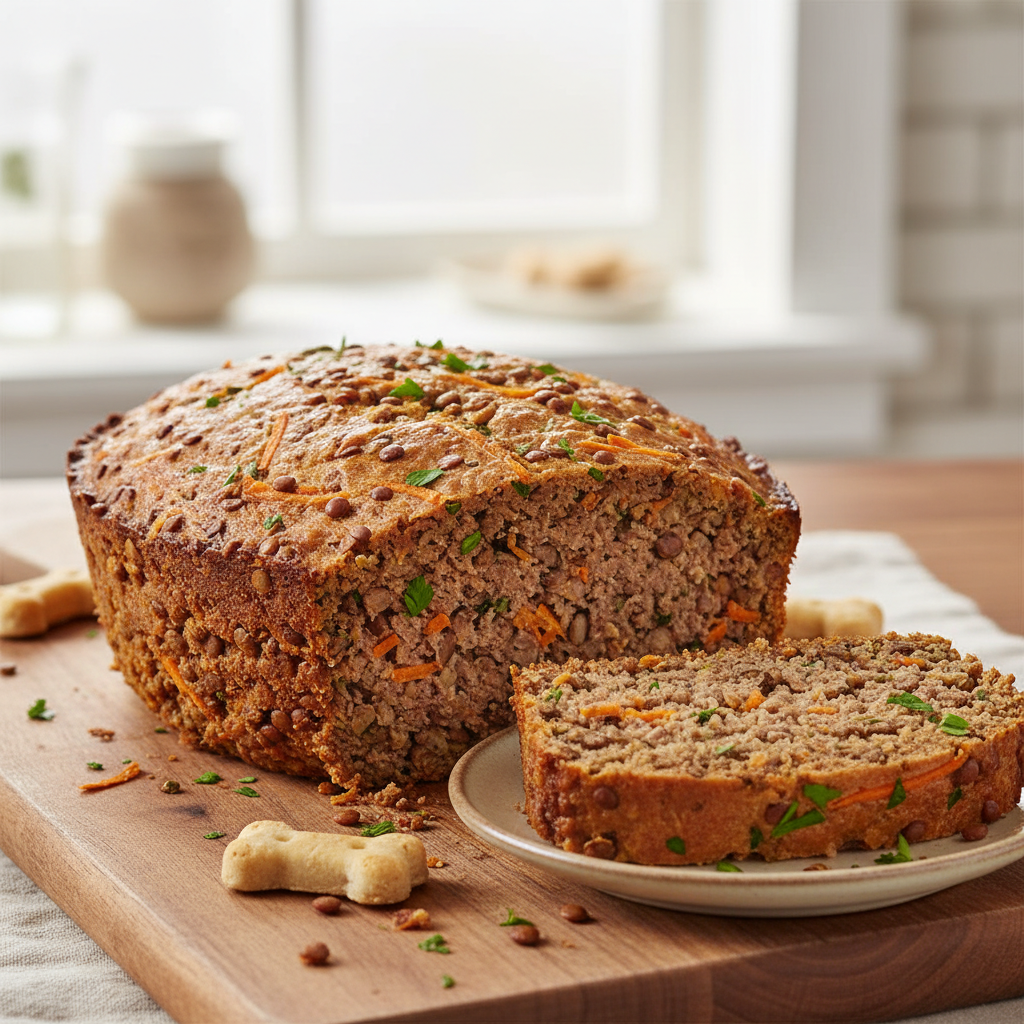
This ‘meatloaf’ for dogs is a fun way to serve a nutrient-dense meal. Lamb is a great protein source that’s rich in zinc and iron, and often well-tolerated by dogs with sensitivities. The green lentils and finely chopped veggies baked into the loaf provide essential fiber and vitamins.
Ingredients:
- 1 lb ground lamb
- 1 cup cooked green lentils
- 1 egg, lightly beaten
- 1/2 cup finely grated carrots
- 1/2 cup finely chopped parsley
Instructions:
- Preheat your oven to 350°F (175°C). Grease a standard loaf pan.
- In a large bowl, combine the ground lamb, cooked lentils, beaten egg, grated carrots, and chopped parsley.
- Use your hands to mix all the ingredients thoroughly until just combined. Do not overmix.
- Press the mixture evenly into the prepared loaf pan.
- Bake for 45-55 minutes, or until the loaf is cooked through and browned on top.
- Let the loaf cool completely in the pan before slicing and serving.
Pros & Cons
Pros
|
Cons
|
Verdict:
A wonderful recipe for picky eaters who enjoy a more solid, chewy texture. It’s also great for meal prepping, as you can bake one loaf and have meals ready for the week.
11. Duck & Asparagus Medley
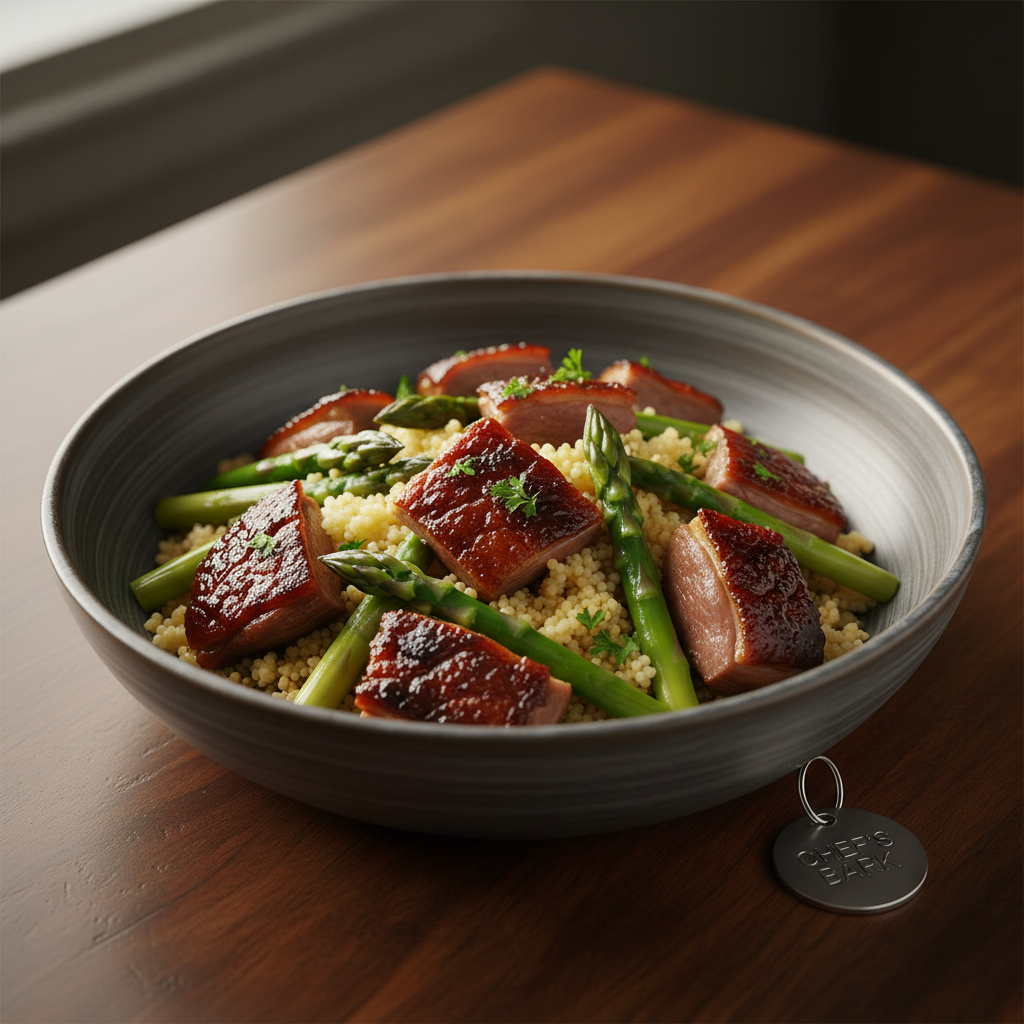
Duck is a rich, flavorful poultry that serves as another excellent novel protein. It’s packed with iron and amino acids. Asparagus provides prebiotic fiber, which feeds the good bacteria in your dog’s gut, supporting overall digestive health.
Ingredients:
- 1 lb ground duck (or boneless duck breast, finely chopped)
- 1 cup chopped asparagus, tough ends removed
- 1/2 cup cooked pearled couscous (use whole wheat for more fiber)
- 1 teaspoon dried rosemary
Instructions:
- If using duck breast, chop it into very small, bite-sized pieces.
- In a skillet, cook the ground or chopped duck over medium heat until cooked through. Duck is fatty, so be sure to drain the rendered fat thoroughly.
- While the duck cooks, steam the chopped asparagus until tender-crisp, about 5-7 minutes.
- In a bowl, combine the cooked duck, steamed asparagus, and cooked couscous.
- Sprinkle with dried rosemary and toss to combine. Serve when cool.
Pros & Cons
Pros
|
Cons
|
Verdict:
A gourmet meal for the dog with a discerning palate or food sensitivities. The rich flavor of duck makes this a high-reward meal that’s still diabetic-friendly when prepared correctly.
12. Rabbit & Zucchini Stir-Fry
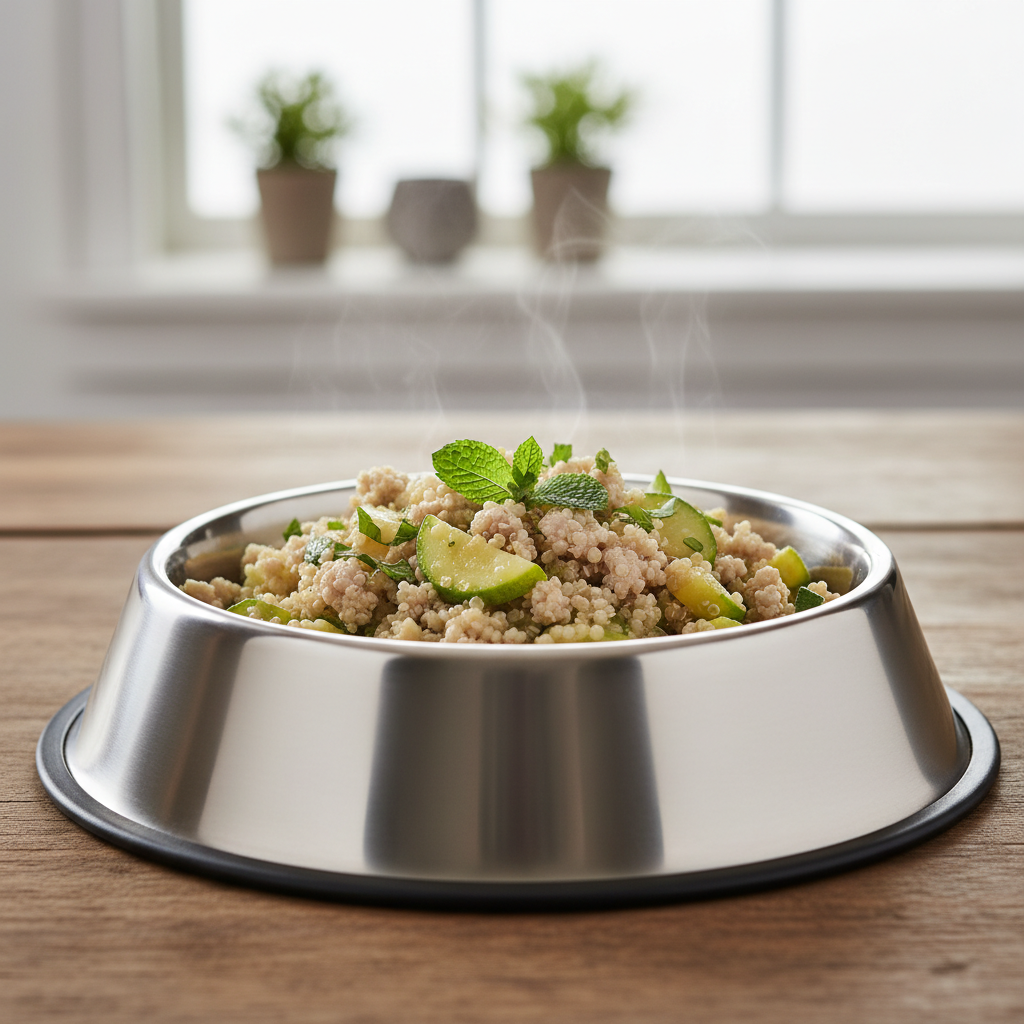
Rabbit is one of the leanest, most hypoallergenic proteins available. It’s higher in protein than chicken, turkey, or beef, and very low in cholesterol. Zucchini is a low-calorie, hydrating vegetable that’s gentle on the stomach.
Ingredients:
- 1 lb ground rabbit
- 2 cups chopped zucchini
- 1/2 cup cooked quinoa
- 1 tablespoon fresh mint, chopped (aids digestion)
Instructions:
- In a large skillet or wok with a touch of olive oil, cook the ground rabbit until it’s no longer pink.
- Add the chopped zucchini to the skillet and stir-fry for 5-8 minutes until it’s tender.
- Remove from heat and stir in the cooked quinoa and fresh mint.
- Let it cool down to a safe temperature before serving to your pup.
Pros & Cons
Pros
|
Cons
|
Verdict:
The ultimate choice for dogs with severe allergies or those needing a very low-fat diet. This is a premium, highly digestible meal for the most sensitive of dogs.
13. Chicken Liver & Kale Pâté
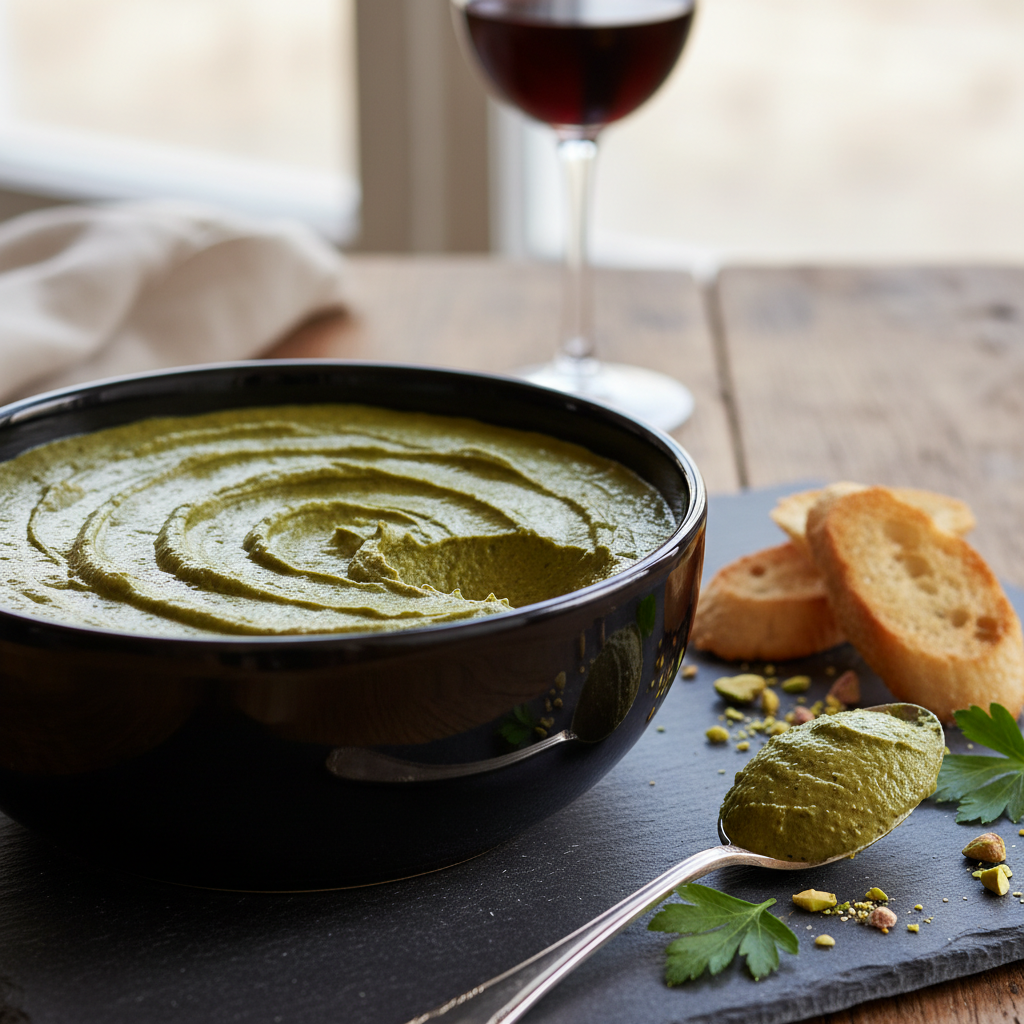
Organ meats like chicken liver are incredibly nutrient-dense, like a natural multivitamin for your dog. They are rich in Vitamin A, iron, and B vitamins. Kale is a fibrous leafy green that supports the slow release of energy. This recipe has a soft texture, perfect for senior dogs.
Ingredients:
- 1 lb chicken livers, rinsed
- 2 cups chopped kale, stems removed
- 1/2 cup water
- 1/4 cup rolled oats (to act as a binder)
Instructions:
- In a medium pot, combine the chicken livers, kale, and water.
- Bring to a simmer and cook for 10-15 minutes, until the livers are cooked through (no longer pink inside).
- Pour the entire contents of the pot into a blender or food processor.
- Add the rolled oats.
- Blend until you achieve a smooth pâté consistency. Add a little more water if it’s too thick.
- Let the pâté cool completely before serving. It will firm up as it cools.
Pros & Cons
Pros
|
Cons
|
Verdict:
A nutrient-boosting meal perfect for senior dogs or any dog needing an extra dose of vitamins and minerals. Its soft texture makes it easy to eat and highly palatable.
Conclusion
A Pet Parent’s Guide to Homemade Diabetic Dog Food
Switching to a homemade diet for your diabetic dog is a significant commitment, but it can be incredibly rewarding. To ensure you’re doing it safely and effectively, keep these key principles in mind:
- Consult Your Vet: This cannot be stressed enough. Your veterinarian is your partner in managing your dog’s diabetes. They need to approve any diet change and will help you calculate the precise number of calories and portion sizes your dog needs to maintain a healthy weight and stable blood glucose.
- Focus on Fiber and Protein: The cornerstones of a diabetic diet are high-quality protein and complex carbohydrates rich in fiber. Protein helps maintain muscle mass, while fiber slows digestion and the release of sugar into the bloodstream. Ingredients like lentils, chickpeas, green beans, pumpkin, and barley are excellent fiber sources.
- Avoid Simple Sugars and High-Glycemic Ingredients: Steer clear of ingredients like corn, white rice, white potatoes, and wheat, which can cause rapid spikes in blood sugar. Avoid any foods with added sugars, including honey or molasses. Be cautious with fruits; while some like blueberries are okay in moderation, many are too high in sugar.
- Consistency is Key: Dogs with diabetes thrive on routine. Feed your dog the same amount of food at the same times each day, coordinating meals with their insulin injections as advised by your vet. This predictability helps keep their blood sugar levels as stable as possible.
- Monitor, Monitor, Monitor: When you change your dog’s diet, you’ll need to work with your vet to monitor their blood glucose curves closely. The new food will likely affect their insulin requirements. Also, keep an eye on their weight, energy levels, water intake, and frequency of urination.
Frequently Asked Questions
- Can I substitute ingredients in these recipes?
- Yes, to an extent. You can often swap one lean protein for another (like turkey for chicken) or one low-glycemic vegetable for another (like green beans for broccoli). However, avoid swapping proteins for carbs or vice-versa. Always discuss significant substitutions with your vet, as it can change the nutritional profile of the meal.
- How should I store this homemade dog food?
- You can store these meals in airtight containers in the refrigerator for up to 4 days. For longer storage, most of these recipes freeze beautifully. You can portion them out into individual servings in freezer bags or containers for easy, grab-and-go meals. They can typically be frozen for up to 3 months.
- My dog is a picky eater. How can I transition them?
- Transition slowly. Start by mixing a small amount of the new homemade food (e.g., 10%) with their old food. Gradually increase the proportion of the new food over a week or two, while decreasing the old food. Warming the food slightly can also make it more aromatic and appealing to a fussy eater.
Embarking on a homemade food journey for your diabetic dog is a profound act of love. By using these recipes as a starting point and working closely with your veterinarian, you can provide your beloved companion with delicious, wholesome meals that will help them live a long, happy, and healthy life. You’ve got this!