
21 Low Sodium Homemade Dog Food Recipes for Heart Health
Hearing that your beloved dog has a heart condition can feel overwhelming. You want to do everything you can to support them, and a huge part of that is their diet. Vets often recommend a low-sodium diet to help manage heart disease, particularly conditions like congestive heart failure (CHF). Less sodium helps reduce blood pressure and fluid retention, easing the strain on your pup’s heart.
While many commercial low-sodium dog foods are available, making your dog’s food at home gives you unparalleled control over every single ingredient. You can ensure there are no hidden salts, use fresh, high-quality proteins and vegetables, and tailor each meal to your dog’s specific tastes and needs. It’s a true act of love!
Important Note: Before starting any homemade diet, it is absolutely crucial to consult with your veterinarian or a board-certified veterinary nutritionist. They can help you ensure the recipes are balanced and meet all of your dog’s unique nutritional requirements.
Quick Recipe Overview
| Recipe Name | Primary Protein | Key Veggies/Grains | Best For |
|---|---|---|---|
| Chicken & Rice Delight | Chicken Breast | White Rice, Carrots | Sensitive Stomachs |
| Turkey & Sweet Potato Mash | Ground Turkey | Sweet Potato, Spinach | Extra Vitamins |
| Lean Beef & Barley Stew | Lean Ground Beef | Barley, Green Beans | Hearty Appetites |
| Salmon & Quinoa Power Bowl | Salmon | Quinoa, Broccoli | Omega-3 Boost |
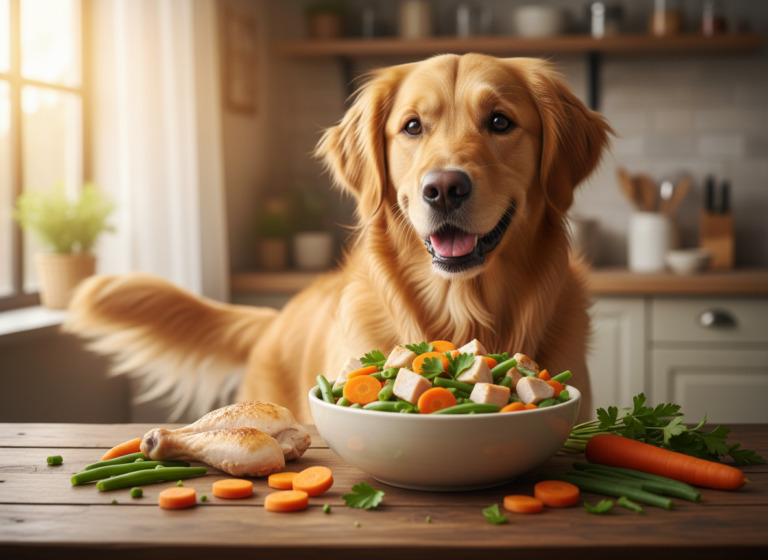
1. Simple Chicken and Rice Delight

This is the classic go-to for a reason! It’s gentle on the stomach and incredibly easy to make. Using skinless, boneless chicken breast keeps the fat and sodium content low, while rice provides easily digestible carbohydrates for energy.
Ingredients:
- 1 lb boneless, skinless chicken breast
- 1 cup uncooked white rice
- 4 cups water
- 1/2 cup chopped carrots
- 1/2 cup chopped green beans
- 1 tablespoon olive oil (optional, for healthy fats)
Instructions:
- Cut the chicken into small, bite-sized pieces.
- In a large pot, bring the 4 cups of water to a boil.
- Add the chicken, rice, carrots, and green beans.
- Reduce heat, cover, and simmer for about 20-25 minutes, or until the rice is cooked and the chicken is tender.
- Drain any excess water. Let it cool completely before serving. You can stir in the olive oil once cooled.
Pros and Cons
Pros
|
Cons
|
Verdict
Perfect for a simple, soothing meal, especially for dogs with sensitive stomachs or when you’re just starting your homemade food journey.
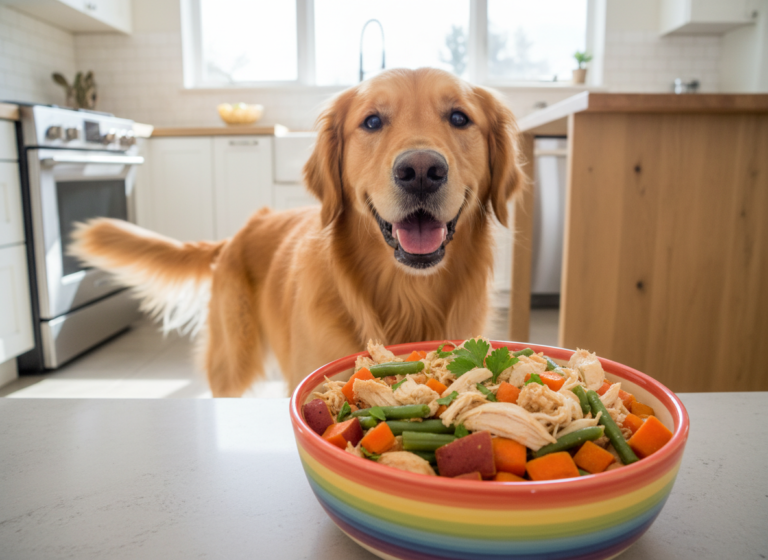
2. Turkey and Sweet Potato Mash

Ground turkey is a fantastic lean protein source, and sweet potatoes are packed with vitamins, fiber, and antioxidants. This recipe is both delicious and nutrient-dense, making it a favorite for many pups.
Ingredients:
- 1 lb lean ground turkey (93/7 or leaner)
- 1 large sweet potato, peeled and cubed
- 1 cup spinach
- 2 tablespoons coconut oil
- Water for boiling
Instructions:
- Boil the sweet potato cubes in water until they are fork-tender (about 15 minutes). Drain and mash them.
- While the sweet potato is boiling, cook the ground turkey in a skillet with the coconut oil until browned. Drain off any excess fat.
- Wilt the spinach in the hot pan for 1-2 minutes.
- Combine the cooked turkey, mashed sweet potato, and wilted spinach in a large bowl. Mix well.
- Allow to cool to room temperature before serving.
Pros and Cons
Pros
|
Cons
|
Verdict
An excellent choice for dogs who need a grain-free option that’s packed with vitamins and flavor. The vibrant color is a bonus!
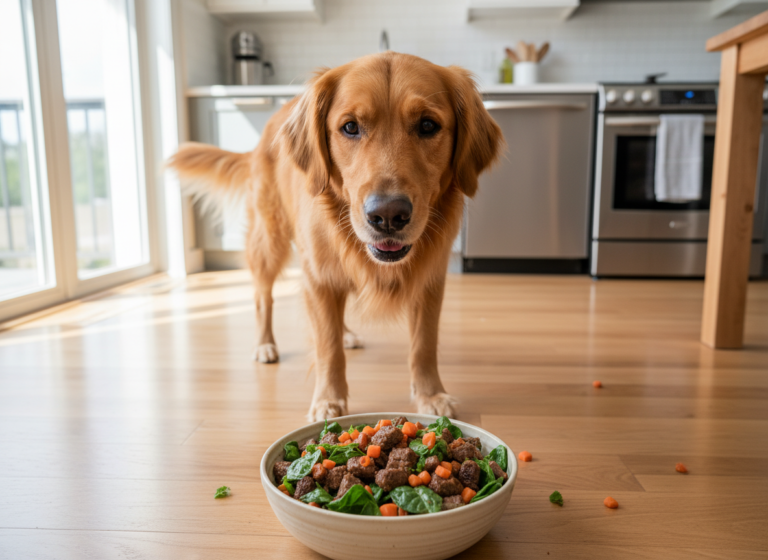
3. Lean Beef and Barley Stew

For dogs that love a heartier meal, this beef and barley stew is a winner. Beef is rich in iron and protein, while barley is a healthy, fibrous grain. Be sure to use lean ground beef (90% lean or higher) to keep the fat content in check.
Ingredients:
- 1 lb lean ground beef (90/10 or leaner)
- 1/2 cup uncooked pearl barley
- 4 cups low-sodium or no-salt-added beef broth
- 1 cup chopped celery
- 1 cup chopped green beans
Instructions:
- In a large pot or Dutch oven, brown the ground beef. Drain all the fat.
- Add the beef broth, barley, celery, and green beans to the pot.
- Bring to a simmer, then reduce the heat, cover, and cook for 45-50 minutes, or until the barley is tender.
- Stir occasionally to prevent sticking.
- Let the stew cool completely before serving.
Pros and Cons
Pros
|
Cons
|
Verdict
A fantastic, warming meal for active dogs or those with bigger appetites who can tolerate beef and grains well.
4. Salmon and Quinoa Power Bowl

Salmon is a superstar ingredient for heart health, thanks to its high concentration of omega-3 fatty acids, which have anti-inflammatory properties. Paired with quinoa, a complete protein, this bowl is a nutritional powerhouse.
Ingredients:
- 1 lb salmon fillet, skin removed
- 1 cup uncooked quinoa
- 2 cups water
- 1 cup chopped broccoli florets
- 1 tablespoon flaxseed oil
Instructions:
- Bake or poach the salmon until it’s cooked through. Flake it with a fork.
- Rinse the quinoa thoroughly. In a saucepan, combine the quinoa and 2 cups of water. Bring to a boil, then cover and simmer for 15 minutes.
- During the last 5 minutes of the quinoa cooking, steam the broccoli florets until tender-crisp.
- In a large bowl, combine the flaked salmon, cooked quinoa, and steamed broccoli.
- Drizzle with flaxseed oil and mix gently. Cool before serving.
Pros and Cons
Pros
|
Cons
|
Verdict
This is one of the best recipes for directly supporting heart and joint health due to the high omega-3 content. Ideal for dogs of all ages.
5. Cod, Pea, and Potato Mix

Cod is another excellent, low-fat fish that’s easy on the digestive system. It’s a great alternative to salmon if your dog has sensitivities. Peas add a touch of sweetness and fiber, while potatoes offer starchy carbs for energy.
Ingredients:
- 1 lb cod fillets
- 2 medium potatoes, peeled and diced
- 1 cup frozen peas
- Water for boiling
- 1 tablespoon of a dog-safe fish oil
Instructions:
- Boil the diced potatoes in water until tender, about 15 minutes.
- Add the cod fillets and frozen peas to the pot with the potatoes for the last 5-7 minutes of cooking, or until the fish is opaque and flakes easily.
- Drain the mixture well. Gently break up the fish and mix everything together.
- Let it cool down, then stir in the fish oil before serving.
Pros and Cons
Pros
|
Cons
|
Verdict
A great, lean option for dogs needing to manage their weight alongside their heart condition. It’s simple, tasty, and easy to digest.
6. Egg and Veggie Scramble
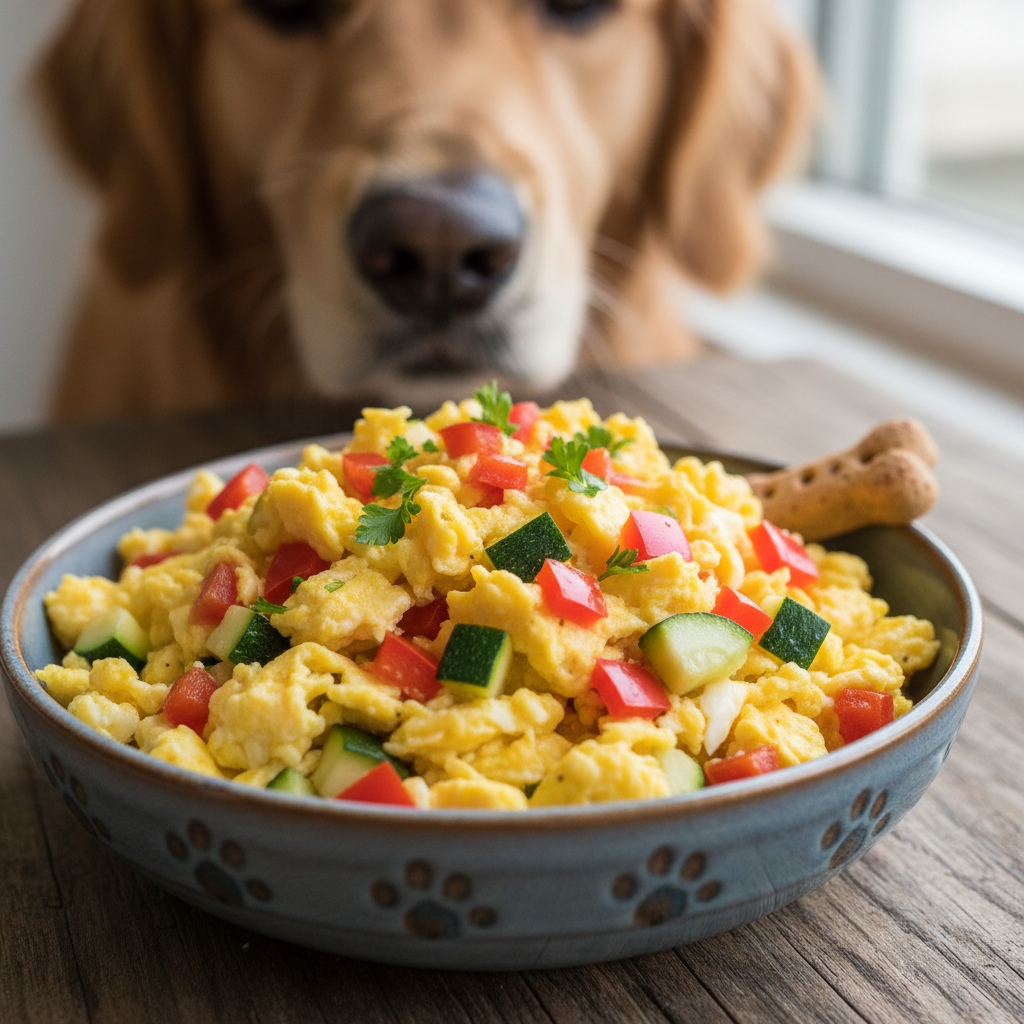
Don’t forget breakfast! Eggs are a fantastic source of highly digestible protein and essential amino acids. This scramble is a quick and easy meal you can whip up in minutes.
Ingredients:
- 4 whole eggs
- 1/4 cup finely chopped zucchini
- 1/4 cup finely chopped red bell pepper
- 1 teaspoon coconut oil
- A splash of water
Instructions:
- Heat the coconut oil in a non-stick skillet over medium heat.
- Sauté the zucchini and bell pepper until soft, about 3-4 minutes.
- In a separate bowl, whisk the eggs with a splash of water.
- Pour the eggs into the skillet with the veggies. Scramble gently until the eggs are fully cooked.
- Let it cool completely before serving.
Pros and Cons
Pros
|
Cons
|
Verdict
A perfect quick meal or a special breakfast treat. It’s also great for senior dogs who may have trouble chewing tougher meats.
7. Hearty Lentil and Carrot Stew

For a meat-free option that’s still packed with protein and fiber, this lentil stew is a fantastic choice. Lentils are a nutritional powerhouse, offering protein, fiber, and iron. This is a great recipe to rotate into your dog’s diet.
Ingredients:
- 1 cup brown or green lentils, rinsed
- 4 cups no-salt-added vegetable broth
- 2 carrots, finely diced
- 1 celery stalk, finely diced
- 1 tablespoon olive oil
Instructions:
- In a large pot, combine the lentils, vegetable broth, carrots, and celery.
- Bring to a boil, then reduce heat and simmer for about 30-40 minutes, or until the lentils are soft.
- The stew should be thick. If it’s too watery, let it simmer uncovered for a few more minutes.
- Remove from heat, stir in the olive oil, and let it cool completely.
Pros and Cons
Pros
|
Cons
|
Verdict
An excellent, budget-friendly meal to use in rotation. Be sure to discuss necessary supplements with your vet if you plan to feed plant-based meals regularly.
8. Sardine and Pumpkin Mash

Sardines are tiny fish with a huge nutritional impact! They are packed with omega-3s and are a great source of calcium if you use the bone-in variety. Pumpkin is a superfood for dogs, known for aiding digestion.
Ingredients:
- 1 can (3.75 oz) sardines packed in water, no salt added
- 1/2 cup plain pumpkin puree (not pie filling)
- 1/4 cup cooked oatmeal
Instructions:
- Drain the water from the can of sardines.
- In a bowl, mash the sardines with a fork.
- Add the pumpkin puree and cooked oatmeal.
- Mix everything together until well combined. Serve immediately.
Pros and Cons
Pros
|
Cons
|
Verdict
A fantastic meal topper or a small, nutrient-dense meal. The potent smell can entice even the pickiest of eaters.
9. Ground Turkey and Zucchini Skillet

This simple skillet meal combines lean ground turkey with zucchini, a low-calorie vegetable that’s full of moisture and nutrients. It’s a light yet satisfying meal that’s easy to whip up on a busy day.
Ingredients:
- 1 lb lean ground turkey
- 2 medium zucchinis, shredded or finely chopped
- 1/2 cup cooked brown rice
- 1 teaspoon dried parsley (for fresh breath!)
- 1 tablespoon olive oil
Instructions:
- Heat the olive oil in a skillet over medium heat. Add the ground turkey and cook until browned, breaking it up with a spoon. Drain any fat.
- Add the shredded zucchini to the skillet and cook for another 5 minutes until it’s soft.
- Stir in the cooked brown rice and parsley.
- Let the mixture cool before serving it to your pup.
Pros and Cons
Pros
|
Cons
|
Verdict
A simple, hydrating, and low-calorie meal that’s great for weight management and picky eaters who enjoy a softer food texture.
10. Lamb and Brown Rice Casserole

Lamb is a novel protein for many dogs, making it a great choice if your dog has allergies to more common proteins like chicken or beef. It’s rich in flavor and packed with essential amino acids.
Ingredients:
- 1 lb ground lamb
- 1 cup cooked brown rice
- 1 cup chopped kale, stems removed
- 1/2 cup chopped carrots
- 3 cups water
Instructions:
- In a large pot, brown the ground lamb. Drain the fat thoroughly.
- Add the water, brown rice, kale, and carrots to the pot.
- Bring to a simmer, cover, and cook for 20-25 minutes, until the rice is fully cooked and the vegetables are tender.
- Stir well and allow to cool completely before portioning out for your dog.
Pros and Cons
Pros
|
Cons
|
Verdict
An excellent option for dogs with food sensitivities or for owners looking to introduce some variety with a novel, flavorful protein.
11. Chicken Liver and Kale Power Mix

Organ meats are incredibly nutrient-dense, and chicken liver is a fantastic source of Vitamin A, iron, and B vitamins. A little goes a long way, so it’s mixed with other ingredients to create a balanced meal.
Ingredients:
- 1/2 lb chicken livers
- 1/2 lb ground chicken
- 1 cup chopped kale
- 1/2 cup blueberries (for antioxidants)
- 1/2 cup cooked oatmeal
Instructions:
- Gently boil or sauté the chicken livers and ground chicken until cooked through. Drain any fat.
- Finely chop the cooked livers and chicken.
- In a large bowl, combine the meat mixture with the chopped kale, blueberries, and cooked oatmeal.
- Mix well and serve once cooled.
Pros and Cons
Pros
|
Cons
|
Verdict
A super-nutrient boost for your dog’s diet. Due to its richness, this is best served in smaller quantities or rotated with other meals.
12. Cottage Cheese and Apple Bowl
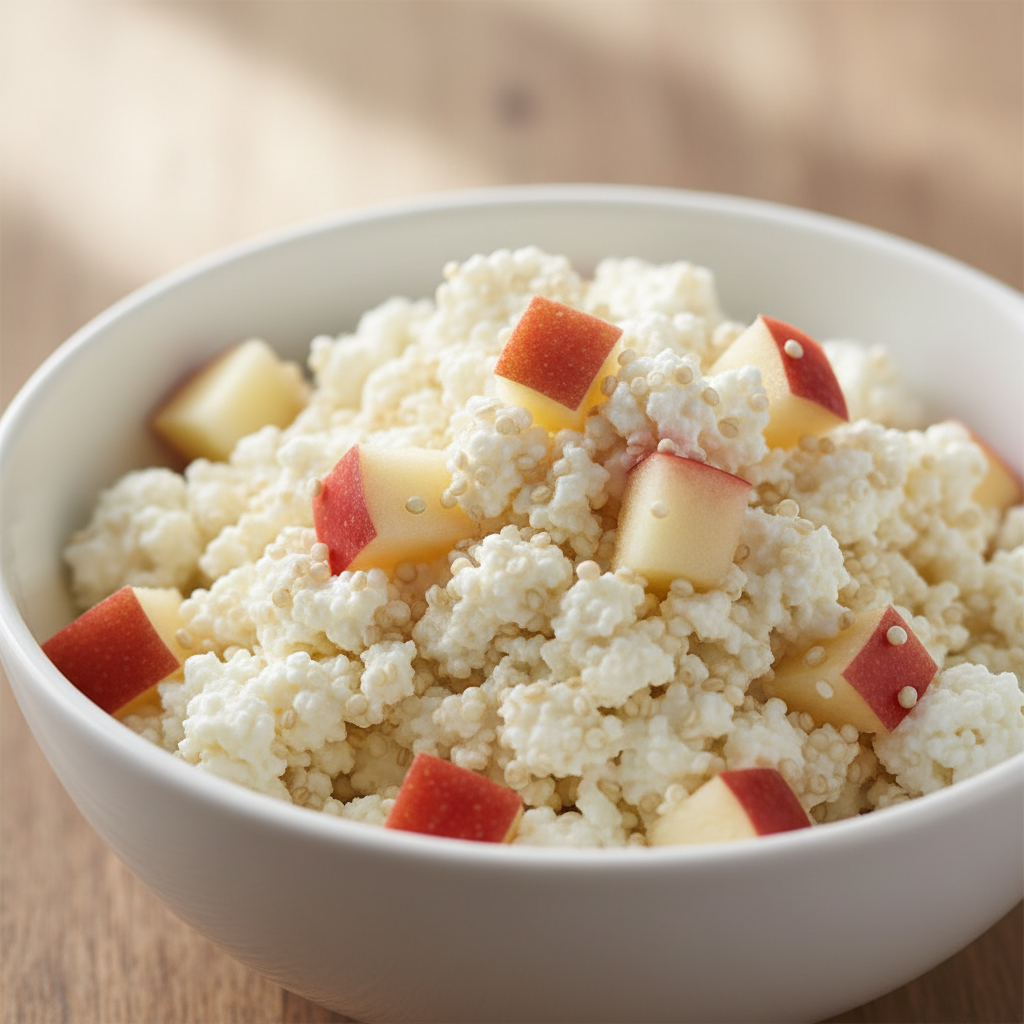
A surprising but effective low-sodium meal! It’s crucial to use low-sodium or no-salt-added cottage cheese. This recipe is high in protein and calcium, and the apple provides fiber and a touch of sweetness.
Ingredients:
- 1 cup low-sodium cottage cheese
- 1/2 apple, cored and finely chopped (no seeds!)
- 1/4 cup cooked quinoa
- A sprinkle of cinnamon (optional, anti-inflammatory)
Instructions:
- Ensure the apple is cored and all seeds are removed, as they are toxic to dogs.
- In a bowl, simply combine the cottage cheese, chopped apple, and cooked quinoa.
- Sprinkle with a tiny amount of cinnamon if desired and serve.
Pros and Cons
Pros
|
Cons
|
Verdict
A wonderful light meal or snack, especially on a warm day. It’s perfect for senior dogs or those recovering from an upset stomach.
13. Venison and Butternut Squash Stew
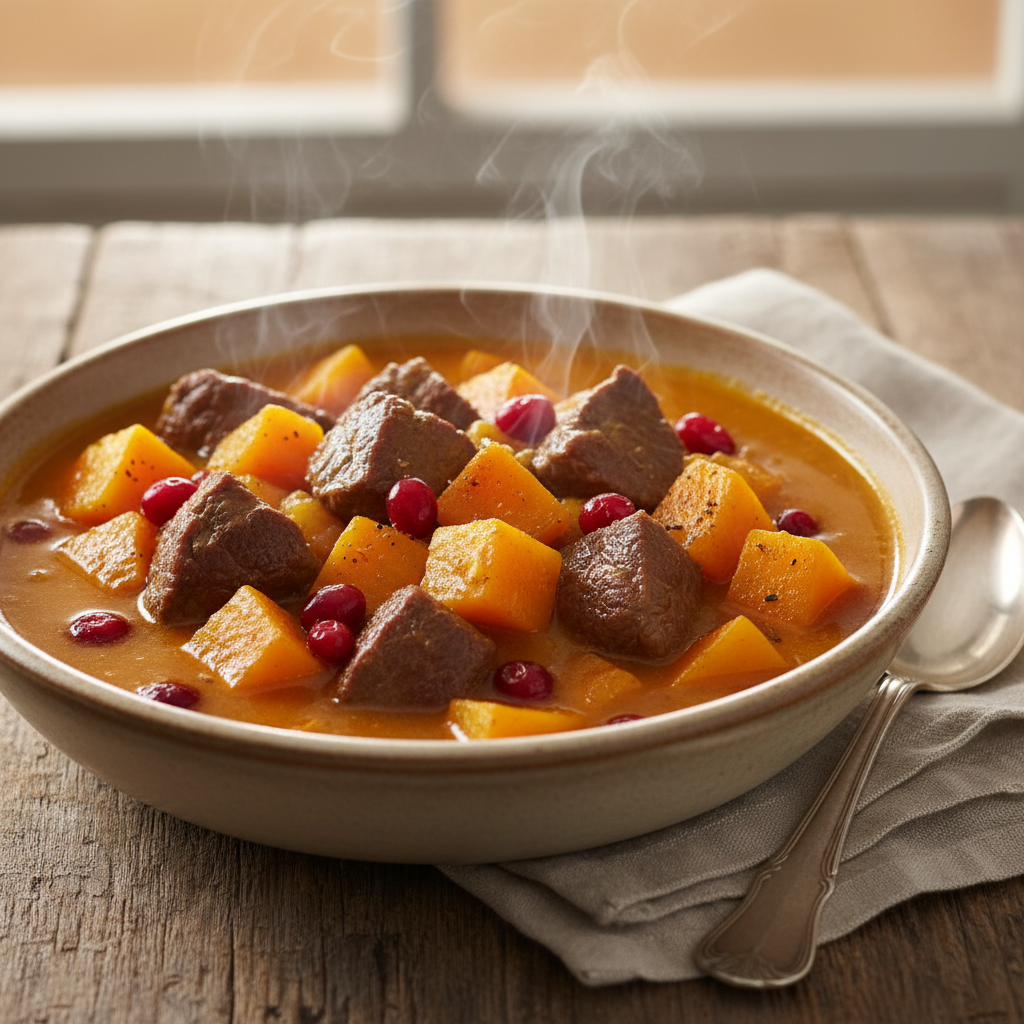
Venison (deer meat) is another excellent novel protein that is naturally lean and low in sodium. Paired with butternut squash, this stew is full of flavor, fiber, and beta-carotene.
Ingredients:
- 1 lb ground venison
- 2 cups butternut squash, peeled and cubed
- 1/2 cup cranberries (unsweetened, dried or fresh)
- 4 cups water or no-salt-added beef broth
- 1 sprig of rosemary (remove before serving)
Instructions:
- In a large pot, brown the ground venison. Drain any fat.
- Add the butternut squash, cranberries, and water/broth. Add the rosemary sprig.
- Bring to a simmer, cover, and cook for 20-25 minutes until the squash is tender.
- Remove the rosemary sprig. Mash the stew slightly to break up the squash.
- Allow to cool completely before serving.
Pros and Cons
Pros
|
Cons
|
Verdict
A gourmet, seasonal meal that’s perfect for dogs with poultry or beef allergies. It feels like a special holiday dinner for your pup!
14. Rabbit and Pea Puree

Rabbit is one of the most common proteins used in elimination diets for dogs with severe allergies. It’s incredibly lean and easy to digest. This simple puree is gentle on the system and highly palatable.
Ingredients:
- 1 lb ground rabbit
- 1 cup frozen peas
- 1/2 cup chopped parsley
- 2 cups water
Instructions:
- In a pot, combine the ground rabbit, peas, and water.
- Bring to a simmer and cook for 15-20 minutes, until the rabbit is cooked through.
- Drain most of the water, leaving a little for moisture.
- Add the parsley and use an immersion blender or a regular blender to puree the mixture to your dog’s desired consistency.
- Let it cool before serving.
Pros and Cons
Pros
|
Cons
|
Verdict
The ultimate choice for dogs with significant food allergies or sensitivities. The soft texture is a lifesaver for senior pups.
15. Duck and Asparagus Medley

Duck is a rich, flavorful poultry that serves as a great novel protein. It’s higher in fat than chicken or turkey, so be sure to use duck breast with the skin removed and drain all fat carefully.
Ingredients:
- 1 lb boneless, skinless duck breast, cubed
- 1 cup chopped asparagus (tough ends removed)
- 1/2 cup cooked pearl barley
- 1 tablespoon olive oil
Instructions:
- In a skillet, cook the cubed duck breast until browned. Duck releases a lot of fat, so be sure to drain it all from the pan.
- Add the chopped asparagus to the skillet and sauté for 5-7 minutes until tender.
- In a bowl, combine the cooked duck, asparagus, and cooked barley.
- Drizzle with olive oil, mix, and let it cool.
Pros and Cons
Pros
|
Cons
|
Verdict
A gourmet meal for the discerning canine palate, especially those who have turned their noses up at other proteins.
16. Heart-Healthy Beef Heart Stew

It might sound a bit unusual, but beef heart is a fantastic ingredient for a cardiac diet. It’s technically a muscle, so it’s very lean, and it’s the single best natural source of Coenzyme Q10 (CoQ10), which is vital for heart muscle function.
Ingredients:
- 1 lb beef heart, trimmed of fat and cubed
- 2 carrots, chopped
- 1 cup green beans, chopped
- 1/2 cup rolled oats
- 4 cups water
Instructions:
- In a large pot, combine the cubed beef heart, carrots, green beans, and water.
- Bring to a boil, then reduce heat and simmer for 1 hour, or until the heart is tender.
- Stir in the rolled oats and cook for another 10 minutes until the stew thickens.
- Let it cool completely. The beef heart can be shredded or served in cubes.
Pros and Cons
Pros
|
Cons
|
Verdict
This is arguably the most targeted recipe for heart health due to its incredible nutrient profile. A must-try for any dog on a cardiac diet.
17. Pork and Cabbage Stir-fry

Pork is another protein that many dogs enjoy. This ‘stir-fry’ (made without any salt or soy sauce) is simple and uses cabbage, an inexpensive vegetable that’s great for digestion.
Ingredients:
- 1 lb ground pork
- 2 cups shredded green cabbage
- 1 apple, cored and grated (no seeds)
- 1/2 cup cooked brown rice
- 1 tablespoon coconut oil
Instructions:
- Heat coconut oil in a large skillet. Add the ground pork and cook until browned. Drain the fat.
- Add the shredded cabbage and grated apple to the skillet. Cook for 5-7 minutes until the cabbage is wilted and tender.
- Stir in the cooked brown rice.
- Mix everything together and let it cool before serving.
Pros and Cons
Pros
|
Cons
|
Verdict
A simple, budget-friendly meal that provides a tasty alternative to poultry and beef, with the added digestive benefits of cabbage and apple.
18. Mackerel and Broccoli Mash
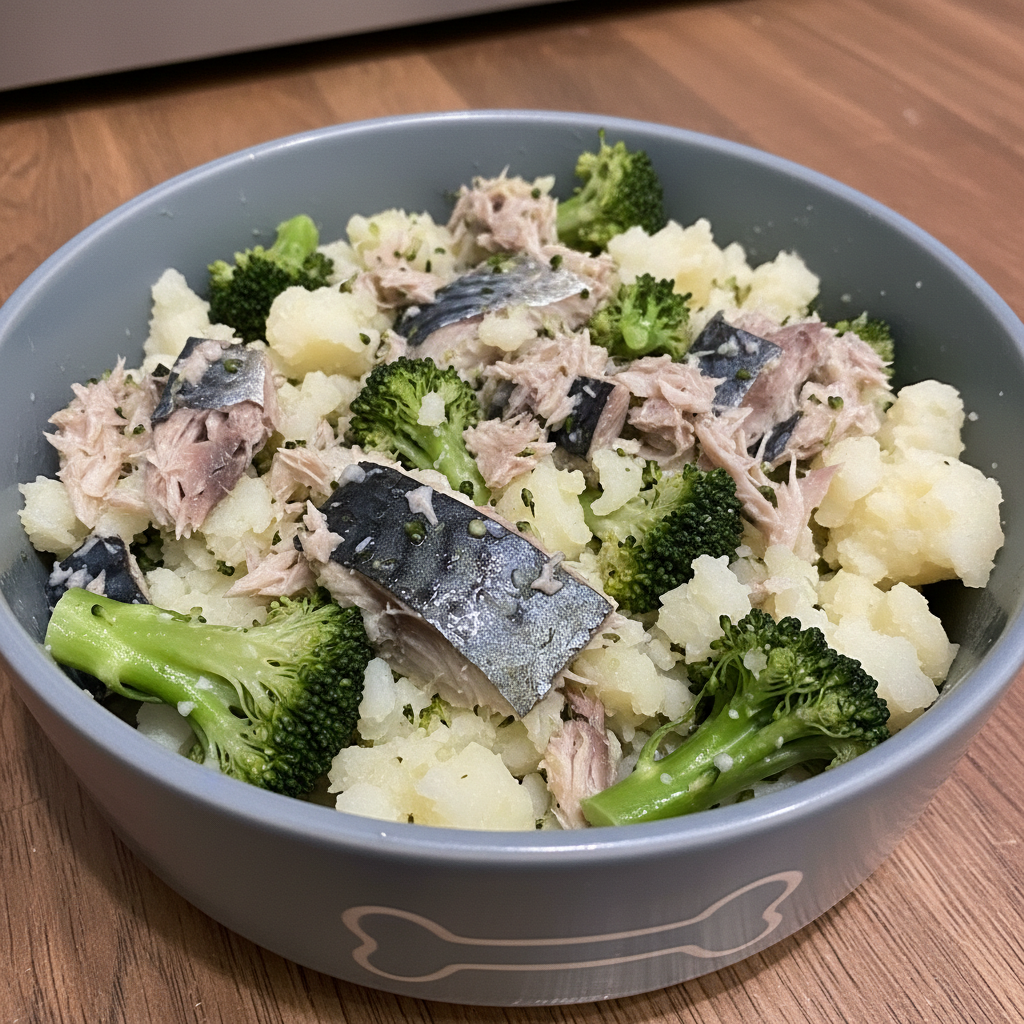
Mackerel is an oily fish, similar to salmon and sardines, making it a phenomenal source of anti-inflammatory omega-3 fatty acids. It’s a bit stronger in flavor, which can be great for tempting picky eaters.
Ingredients:
- 1 can (15 oz) mackerel in water, no salt added
- 1 cup broccoli florets, steamed
- 1/2 cup mashed potatoes
Instructions:
- Drain the water from the can of mackerel.
- In a bowl, flake the mackerel with a fork.
- Add the steamed broccoli and mashed potatoes.
- Mash and mix everything together until it’s well combined. Serve when cool.
Pros and Cons
Pros
|
Cons
|
Verdict
An omega-3 powerhouse meal that is perfect for supporting a dog’s entire system, from their heart to their skin and coat.
19. Simple Ground Chicken Patties

Sometimes, a different format is all it takes to get a dog excited about mealtime. These simple baked patties are easy to make in a batch and store for a few days in the fridge.
Ingredients:
- 1 lb ground chicken
- 1/2 cup rolled oats
- 1/4 cup finely grated carrot
- 1 egg
- 1 teaspoon dried parsley
Instructions:
- Preheat your oven to 375°F (190°C).
- In a large bowl, combine the ground chicken, oats, grated carrot, egg, and parsley. Mix with your hands until just combined (don’t overmix).
- Form the mixture into small patties and place them on a baking sheet lined with parchment paper.
- Bake for 20-25 minutes, or until cooked through and lightly browned.
- Let them cool completely before serving.
Pros and Cons
Pros
|
Cons
|
Verdict
A fantastic, convenient option for busy pet owners. These patties are great for meals, and you can even break them up for training treats.
20. Tuna and White Bean Salad

This ‘salad’ is a no-cook, protein-packed meal that’s perfect for a quick lunch. Use canned tuna packed in water with no salt added, and be sure to rinse the beans to remove any sodium from the canning liquid.
Ingredients:
- 1 can (5 oz) chunk light tuna in water, no salt added
- 1/2 cup canned white beans (cannellini), no salt added, rinsed and drained
- 1/4 cup chopped celery
- 1 tablespoon olive oil
Instructions:
- Drain the tuna well.
- In a bowl, combine the tuna, rinsed white beans, and chopped celery.
- Drizzle with olive oil and gently mix to combine. Serve immediately.
Pros and Cons
Pros
|
Cons
|
Verdict
The perfect recipe for when you’re in a pinch and need a healthy, low-sodium meal for your dog right away. Best served occasionally rather than as a daily staple.
21. Bison and Pumpkin Loaf

Bison is another lean, novel protein that’s lower in fat and calories than beef. Baking it into a ‘meatloaf’ makes for easy slicing and serving throughout the week.
Ingredients:
- 1 lb ground bison
- 1 cup pumpkin puree
- 1/2 cup rolled oats
- 1 egg
- 1/2 cup chopped spinach
Instructions:
- Preheat your oven to 350°F (175°C).
- In a large bowl, mix together the ground bison, pumpkin puree, oats, egg, and spinach.
- Press the mixture into a loaf pan.
- Bake for 45-55 minutes, or until the center is cooked through.
- Let the loaf cool completely in the pan before slicing and serving.
Pros and Cons
Pros
|
Cons
|
Verdict
A hearty and convenient meal-prep solution for dogs with common protein allergies. The pumpkin makes this loaf moist and easy to digest.
Buyer’s Guide: Making Homemade Low-Sodium Food Successfully

Talk to Your Vet First
This cannot be stressed enough. Before you start cooking, have a detailed conversation with your veterinarian or a veterinary nutritionist. They can provide specific sodium, protein, and fat targets for your dog’s individual condition and may recommend essential supplements.
Focus on Key Nutrients for Heart Health
Beyond just low sodium, certain nutrients are vital for a dog’s cardiac function. These include:
- Taurine and L-carnitine: These amino acids are critical for heart muscle function. While present in meats (especially heart muscle), your vet may recommend a specific supplement to ensure your dog gets enough.
- Omega-3 Fatty Acids: Found in oily fish like salmon, sardines, and mackerel, these have powerful anti-inflammatory effects that benefit the heart.
- Antioxidants: Vitamins E and C, found in many fruits and vegetables like blueberries and kale, help combat oxidative stress on the body.
Foods to Strictly Avoid
When cooking, you must be vigilant about avoiding high-sodium ingredients. This includes:
- Processed meats (bacon, sausage, deli meat)
- Canned goods with added salt
- Cheese (unless it’s specifically low-sodium, like certain cottage cheeses)
- Commercial broths and stocks (use no-salt-added versions or make your own)
- Breads and many baked goods
- Any table scraps or processed human foods
Batch Cooking and Storage
To make life easier, cook large batches of food once or twice a week. You can portion out meals for 2-3 days in the refrigerator. For longer storage, freeze individual portions in freezer-safe bags or containers. Simply thaw a portion in the fridge the night before you need it.
Frequently Asked Questions

1. How much homemade food should I feed my dog?
The amount depends on your dog’s age, weight, activity level, and the specific recipe’s caloric content. A general starting point is 2-3% of their ideal body weight in food per day, but this is a rough estimate. Your veterinarian is the best person to determine the correct portion size to prevent weight gain or loss.
2. Are these recipes nutritionally complete?
On their own, most of these recipes are not 100% complete and balanced for long-term daily feeding. They are a fantastic base, but to be a dog’s sole source of nutrition, they almost always require supplements. Common additions recommended by vets include a calcium source, a multivitamin, and specific amino acids like taurine. This is why consulting a vet or veterinary nutritionist is non-negotiable.
3. Can I use salt substitutes for my dog?
No, absolutely not. Many salt substitutes contain high levels of potassium chloride, which can be extremely dangerous for dogs, especially those with heart or kidney conditions. It’s best to let your dog enjoy the natural flavors of the fresh ingredients without any added salt or substitutes.
4. My dog is a picky eater. How can I get them to eat the new food?
Transition slowly. Start by mixing a small amount of the new homemade food with their old food. Gradually increase the amount of new food and decrease the old food over a week or two. You can also try slightly warming the food to enhance its aroma, which can make it more appealing.
Conclusion
Switching to a homemade, low-sodium diet is a powerful way to show your love and support your dog’s heart health. It allows you to provide fresh, wholesome meals tailored specifically to their needs. While it takes a bit more effort than scooping kibble, the peace of mind that comes from knowing exactly what’s in your dog’s bowl is priceless.
Remember, this journey should always be a partnership between you and your veterinarian. Use these 21 recipes as a starting point for discussion and inspiration. With your vet’s guidance and your love-filled cooking, you can help your best friend live their happiest, healthiest life possible.