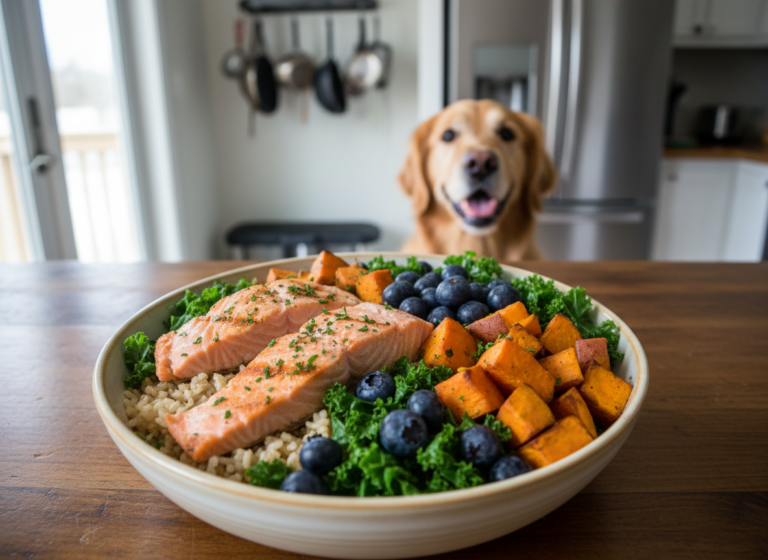
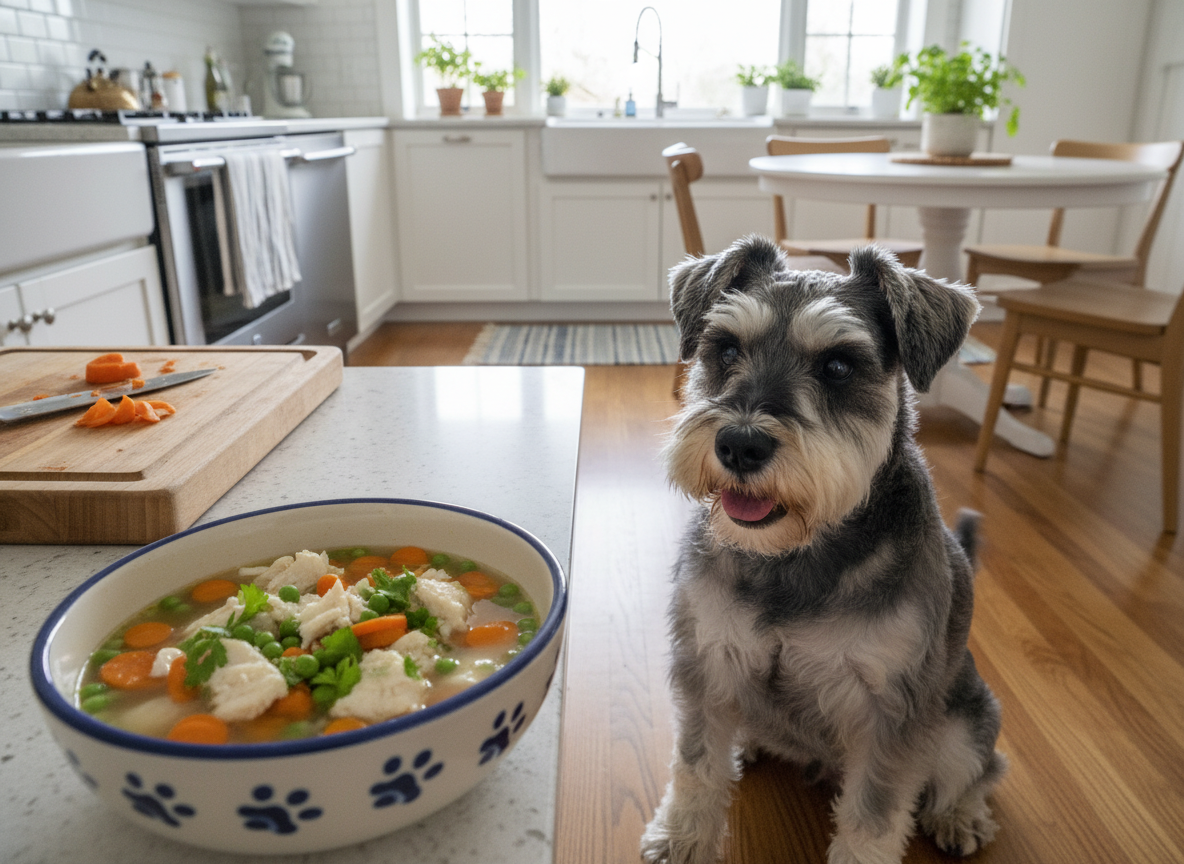
7 Low Fat Dog Food Recipes for Dogs with Pancreatitis
Seeing your beloved dog in pain from pancreatitis is heartbreaking. This serious condition, an inflammation of the pancreas, often requires a strict, lifelong dietary change. The number one rule? A low-fat diet. While many commercial options exist, preparing your dog’s food at home gives you complete control over every single ingredient, ensuring they get the gentle, nutritious meals they need to thrive.
But where do you start? Don’t worry, we’re here to help! We’ve compiled seven easy, delicious, and pancreatitis-friendly recipes that you can whip up in your own kitchen. Before we dive in, remember to always consult your veterinarian before making any changes to your dog’s diet. They can help you choose the best recipe and portion sizes for your pup’s specific needs.
Quick Recipe Comparison
| Recipe | Primary Protein | Key Ingredients | Best For |
|---|---|---|---|
| Simple Chicken & Rice | Chicken Breast | White Rice, Bone Broth | Sensitive Stomachs |
| Lean Turkey & Sweet Potato Mash | Ground Turkey | Sweet Potato, Spinach | Extra Nutrients & Fiber |
| Flaky Cod & Pumpkin Purée | Cod Fillets | Pumpkin, Green Beans | Digestive Support |
| Beef & Barley Goodness | Extra-Lean Ground Beef | Barley, Carrots | Picky Eaters |
| Egg White & Oatmeal Scramble | Egg Whites | Rolled Oats, Zucchini | Extremely Low-Fat Needs |
| Cottage Cheese & Veggie Bowl | Low-Fat Cottage Cheese | Peas, Bell Pepper | Quick & No-Cook Meals |
| Lentil & Butternut Squash Stew | Lentils | Butternut Squash, Celery | Plant-Based Option |
1. Simple Chicken & Rice Delight
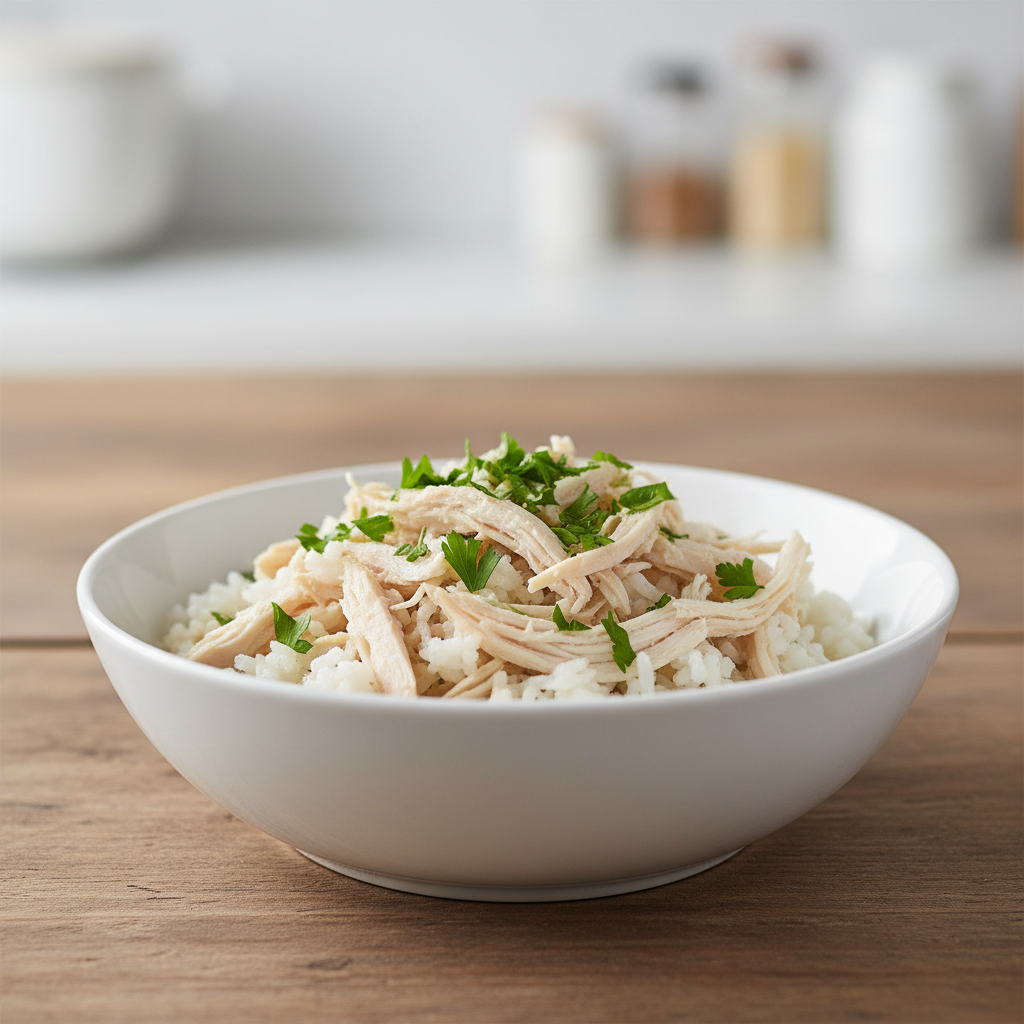
1. Simple Chicken & Rice Delight
This recipe is the gold standard for dogs with upset stomachs, and for good reason. It’s incredibly gentle, easy to digest, and provides a bland source of lean protein and carbohydrates that won’t overtax the pancreas. Using boneless, skinless chicken breast is key to keeping the fat content minimal.
Ingredients:
- 1 cup boneless, skinless chicken breast, cooked and shredded
- 2 cups cooked white rice (cooked in extra water to be mushy)
- 1/4 cup plain, unsalted bone broth (optional, for moisture)
- 2 tablespoons finely chopped parsley (for fresh breath!)
Instructions:
- Boil the chicken breast until thoroughly cooked. Do not use any oils or seasonings. Once cooked, let it cool and then shred it into small, bite-sized pieces.
- Cook the white rice according to package directions, but use a little extra water to make it softer and easier to digest.
- In a large bowl, combine the shredded chicken and cooked rice.
- If the mixture seems too dry, add a splash of bone broth to moisten it.
- Stir in the chopped parsley and serve once it has cooled to room temperature.
Pros & Cons
| Pros | Cons |
|---|---|
| Extremely easy to digest and gentle on the GI tract. | Not nutritionally complete for long-term feeding without supplements. |
| Simple, affordable ingredients. | White rice can spike blood sugar in some dogs. |
| Quick to prepare. | May be too bland for very picky eaters. |
Verdict:
This is the perfect starting recipe for a dog recovering from a recent pancreatitis flare-up. It’s the ultimate bland diet that provides necessary calories and protein without stressing the digestive system.
2. Lean Turkey & Sweet Potato Mash
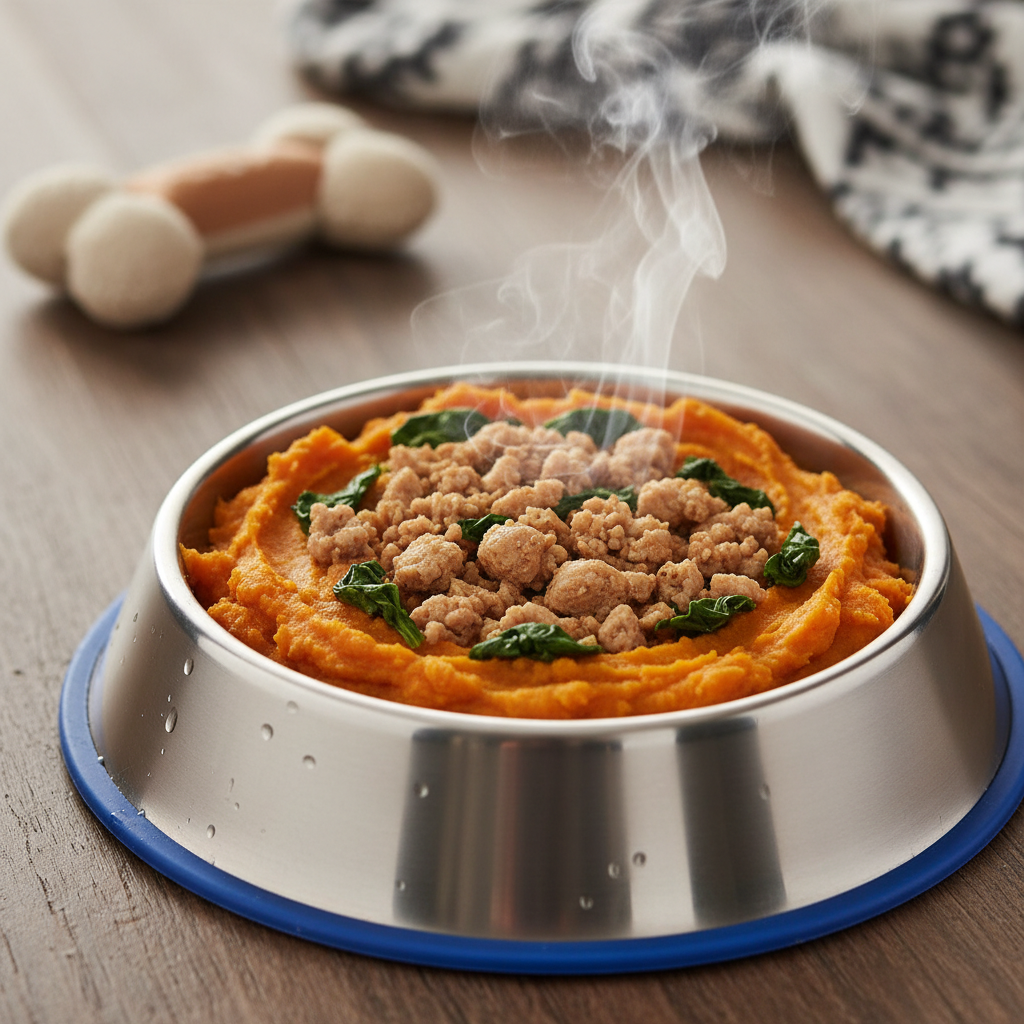
2. Lean Turkey & Sweet Potato Mash
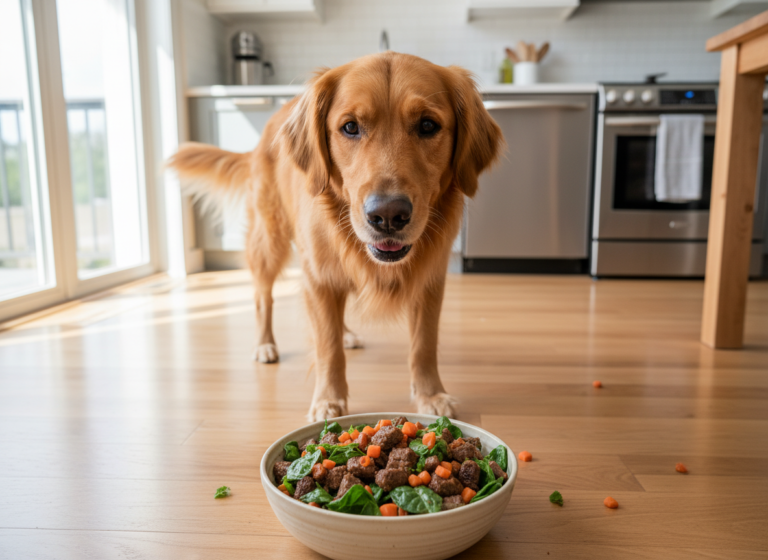
Ground turkey is another fantastic lean protein source, often even lower in fat than chicken. Paired with sweet potato, this recipe offers a boost of fiber, vitamins A and C, and complex carbohydrates for sustained energy.
Ingredients:
- 1 lb 99% lean ground turkey
- 2 medium sweet potatoes, peeled and cubed
- 1 cup chopped spinach
- 1/2 cup water
Instructions:
- In a large pot, add the cubed sweet potatoes and enough water to cover them. Boil until they are fork-tender, about 15-20 minutes. Drain and mash them.
- While the potatoes are boiling, cook the ground turkey in a non-stick skillet over medium heat. Break it up with a spoon until it’s fully cooked. Do not add any oil. Drain any fat that renders out.
- Once the turkey is cooked, add the chopped spinach and 1/2 cup of water to the skillet. Let it simmer for 2-3 minutes until the spinach is wilted.
- Combine the mashed sweet potatoes with the turkey and spinach mixture. Mix well and let it cool completely before serving.
Pros & Cons
| Pros | Cons |
|---|---|
| Sweet potatoes are rich in fiber and vitamins. | Ground turkey can be slightly more expensive than chicken. |
| A more flavorful option than plain chicken and rice. | Some dogs might be sensitive to turkey. |
| Easy to make in large batches and freeze. | The texture of mash might not appeal to all dogs. |
Verdict:
This is a great step-up from the basic chicken and rice. It introduces more nutrients and flavor while remaining very low in fat, making it ideal for dogs who are stable but need long-term dietary management.
3. Flaky Cod & Pumpkin Purée
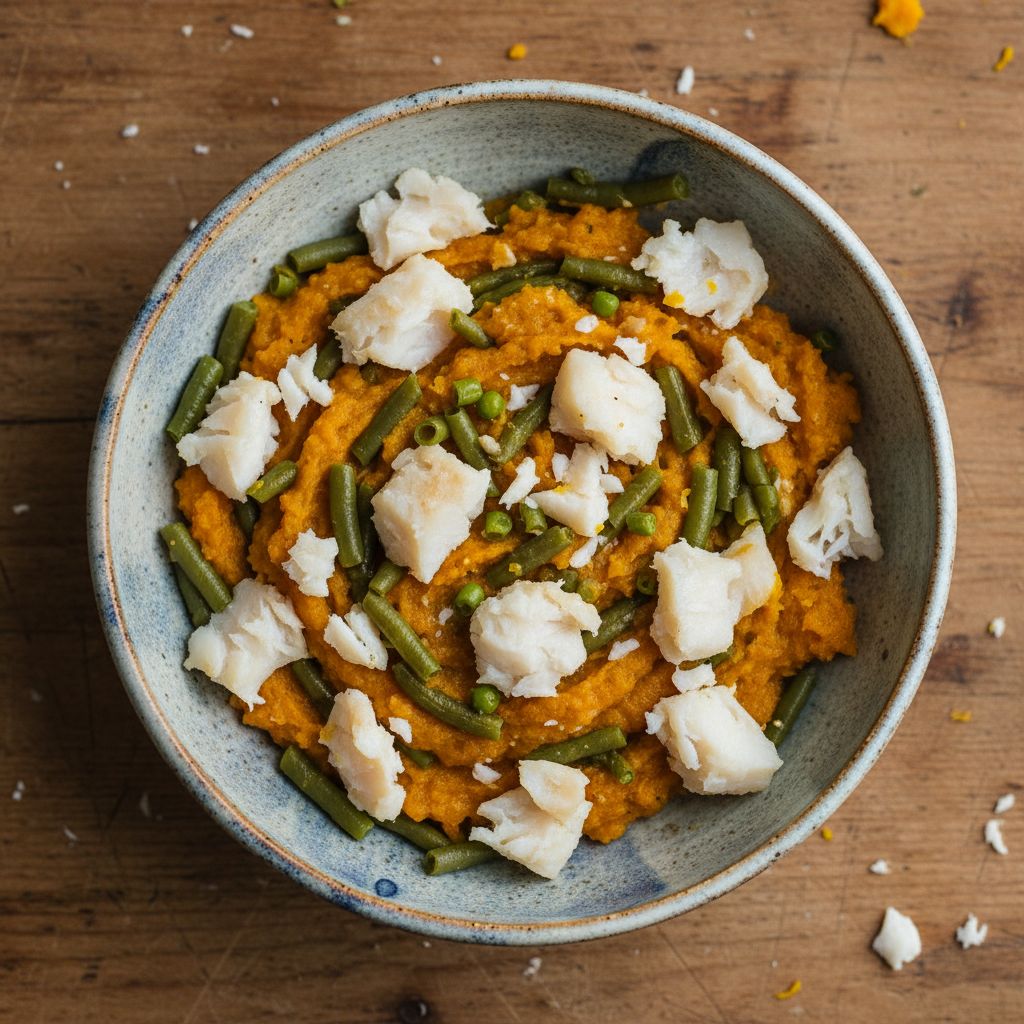
3. Flaky Cod & Pumpkin Purée
White fish like cod or haddock are exceptionally low in fat and a great source of protein. They also contain omega-3 fatty acids, which have anti-inflammatory properties. Pumpkin is a superstar for digestive health, helping with both constipation and diarrhea.
Ingredients:
- 1 lb cod fillets (or other white fish like tilapia or haddock)
- 1 cup plain pumpkin purée (100% pumpkin, not pie filling)
- 1 cup cooked green beans, chopped
- 1/2 cup cooked quinoa
Instructions:
- Preheat your oven to 400°F (200°C). Place the cod fillets on a baking sheet lined with parchment paper. Bake for 10-15 minutes, or until the fish is opaque and flakes easily with a fork. No oil is needed.
- While the fish bakes, cook the quinoa according to package directions. Steam or boil the green beans until tender, then chop them.
- Once the cod is cooked and has cooled slightly, flake it apart into small pieces. Be sure to check for any bones.
- In a bowl, gently mix the flaked cod, pumpkin purée, chopped green beans, and cooked quinoa.
- Serve at room temperature.
Pros & Cons
| Pros | Cons |
|---|---|
| Excellent for digestive regulation due to pumpkin. | Fish can have a strong smell that some owners dislike. |
| Fish provides anti-inflammatory omega-3s. | Fresh cod can be pricier than poultry. |
| Good option for dogs with poultry allergies. | Must be very careful to remove all bones. |
Verdict:
This recipe is a digestive powerhouse, perfect for dogs who not only have pancreatitis but also struggle with irregular bowel movements. It’s also a great choice for pups with allergies to chicken or turkey.
4. Beef & Barley Goodness
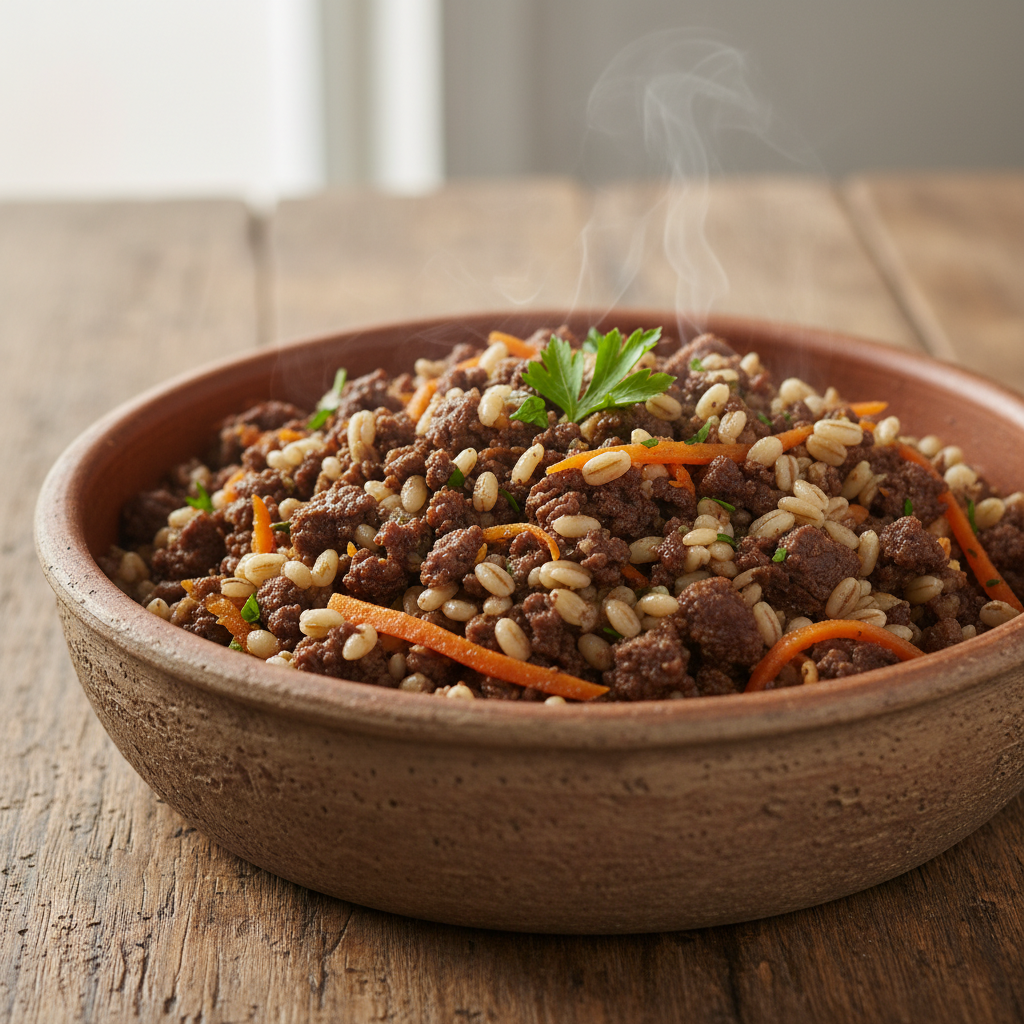
4. Beef & Barley Goodness
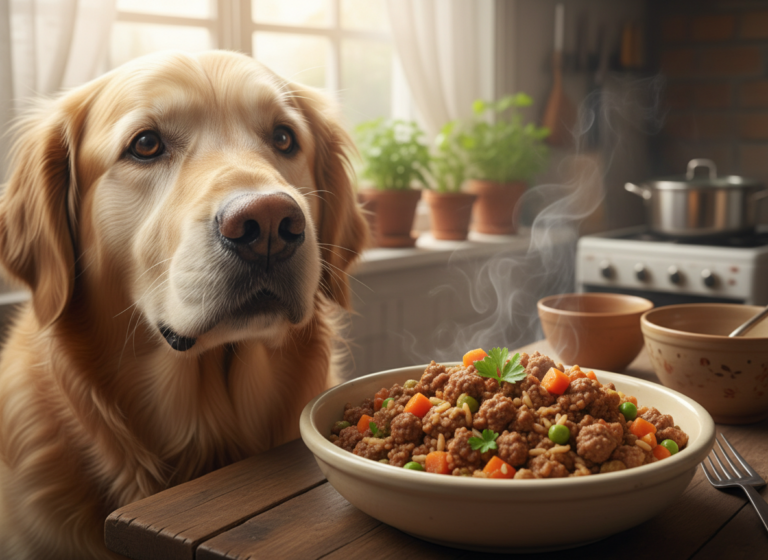
Many owners assume beef is off-limits, but extra-lean ground beef (at least 95% lean) or ground sirloin can be a safe, low-fat option that appeals to picky eaters. Barley is a healthy, low-glycemic grain that provides soluble fiber, which can aid in digestion.
Ingredients:
- 1 lb extra-lean ground beef (95/5 or 96/4)
- 1 cup cooked pearl barley
- 1 cup finely grated carrots
- 1/2 cup water
Instructions:
- In a dry, non-stick skillet, cook the ground beef over medium heat until browned. Use a spoon to crumble it into small pieces.
- After cooking, it’s crucial to drain the meat thoroughly. You can place it on a plate lined with paper towels to absorb every last bit of fat.
- Return the drained meat to the skillet. Add the grated carrots and water. Simmer for 5-7 minutes until the carrots are tender.
- Cook the barley separately according to the package instructions.
- Combine the beef and carrot mixture with the cooked barley. Let it cool before serving.
Pros & Cons
| Pros | Cons |
|---|---|
| Highly palatable for dogs who love the taste of beef. | Crucial to buy the leanest beef available, which can be expensive. |
| Barley is a nutritious, high-fiber grain. | Requires meticulous draining of fat after cooking. |
| Carrots provide beta-carotene and a touch of sweetness. | Barley is not grain-free, which is a concern for some owners. |
Verdict:
This recipe is the answer for the picky pup who turns their nose up at poultry or fish. As long as you are diligent about sourcing extra-lean beef and draining the fat, it can be a safe and delicious part of a pancreatitis management plan.
5. Egg White & Oatmeal Scramble
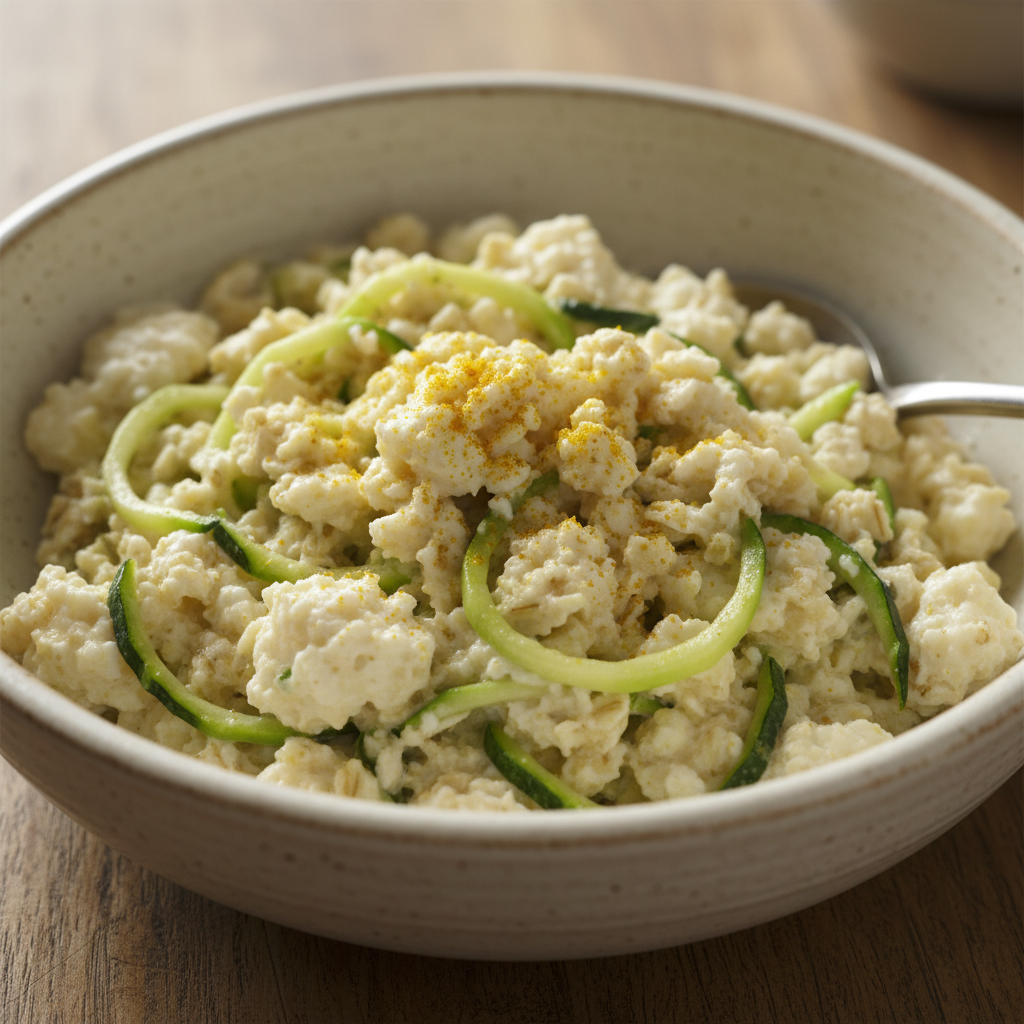
5. Egg White & Oatmeal Scramble
When you need an ultra-low-fat protein, egg whites are a fantastic choice. The yolk contains all the fat, so by using only the whites, you get a pure, easily digestible protein. Oatmeal provides soluble fiber, which is great for gut health.
Ingredients:
- 1/2 cup liquid egg whites (or whites from 4 large eggs)
- 1 cup cooked oatmeal (cooked with water, not milk)
- 1/2 cup finely grated zucchini
- A pinch of turmeric (optional, for its anti-inflammatory properties)
Instructions:
- Cook the oatmeal with water until it’s soft and has absorbed all the liquid. Avoid instant oatmeal with added sugars.
- Grate the zucchini and squeeze out as much excess water as possible using a paper towel or cheesecloth.
- In a non-stick pan (no oil!), scramble the egg whites over medium-low heat until they are just cooked through.
- Add the cooked oatmeal, grated zucchini, and a pinch of turmeric (if using) to the pan with the egg whites. Stir everything together for about a minute to heat through.
- Allow the scramble to cool to room temperature before serving.
Pros & Cons
| Pros | Cons |
|---|---|
| Extremely low in fat, one of the safest options. | Lower in calories, so larger portions may be needed. |
| Very quick and easy to make. | Some dogs may not like the texture. |
| Great for breakfast or a light meal. | Not as flavorful as meat-based recipes. |
Verdict:
This is an excellent choice for dogs who need a minimal-fat diet, perhaps during a sensitive recovery period. It’s also great for rotating with other proteins to provide variety without risking a flare-up.
6. Cottage Cheese & Veggie Bowl
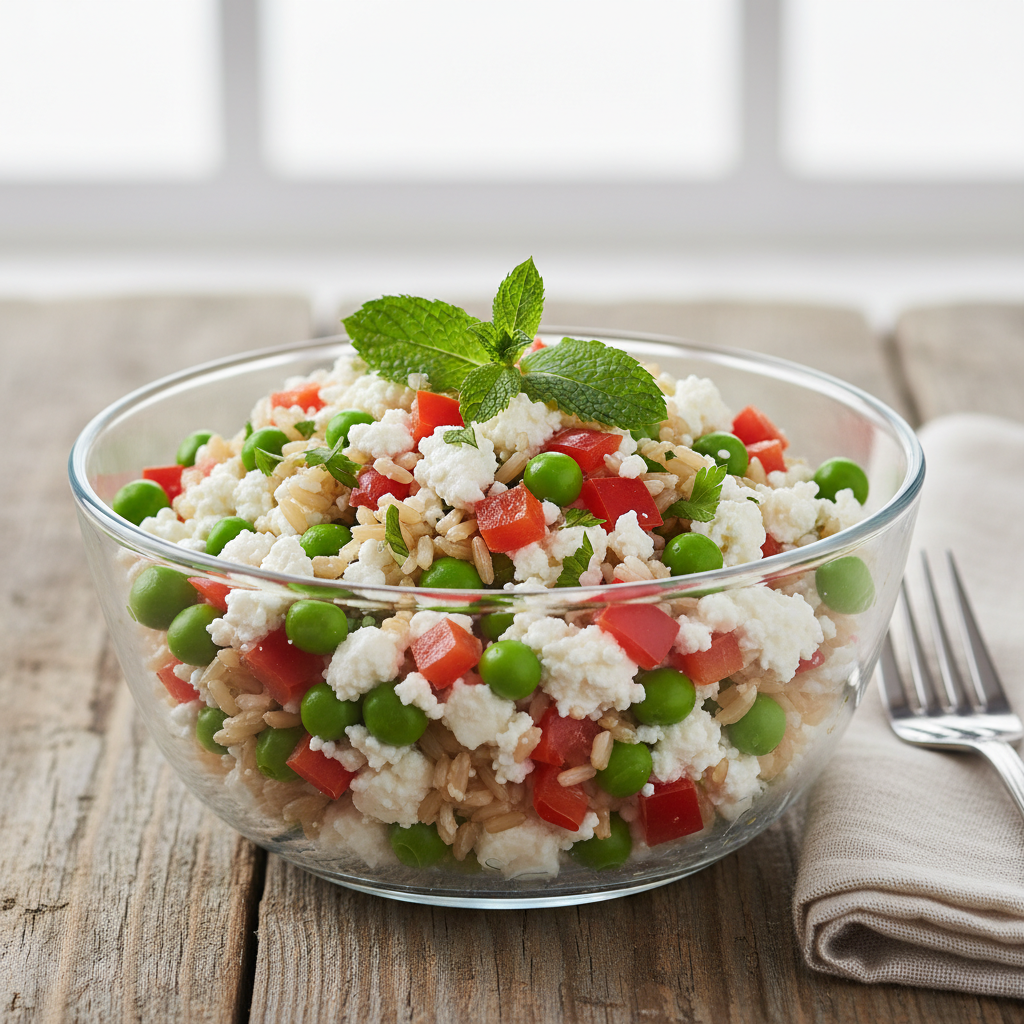
6. Cottage Cheese & Veggie Bowl
For a quick, no-cook meal, low-fat cottage cheese is a surprising but effective option. It’s packed with protein and calcium. Just be sure to choose a variety that is low-fat (1% or fat-free) and has no salt added if possible.
Ingredients:
- 1 cup low-fat (1%) cottage cheese
- 1/4 cup cooked peas (canned with no salt added, or frozen and thawed)
- 1/4 cup finely diced red bell pepper
- 1/2 cup cooked brown rice, cooled
Instructions:
- This is the easiest recipe of all! In a bowl, simply combine the low-fat cottage cheese, peas, diced red bell pepper, and cooled brown rice.
- Mix gently until all ingredients are evenly distributed.
- Serve immediately. This recipe is best served fresh and doesn’t store as well as the cooked options.
Pros & Cons
| Pros | Cons |
|---|---|
| No cooking required, perfect for busy owners. | Dairy can cause digestive upset in some dogs. |
| Provides a different protein source. | Best served fresh, not ideal for batch prepping. |
| Bell peppers are a great source of Vitamin C. | Not all dogs enjoy the taste or texture of cottage cheese. |
Verdict:
This is the perfect recipe for those days when you’re short on time. It’s a cool and refreshing meal, especially in warmer weather. Introduce it slowly to make sure your dog tolerates dairy well.
7. Lentil & Butternut Squash Stew
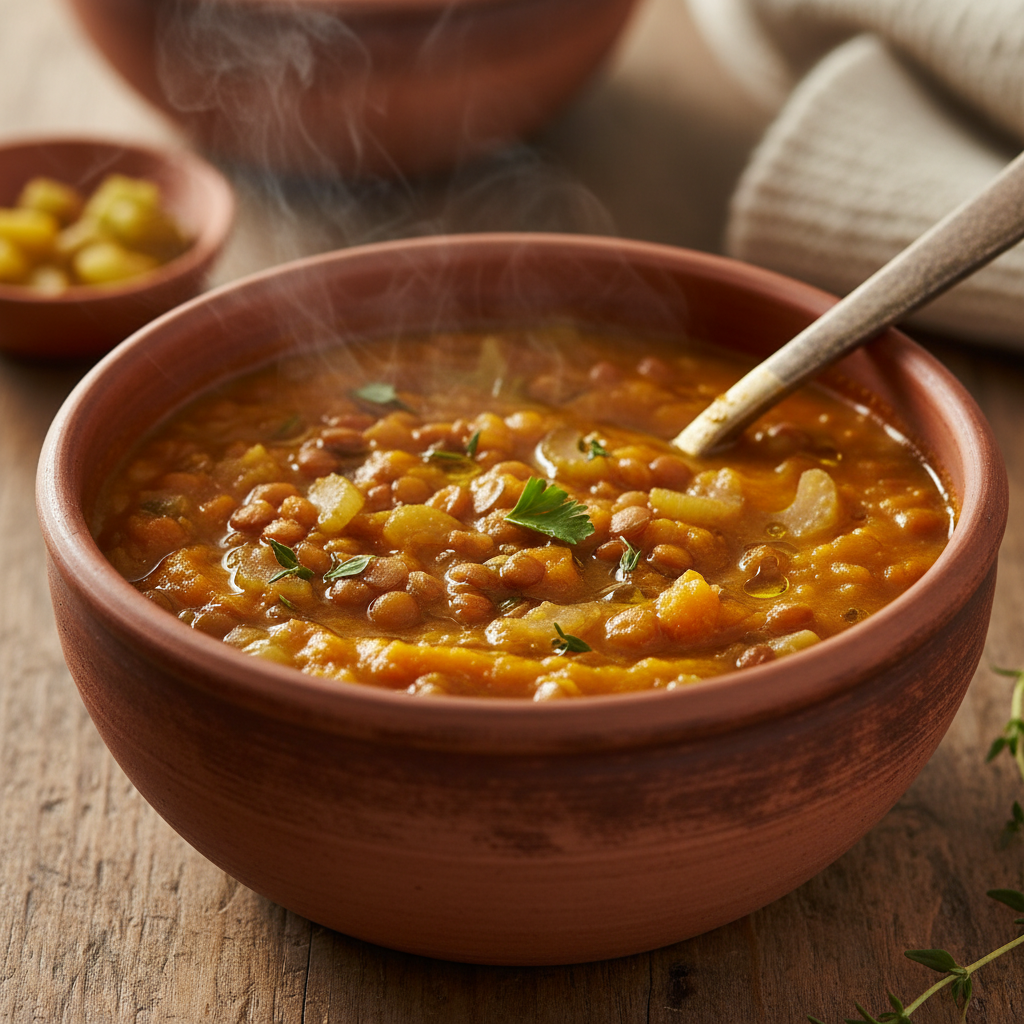
7. Lentil & Butternut Squash Stew
For a plant-forward option, lentils are a wonderful source of protein, fiber, and iron, and they are naturally very low in fat. Combined with the nutrient-rich butternut squash, this stew is both hearty and healthy.
Ingredients:
- 1/2 cup red or brown lentils, rinsed
- 2 cups cubed butternut squash
- 1 celery stalk, finely chopped
- 4 cups low-sodium vegetable or chicken broth
Instructions:
- In a large pot, combine the rinsed lentils, cubed butternut squash, chopped celery, and broth.
- Bring the mixture to a boil, then reduce the heat to low, cover, and simmer for 25-30 minutes, or until the lentils are soft and the squash is tender.
- Stir occasionally to prevent sticking. The stew should be thick but still have some liquid.
- Let the stew cool completely. You can mash it slightly for a smoother consistency if your dog prefers.
Pros & Cons
| Pros | Cons |
|---|---|
| Excellent plant-based source of protein and fiber. | Lentils can cause gas in some dogs if not introduced slowly. |
| Very inexpensive to make. | May not be suitable as a sole food source without vet-approved protein boosters. |
| Butternut squash is packed with vitamins and antioxidants. | Lacks the animal-based amino acids some vets prefer. |
Verdict:
This veggie-packed stew is a fantastic option to use in rotation with meat-based meals. It gives your dog’s system a different set of nutrients and is incredibly gentle and affordable. It’s a great ‘base’ meal to which you could add a small amount of a vet-approved lean protein if needed.
Buyer’s Guide: Choosing the Right Ingredients
Buyer’s Guide: Choosing the Right Ingredients for a Pancreatitis-Friendly Diet
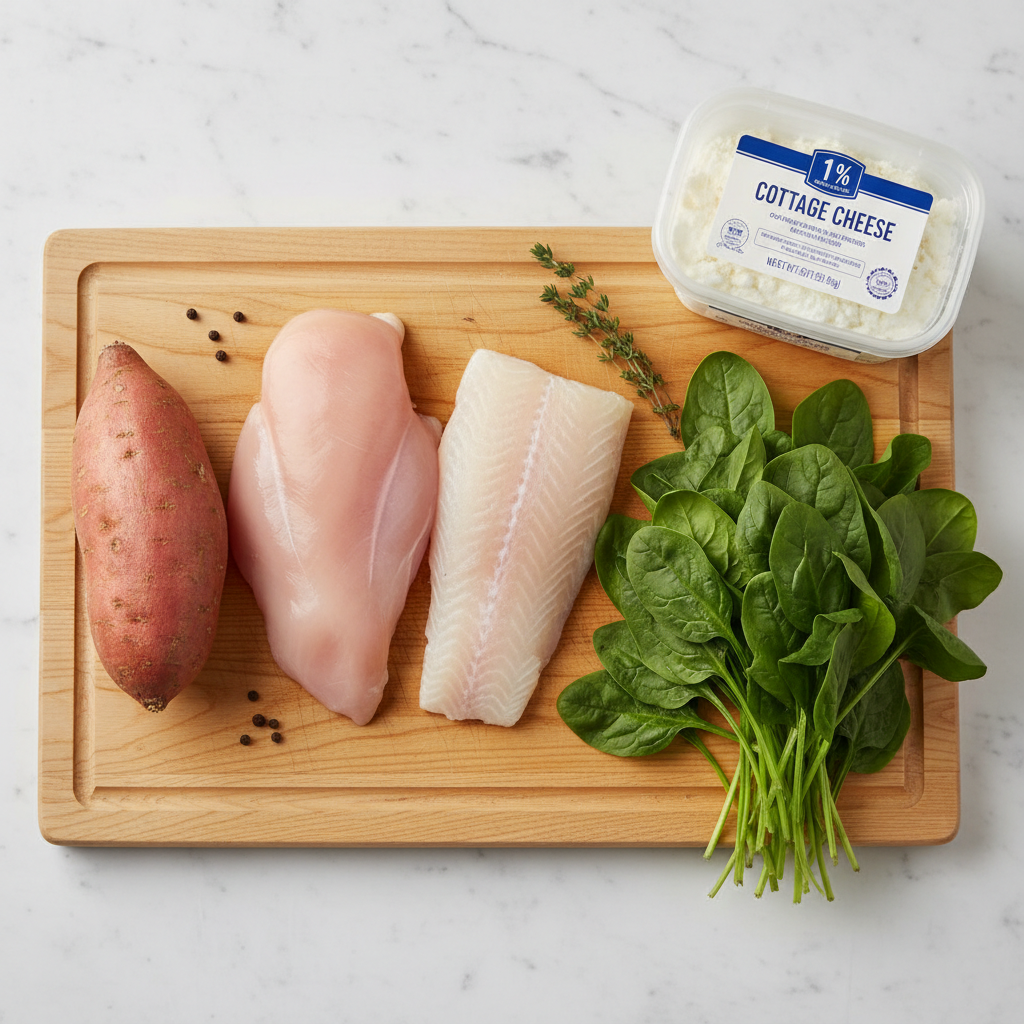
Making food at home is all about control, and that starts in the grocery aisle. When your dog has pancreatitis, every ingredient matters. Here’s what to look for and what to avoid.
Protein Power
Protein is essential, but the fat that often comes with it is the enemy. Stick to the leanest options available.
- Poultry: Always choose boneless, skinless chicken or turkey breast. Ground versions should be at least 95% lean. Never feed your dog the skin.
- Red Meat: If you use beef, it must be extra-lean ground sirloin or a 96/4 lean-to-fat ratio. Always drain off any rendered fat after cooking. Avoid fatty cuts like chuck or ribeye.
- Fish: Stick to white fish like cod, haddock, tilapia, or pollock. Avoid oily fish like salmon or mackerel, as their high (though healthy) fat content can be too much for a sensitive pancreas.
- Other Options: Egg whites and low-fat (1%) cottage cheese are excellent, very low-fat protein sources.
Carbohydrate Choices
Carbs provide energy and fiber. Simple, easily digestible options are best.
- Grains: White rice is the go-to for sensitive stomachs. Other good options include oatmeal, barley, and quinoa.
- Vegetables: Sweet potatoes and pumpkin are fantastic for their fiber and nutrients. Other safe bets include carrots, green beans, zucchini, peas, and spinach. Always cook vegetables to make them easier to digest.
What to Absolutely Avoid
This is just as important as what to include. A single high-fat mistake can trigger a painful flare-up.
- Oils and Fats: Do not add any butter, oil, or fat drippings to your dog’s food. Cook everything by boiling, steaming, baking, or using a dry non-stick pan.
- Fatty Meats: Bacon, sausage, lamb, duck, and fatty cuts of beef or pork are strictly off-limits.
- High-Fat Dairy: Avoid cheese (except low-fat cottage cheese), milk, and yogurt unless it’s specifically non-fat and your vet approves.
- Processed Foods: Anything with added salt, sugar, onions, or garlic is a no-go. Stick to whole, fresh ingredients.
Frequently Asked Questions

Frequently Asked Questions
1. How much homemade food should I feed my dog?
Portion size is critical and depends on your dog’s age, weight, activity level, and metabolic rate. It’s impossible to give a one-size-fits-all answer. This is one of the most important questions to ask your veterinarian. They can calculate your dog’s daily caloric needs and tell you exactly how much of a specific recipe to feed to ensure they maintain a healthy weight.
2. Are these recipes nutritionally complete for long-term feeding?
While these recipes are designed to be healthy and safe, most simple homemade diets are not 100% nutritionally complete on their own for long-term use. They may lack certain vitamins and minerals, like calcium or zinc, in the correct ratios. To make a homemade diet complete, you will likely need to add a vitamin and mineral supplement designed for dogs on homemade food. Please, consult your veterinarian or a veterinary nutritionist to recommend the right supplement for your dog.
3. Can I give my dog with pancreatitis treats?
This is a tricky area. Most commercial dog treats are too high in fat. Even a small, seemingly innocent treat can cause a flare-up. The safest approach is to use a portion of their regular homemade meal as a treat. You can also give single-ingredient treats that are naturally fat-free, like small pieces of carrot, green beans, or a tiny piece of cooked chicken breast. Always check with your vet before introducing any new treat.
Conclusion
Caring for a dog with pancreatitis is a journey of love and diligence, and diet is your most powerful tool. By preparing low-fat meals at home, you’re not just feeding your dog; you’re actively participating in their health and well-being. These seven recipes provide a wonderful starting point to show your pup that a restricted diet can still be delicious and satisfying.
Remember, the golden rule is to partner with your veterinarian. They are your best resource for navigating this condition. Use these recipes as a foundation for a conversation with them to create the perfect, tailored nutritional plan that will help your furry best friend live a long, happy, and comfortable life. Happy cooking!