
7 Omega-Packed Fish Bone Broth For Dogs Recipes
Hey there, fellow dog lovers! Are you constantly on the lookout for natural ways to boost your furry friend’s health? If you’re nodding along, you’ve come to the right place. We all want our pups to have shinier coats, more flexible joints, and a zest for life. One of the best-kept secrets in the canine wellness world is the liquid gold known as fish bone broth.
Unlike traditional beef or chicken broth, fish bone broth is an absolute powerhouse of Omega-3 fatty acids, collagen, and essential minerals. It’s a fantastic way to support everything from their skin and coat to their brain and immune system. Plus, dogs find it absolutely irresistible! Forget store-bought supplements with questionable ingredients; these homemade recipes are simple, affordable, and made with love.
Ready to turn your kitchen into your dog’s favorite health bistro? Let’s dive into seven fin-tastic recipes! Here’s a quick peek at what we’ll be cooking up:
Quick Recipe Comparison
| Recipe Name | Best For | Prep Time | Key Ingredients |
|---|---|---|---|
| The Classic Salmon Soother | Skin & Coat Health | 20 mins | Salmon Heads/Frames, Carrots |
| Sardine Super-Boost Broth | Overall Nutrition Boost | 15 mins | Canned Sardines, Parsley |
| Mackerel Mobility Magic | Joint Support | 20 mins | Mackerel, Ginger |
| Cod & Kelp Gut Guardian | Sensitive Stomachs | 20 mins | Cod Frames, Kelp Powder |
| Tuna & Turmeric Tonic | Anti-Inflammatory Support | 10 mins | Canned Tuna, Turmeric |
| Flounder & Fennel Digestive Aid | Digestive Health | 20 mins | Flounder Frames, Fennel |
| The ‘Kitchen Sink’ Whitefish Medley | Budget-Friendly Nutrition | 25 mins | Mixed Whitefish Bones, Celery |
1. The Classic Salmon Soother
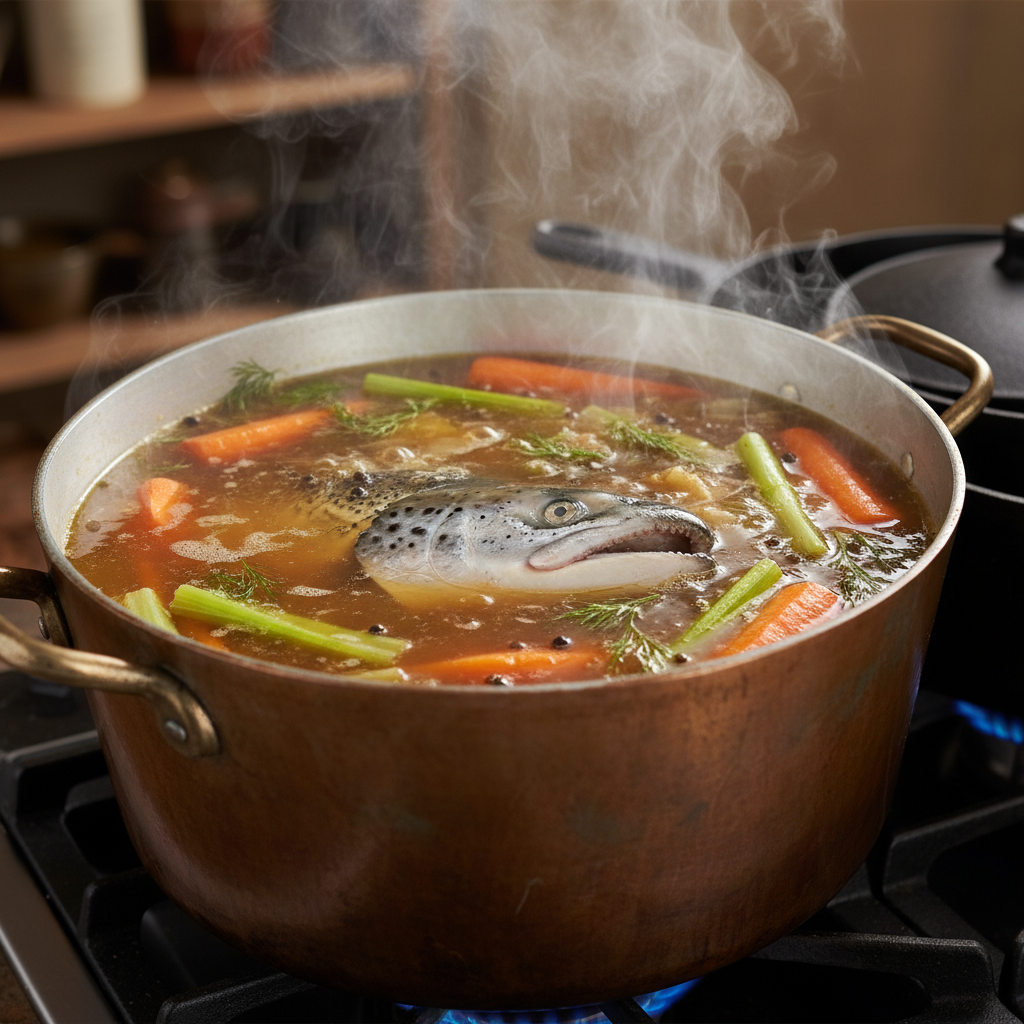
If you’re looking for the perfect entry point into the world of fish bone broth, this is it. Salmon is renowned for its high concentration of Omega-3 fatty acids, particularly EPA and DHA, which are superstars for promoting healthy skin and a luxuriously shiny coat. This recipe is simple, uses readily available ingredients, and creates a rich, palatable broth that even picky eaters often love.
Ingredients:
- 2-3 lbs salmon heads, frames, and/or collars (ask your local fishmonger; they often sell them cheaply!)
- 1 gallon of filtered water
- 2 carrots, roughly chopped
- 2 celery stalks, roughly chopped
- 1 tablespoon of apple cider vinegar (this helps extract minerals from the bones)
- A small handful of fresh parsley
Instructions:
- Rinse the Fish: Give the salmon parts a good rinse under cold water to remove any impurities.
- Combine Ingredients: Place the salmon heads and frames into a large stockpot or slow cooker. Add the chopped carrots, celery, and apple cider vinegar.
- Add Water: Pour in the filtered water, ensuring all the ingredients are fully submerged.
- Simmer Gently: Bring the pot to a boil, then immediately reduce the heat to a low simmer. Skim off any foam that rises to the surface. Let it simmer gently for at least 4-6 hours on the stovetop, or 12-24 hours in a slow cooker on low. The key is low and slow to extract all the goodness without making the bones brittle.
- Strain Thoroughly: Once done, turn off the heat and let it cool slightly. Carefully strain the broth through a fine-mesh sieve or cheesecloth into a large bowl or container. It is CRITICAL to ensure no bones, not even tiny ones, get into the final broth.
- Add Parsley & Cool: Stir in the fresh parsley. Let the broth cool completely on the counter, then place it in the refrigerator.
- Skim the Fat: After a few hours in the fridge, a layer of fat will solidify on top. You can skim this off and discard it. The broth underneath should have a gelatinous, jiggly texture – that’s the collagen!
Pros & Cons
| Pros | Cons |
|---|---|
| Extremely high in Omega-3s for skin and coat health. | Salmon can be more expensive than other fish. |
| Rich, appealing flavor for most dogs. | Can make the house smell quite fishy during cooking. |
| Produces a very gelatinous, collagen-rich broth. | Requires careful straining to remove all bones. |
Verdict:
This is the go-to recipe for any dog parent looking to specifically target dry skin, dull fur, or excessive shedding. It’s a fantastic, all-around health booster that lays a great foundation for your pup’s diet.
2. Sardine Super-Boost Broth

Don’t underestimate the humble sardine! These tiny fish are one of the most nutrient-dense foods on the planet. They are packed with Omega-3s, but also provide a fantastic source of calcium because you use the whole fish, including the soft, edible bones. This recipe is incredibly quick and easy, making it perfect for busy pet parents.
Ingredients:
- 2 cans (approx. 4 oz each) of sardines packed in water, no salt added
- 6 cups of filtered water
- 1 tablespoon of apple cider vinegar
- A small handful of fresh, chopped parsley
Instructions:
- Combine: Empty the entire contents of the sardine cans (fish and water) into a medium saucepan.
- Mash Lightly: Use a fork to lightly break up the sardines.
- Add Water & Vinegar: Pour in the 6 cups of filtered water and the apple cider vinegar.
- Simmer: Bring the mixture to a gentle simmer over medium heat. Reduce the heat to low and let it cook for about 20-30 minutes. The goal is just to infuse the water with all the nutrients.
- Cool and Serve: Turn off the heat and let the broth cool completely. There’s no need to strain this one, as the bones are soft and edible, providing a great calcium boost. Just give it a good stir.
- Garnish: Stir in the fresh parsley before serving.
Pros & Cons
| Pros | Cons |
|---|---|
| Extremely fast and easy to make (under 30 minutes). | Very strong, fishy odor that might not be for everyone. |
| Excellent source of calcium from the edible bones. | Not a true ‘bone broth’ as it won’t become gelatinous. |
| Inexpensive and uses pantry staples. | Some dogs may be sensitive to the richness of sardines. |
Verdict:
This is the perfect recipe for pet parents who are short on time but still want to provide a massive nutritional punch. It’s especially great for small breeds and senior dogs who can benefit from the extra calcium for their bones.
3. Mackerel Mobility Magic
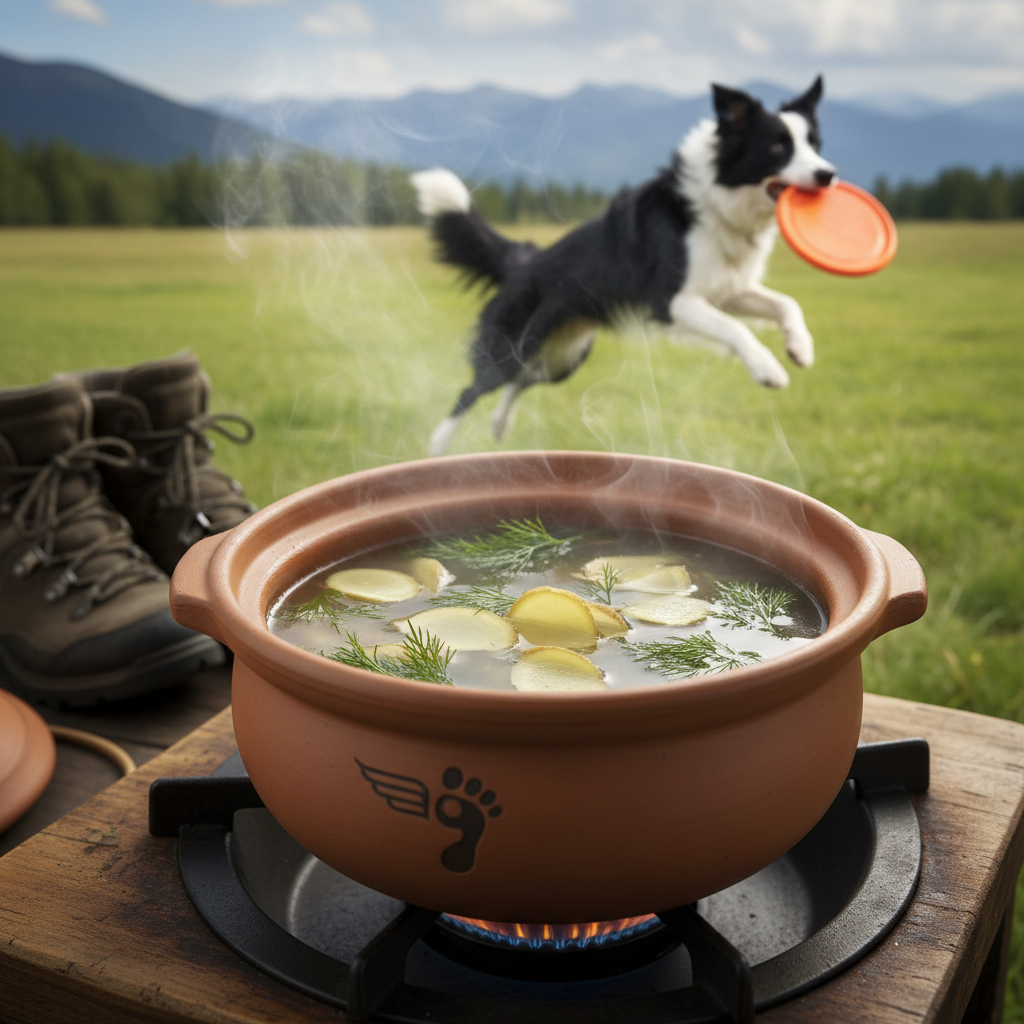
If you have an active dog, a senior pup, or a breed prone to joint issues, this Mackerel Mobility Magic broth is for you. Mackerel is an oily fish that is exceptionally high in anti-inflammatory Omega-3s. We’re pairing it with a touch of fresh ginger, another natural anti-inflammatory, to create a powerful concoction to support healthy, happy joints.
Ingredients:
- 2 lbs mackerel heads and frames (or 1 lb of whole mackerel, cleaned)
- 1 gallon of filtered water
- 1-inch piece of fresh ginger, thinly sliced
- 1 tablespoon of apple cider vinegar
- A few sprigs of fresh dill (optional)
Instructions:
- Prep the Fish: Rinse the mackerel parts well under cold water. If using whole fish, make sure they are gutted and cleaned.
- Combine in Pot: Place the mackerel, sliced ginger, and apple cider vinegar in a large stockpot or slow cooker.
- Add Water and Simmer: Cover with the filtered water and bring to a boil. Immediately reduce to a very low simmer. Skim off any scum that forms.
- Cook Low and Slow: Let the broth simmer for 4-6 hours on the stove, or 12-20 hours in a slow cooker. You want to extract all the collagen and minerals.
- Strain with Care: Let the broth cool down before straining it through a fine-mesh sieve. Double-check to ensure no bones have passed through. This is extremely important.
- Cool and Store: Add the optional dill, then let the broth cool to room temperature. Refrigerate until a layer of fat forms on top. Skim off the fat and store the gelatinous broth below.
Pros & Cons
| Pros | Cons |
|---|---|
| Specifically targets joint health and inflammation. | Mackerel can be harder to find than salmon or cod. |
| Ginger adds extra anti-inflammatory power. | It has a very strong and distinct fishy smell. |
| Great for senior dogs and active sporting breeds. | Ginger should be used in moderation, especially for sensitive dogs. |
Verdict:
This is the ultimate broth for supporting mobility. It’s an excellent addition to the diet of older dogs showing signs of stiffness, agility dogs, or any pup who could use a little extra joint lubrication and care.
4. Cod & Kelp Gut Guardian
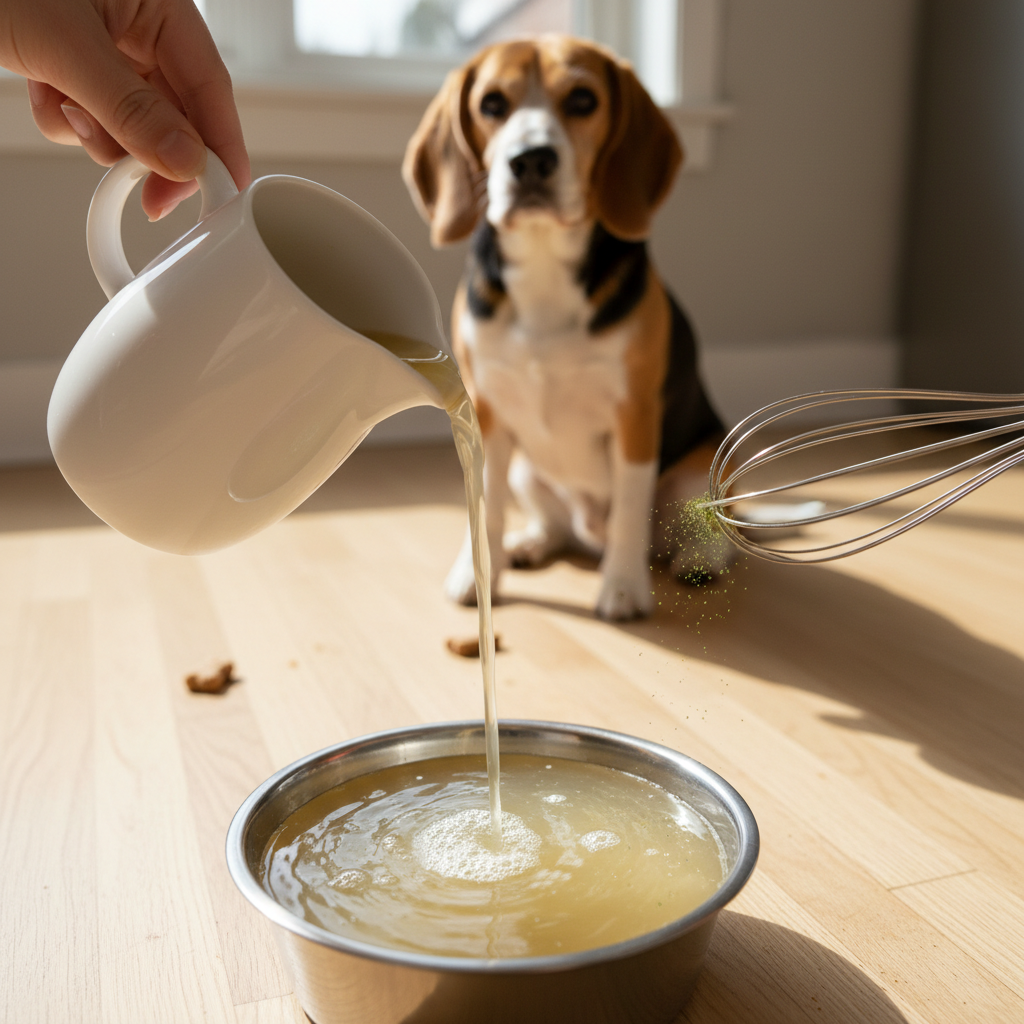
For our furry friends with sensitive tummies, a rich broth can sometimes be too much. This recipe uses cod, a leaner, milder whitefish, making it much gentler on the digestive system. We’re also adding a sprinkle of kelp powder, a seaweed superfood that’s packed with minerals and prebiotics to support a healthy gut microbiome and thyroid function.
Ingredients:
- 2-3 lbs of cod frames (the leftover bones after filleting)
- 1 gallon of filtered water
- 1 tablespoon of apple cider vinegar
- 1 teaspoon of organic kelp powder
- 1 carrot, chopped
Instructions:
- Rinse and Combine: Rinse the cod frames thoroughly. Place them in your stockpot or slow cooker along with the chopped carrot and apple cider vinegar.
- Add Water and Simmer: Cover with water, bring to a boil, and immediately reduce to a low simmer. Skim any foam from the surface.
- Gentle Cooking: Simmer for 3-5 hours on the stove or 10-15 hours in a slow cooker. Since cod bones are lighter, they don’t need as long as salmon.
- Strain Carefully: Allow the broth to cool, then strain it meticulously through a fine-mesh sieve or cheesecloth to remove every single bone.
- Stir in Kelp: Once the broth is strained and still warm, whisk in the teaspoon of kelp powder until it’s fully dissolved.
- Cool and Skim: Let it cool to room temperature, then refrigerate. There will be very little fat to skim from this lean broth. It may have a looser gel than salmon broth, which is perfectly normal.
Pros & Cons
| Pros | Cons |
|---|---|
| Very gentle and easy to digest for sensitive dogs. | Lower in Omega-3s compared to oily fish like salmon. |
| Kelp adds beneficial minerals and supports gut health. | May not form as firm of a gel, which some people mistake for a flaw. |
| Mild flavor and less ‘fishy’ smell during cooking. | Cod frames might need to be special-ordered from a fish market. |
Verdict:
This is the perfect ‘starter’ broth for dogs who are new to fish or have a history of digestive upset. The Cod & Kelp Gut Guardian is all about gentle, soothing nourishment that supports a happy tummy.
5. Tuna & Turmeric Tonic

Need a super-fast, anti-inflammatory boost for your pup? This recipe leverages the convenience of canned tuna and the power of turmeric. Turmeric contains curcumin, a compound famous for its potent anti-inflammatory and antioxidant properties. This ‘tonic’ is less of a traditional bone broth and more of a quick, nutrient-rich gravy to pour over kibble.
Ingredients:
- 1 can (5 oz) of chunk light tuna in water, no salt added
- 4 cups of filtered water
- 1/4 teaspoon of ground turmeric
- A pinch of black pepper (helps with turmeric absorption)
Instructions:
- Combine: In a small saucepan, combine the entire can of tuna (with its water), the 4 cups of filtered water, the turmeric, and the pinch of black pepper.
- Warm and Whisk: Heat over medium heat, whisking to break up the tuna and dissolve the turmeric.
- Simmer Briefly: Let the mixture come to a gentle simmer for just 5-10 minutes to allow the flavors to meld.
- Cool and Serve: Turn off the heat and let it cool completely. No straining is needed. Give it a final stir and pour a small amount over your dog’s regular meal.
Pros & Cons
| Pros | Cons |
|---|---|
| Incredibly quick to make, taking only about 10 minutes. | Not a source of collagen or gelatin as it contains no bones. |
| Turmeric provides powerful anti-inflammatory benefits. | Must use ‘chunk light’ tuna to minimize mercury content. |
| Uses common and inexpensive pantry ingredients. | Turmeric can stain bowls and surfaces, so be careful! |
Verdict:
This tonic is a fantastic, convenient way to add anti-inflammatory goodness and a burst of flavor to your dog’s food. It’s ideal for older dogs with achy joints or any dog that could benefit from reduced inflammation in their system.
6. Flounder & Fennel Digestive Aid
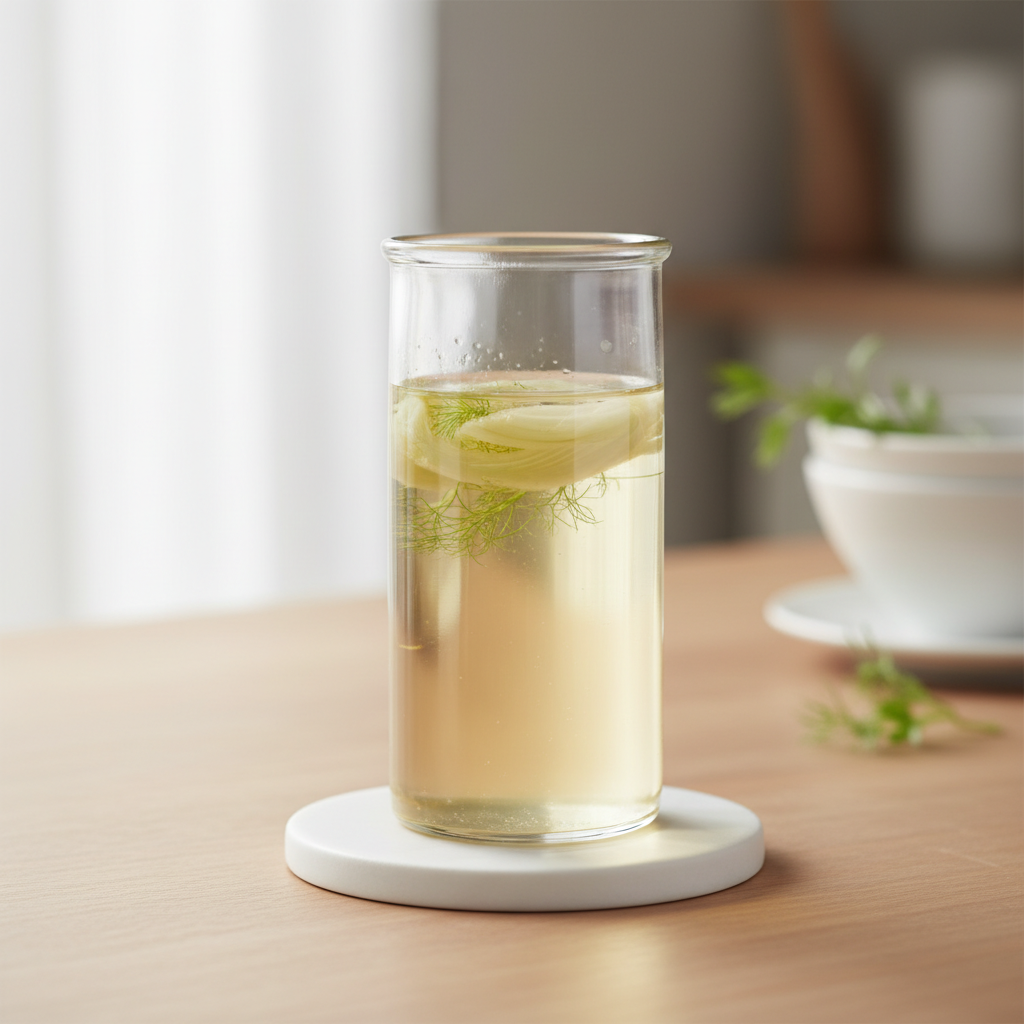
Here’s another wonderful option for dogs with sensitive systems. Flounder is an incredibly lean and mild flatfish, making its broth very easy on the stomach. We’re adding a hint of fennel, a carminative herb known in traditional medicine to help soothe the digestive tract, reduce gas, and ease bloating. It’s a gentle, comforting hug in a bowl.
Ingredients:
- 2 lbs of flounder or other flatfish frames (like sole or halibut)
- 1 gallon of filtered water
- 1 tablespoon of apple cider vinegar
- 1/2 bulb of fresh fennel, roughly chopped
Instructions:
- Prep and Combine: Rinse the fish frames well and place them in a large stockpot with the chopped fennel and apple cider vinegar.
- Add Water and Simmer: Cover with water, bring to a boil, then reduce to a very low simmer, skimming the surface as needed.
- Cook Gently: Let the broth simmer for 3-5 hours. The bones of these fish are quite delicate and release their nutrients relatively quickly.
- Strain Meticulously: Let it cool before straining through a fine-mesh sieve. Flatfish have many tiny bones, so you may want to strain it twice to be extra safe.
- Cool and Store: Cool to room temperature, then refrigerate. Skim any small amount of fat that may form. The resulting broth will be light, clear, and fragrant.
Pros & Cons
| Pros | Cons |
|---|---|
| Extremely gentle and ideal for dogs with digestive issues. | Lower in Omega-3s than oily fish. |
| Fennel adds a unique, stomach-soothing property. | Requires very careful straining due to numerous tiny bones. |
| Very mild aroma, making it a good choice for sensitive noses (human and canine!). | Flounder frames might not be as commonly available. |
Verdict:
This is the go-to recipe for a dog that’s recovering from an upset stomach or is prone to gas and indigestion. It’s a bland, soothing, and hydrating meal topper that helps get their system back on track.
7. The ‘Kitchen Sink’ Whitefish Medley

This recipe is all about being resourceful and budget-friendly! Don’t be afraid to mix and match. Your local fish market often has a variety of leftover whitefish frames from filleting cod, haddock, pollock, or hake. Combining them creates a broth with a complex and balanced profile of minerals and nutrients. It’s a fantastic way to reduce waste and create a high-value supplement for your dog at a low cost.
Ingredients:
- 3 lbs of mixed whitefish heads and frames (cod, haddock, pollock, hake, etc.)
- 1 gallon of filtered water
- 2 celery stalks, chopped
- 1 carrot, chopped
- 1 tablespoon of apple cider vinegar
- A handful of parsley
Instructions:
- Rinse and Combine: Rinse all the fish parts very well. Place them in your largest stockpot or slow cooker with the celery, carrot, and apple cider vinegar.
- Cover and Simmer: Add the water, bring to a boil, and immediately reduce to a low simmer. Skim the surface foam.
- Long Simmer: Let this medley simmer for 5-7 hours on the stove, or up to 24 hours in a slow cooker to ensure you extract nutrients from all the different types of bones.
- Strain, Strain, Strain: This is the most important step for a mixed broth. Let it cool, then strain meticulously through a fine-mesh sieve. Given the mix of bones, a double strain is highly recommended.
- Finish and Cool: Stir in the parsley. Let the broth cool to room temperature before refrigerating. Skim the fat layer once solidified.
Pros & Cons
| Pros | Cons |
|---|---|
| Very economical and makes use of fish parts that might be discarded. | Nutrient profile can be inconsistent depending on the fish used. |
| Provides a broad spectrum of minerals from different fish species. | Requires extra diligence in straining to remove all bone types. |
| A great way to reduce food waste. | The smell can be quite strong and complex. |
Verdict:
This is the perfect recipe for the savvy, budget-conscious pet parent who wants to provide consistent, homemade nutrition without breaking the bank. It’s a fantastic all-purpose broth for general health maintenance.
A Pup-Parent’s Guide to Making the Best Fish Bone Broth
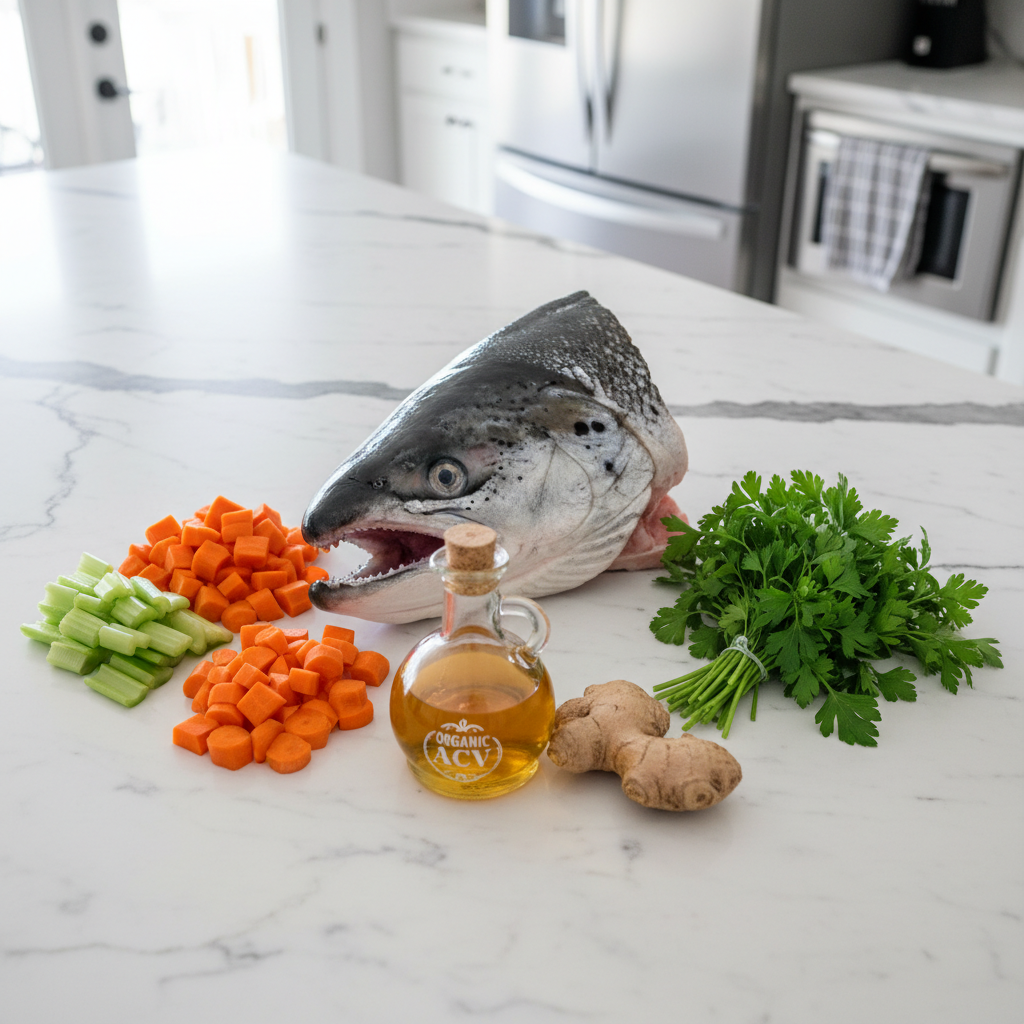
Feeling inspired to start simmering? Awesome! Making fish bone broth is more of an art than a science, but following a few key principles will ensure you get a safe, nutritious, and delicious final product every time.
Choosing Your Fish
The type of fish you choose is the most important decision. Here’s what to look for:
- Go for Low-Mercury Fish: Stick to smaller, non-predatory fish. Excellent choices include salmon, sardines, mackerel, anchovies, cod, haddock, and flounder. It’s best to avoid large fish like shark, swordfish, king mackerel, and tilefish, as they accumulate higher levels of mercury.
- Wild-Caught Over Farmed: Whenever possible, opt for wild-caught fish. They tend to have a better fatty acid profile (more Omega-3s!) and are less likely to contain antibiotics or other contaminants.
- Use the Whole Thing (Almost): The best parts for broth are the heads and frames (the skeleton). These parts are loaded with cartilage, connective tissue, and marrow, which translates to a more collagen-rich broth. Don’t be shy about asking your fishmonger for them!
Veggies & Herbs: What to Add and Avoid
You can add dog-safe vegetables and herbs to increase the nutrient content and flavor.
- Great Additions: Carrots, celery, parsley, dill, fennel, ginger, and turmeric are all fantastic, healthy choices.
- ABSOLUTELY AVOID: Onions, garlic, leeks, and shallots are toxic to dogs and should never be included in your broth.
The Magic of Apple Cider Vinegar
Don’t skip the splash of apple cider vinegar! The acidity plays a crucial role in helping to break down the cartilage and bones, pulling more of the valuable minerals and collagen out of the fish and into the broth.
Straining is Non-Negotiable
We’ve said it in every recipe, but it bears repeating: you must strain the broth with extreme care. Cooked fish bones, no matter how soft they seem, can become brittle and splinter, posing a serious choking or internal perforation risk. Use a very fine-mesh sieve, or for ultimate safety, line a colander with cheesecloth. Never, ever feed your dog the cooked bones from the broth.
Storage Tips
Once your liquid gold has cooled, you can store it in the refrigerator in an airtight container for up to 5-7 days. For longer storage, pour the broth into ice cube trays and freeze. Once frozen, you can pop the cubes into a freezer bag. This is a super convenient way to have single servings ready to go! They’ll last in the freezer for up to 6 months.
Frequently Asked Questions

How much fish bone broth should I give my dog?
It depends on the size of your dog. A good rule of thumb is to start small. For small dogs (under 20 lbs), begin with 1-2 tablespoons per day over their food. For medium dogs (20-50 lbs), you can give 1/4 to 1/2 cup. For large dogs (over 50 lbs), 1/2 to 1 cup per day is a good amount. You can serve it as a hydrating drink, pour it over their kibble to soften it, or use the frozen cubes as a cool treat in the summer.
Can I use fish scraps from my own dinner?
It’s generally not recommended unless you are eating very plain, unseasoned fish. Broth for dogs should never contain salt, onions, garlic, or other seasonings and oils that we commonly use in human cooking, as these can be harmful to them. It’s always safest to start with raw, fresh fish parts specifically for their broth.
My broth didn’t turn into jelly! Did I do something wrong?
Not at all! The gelatinous (jiggly) texture is a sign of high collagen content, which is fantastic. However, the ‘gel’ factor depends on the ratio of water to bones and the type of fish used. Oily fish with large heads like salmon tend to produce a firmer gel. Leaner whitefish or broths made with a higher water ratio might remain more liquid. Even if it doesn’t gel, your broth is still packed with valuable Omega-3s, minerals, and other nutrients. It’s still incredibly healthy for your dog!
How often can I give my dog fish bone broth?
Fish bone broth can be given daily as a healthy supplement to a balanced diet. It’s a wonderful way to increase hydration and add a boost of joint- and skin-supporting nutrients to their regular meals. As with any new food, introduce it gradually and watch for any signs of digestive upset.
Conclusion
Whew, what a culinary journey! From the coat-shining power of salmon to the stomach-soothing properties of flounder, you’re now armed with seven fantastic recipes to elevate your dog’s health and happiness. Making homemade fish bone broth is more than just cooking; it’s a simple, profound act of love. It allows you to control every single ingredient, ensuring your best friend gets pure, wholesome goodness without any of the fillers or preservatives found in commercial products.
Don’t be intimidated by the process. As you’ve seen, many of these recipes are incredibly simple, and the benefits are well worth the little bit of effort. Your dog will thank you with sloppy kisses, a wagging tail, and a vibrant, healthy glow. So, pick a recipe that speaks to you, head to your local fish market, and get ready to simmer up some love. Happy cooking!