
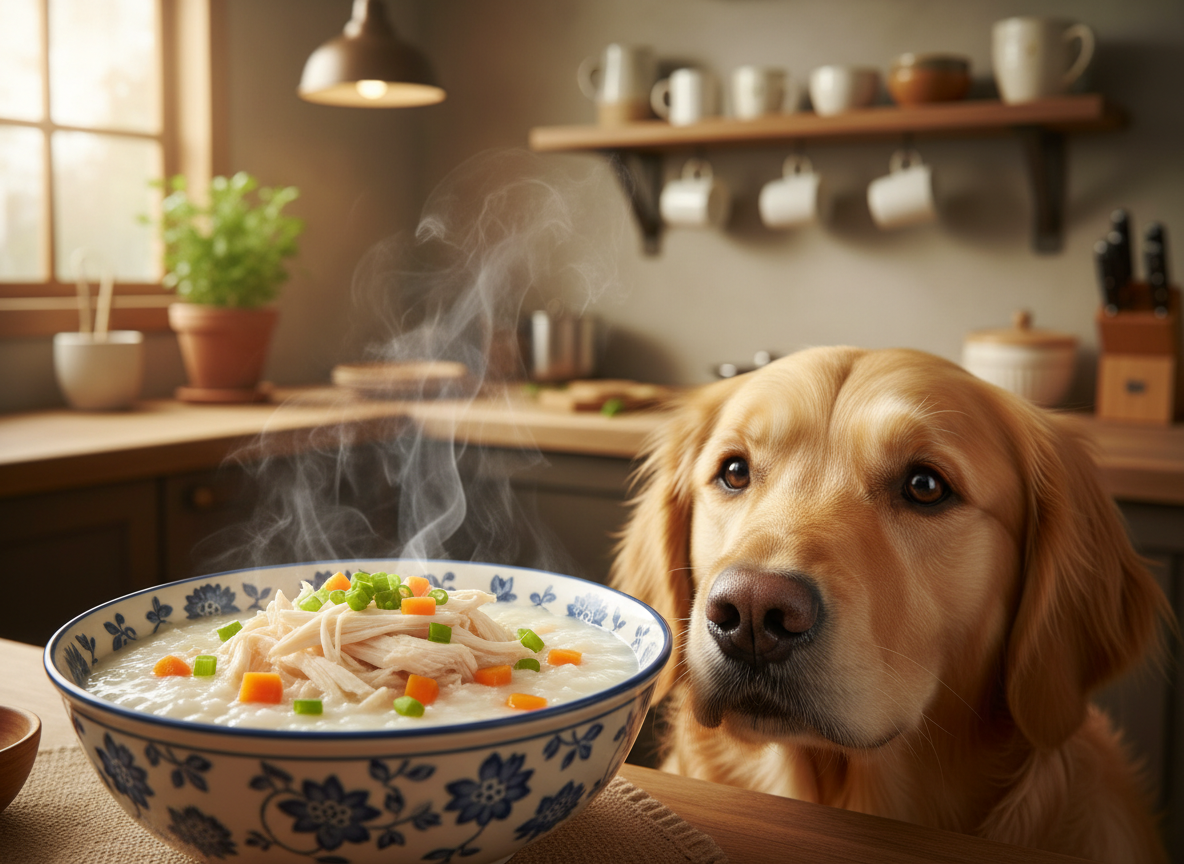
7 Soothing Dog Friendly Congee Recipes for Recovery
There’s no worse feeling than seeing your beloved canine companion feeling sick. Whether they’re recovering from surgery, dealing with a tummy bug, or just having an off day, our first instinct is to comfort them. And what’s more comforting than a warm, nourishing bowl of goodness? For humans, that’s often chicken soup. For dogs, a fantastic equivalent is congee.
Congee, a type of rice porridge, is a staple in many Asian cultures, celebrated for its soothing and healing properties. When adapted for our furry friends, it becomes an incredibly gentle, hydrating, and easy-to-digest meal that’s perfect for a recovering system. It provides necessary hydration and simple carbohydrates for energy without taxing a sensitive gut.
We’ve put together seven simple and soothing congee recipes you can whip up at home to help your pup on their road to recovery. Before we dive in, here’s a quick look at what each recipe offers.
Quick Comparison of Recovery Congees
| Recipe Name | Best For | Key Ingredients | Approx. Prep & Cook Time |
|---|---|---|---|
| Classic Chicken & Rice | General Upset Stomach | White Rice, Chicken Breast | 60-90 Minutes |
| Pumpkin & Ginger | Digestive Regularity | Rice, Pumpkin Purée, Ginger | 60-90 Minutes |
| Fish & Seaweed | Skin & Coat Health | Rice, White Fish, Kelp | 60-90 Minutes |
| Lean Beef & Carrot | Building Strength | Rice, Lean Beef, Carrots | 70-100 Minutes |
| Turkey & Chamomile | Anxious Tummies | Rice, Ground Turkey, Chamomile | 70-100 Minutes |
| Sweet Potato & Spinach | Vitamin Boost | Rice, Sweet Potato, Spinach | 60-90 Minutes |
| Bone Broth & Turmeric | Joint Support & Seniors | Rice, Bone Broth, Turmeric | 60-90 Minutes |
Important Note: Always consult your veterinarian before introducing new foods to your dog, especially when they are sick. These recipes are intended for short-term feeding to aid recovery.
1. The Classic: Simple Chicken & Rice Congee
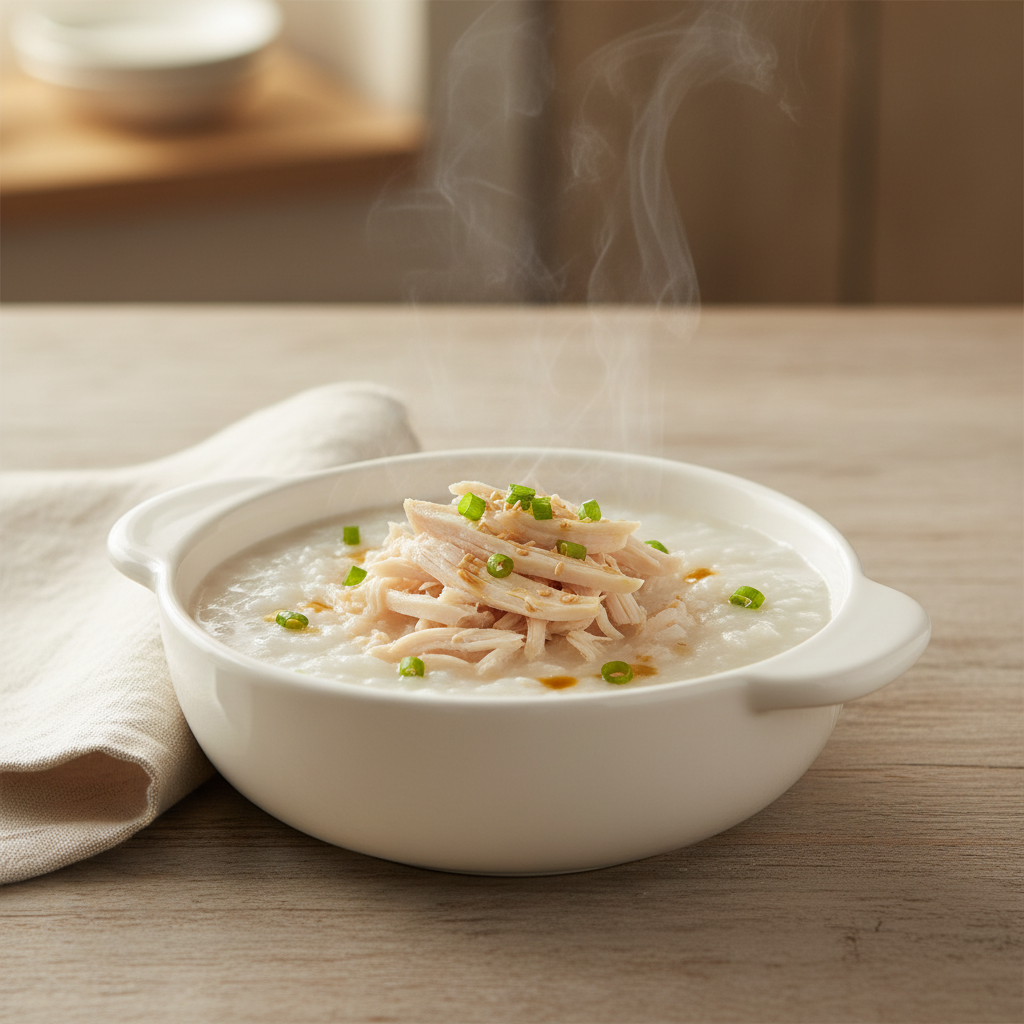
You can’t go wrong with a classic. This is the ultimate bland diet recipe, combining easily digestible white rice with lean protein from chicken. It’s the go-to for a reason: it’s gentle, nourishing, and provides the simple energy your dog needs to start feeling like themselves again.
Ingredients:
- 1/2 cup white rice (Jasmine or short-grain works well)
- 4 cups water or unsalted chicken broth
- 1 boneless, skinless chicken breast
Instructions:
- Rinse the white rice under cool water until the water runs clear. This removes excess starch.
- In a medium-sized pot, add the rinsed rice, water or broth, and the whole chicken breast.
- Bring the mixture to a boil, then immediately reduce the heat to a low simmer.
- Cover the pot and let it simmer for 60-90 minutes. Stir occasionally to prevent the rice from sticking to the bottom. The congee is ready when the rice has broken down and the mixture is thick and creamy like porridge.
- Once cooked, remove the chicken breast from the pot. It should be incredibly tender. Shred it easily with two forks.
- Stir the shredded chicken back into the congee.
- Let the congee cool completely to a lukewarm temperature before serving.
Pros & Cons
| Pros | Cons |
|---|---|
| Extremely easy to digest. | Not nutritionally complete for long-term feeding. |
| Provides excellent hydration. | May not be suitable for dogs with chicken allergies. |
| Simple ingredients are easy to find. | Very low in fat and fiber. |
Verdict
This Classic Chicken & Rice Congee is the perfect starting point for almost any dog feeling unwell. It’s ideal for recovery from gastrointestinal upset, post-surgery care, or for a dog who has lost their appetite. It’s the gentle hug-in-a-bowl your pup needs.
2. The Tummy Tamer: Pumpkin & Ginger Congee
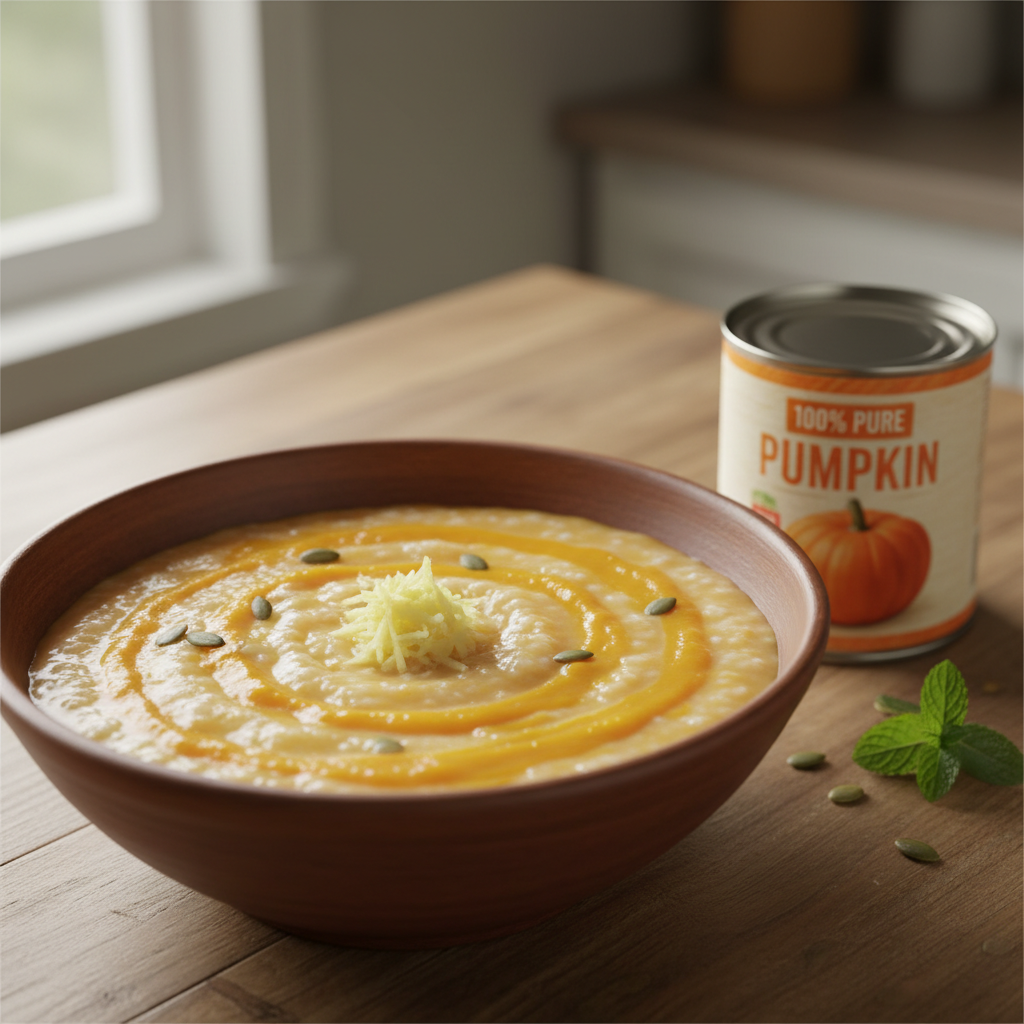
When digestive distress is the main issue, pumpkin is your best friend. It’s packed with soluble fiber, which can help with both diarrhea and constipation. A tiny hint of ginger adds anti-nausea and anti-inflammatory properties, making this a true tummy-taming powerhouse.
Ingredients:
- 1/2 cup white rice
- 4-5 cups water or unsalted vegetable broth
- 2 tablespoons 100% pure canned pumpkin (NOT pumpkin pie filling)
- 1/8 teaspoon freshly grated ginger (or a very tiny pinch of ginger powder)
Instructions:
- Rinse the rice thoroughly.
- In a pot, combine the rice and water/broth. Bring to a boil, then reduce to a low simmer.
- Cover and cook for 60-90 minutes, stirring occasionally, until the congee is thick and creamy.
- In the last 10 minutes of cooking, stir in the canned pumpkin and the freshly grated ginger. Mix well to combine.
- Allow the congee to cool completely before serving. The ginger smell should be very subtle.
Pros & Cons
| Pros | Cons |
|---|---|
| Excellent for regulating digestion. | Ginger can be too strong for some dogs; use sparingly. |
| Ginger helps soothe nausea. | Lacks a primary protein source (can add shredded chicken). |
| Rich in vitamins A and C. | The orange color might be surprising to your dog at first. |
Verdict
This is the go-to recipe for a dog experiencing a bout of diarrhea or constipation. The pumpkin works wonders for digestive regularity, and the ginger provides extra comfort for a nauseous pup. It’s a gentle way to get their system back on track.
3. The Hydration Hero: Fish & Seaweed Congee
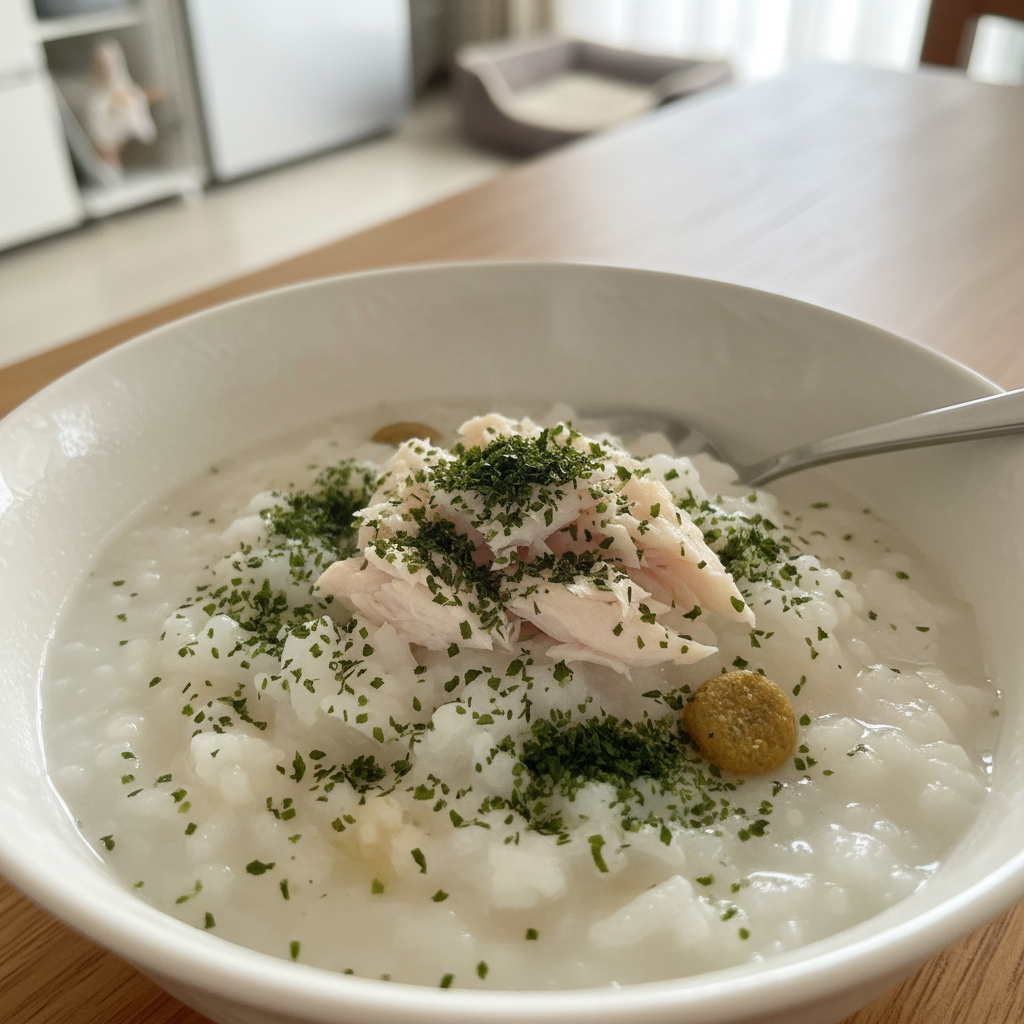
For a change of pace from poultry, this light and savory congee uses flaky white fish. Fish like cod or tilapia are great sources of protein and omega-3 fatty acids, which are fantastic for skin, coat, and reducing inflammation. A tiny pinch of kelp powder or dog-safe seaweed adds a boost of minerals and iodine.
Ingredients:
- 1/2 cup white rice
- 4-5 cups water
- 1 small fillet of a simple white fish (like cod, tilapia, or flounder)
- A tiny pinch of organic kelp powder (optional)
Instructions:
- Rinse the rice well. Add it to a pot with the water.
- Bring to a boil, then reduce to a simmer. Cover and cook for about 45 minutes.
- Gently place the fish fillet on top of the cooking rice. Re-cover the pot and let the fish steam for another 15-20 minutes, or until it is completely cooked and opaque.
- Remove the fish fillet and check it meticulously for any bones. Flake it apart with a fork.
- Stir the flaked fish and the pinch of kelp powder (if using) into the congee.
- Let it cool to a safe temperature before serving.
Pros & Cons
| Pros | Cons |
|---|---|
| Rich in anti-inflammatory omega-3s. | Fish can be an allergen for some dogs. |
| Provides a different protein source for picky eaters. | Must be extremely careful to remove all bones. |
| Kelp offers beneficial trace minerals. | Can have a stronger smell than chicken congee. |
Verdict
This recipe is wonderful for dogs with dry, itchy skin or a dull coat, thanks to the omega-3s. It’s also a great alternative for dogs who might have a poultry sensitivity. It’s a light, clean meal that still packs a nutritional punch.
4. The Strength Builder: Lean Beef & Carrot Congee
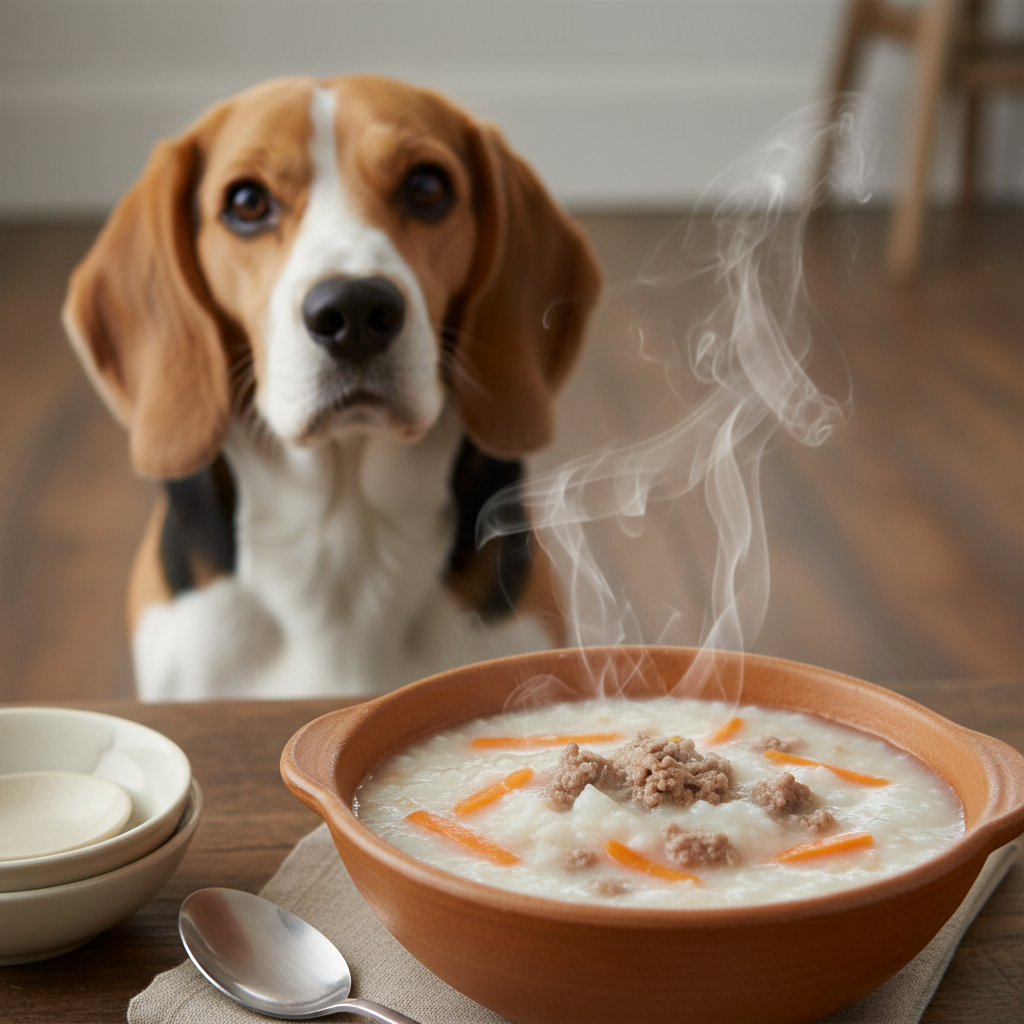
If your dog is recovering from a more prolonged illness and needs to regain some strength, this heartier congee can be a great option. Extra-lean ground beef provides iron and protein, while finely grated carrots add a touch of sweetness and a boost of beta-carotene for immune support.
Ingredients:
- 1/2 cup white rice
- 5 cups unsalted beef broth or water
- 1/4 lb extra-lean ground beef (95% lean or more)
- 1 small carrot, finely grated
Instructions:
- In a separate pan, lightly brown the ground beef. Drain off ALL excess fat. This step is crucial to keep the meal bland and low-fat.
- Rinse the rice and add it to a large pot with the broth or water.
- Bring to a boil, then reduce to a simmer. Cover and cook for about 60 minutes.
- Stir in the cooked ground beef and the grated carrot. Continue to simmer for another 15-20 minutes until the congee is creamy and the carrots are very soft.
- Let cool completely before serving a small portion.
Pros & Cons
| Pros | Cons |
|---|---|
| High in iron for energy and strength. | Higher fat content than poultry or fish; not for dogs with pancreatitis. |
| Very palatable for picky eaters. | Red meat can sometimes be richer on a sensitive stomach. |
| Carrots provide Vitamin A for immune health. | Requires the extra step of cooking and draining the beef. |
Verdict
This is a great ‘step-up’ congee for a dog that is well into the recovery process and needs to start rebuilding muscle and energy reserves. It’s not for the first day of an upset stomach, but it’s perfect for the days that follow when their appetite is returning.
5. The Calming Bowl: Turkey & Chamomile Congee
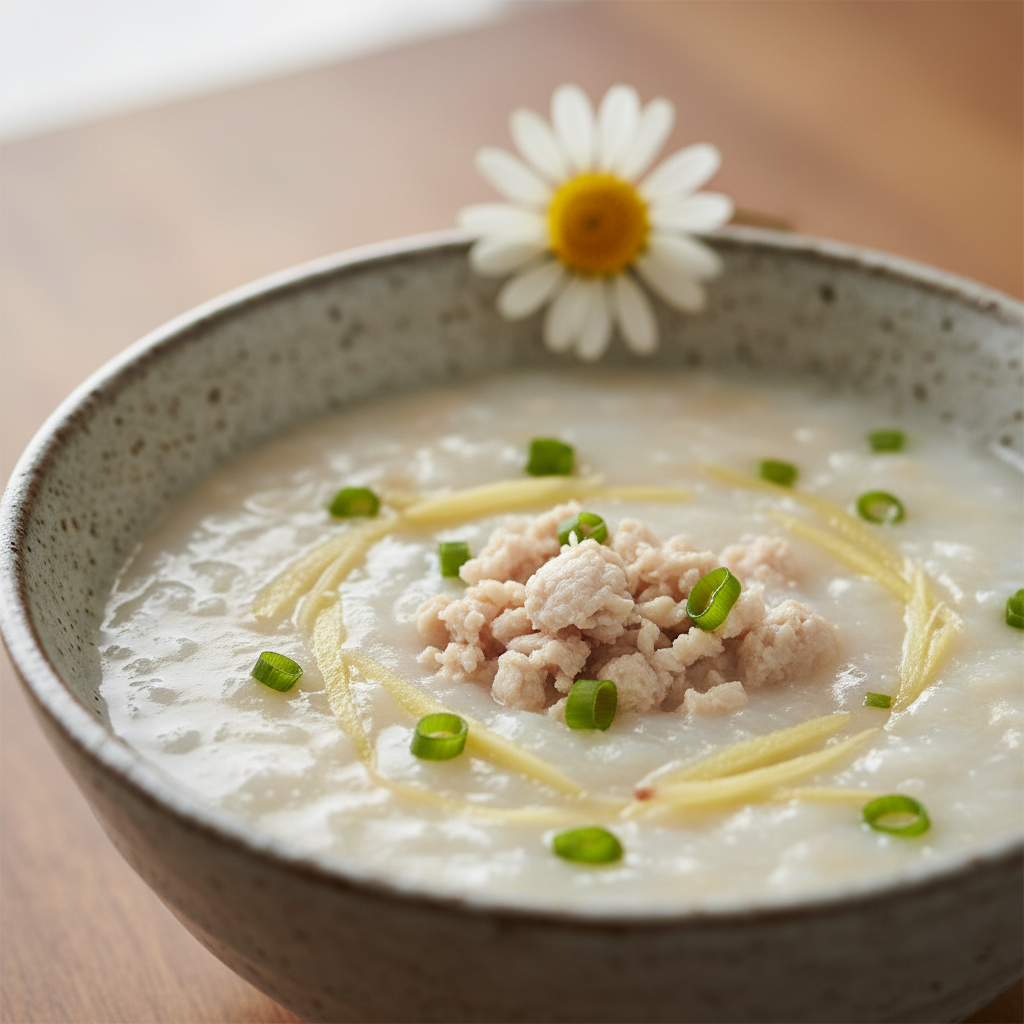
Sometimes, illness and anxiety go hand-in-hand. A trip to the vet or not feeling well can be stressful for our pups. This recipe uses lean ground turkey, another excellent poultry protein, and adds a touch of chamomile—a herb known for its gentle calming properties.
Ingredients:
- 1/2 cup white rice
- 4-5 cups water
- 1/4 lb lean ground turkey
- 1 bag of pure chamomile tea (or 1 tsp loose leaf)
Instructions:
- Brew a cup of chamomile tea with boiling water and let it steep for 5 minutes. Remove the tea bag and let the tea cool.
- In a pan, cook the ground turkey until no longer pink. Drain any fat thoroughly.
- In a pot, combine the rinsed rice and 4 cups of water. Bring to a boil, then simmer, covered, for about 60 minutes.
- Stir in the cooked ground turkey.
- In the final 5 minutes of cooking, stir in 1-2 tablespoons of the cooled chamomile tea.
- Mix well and let the congee cool completely before serving.
Pros & Cons
| Pros | Cons |
|---|---|
| Chamomile may help calm an anxious dog. | Dogs with ragweed allergies may react to chamomile. |
| Turkey is a great lean protein alternative. | Must use pure chamomile tea with no added flavors or caffeine. |
| Very gentle and soothing. | Requires extra steps of brewing tea and cooking turkey. |
Verdict
This is the perfect meal for a dog who is both physically unwell and emotionally stressed. It’s a wonderful, gentle option for post-operative care when a dog needs to rest and stay calm. The combination of easy-to-digest food and a calming herb is a win-win.
6. The Veggie Boost: Sweet Potato & Spinach Congee
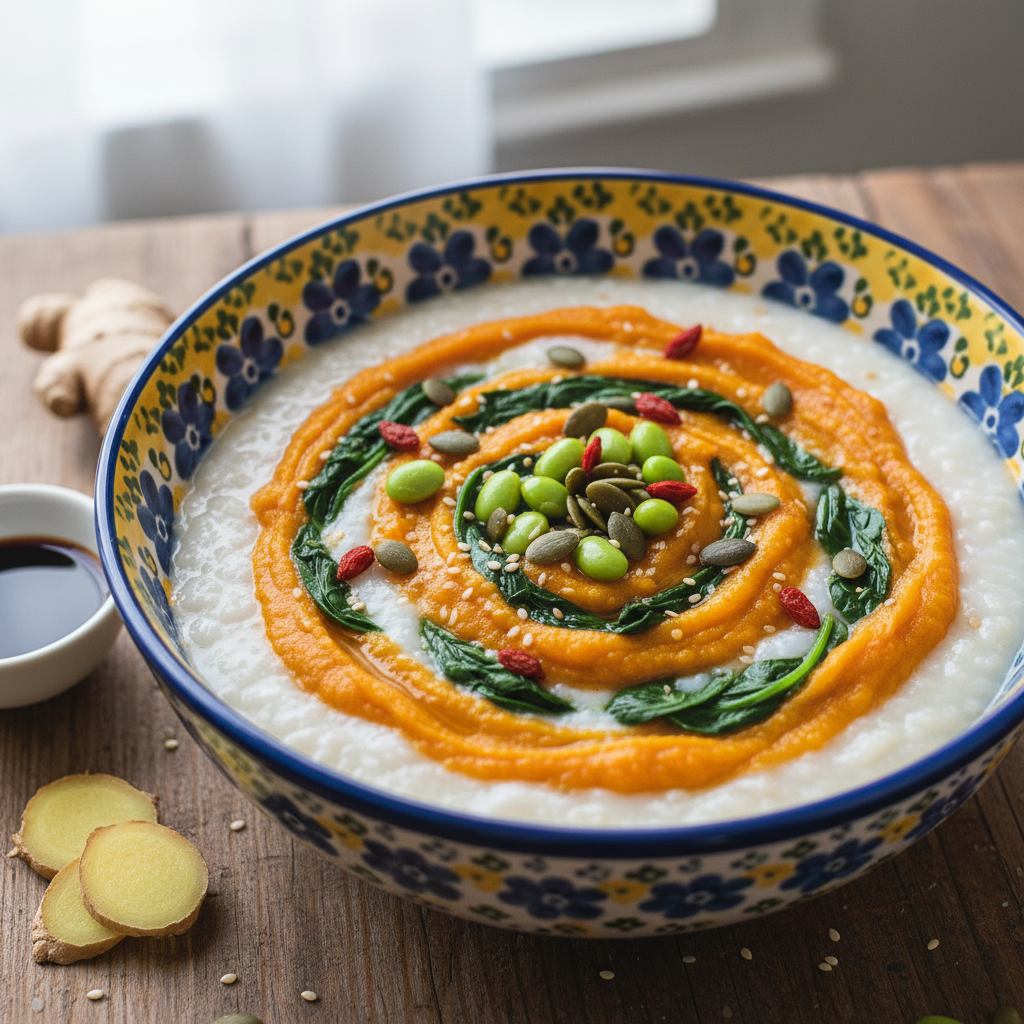
Want to add some extra vitamins to the recovery bowl? This veggie-packed version is a great choice. Sweet potato provides fiber, vitamins, and a delicious taste, while spinach offers a dose of iron and antioxidants. This can be served as-is for a light meal or have a protein stirred in.
Ingredients:
- 1/2 cup white rice
- 4-5 cups unsalted vegetable broth or water
- 1/4 cup cooked and mashed sweet potato
- A small handful of fresh spinach, finely chopped
Instructions:
- Rinse the rice. Combine with broth or water in a pot.
- Bring to a boil, then reduce to a low simmer. Cover and cook for 60-90 minutes until thick and creamy.
- In the last 5 minutes of cooking, stir in the mashed sweet potato and the chopped spinach. The heat from the congee will wilt the spinach perfectly.
- Mix everything together until well combined.
- Let it cool to a safe, lukewarm temperature.
Pros & Cons
| Pros | Cons |
|---|---|
| Packed with vitamins and antioxidants. | Lacks a main protein unless you add one. |
| Great source of dietary fiber. | Spinach should be given in moderation due to oxalates. |
| Naturally sweet and appealing to many dogs. | The vibrant colors might be off-putting to very picky dogs. |
Verdict
This recipe is excellent for adding a nutrient boost to a bland diet. It’s a good choice for dogs who are on the mend and can tolerate a bit more fiber. You can easily stir in some shredded chicken or turkey to make it a more complete meal.
7. The Joint Soother: Bone Broth & Turmeric Congee
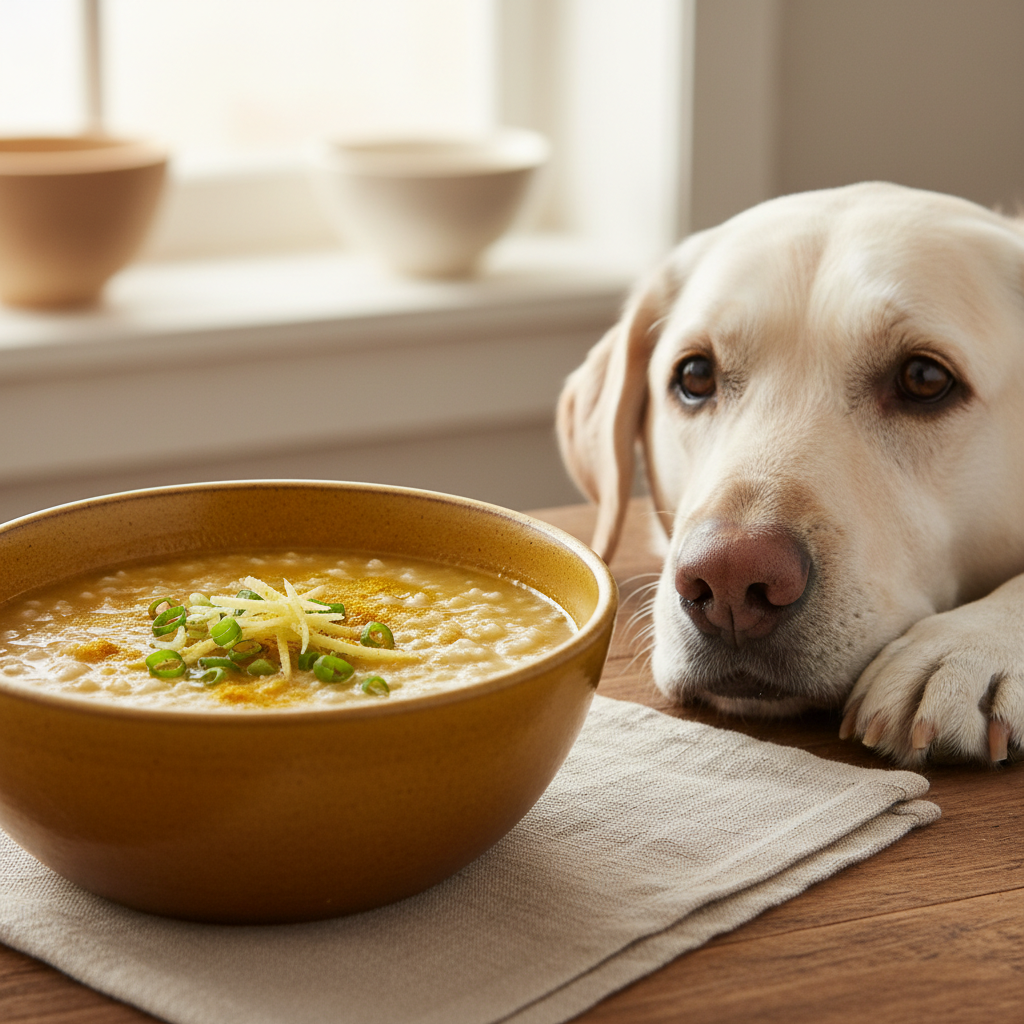
For senior dogs, or those recovering from orthopedic issues, this congee is a game-changer. Cooking the rice in nutrient-rich bone broth provides collagen, glucosamine, and chondroitin to support joint health. A tiny pinch of turmeric adds its famous anti-inflammatory superpowers.
Ingredients:
- 1/2 cup white rice
- 4-5 cups dog-safe bone broth (no onions, garlic, or salt)
- 1/8 teaspoon turmeric powder
- Shredded chicken or turkey (optional)
Instructions:
- Ensure your bone broth is 100% dog-safe. You can buy commercial versions or make your own.
- Rinse the rice. In a pot, combine the rice and the bone broth.
- Bring to a boil, then reduce to a low simmer. Cover and cook for 60-90 minutes, stirring occasionally. The congee will be extra flavorful.
- In the last few minutes of cooking, stir in the tiny pinch of turmeric powder until it’s evenly distributed, turning the congee a lovely golden color.
- If you’re adding protein, stir in the shredded chicken or turkey.
- Let cool completely before serving.
Pros & Cons
| Pros | Cons |
|---|---|
| Excellent for joint health and mobility. | Turmeric can stain bowls and fabrics. |
| Turmeric has powerful anti-inflammatory benefits. | Must use a pre-made dog-safe bone broth or make it yourself. |
| Extremely hydrating and nutrient-dense. | Some dogs may not like the taste of turmeric. |
Verdict
This is the ultimate recovery meal for the senior dog in your life or any pup dealing with arthritis, inflammation, or recovery from joint surgery. It’s a comforting, warming meal that nourishes their body and soothes their aches.
A Pet Parent’s Guide to Making Congee
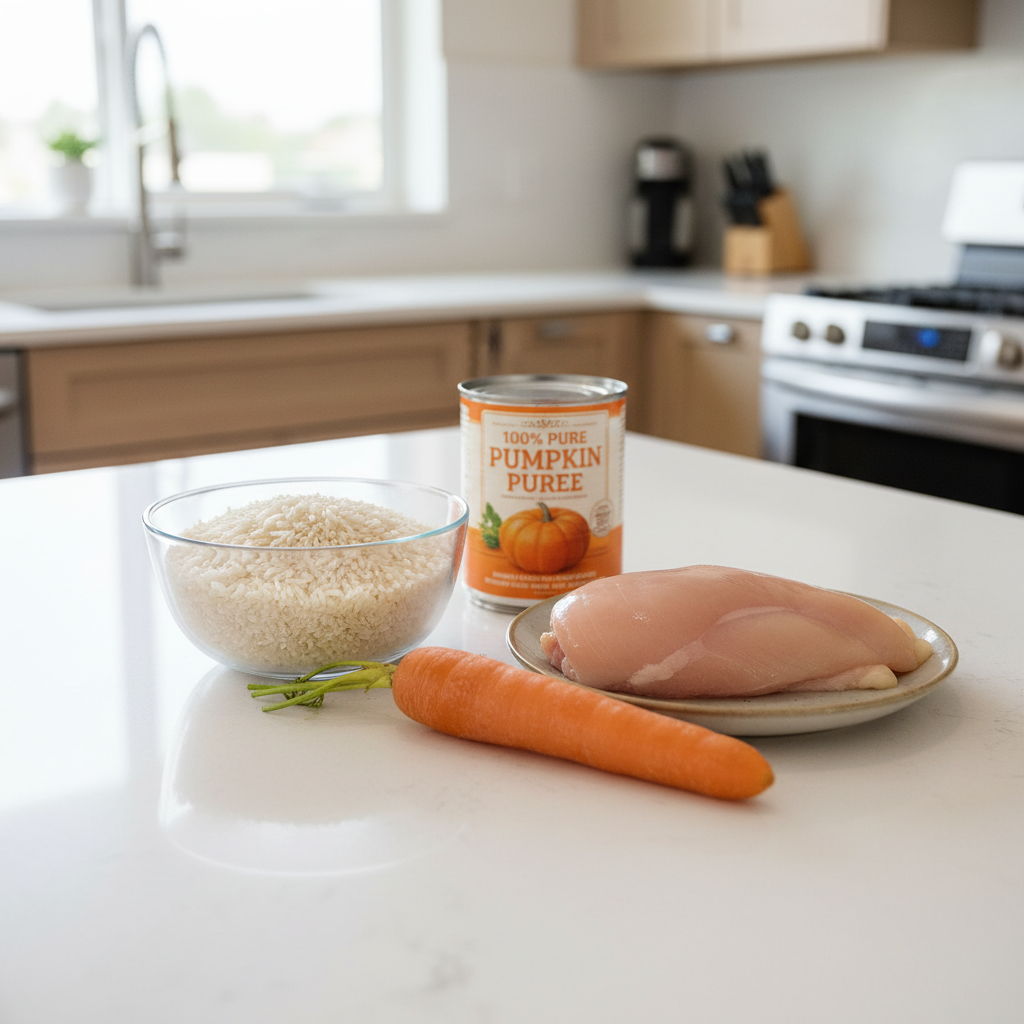
Making congee for your dog is simple, but keeping a few key principles in mind will ensure it’s both safe and effective as a recovery food.
Choosing Your Ingredients
- Rice: Always use plain white rice. While brown rice is healthier for everyday meals, its high fiber content can be tough on a sensitive digestive system. White rice provides easily accessible energy.
- Liquid: Water is perfectly fine and the safest bet. If you want to add more flavor and nutrients, use a 100% dog-safe broth. This means no salt, no onions, no garlic, and no mystery ‘flavorings’. Homemade is best, but store-bought dog-specific bone broths are great too.
- Proteins: Stick to lean, easily digestible proteins like boneless/skinless chicken breast, turkey, or a simple white fish. Always cook the protein thoroughly and shred or chop it finely.
- Veggies & Add-Ins: Stick to simple, dog-safe vegetables like pumpkin, carrots, or sweet potatoes. Always cook them until very soft. Avoid anything in the onion family (garlic, shallots, chives), as well as corn, grapes, or raisins, which are toxic.
Tips for Success
Consistency is Key: The magic of congee is its high water content. The general ratio is about 1 part rice to 8-10 parts liquid. You can always add more water or broth during cooking if it gets too thick. The final result should be a creamy, soupy porridge.
Keep it Bland: The entire point of a recovery food is to be gentle. Do not add any salt, pepper, oils, butter, or spices (other than the tiny, dog-safe amounts of herbs like ginger or turmeric mentioned in the recipes).
Serve it Right: Never serve congee hot! It can easily burn your dog’s mouth. Wait until it has cooled to lukewarm or room temperature. Start by offering a very small amount to see how your dog tolerates it before giving a full meal-sized portion.
Frequently Asked Questions About Dog Congee

How much congee should I feed my dog?
This depends on your dog’s size and your vet’s recommendation. As a general rule, start small. Offer a few tablespoons to a small dog or a quarter-cup to a larger dog. If they keep it down and seem to feel better, you can gradually increase the amount to replace their regular meal size for a day or two.
Can I make congee in a slow cooker or pressure cooker?
Absolutely! A slow cooker is fantastic for congee. Simply combine the rice and liquid (and protein, if cooking together) and cook on low for 6-8 hours or on high for 3-4 hours. For a pressure cooker (like an Instant Pot), combine ingredients and cook on high pressure for about 20-25 minutes, followed by a natural release. These methods are great for a ‘set it and forget it’ approach.
How long can I store leftover congee?
You can store leftover congee in an airtight container in the refrigerator for up to 3-4 days. It will thicken considerably when chilled. To serve, spoon out a portion and add a splash of warm water or broth to loosen it up and warm it slightly.
Is congee a complete and balanced meal?
No, it is not. While nourishing and beneficial for short-term recovery, none of these recipes are formulated to be a complete and balanced diet for long-term feeding. They lack the full range of vitamins, minerals, and fats a healthy dog needs. Congee should only be used for a few days to help your dog get over an illness, as directed by your veterinarian.
Conclusion
Caring for a sick pet requires patience, love, and a gentle touch. Providing a comforting meal like homemade congee is a wonderful way to show you care while actively helping their body heal. From the classic chicken and rice to the joint-soothing bone broth version, these recipes offer a simple, effective way to provide hydration and nourishment when your dog needs it most.
Remember, these recipes are a temporary support, not a permanent diet. Always keep your veterinarian in the loop about your dog’s condition and diet, especially during times of illness. Here’s to seeing your best friend back on their paws, happy, healthy, and ready for playtime again soon!