7 Golden Millet Dog Food Recipes for Sensitive Systems
Hey there, fellow pet parent! If you’re reading this, chances are you know the struggle of finding the perfect food for a dog with a sensitive system. The trial and error, the tummy rumbles, the sad puppy eyes… it’s tough! You want to give them something nutritious and delicious, but so many commercial foods seem to cause flare-ups. What if the answer was waiting in your own kitchen?
Enter millet, a tiny but mighty gluten-free grain that’s becoming a superstar ingredient for sensitive dogs. It’s packed with nutrients, easy to digest, and serves as a fantastic alternative to common grains like wheat, corn, or even rice, which can sometimes be problematic. Making your dog’s food at home allows you to control every single ingredient, ensuring there are no hidden irritants.
To help you get started on this rewarding culinary journey, we’ve cooked up 7 golden millet recipes that are both gentle on the tummy and delightful to the taste buds. Let’s get cooking!
Quick Recipe Comparison
| Recipe Name | Primary Protein | Best For | Approx. Prep & Cook Time |
|---|---|---|---|
| Turkey & Millet Delight | Turkey | Extremely sensitive stomachs | 35 minutes |
| Omega-Rich Salmon & Millet | Salmon | Skin & coat health | 40 minutes |
| Soothing Lamb & Pumpkin Millet | Lamb | Digestive regularity | 45 minutes |
| Simple Chicken & Veggie Millet Stew | Chicken | Picky eaters & balanced diet | 40 minutes |
| Hearty Beef & Millet Loaf | Beef | Active dogs needing calories | 1 hour 15 minutes |
| Millet & Egg Breakfast Scramble | Eggs | A nutritious breakfast or treat | 25 minutes |
| Mighty Sardine & Millet Patties | Sardines | Joint health & brain function | 30 minutes |
Important Note: Always consult with your veterinarian or a certified canine nutritionist before making significant changes to your dog’s diet. These recipes are intended as a guide, and your vet can help you tailor them to your dog’s specific health needs, including adding necessary supplements.
1. Turkey & Millet Delight
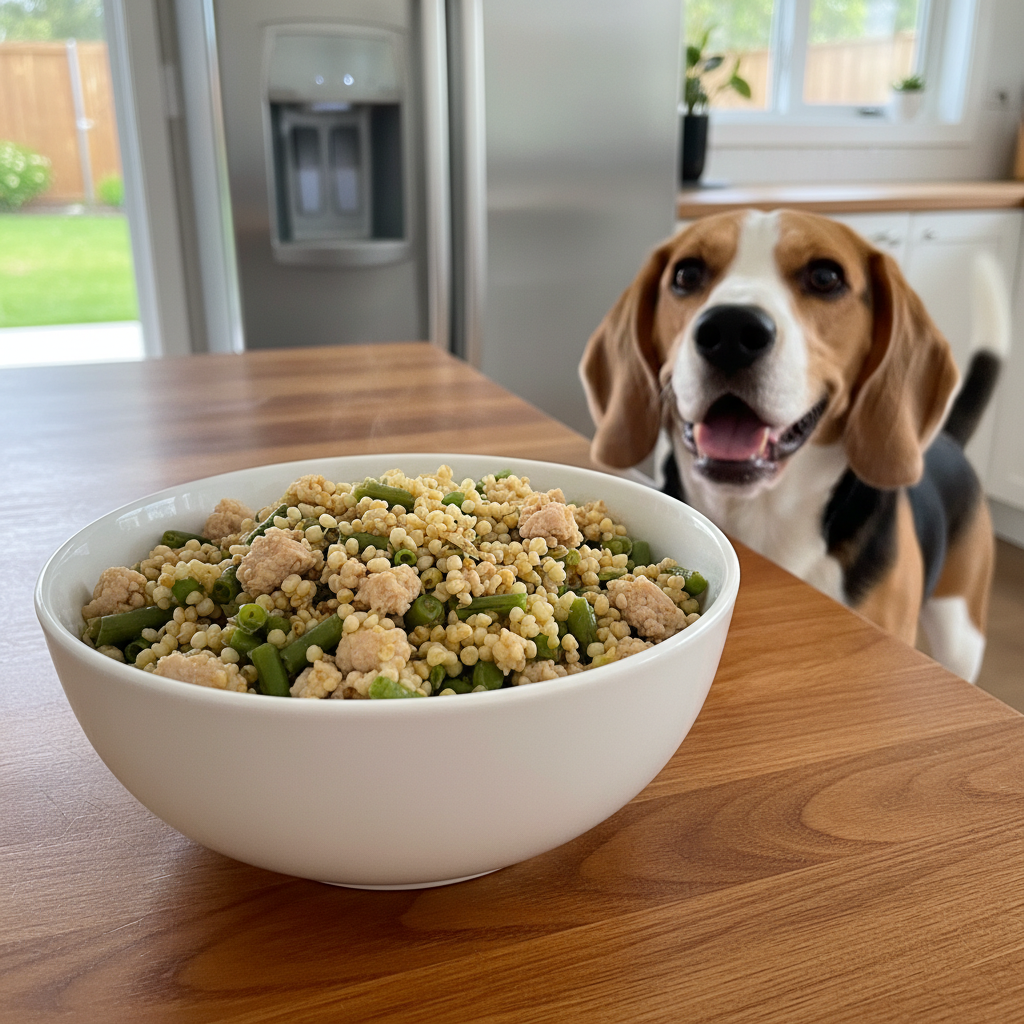
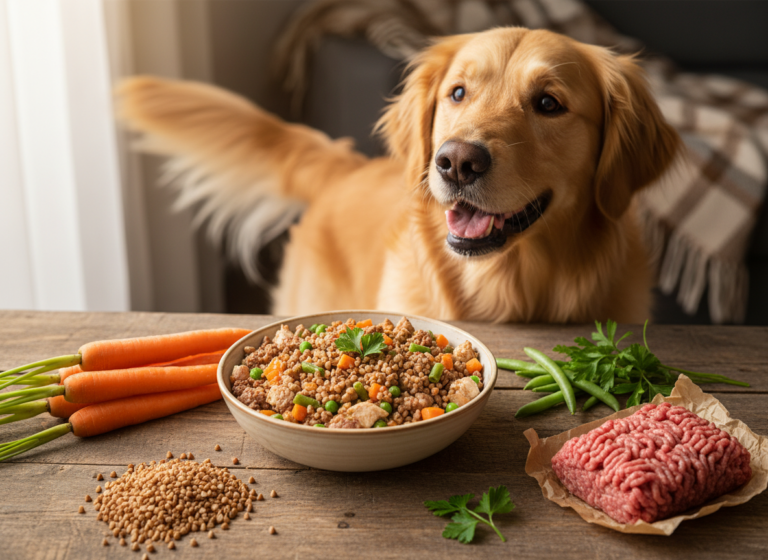
This is the quintessential starting recipe for any pup with a finicky digestive system. Turkey is a lean, novel protein for many dogs, meaning it’s less likely to cause an allergic reaction. Paired with gentle millet and soothing carrots, this dish is like a warm hug for your dog’s tummy.
Ingredients:
- 1 cup uncooked hulled millet
- 3 cups water or low-sodium chicken broth
- 1 lb lean ground turkey
- 2 medium carrots, finely chopped or grated
- 1 cup green beans, chopped
- 1 tablespoon olive oil or coconut oil
- Optional: 1/4 cup chopped parsley for fresh breath
Instructions:
- Cook the Millet: In a medium saucepan, bring the water or broth to a boil. Add the millet, reduce the heat to low, cover, and let it simmer for about 20-25 minutes, or until all the liquid is absorbed. Fluff with a fork and set aside.
- Cook the Turkey: While the millet is cooking, heat the oil in a large skillet or pot over medium heat. Add the ground turkey and cook until browned, breaking it up with a spoon.
- Add the Veggies: Add the chopped carrots and green beans to the skillet with the turkey. Cook for another 5-7 minutes, until the vegetables are tender.
- Combine Everything: Add the cooked millet and parsley (if using) to the skillet with the turkey and vegetable mixture. Stir everything together until well combined.
- Cool and Serve: Let the food cool completely before serving to your dog. Store leftovers in an airtight container in the refrigerator for up to 4 days.
Pros & Cons
| Pros | Cons |
|---|---|
| Extremely gentle on the stomach | Lower in fat, may not be ideal for highly active dogs without supplementation |
| Lean protein source | Turkey can be more expensive than chicken |
| Simple, limited ingredients reduce risk of reaction | Some dogs may find it less flavorful than richer meats |
The Verdict
This recipe is the perfect starting point for dogs transitioning to a homemade diet, especially those with known poultry sensitivities (other than turkey) or IBD. It’s simple, clean, and incredibly easy to digest.
2. Omega-Rich Salmon & Millet
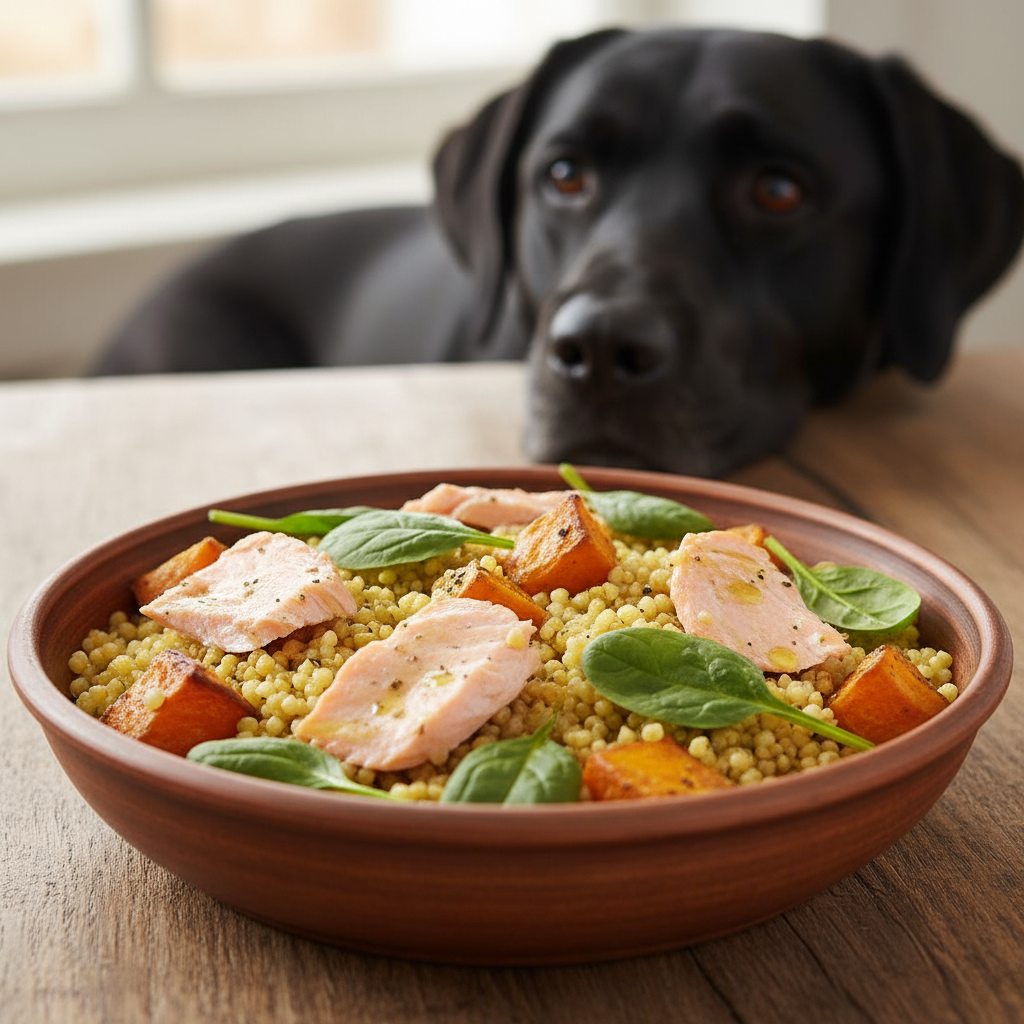
If your sensitive pup also deals with dry, itchy skin or a dull coat, this recipe is a game-changer. Salmon is bursting with Omega-3 fatty acids, which are fantastic for reducing inflammation, promoting healthy skin, and giving their coat a beautiful shine. Sweet potatoes add a dose of fiber and vitamins.
Ingredients:
- 1 cup uncooked hulled millet
- 3 cups water
- 1 lb salmon fillet, skin and bones removed
- 1 large sweet potato, peeled and diced
- 1 cup spinach, chopped
- 1 tablespoon flaxseed oil (for extra Omega-3s)
Instructions:
- Prepare Ingredients: Bake or poach the salmon until it’s cooked through and flakes easily with a fork. While the salmon cooks, boil or steam the diced sweet potato until tender.
- Cook the Millet: In a saucepan, bring 3 cups of water to a boil. Add the millet, reduce heat, cover, and simmer for 20-25 minutes until the water is absorbed.
- Combine: In a large bowl, flake the cooked salmon apart. Add the cooked millet, mashed or diced sweet potato, and chopped spinach (the heat from the other ingredients will wilt it).
- Add Oil and Mix: Drizzle the flaxseed oil over the mixture and stir gently until everything is well combined.
- Cool Down: Ensure the food has cooled to room temperature before serving. This recipe is also great for portioning and freezing.
Pros & Cons
| Pros | Cons |
|---|---|
| Excellent for skin and coat health | Salmon can be pricey |
| Anti-inflammatory properties from Omega-3s | Some dogs dislike the taste or smell of fish |
| Sweet potato provides healthy fiber and vitamins | Requires careful deboning of the fish fillet |
The Verdict
This is the ideal meal for dogs suffering from allergies, hot spots, or dull coats. The powerful combination of salmon and millet addresses both internal sensitivity and external symptoms, making for a happy pup inside and out.
3. Soothing Lamb & Pumpkin Millet
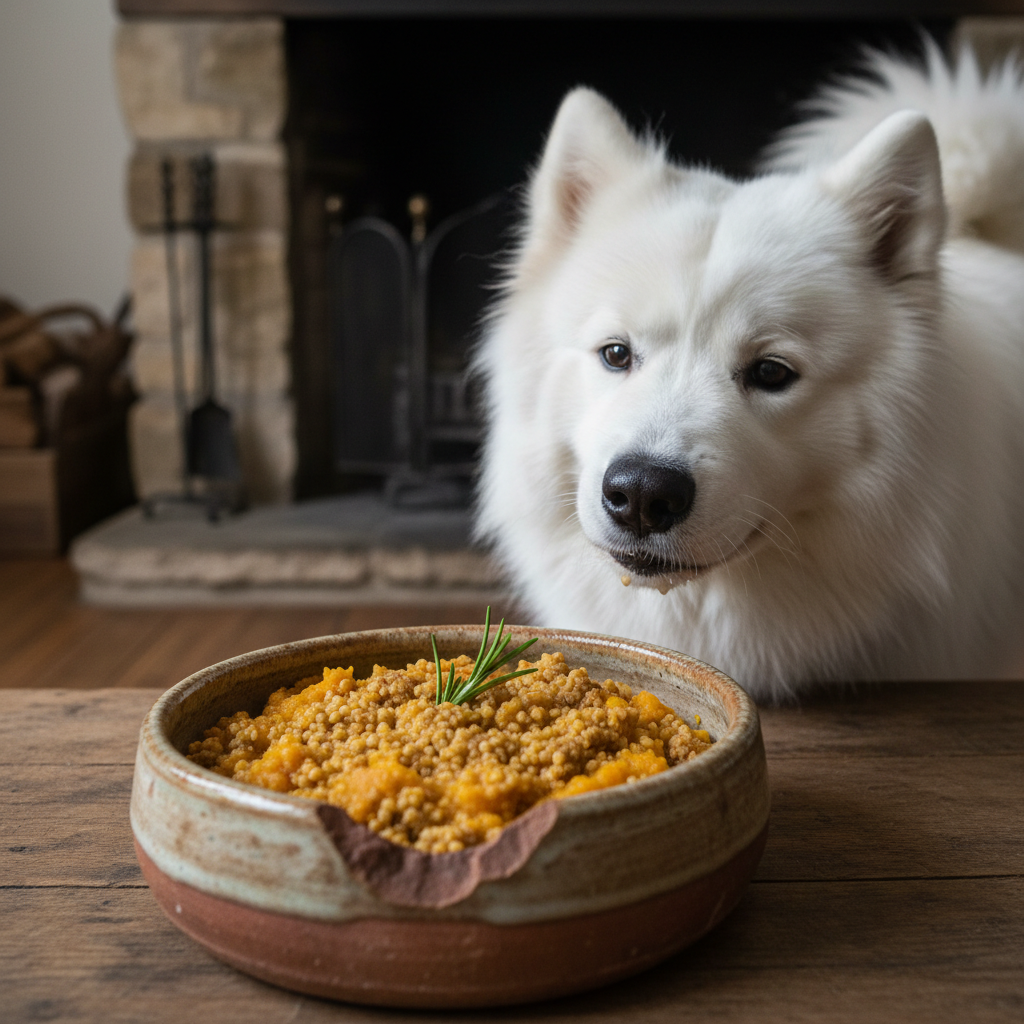
When digestive regularity is the main concern, pumpkin and lamb are your best friends. Lamb is another excellent novel protein, and pumpkin is a well-known superstar for digestive health, helping with both constipation and diarrhea. This recipe is hearty, soothing, and incredibly effective.
Ingredients:
- 1 cup uncooked hulled millet
- 3 cups water or low-sodium beef broth
- 1 lb ground lamb
- 1 can (15 oz) pure pumpkin puree (NOT pumpkin pie filling)
- 1/2 cup frozen peas
- 1 teaspoon dried rosemary (optional, good for circulation)
Instructions:
- Cook the Millet: Prepare the millet according to the instructions in the first recipe, using water or beef broth for extra flavor.
- Brown the Lamb: In a large pot, cook the ground lamb over medium heat until it’s fully browned. Drain off any excess fat.
- Simmer Together: To the pot with the lamb, add the cooked millet, the entire can of pumpkin puree, and the frozen peas. If using rosemary, add it now.
- Combine and Heat: Stir everything together and let it simmer on low for about 5 minutes to allow the flavors to meld and the peas to cook through. The mixture should be thick like a hearty stew.
- Cool Before Serving: As always, let the food cool completely before dishing it up for your eager pup. Store in the fridge for up to 4 days.
Pros & Cons
| Pros | Cons |
|---|---|
| Pumpkin is fantastic for digestive regulation | Lamb is a fattier meat; be sure to drain excess grease |
| Lamb is a great novel protein for dogs with chicken/beef allergies | The texture can be very soft, which some dogs may not prefer |
| Very palatable and appealing to most dogs | Pumpkin can cause orange-tinted stools (this is normal!) |
The Verdict
This is the go-to recipe for dogs with inconsistent stools or general digestive upset. It’s a comforting, fiber-rich meal that actively works to soothe and regulate their gut while providing excellent nutrition.
4. Simple Chicken & Veggie Millet Stew
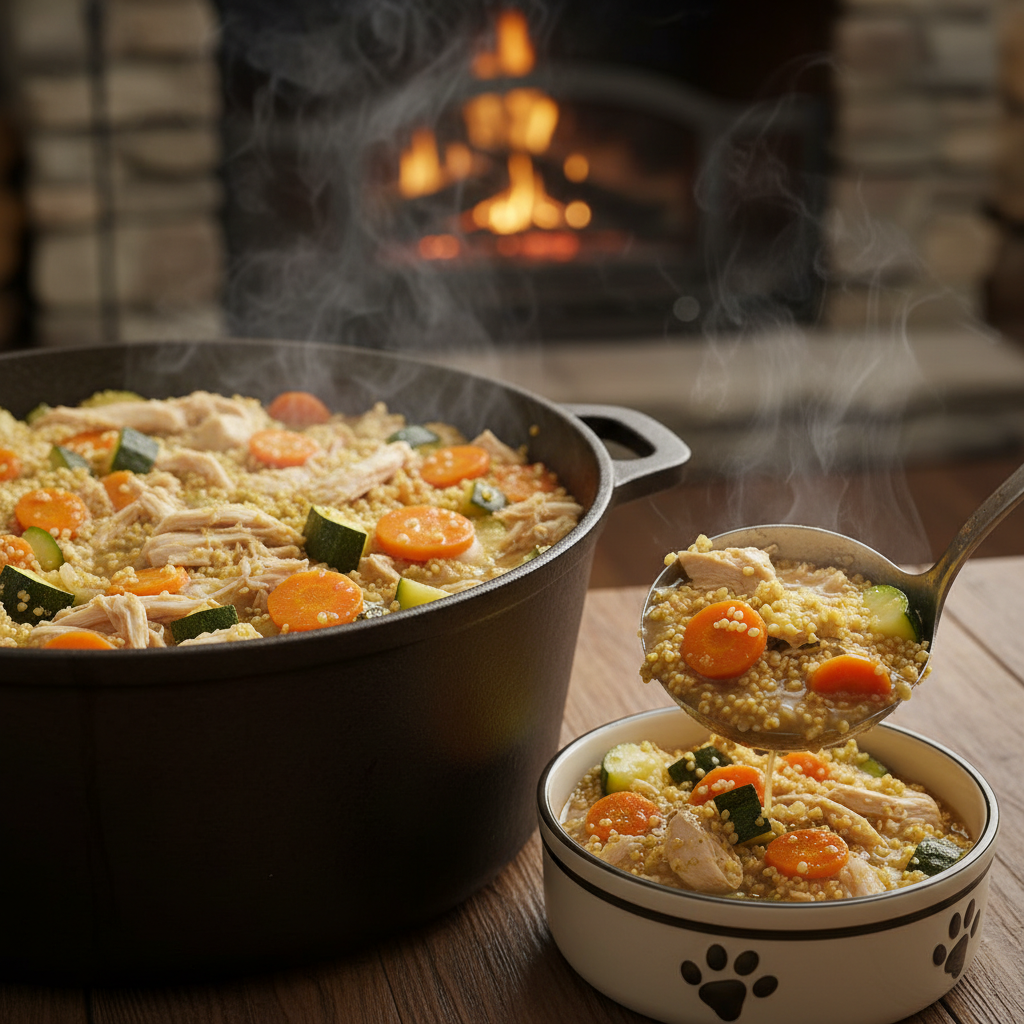
Sometimes, simple is best. If your dog does well with chicken, this classic stew is a balanced and budget-friendly option. It’s packed with dog-friendly vegetables and is easy to make in a big batch for meal prepping. It’s a straightforward, wholesome meal that provides everything your pup needs.
Ingredients:
- 1 cup uncooked hulled millet
- 4 cups low-sodium chicken broth
- 1.5 lbs boneless, skinless chicken breast or thighs, cut into small chunks
- 1 cup chopped carrots
- 1 cup chopped celery
- 1 cup chopped zucchini
- 2 tablespoons olive oil
Instructions:
- Sauté the Veggies: In a large pot or Dutch oven, heat the olive oil over medium heat. Add the carrots and celery and cook for 5-7 minutes until they begin to soften.
- Cook the Chicken: Add the chicken chunks to the pot and cook until they are lightly browned on all sides.
- Add Liquids and Millet: Pour in the chicken broth and bring it to a simmer. Stir in the uncooked millet.
- Simmer the Stew: Reduce the heat to low, cover the pot, and let the stew simmer for about 25-30 minutes, or until the millet is cooked and the chicken is tender. Stir occasionally to prevent sticking.
- Final Touches: In the last 5 minutes of cooking, stir in the chopped zucchini (it cooks quickly and you don’t want it to get too mushy).
- Cool and Shred: Let the stew cool. You can serve the chicken in chunks or shred it with two forks for easier eating.
Pros & Cons
| Pros | Cons |
|---|---|
| Cost-effective and easy to find ingredients | Chicken is a common allergen for some sensitive dogs |
| One-pot meal makes for easy cleanup | Requires more chopping of vegetables compared to other recipes |
| Well-balanced with protein, grains, and veggies | Celery is not a favorite for all dogs |
The Verdict
For the dog without a specific chicken allergy but who still benefits from a gentle, homemade diet, this recipe is a perfect all-rounder. It’s a crowd-pleaser that’s easy on your wallet and simple to prepare.
5. Hearty Beef & Millet Loaf
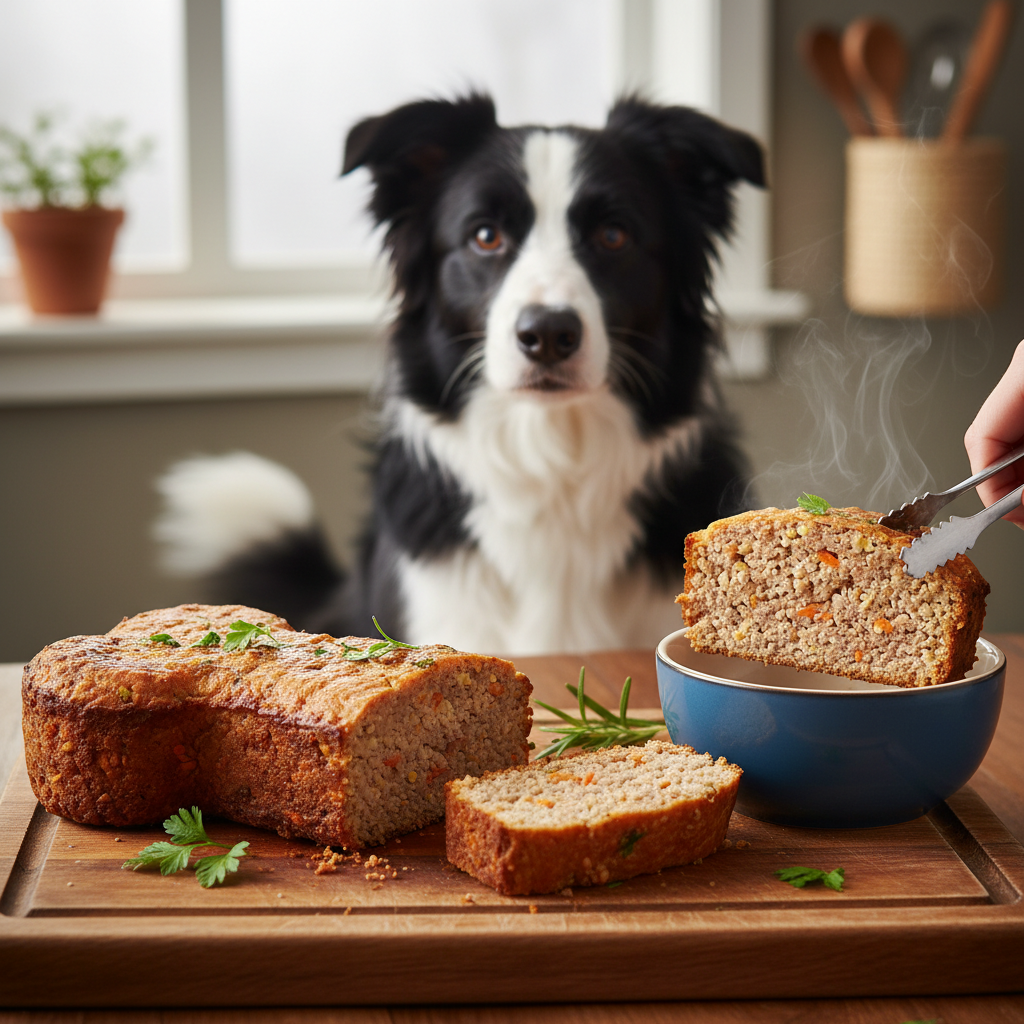
Want a recipe that feels more like a special treat but is packed with nutrition? This beef and millet loaf is the answer. It’s baked instead of boiled, creating a firm texture that’s easy to slice and serve. It’s a fantastic option for more active dogs who need a higher calorie count to fuel their adventures.
Ingredients:
- 1 lb lean ground beef
- 1.5 cups cooked millet
- 2 eggs, lightly beaten
- 1 cup grated carrots
- 1/2 cup rolled oats (gluten-free if needed)
- 1/4 cup chopped parsley
Instructions:
- Preheat Oven: Preheat your oven to 350°F (175°C). Lightly grease a standard loaf pan.
- Cook Millet: Cook 1/2 cup of uncooked millet with 1.5 cups of water to get the 1.5 cups of cooked millet needed for the recipe. Let it cool slightly.
- Mix Ingredients: In a large bowl, combine the ground beef, cooked millet, beaten eggs, grated carrots, rolled oats, and parsley. Use your hands to mix everything together until it’s just combined – don’t overmix!
- Form the Loaf: Press the mixture evenly into the prepared loaf pan.
- Bake: Bake for 45-55 minutes, or until the center is cooked through and the top is nicely browned.
- Cool, Slice, and Serve: Let the loaf cool in the pan for at least 15 minutes before turning it out. Let it cool completely before slicing and serving. This stores beautifully in the fridge and is easy to portion.
Pros & Cons
| Pros | Cons |
|---|---|
| Easy to portion and store; great for meal prep | Longer cook time due to baking |
| Denser and more calorie-rich for active dogs | Beef can be a trigger for some dogs with sensitivities |
| Less messy to serve than a stew | Requires oven use, which can heat up the kitchen |
The Verdict
This beef loaf is perfect for the sensitive dog that’s also an athlete. It provides the dense energy they need in a format that’s easy to serve. It’s also a great way to make mealtimes feel a bit more special.
6. Millet & Egg Breakfast Scramble
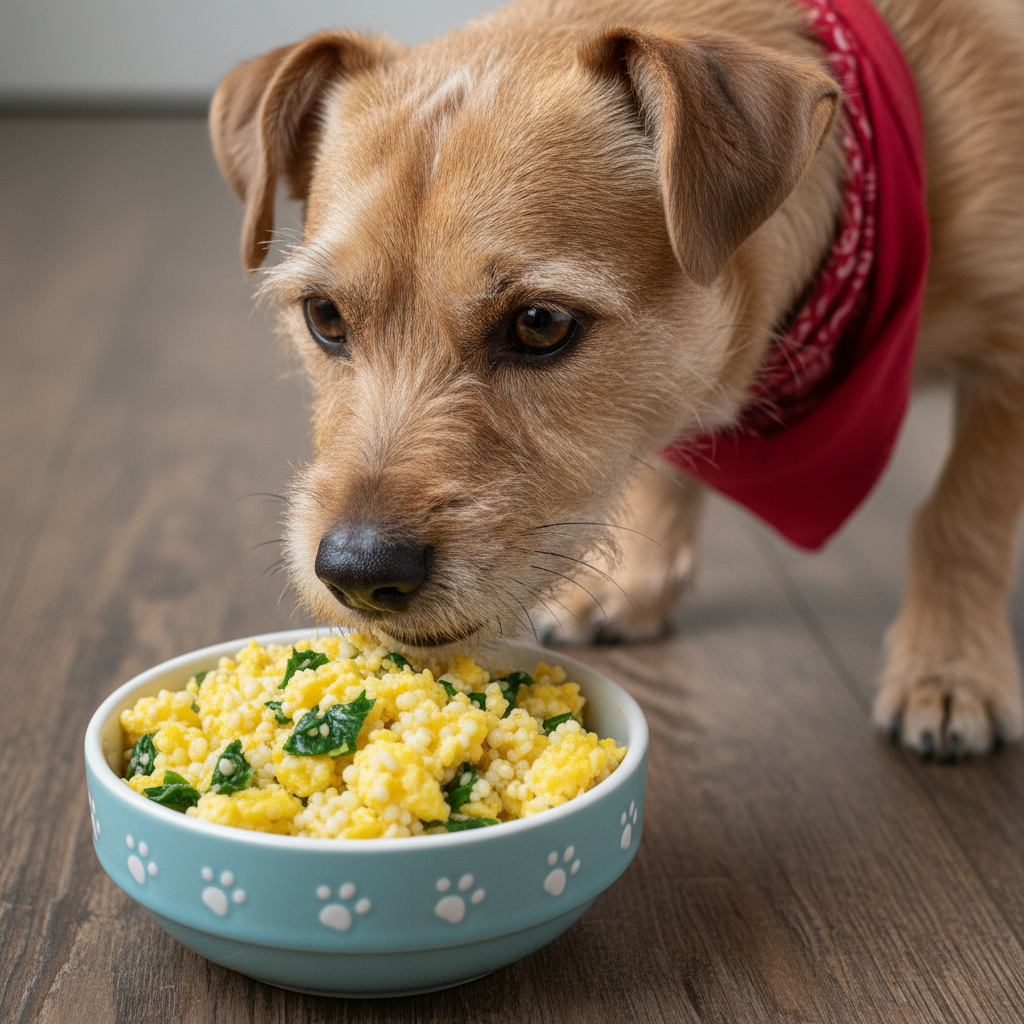
Who says homemade meals are just for dinner? This breakfast scramble is a fantastic way to start your sensitive dog’s day. Eggs are a highly digestible source of protein, and this quick meal is perfect as a special breakfast, a light meal for an older dog, or a topper for their regular food.
Ingredients:
- 1/2 cup cooked millet, cooled
- 2 large eggs
- 1 teaspoon coconut oil or olive oil
- 2 tablespoons finely chopped spinach or kale
- 1 tablespoon cottage cheese (optional, for calcium)
Instructions:
- Heat Pan: Melt the coconut oil in a small non-stick skillet over medium-low heat.
- Scramble Eggs: Whisk the eggs in a small bowl. Pour them into the heated skillet and cook, stirring gently, until they begin to set.
- Add Other Ingredients: When the eggs are about halfway cooked, add the cooked millet and chopped spinach. Continue to stir until the eggs are fully cooked and the spinach is wilted.
- Stir in Cottage Cheese: Remove from the heat and stir in the cottage cheese, if using.
- Cool and Serve: Let the scramble cool down to a safe temperature before serving. This is best served fresh.
Pros & Cons
| Pros | Cons |
|---|---|
| Extremely fast to prepare | Not a complete meal for every day; best as a treat or topper |
| Eggs are a high-quality, easily digestible protein | A small percentage of dogs have egg allergies |
| Great for using up leftover millet | Doesn’t store as well as other recipes; best made fresh |
The Verdict
This scramble is a wonderful, nutritious treat or meal topper. It’s perfect for pet parents who want to add a little something special and healthy to their dog’s morning routine without a lot of fuss.
7. Mighty Sardine & Millet Patties
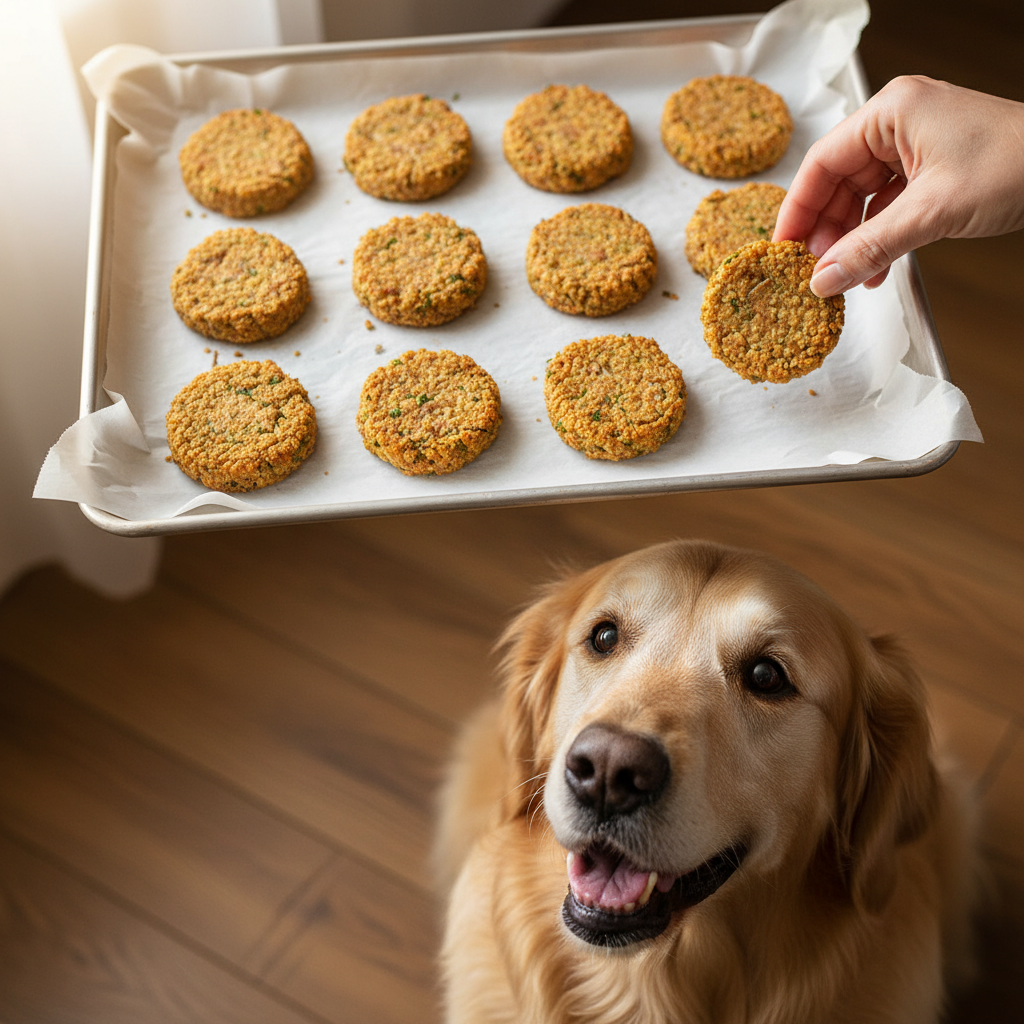
Don’t let the smell fool you—sardines are one of the best foods you can offer your dog! They are packed with Omega-3s for joint and brain health, low in mercury, and highly palatable. These little patties are easy to make and can be served as a meal or broken up as high-value training treats.
Ingredients:
- 1 can (3.75 oz) sardines packed in water, no salt added, undrained
- 1 cup cooked millet
- 1 egg
- 1/4 cup finely chopped parsley
- 2 tablespoons oat flour (or just ground-up rolled oats)
Instructions:
- Preheat Oven: Preheat your oven to 375°F (190°C) and line a baking sheet with parchment paper.
- Mix Ingredients: In a bowl, mash the sardines (including the liquid from the can) with a fork. Add the cooked millet, egg, parsley, and oat flour. Mix until a thick, paste-like consistency forms.
- Form Patties: Take spoonfuls of the mixture and form them into small, bite-sized patties. Place them on the prepared baking sheet.
- Bake: Bake for 15-20 minutes, flipping halfway through, until the patties are firm and lightly golden on the outside.
- Cool Completely: These will be hot! Let them cool completely before offering them to your dog. They can be stored in the fridge for a few days or frozen for later.
Pros & Cons
| Pros | Cons |
|---|---|
| Incredibly high in beneficial Omega-3 fatty acids | Sardines have a very strong smell that lingers |
| Great for joint health, especially for senior dogs | The fishy smell might not be appealing to all humans! |
| Can be used as a meal or as healthy treats | Should be given in moderation due to their richness |
The Verdict
For senior dogs, dogs with arthritis, or any pup needing a cognitive boost, these sardine patties are a nutritional powerhouse. They are a stinky but incredibly effective way to boost your dog’s health.
A Pet Parent’s Guide to Cooking with Millet
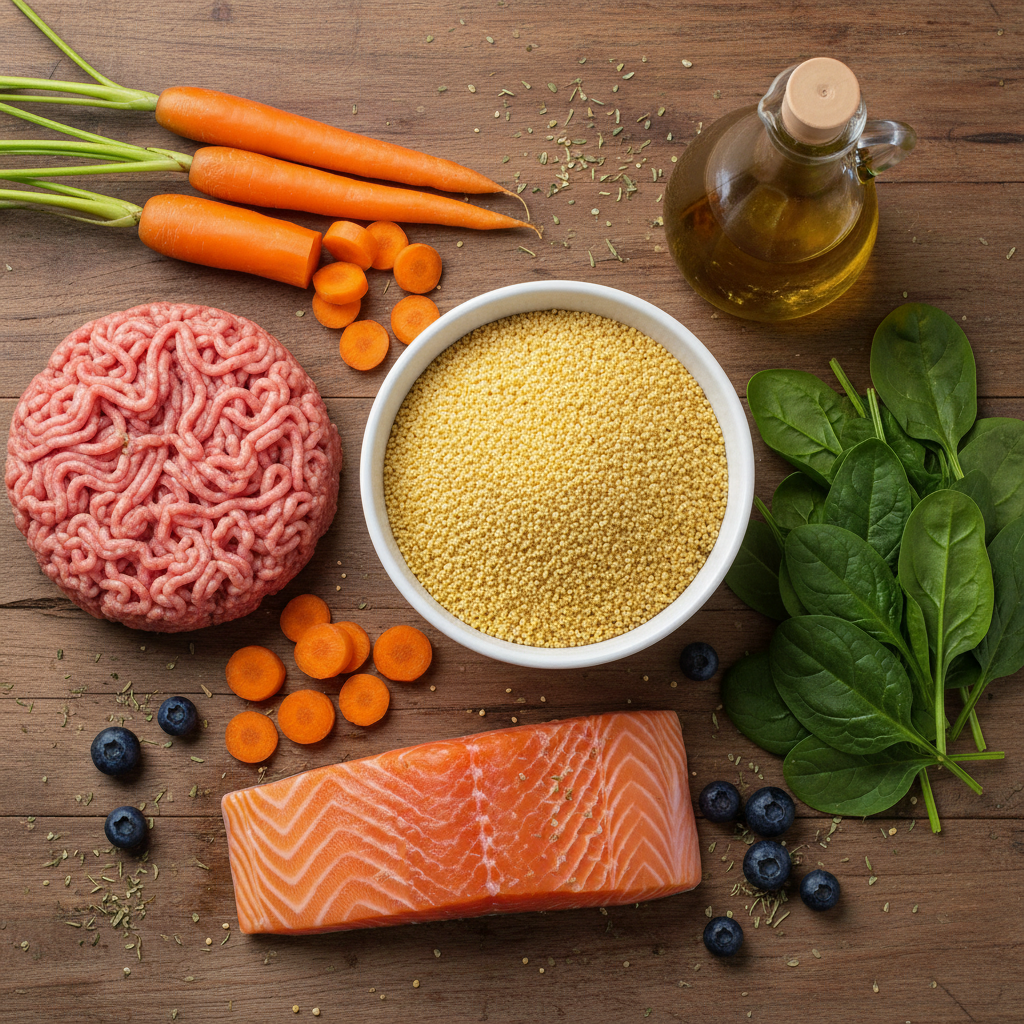
Switching to homemade dog food is a wonderful act of love, but it comes with responsibility. It’s not as simple as just mixing meat and grains. To ensure your dog gets a balanced diet, keep these key points in mind.
Choosing Your Ingredients
- Protein: Always opt for high-quality, lean proteins. If you know your dog is allergic to chicken, try novel proteins like turkey, lamb, or even rabbit. Rotate proteins if you can to provide a wider range of amino acids.
- Millet: Look for hulled millet. It’s the most common type and is easiest for dogs to digest. Always rinse it before cooking to remove any dust or debris.
- Vegetables: Dogs can benefit from a variety of vegetables. Carrots, green beans, peas, spinach, zucchini, and sweet potatoes are all excellent choices. Avoid onions, garlic, grapes, and raisins, which are toxic to dogs.
- Fats: Healthy fats are crucial for energy, skin, and coat health. Small amounts of olive oil, coconut oil, flaxseed oil, or the natural fats from fish like salmon are great additions.
The Importance of Balance and Supplements
While these recipes are healthy, they may not be 100% nutritionally complete for long-term feeding on their own. The biggest challenge with homemade diets is ensuring the correct calcium-to-phosphorus ratio, which is vital for bone health. Commercial dog foods are formulated with precise vitamin and mineral packs to guarantee this balance.
This is why talking to your vet is non-negotiable. They can recommend specific supplements to round out your homemade meals. This might include a canine multivitamin, a calcium supplement, or specific oils to ensure your dog isn’t missing any crucial nutrients. Think of these recipes as a fantastic base, and your vet-approved supplements as the essential finishing touches.
Batch Cooking and Storage
To make life easier, cook in large batches! Most of these recipes can be doubled or tripled. Portion the cooled food into individual meal-sized containers and store them in the refrigerator for up to 4 days. For longer storage, freeze the portions. They can typically be frozen for up to 3 months. To serve, simply thaw a portion in the refrigerator overnight.
Frequently Asked Questions About Millet for Dogs

It’s natural to have questions when introducing a new food to your dog’s diet. Here are answers to some of the most common queries about millet.
1. Is millet better than rice or oatmeal for sensitive dogs?
It can be! While brown rice and oatmeal are healthy grains, they can sometimes be triggers for dogs with certain sensitivities. Millet is gluten-free and generally considered to be less allergenic than many other grains. It’s also a good source of iron, B vitamins, and magnesium. For many dogs with chronic tummy troubles, millet is the gentler choice that finally brings them relief.
2. How much millet can I give my dog?
As a general rule, carbohydrates like millet should make up about 25% to 50% of your dog’s total homemade meal, with protein and vegetables making up the rest. The exact amount depends on your dog’s age, weight, and activity level. Start with a smaller amount and see how your dog tolerates it. A good starting point for a medium-sized dog might be 1/2 to 1 cup of cooked millet per meal. Again, your vet can give you the most precise recommendation.
3. Can puppies eat millet?
Yes, puppies can eat millet, but their nutritional needs are very different from adult dogs. They require specific levels of calcium, protein, and other nutrients for proper growth and development. While a little bit of cooked millet as a treat is fine, a puppy’s primary diet should be a high-quality food specifically formulated for puppies. If you want to feed your puppy a homemade diet, it is absolutely critical to do so under the guidance of a veterinarian or a board-certified veterinary nutritionist to prevent developmental issues.
Conclusion
There you have it – seven delicious, tummy-friendly recipes to bring joy and relief to your sensitive pup! Cooking for your dog is an incredible way to show your love and take control of their health. By using a gentle and nutritious base like millet, you can create meals that are not only safe but also eagerly devoured.
Remember, every dog is an individual. What works wonders for one might not be perfect for another, so don’t be afraid to experiment with different proteins and vet-approved veggies. The most important step is to partner with your veterinarian to ensure the diet you choose is balanced and complete.
Happy cooking, and here’s to many more happy, healthy, and rumble-free days for your best friend!