21 Low Oxalate Dog Food Recipes for Bladder Health
Hey there, fellow pet parent! If you’ve ever received the news that your beloved dog is dealing with bladder stones, you know that heart-sinking feeling. One of the most common types are calcium oxalate stones, and managing them often comes down to one crucial thing: diet. It can feel overwhelming, but don’t worry, you’re in the right place!
Switching to a low-oxalate diet can make a world of difference for your pup’s urinary health. Oxalates are naturally occurring compounds in many plants that, in susceptible dogs, can bind with calcium and form painful crystals or stones in the bladder. By carefully selecting ingredients, you can reduce this risk significantly. Homemade dog food gives you complete control over what goes into your dog’s bowl, ensuring they get a delicious, wholesome meal that’s also therapeutic.
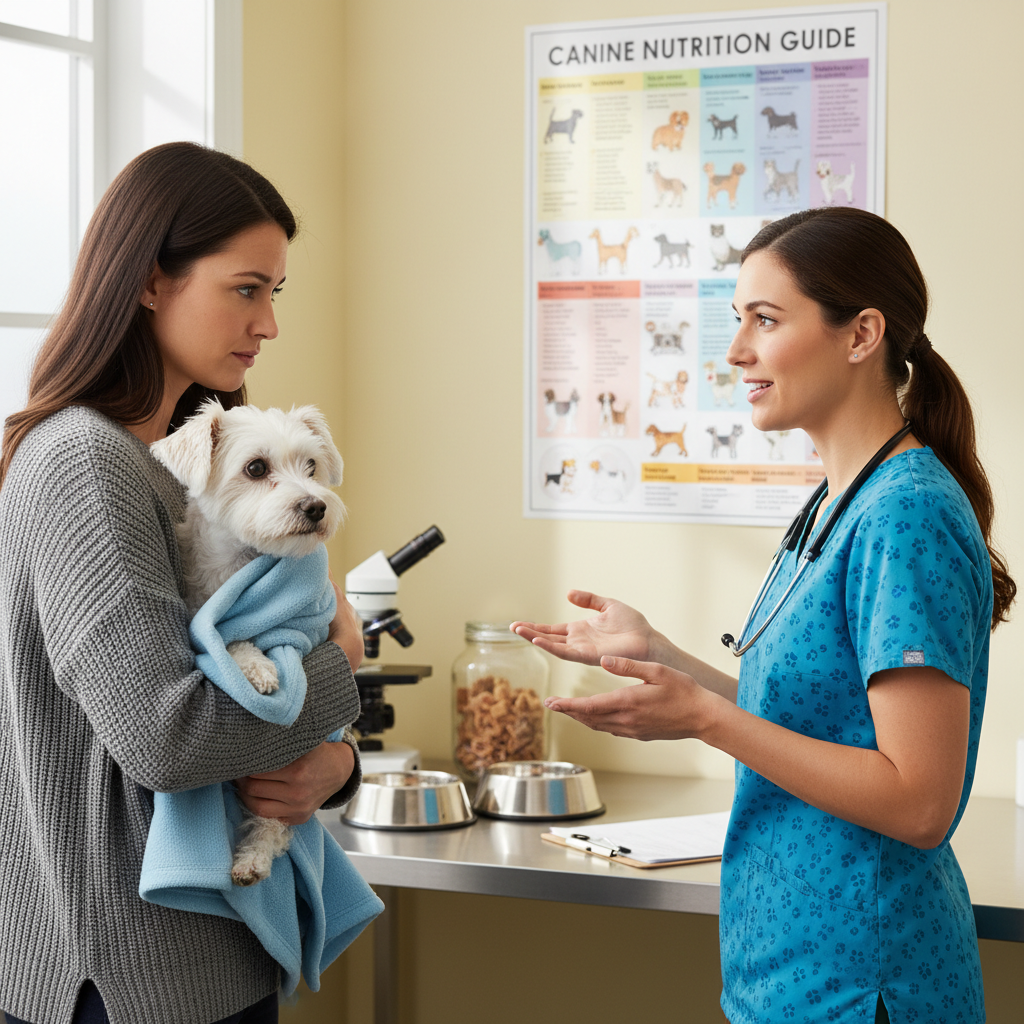
Important Note: Before making any changes to your dog’s diet, it is absolutely essential to consult with your veterinarian or a veterinary nutritionist. They can confirm if a low-oxalate diet is right for your dog and help you tailor it to their specific health needs, age, and activity level.
To get you started, we’ve put together a quick look at the types of recipes you’ll find here. Let’s get cooking for our canine companions!
Recipe Categories at a Glance
| Category | Primary Protein | Key Low-Oxalate Carbs & Veggies |
|---|---|---|
| Poultry Powerhouses | Chicken, Turkey | White Rice, Cauliflower, Cabbage, Cucumber |
| Red Meat Classics | Beef, Lamb | White Rice, Green Peas, Bell Peppers |
| From the Sea | Cod, Salmon, Sardines | Tapioca, Zucchini, Green Beans |
| Specialty & Egg Dishes | Eggs, Cottage Cheese | White Rice, Pumpkin, Broccoli Florets |
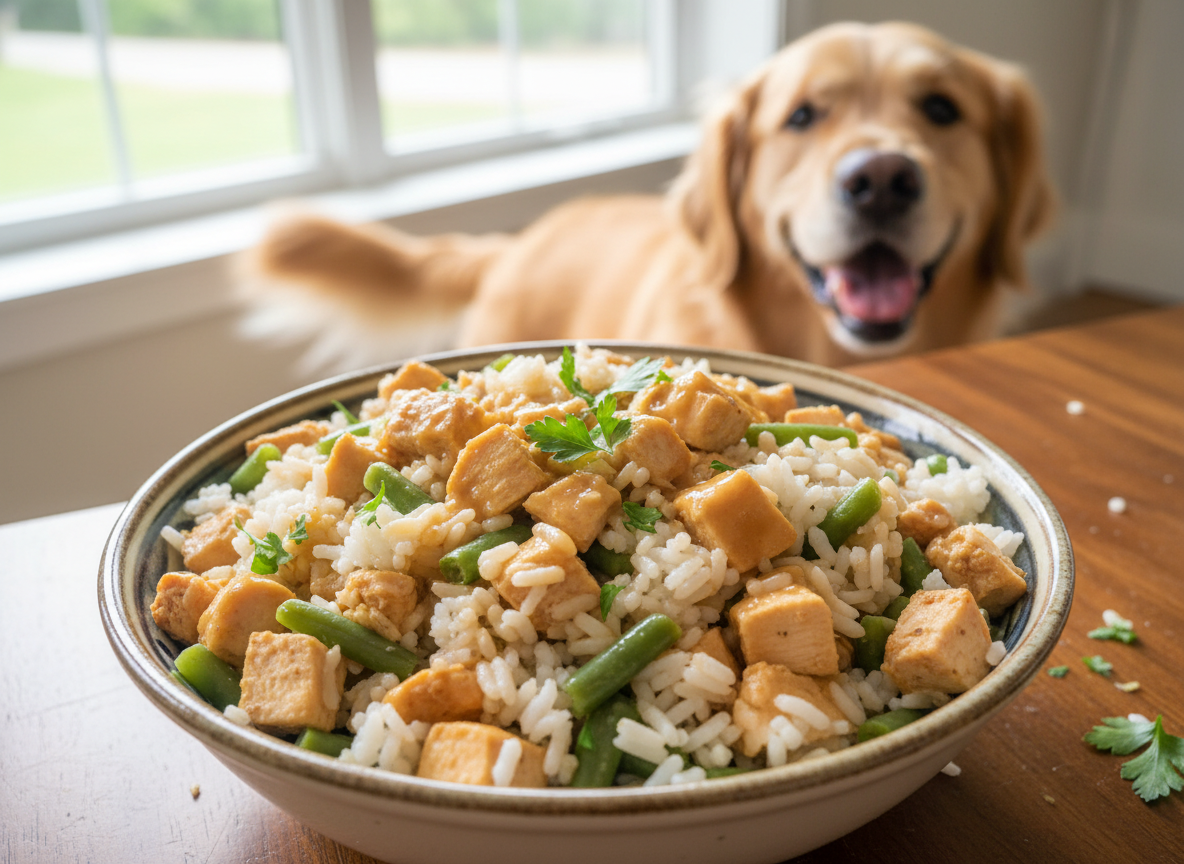
1. Simple Chicken & Rice Delight

This is the quintessential gentle recipe, perfect for sensitive stomachs and a great starting point for a low-oxalate diet. It’s simple, palatable, and easy to prepare.
Ingredient Spotlight: Skinless, boneless chicken breast is a lean protein, and white rice is a low-oxalate carbohydrate that is easy for dogs to digest. Green beans provide fiber without the high oxalate content of other greens.
Ingredients:
- 1 cup cooked, shredded chicken breast
- 2 cups cooked white rice
- 1/2 cup cooked green beans, chopped
- 1 tablespoon olive oil
- Optional: Vet-approved vitamin/mineral supplement
Instructions:
- Cook chicken, rice, and green beans separately and allow to cool.
- In a large bowl, mix the shredded chicken, rice, and chopped green beans.
- Drizzle with olive oil and mix thoroughly.
- Add any supplements recommended by your vet just before serving.
Pros & Cons
| Pros | Cons |
|---|---|
| Extremely easy to digest | May not be suitable for dogs with poultry allergies |
| Simple, accessible ingredients | Lower in some nutrients without supplementation |
Verdict: This recipe is ideal for dogs just starting a homemade diet or those with sensitive digestive systems. It’s a reliable, gentle meal that most dogs love.
2. Turkey and Cauliflower Mash

A great alternative to chicken, ground turkey is a lean protein that pairs wonderfully with the creamy texture of mashed cauliflower, a fantastic low-oxalate vegetable.
Ingredient Spotlight: Ground turkey offers a slightly different flavor profile than chicken. Cauliflower is packed with vitamins but is low in oxalates, making it a perfect substitute for potatoes.
Ingredients:
- 1 lb cooked ground turkey, drained
- 1 head of cauliflower, steamed and mashed
- 1/4 cup water or low-sodium chicken broth
- 1 teaspoon fish oil
Instructions:
- Cook the ground turkey in a skillet until browned, then drain off any excess fat.
- Steam cauliflower until very tender, then mash with a fork or potato masher, adding a little water or broth to get a smooth consistency.
- Combine the cooked turkey with the mashed cauliflower.
- Stir in the fish oil before serving.
Pros & Cons
| Pros | Cons |
|---|---|
| Excellent for dogs who need a novel protein | Cauliflower can sometimes cause gas in sensitive dogs |
| Grain-free option | Requires a bit more prep time for mashing |
Verdict: Perfect for dogs who might be allergic to chicken or who enjoy a softer, mash-style food. The added fish oil is great for skin and coat health.
3. Beef and Green Pea Scramble

For the red meat lovers, this beef and pea scramble is a satisfying and iron-rich meal. It’s straightforward and provides a robust flavor that many dogs find irresistible.
Ingredient Spotlight: Lean ground beef provides essential amino acids and iron. Green peas are a good source of vitamins and fiber and are considered a low-to-moderate oxalate vegetable, making them suitable for this diet in moderation.
Ingredients:
- 1 lb lean ground beef (90/10 or leaner), cooked and drained
- 1.5 cups cooked white rice
- 1/2 cup cooked green peas
- 1 tablespoon flaxseed oil
Instructions:
- Brown the ground beef in a skillet, breaking it into small pieces. Drain the fat thoroughly.
- In a bowl, mix the cooked beef, rice, and green peas.
- Stir in the flaxseed oil until everything is lightly coated.
- Serve warm.
Pros & Cons
| Pros | Cons |
|---|---|
| Rich in iron and protein | Beef can be a higher-fat protein; choose lean cuts |
| Dogs love the flavor of beef | Not ideal for dogs with beef sensitivities |
Verdict: A fantastic choice for active dogs that need a higher protein, iron-rich meal. It’s a simple, hearty dish for canines who aren’t fans of poultry.
4. Cod, Rice, and Zucchini Sauté
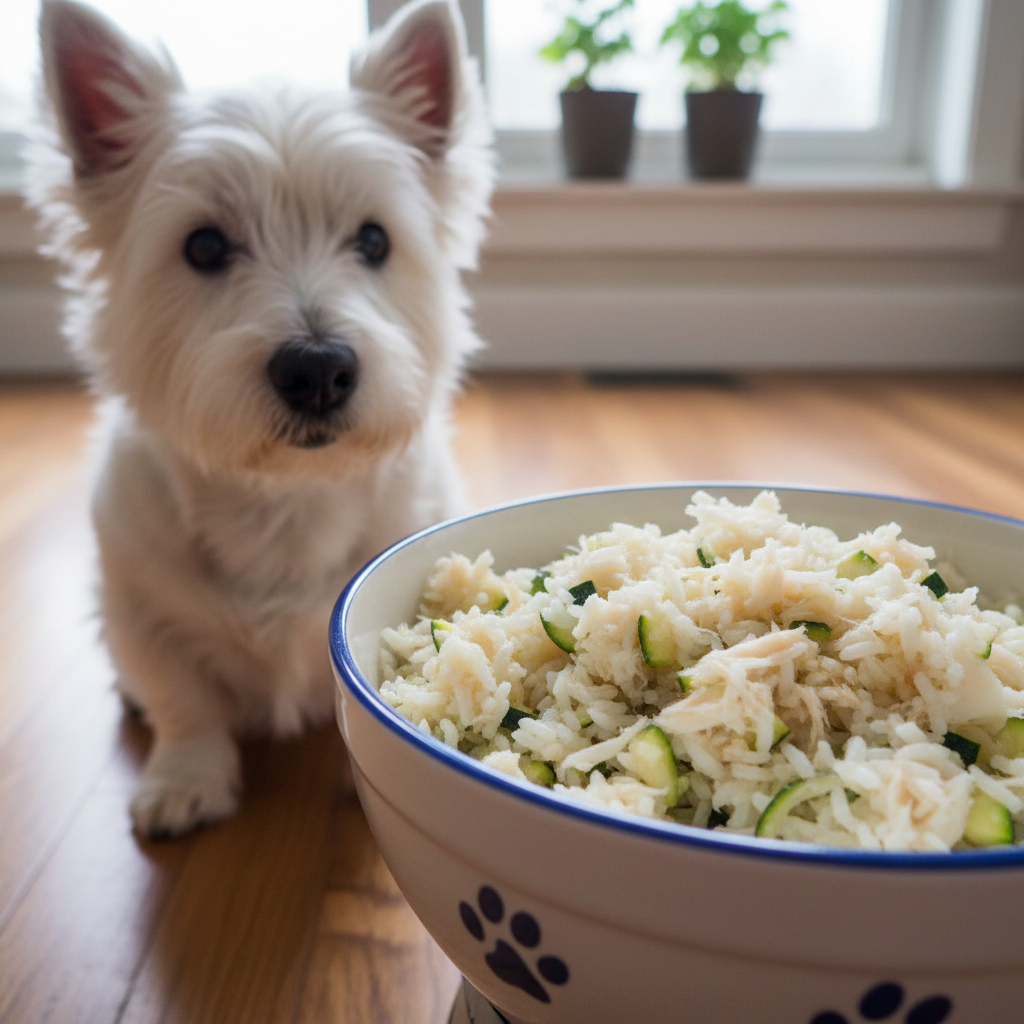
Fish is an excellent source of omega-3 fatty acids, which are great for reducing inflammation. This light recipe is perfect for dogs that need a gentle, easily digestible protein.
Ingredient Spotlight: Cod is a low-fat white fish that’s easy on the tummy. Zucchini is hydrating and very low in oxalates, making it an ideal vegetable for urinary health.
Ingredients:
- 1 lb cod fillets, baked or steamed, then flaked
- 2 cups cooked white rice
- 1 small zucchini, finely chopped and sautéed
- 1 teaspoon coconut oil
Instructions:
- Cook the cod until it’s opaque and flakes easily with a fork.
- Sauté the chopped zucchini in a little water or coconut oil until soft.
- Gently mix the flaked cod, cooked rice, and sautéed zucchini in a bowl.
- Stir in the coconut oil.
Pros & Cons
| Pros | Cons |
|---|---|
| Rich in anti-inflammatory omega-3s | Can have a strong ‘fishy’ smell during preparation |
| Highly digestible and low in fat | Some dogs may not like the taste of fish |
Verdict: An excellent meal for dogs with skin sensitivities or joint issues, thanks to the anti-inflammatory properties of fish. It’s also great for dogs needing a lower-fat diet.
5. Lamb and Pumpkin Purée
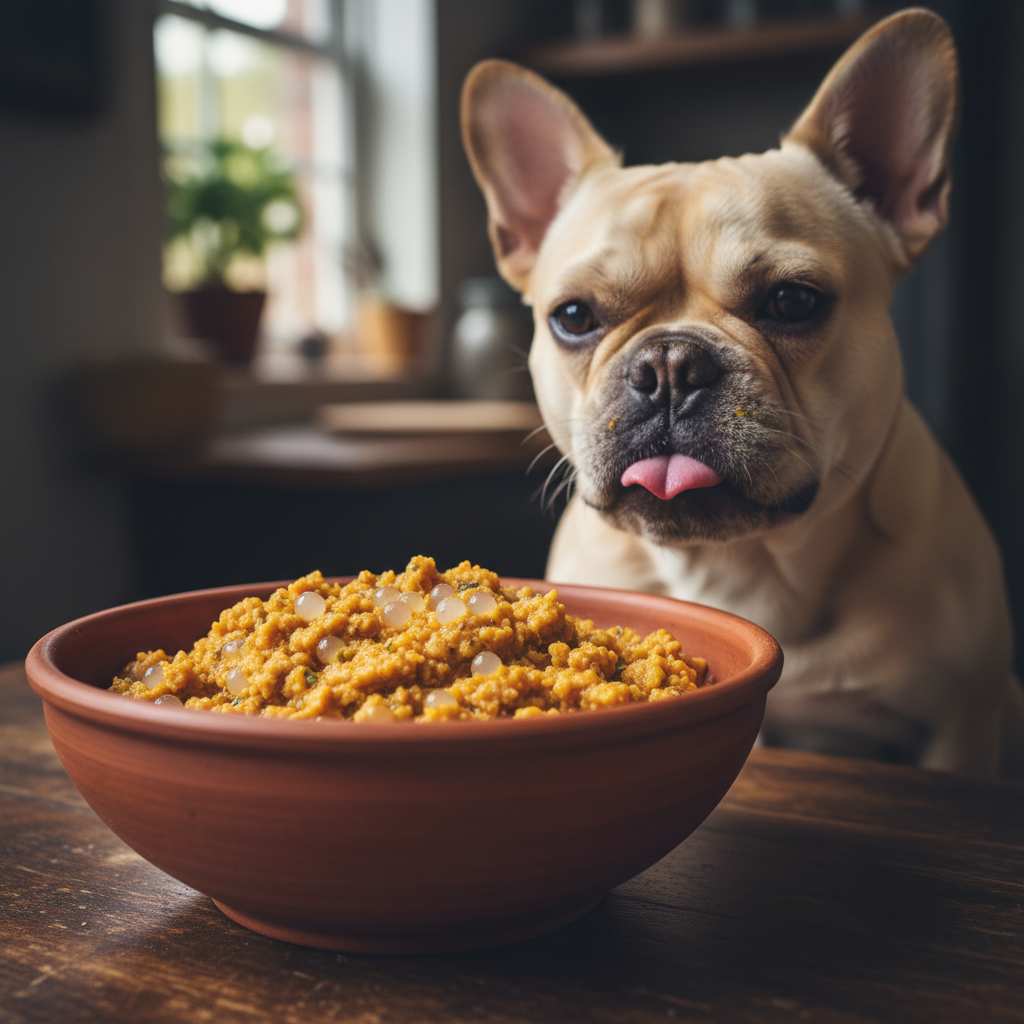
Lamb is another wonderful novel protein for dogs with allergies. Paired with pumpkin, this recipe is also fantastic for digestive health.
Ingredient Spotlight: Lamb is a nutrient-dense red meat. 100% pure pumpkin purée (not pie filling!) is low in oxalates, high in fiber, and known to soothe the digestive tract.
Ingredients:
- 1 lb ground lamb, cooked and drained
- 1.5 cups cooked tapioca pearls (as a grain-free carb)
- 1/2 cup 100% pure pumpkin purée
- A handful of chopped, fresh parsley (low oxalate herb)
Instructions:
- Cook the ground lamb and drain all fat.
- Prepare the tapioca pearls according to package directions.
- In a bowl, combine the lamb, tapioca, and pumpkin purée.
- Sprinkle with fresh parsley and mix well.
Pros & Cons
| Pros | Cons |
|---|---|
| Excellent novel protein for allergy-prone dogs | Lamb can be more expensive than other proteins |
| Pumpkin is great for digestive regularity | Tapioca can be sticky to work with |
Verdict: This recipe is a top choice for dogs with multiple food sensitivities (like chicken and grains) and those who need extra digestive support.
6. Egg and Cottage Cheese Bowl
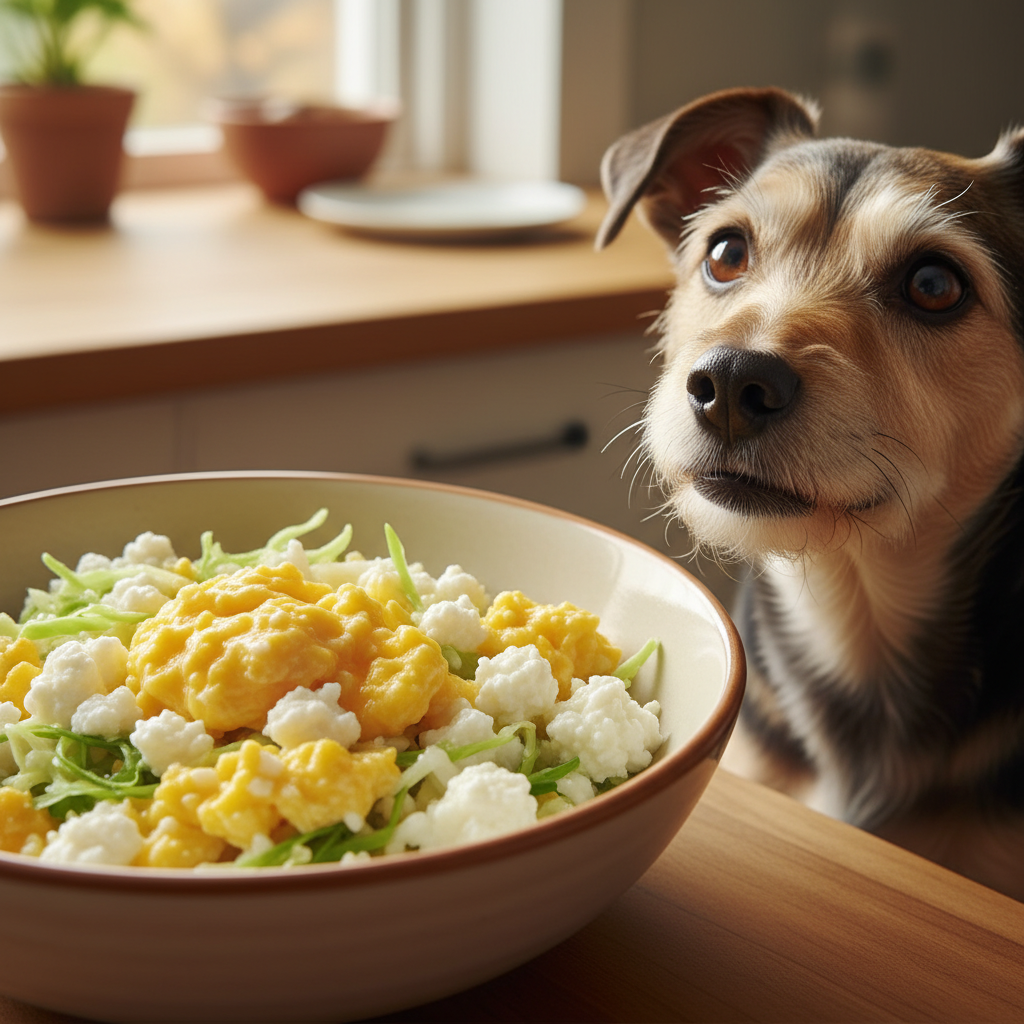
A meat-free option that’s still packed with high-quality protein. This dish is incredibly easy to make and very gentle on the system.
Ingredient Spotlight: Eggs are a complete protein source. Low-fat cottage cheese provides protein and calcium. Cabbage is a crunchy, low-oxalate vegetable that adds texture.
Ingredients:
- 3 large eggs, scrambled and cooked
- 1/2 cup low-fat cottage cheese
- 1 cup cooked white rice
- 1/4 cup finely shredded green cabbage
Instructions:
- Scramble the eggs in a non-stick pan without butter or oil.
- Let the eggs cool slightly, then chop them into small pieces.
- Combine the scrambled eggs, cottage cheese, rice, and shredded cabbage.
- Mix gently and serve.
Pros & Cons
| Pros | Cons |
|---|---|
| Meat-free protein source | Some dogs can be sensitive to dairy |
| Very quick and easy to prepare | Lower in iron compared to red meat dishes |
Verdict: A perfect light meal or a breakfast option for dogs. It’s great for senior dogs or those who need a softer, easy-to-chew meal.
7. Salmon and Green Bean Bake

This casserole-style dish feels like a special treat but is loaded with healthy fats and low-oxalate veggies. Baking everything together lets the flavors meld beautifully.
Ingredient Spotlight: Salmon is a powerhouse of Omega-3 fatty acids. Green beans are a safe, fibrous vegetable for this diet.
Ingredients:
- 1 lb salmon fillet, skin removed
- 1 cup chopped green beans
- 1 cup cooked white rice
- 1 tablespoon olive oil
Instructions:
- Preheat oven to 375°F (190°C).
- Place the salmon fillet in a small baking dish.
- Arrange the green beans and cooked rice around the salmon.
- Drizzle everything with olive oil.
- Bake for 15-20 minutes, or until the salmon is fully cooked.
- Let it cool, flake the salmon with a fork, and mix everything together.
Pros & Cons
| Pros | Cons |
|---|---|
| Exceptionally high in omega-3s for coat and joint health | High-quality salmon can be costly |
| Easy one-pan meal (less cleanup!) | Has a strong aroma while cooking |
Verdict: A fantastic choice for a weekly special meal, especially for dogs with dry skin or arthritis. The healthy fats are a major bonus.
8. Chicken and Cabbage Stew
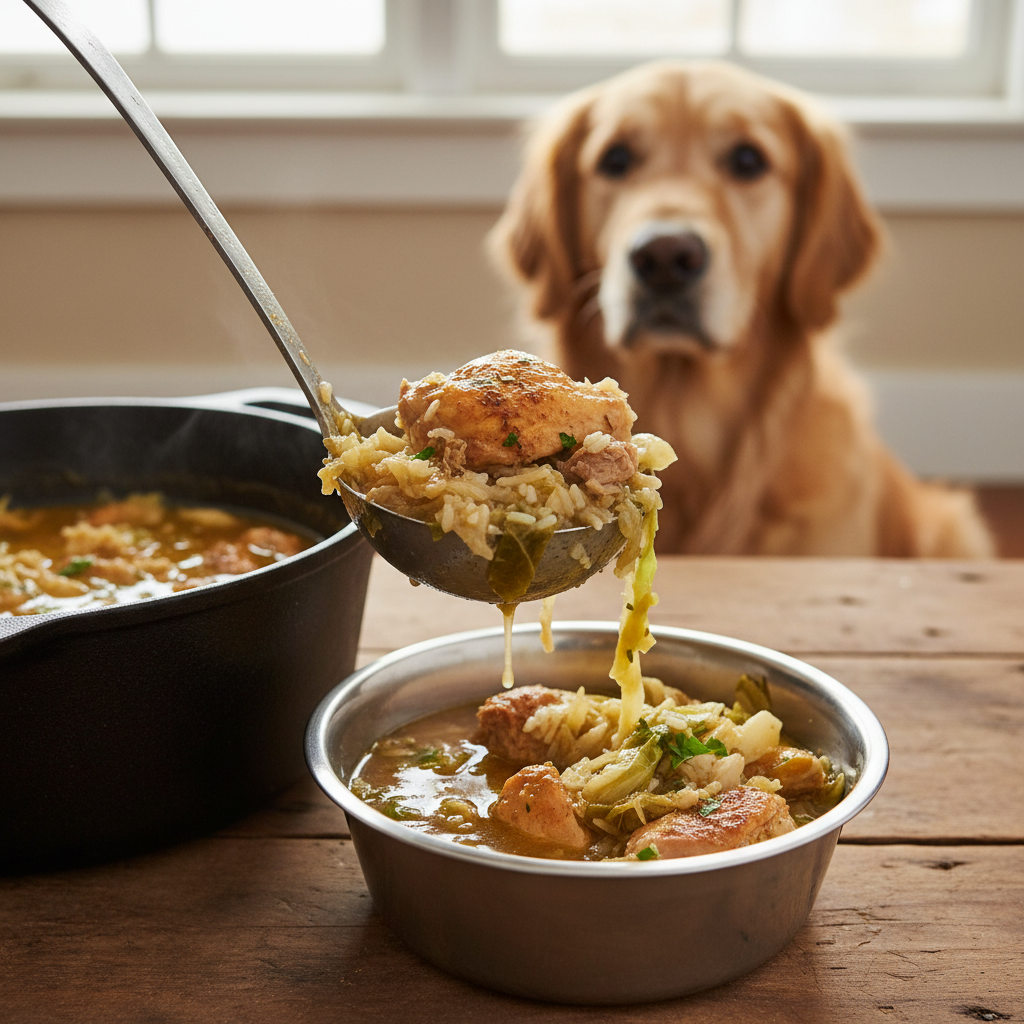
A hydrating, simple stew that’s full of flavor. The shredded cabbage cooks down to a soft, easy-to-eat consistency, and the broth helps increase your dog’s water intake.
Ingredient Spotlight: Cabbage is a cruciferous vegetable that’s very low in oxalates and full of nutrients. Using low-sodium chicken broth adds flavor and moisture, which is crucial for urinary health.
Ingredients:
- 1 lb boneless, skinless chicken thighs, cut into chunks
- 2 cups shredded green cabbage
- 1/2 cup chopped celery (low oxalate)
- 4 cups low-sodium chicken broth
- 1 cup cooked white rice
Instructions:
- In a pot, bring the chicken broth to a simmer.
- Add the chicken chunks and cook for 15 minutes.
- Add the shredded cabbage and celery, and simmer for another 10-15 minutes until vegetables are tender.
- Remove from heat, let cool, and stir in the cooked white rice before serving.
Pros & Cons
| Pros | Cons |
|---|---|
| Extra hydration from the broth is great for bladder health | Takes longer to cook than a simple scramble |
| Very gentle and warming, perfect for colder days | Cabbage can cause gas in some dogs |
Verdict: This stew is perfect for encouraging picky drinkers to get more fluids. It’s a comforting, complete meal that’s easy on the digestive system.
9. Ground Turkey & Zucchini Noodles

A fun, grain-free meal that mimics a human favorite! ‘Zoodles’ are a hydrating and nutrient-rich base for the savory ground turkey.
Ingredient Spotlight: Zucchini, when spiralized, creates a noodle-like texture that dogs enjoy. It’s almost all water, which is fantastic for flushing the urinary system.
Ingredients:
- 1 lb ground turkey, cooked and drained
- 2 medium zucchinis, spiralized or grated
- 1 tablespoon olive oil
- A pinch of dried basil (optional)
Instructions:
- Cook and drain the ground turkey.
- In a separate pan, lightly sauté the zucchini noodles in olive oil for 2-3 minutes until just softened.
- Toss the cooked turkey with the zucchini noodles.
- Sprinkle with a tiny pinch of basil if desired and serve.
Pros & Cons
| Pros | Cons |
|---|---|
| Grain-free and low-carb | Requires a spiralizer or extra prep for the zucchini |
| High water content for hydration | May not be as filling for very active dogs without added carbs |
Verdict: An excellent choice for overweight dogs or those on a grain-free diet. It’s light, hydrating, and offers a fun texture change.
10. Beef & Bell Pepper Stir-fry
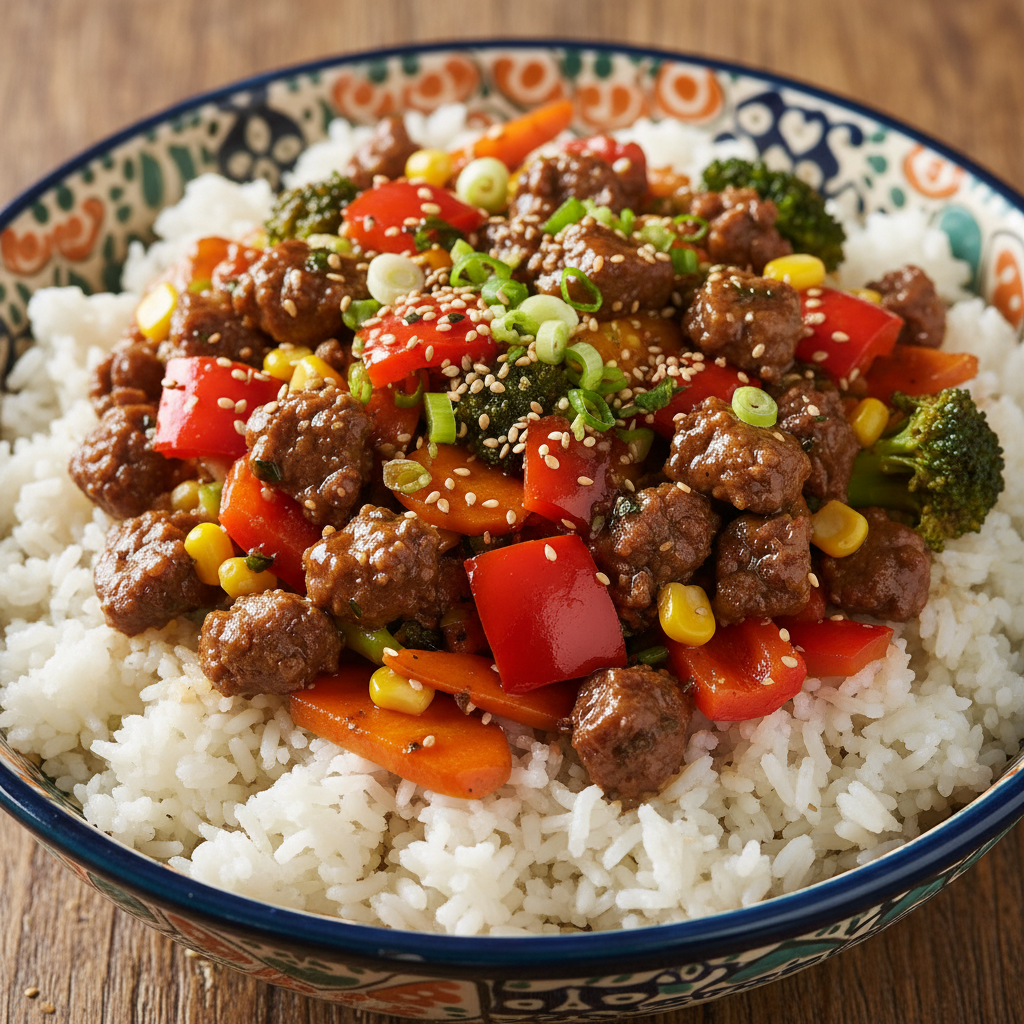
A colorful and vitamin-rich meal. Red bell peppers are low in oxalates and high in antioxidants, adding a nutritional punch to this beefy dish.
Ingredient Spotlight: Red bell peppers are a fantastic source of Vitamins A and C. They add a slight sweetness that dogs often enjoy.
Ingredients:
- 1 lb lean beef strips or ground beef
- 1/2 red bell pepper, finely diced
- 1.5 cups cooked white rice
- 1 tablespoon coconut oil
Instructions:
- In a large skillet or wok, melt the coconut oil.
- Add the beef and cook until browned.
- Add the diced red bell pepper and cook for another 3-4 minutes until softened.
- Stir in the cooked white rice and mix everything together.
- Let cool before serving.
Pros & Cons
| Pros | Cons |
|---|---|
| Rich in vitamins from the bell pepper | Some dogs may not like the texture of cooked peppers |
| Visually appealing and colorful | Beef can be a common allergen for some dogs |
Verdict: A great way to introduce more vegetables into your dog’s diet. This is a nutrient-dense meal for active dogs who tolerate beef well.
11. Sardine and Mashed Pea Mash-Up

Sardines are tiny powerhouses of nutrition. This recipe is a bit smelly but offers an incredible boost of omega-3s and calcium (from the tiny, edible bones).
Ingredient Spotlight: Canned sardines packed in water (no salt added) are an affordable and potent source of omega-3s. Peas provide a low-oxalate starchy vegetable base.
Ingredients:
- 1 can (3.75 oz) sardines in water, no salt added
- 1 cup cooked green peas, mashed
- 1 cup cooked white rice
Instructions:
- Drain the water from the can of sardines.
- In a bowl, mash the sardines with a fork.
- Add the mashed peas and cooked rice.
- Mix everything thoroughly until combined.
Pros & Cons
| Pros | Cons |
|---|---|
| Extremely high in omega-3 fatty acids | Very strong, fishy odor |
| Economical and requires no cooking for the protein | Not all dogs will enjoy the intense flavor |
Verdict: The perfect supplemental meal or topper for dogs needing a serious anti-inflammatory boost. Use in moderation due to its richness.
12. Chicken, Broccoli, and Rice Gratin
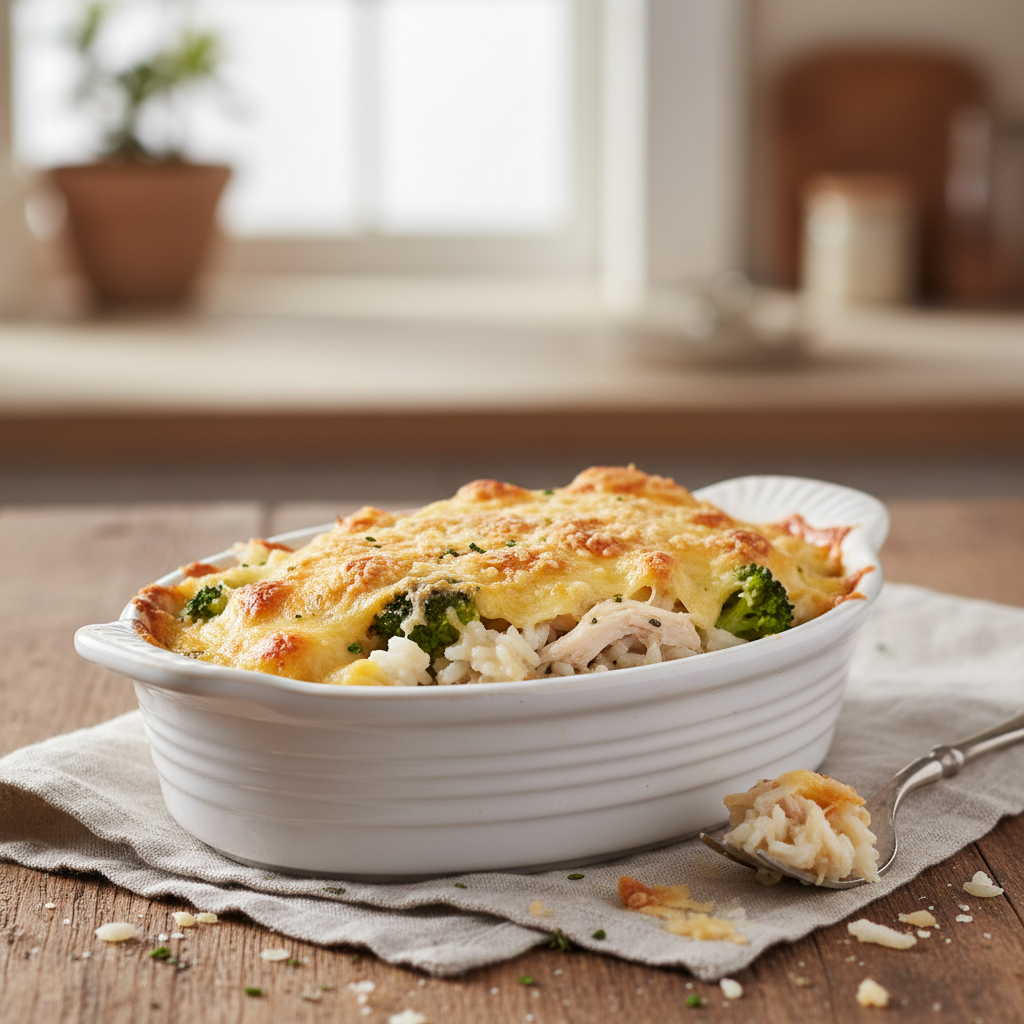
A simple baked dish that feels special. Use only the broccoli florets, as the stems are higher in oxalates.
Ingredient Spotlight: Broccoli florets are a good source of vitamins when used in moderation. A sprinkle of parmesan cheese adds flavor without significantly increasing oxalate levels.
Ingredients:
- 1 cup cooked, diced chicken
- 1/2 cup steamed broccoli florets (not stems)
- 1.5 cups cooked white rice
- 1 tablespoon grated Parmesan cheese
- 1/4 cup water
Instructions:
- Preheat oven to 350°F (175°C).
- In a small baking dish, mix the chicken, broccoli florets, and rice.
- Pour the water over the mixture.
- Sprinkle the Parmesan cheese on top.
- Bake for 10-15 minutes until warmed through and the cheese is melted.
- Cool completely before serving.
Pros & Cons
| Pros | Cons |
|---|---|
| Baked texture is appealing to some dogs | Requires oven use and a bit more time |
| Small amount of cheese makes it highly palatable | Contains dairy, which may not suit all dogs |
Verdict: A delicious ‘special occasion’ meal for dogs who love cheesy flavors and can tolerate dairy in small amounts.
13. Simple Turkey Meatballs
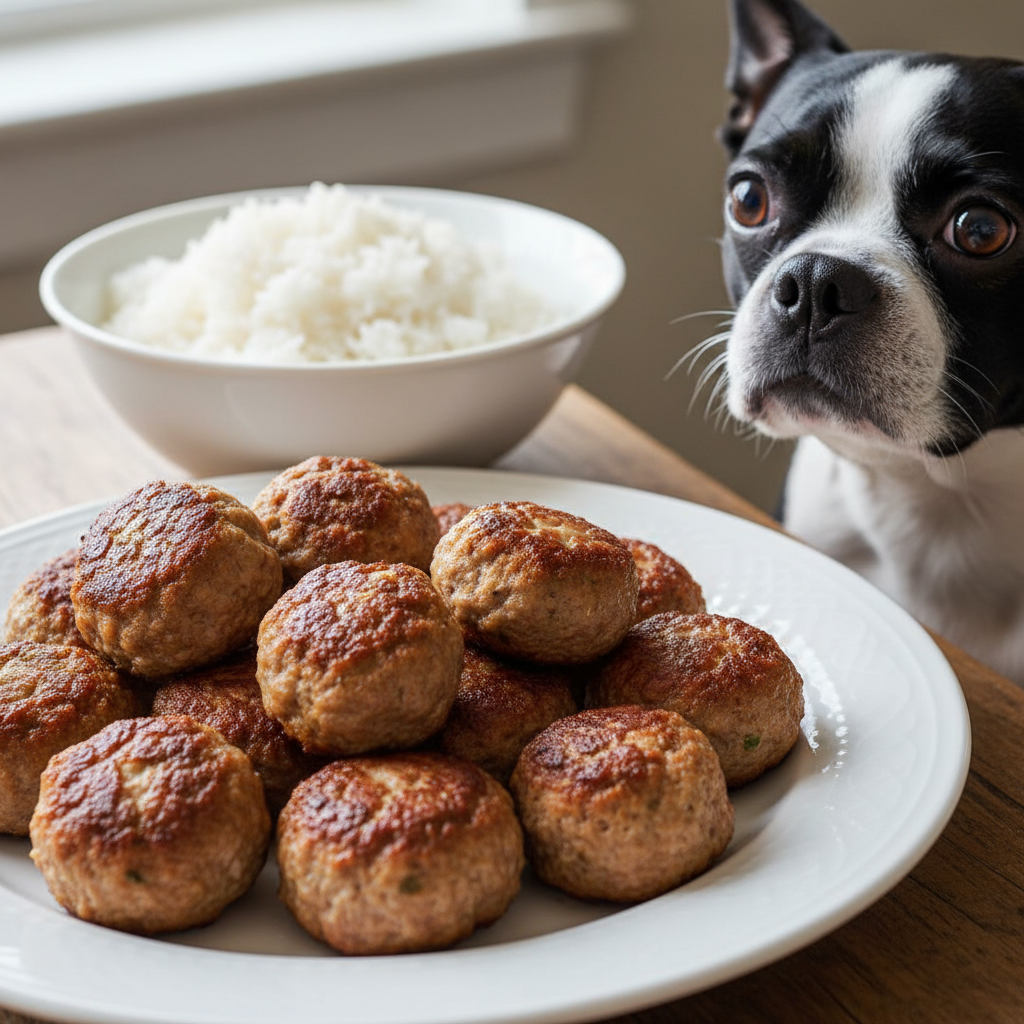
These meatballs are easy to make in batches and freeze for later. They can be served as a meal or a special treat.
Ingredient Spotlight: Ground turkey is the lean base, and finely shredded cucumber (seeds removed) adds moisture without oxalates.
Ingredients:
- 1 lb ground turkey
- 1/4 cup finely shredded cucumber, patted dry
- 1/4 cup breadcrumbs (from low-oxalate white bread)
- 1 egg
Instructions:
- Preheat oven to 400°F (200°C).
- In a bowl, mix the ground turkey, shredded cucumber, breadcrumbs, and egg until just combined.
- Roll the mixture into small, bite-sized meatballs and place on a baking sheet.
- Bake for 15-20 minutes, or until cooked through.
- Serve with a side of white rice.
Pros & Cons
| Pros | Cons |
|---|---|
| Perfect for batch cooking and freezing | Can be a bit dry if overcooked |
| Fun shape and texture for dogs | Requires careful portioning to be a complete meal |
Verdict: Great for meal prepping! These meatballs are a convenient and popular choice for busy pet owners.
14. Pork and Cabbage Rolls
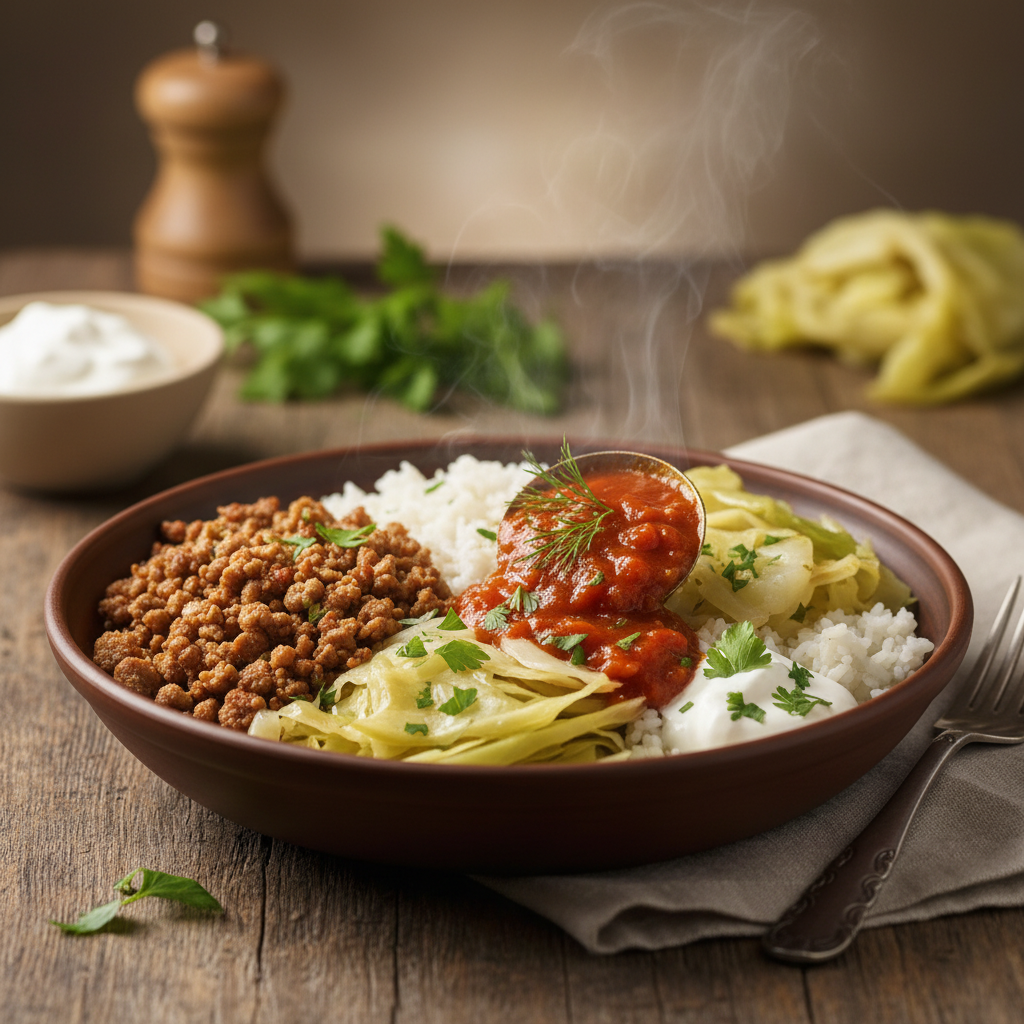
A deconstructed take on a classic. This recipe uses ground pork, a flavorful protein that many dogs enjoy, paired with tender cabbage.
Ingredient Spotlight: Ground pork offers a different flavor profile. Large cabbage leaves serve as a low-oxalate ‘wrapper’ or can be chopped and mixed in.
Ingredients:
- 1 lb ground pork, cooked and drained
- 1.5 cups cooked white rice
- 1 cup finely shredded and sautéed green cabbage
- 2 tablespoons of water
Instructions:
- Cook the ground pork thoroughly and drain any fat.
- In a pan, sauté the shredded cabbage with a bit of water until soft.
- Combine the cooked pork, rice, and cabbage in a bowl.
- Mix well and serve warm.
Pros & Cons
| Pros | Cons |
|---|---|
| Pork is a highly palatable protein for many dogs | Pork can be higher in fat; choose lean ground pork |
| Cabbage provides good fiber content | Can have a strong odor during cooking |
Verdict: A delicious and savory option for dogs who are tired of poultry. It’s a hearty meal that feels like a treat.
15. ‘Goulash’ Style Beef Stew

A simplified, dog-friendly version of goulash. This stew is warming and uses low-oxalate ingredients to create a rich, savory meal.
Ingredient Spotlight: Stewing beef becomes incredibly tender when slow-cooked. A tiny amount of paprika (ensure it’s not hot paprika) can add flavor, but check with your vet first.
Ingredients:
- 1 lb stewing beef, cut into small cubes
- 1/2 cup diced red bell pepper
- 4 cups low-sodium beef broth
- 2 cups cooked white rice or pasta (check pasta ingredients)
Instructions:
- In a large pot, brown the stewing beef on all sides.
- Add the beef broth, bring to a simmer, then reduce heat, cover, and cook for 1.5-2 hours until beef is tender.
- Add the diced bell pepper for the last 20 minutes of cooking.
- Serve the beef and broth mixture over a bed of cooked white rice.
Pros & Cons
| Pros | Cons |
|---|---|
| Tender meat is easy for senior dogs to eat | Very long cooking time |
| Hydrating and full of flavor | Requires monitoring while it simmers |
Verdict: The ultimate comfort food for your canine. Perfect for a lazy weekend cooking project that results in a deeply flavorful and tender meal.
16. Fish Cakes with Peas
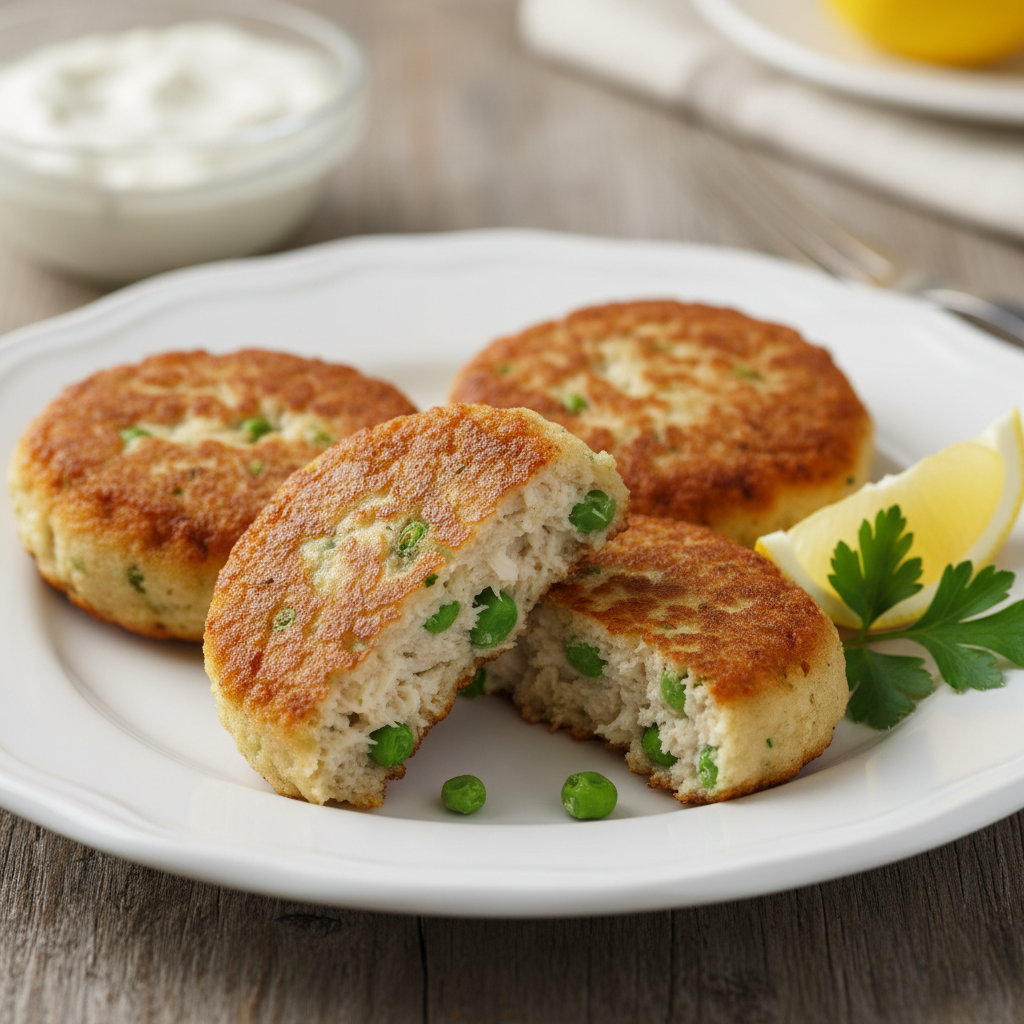
These simple fish cakes are a great way to serve fish without the flaky mess. They hold together well and can be made ahead of time.
Ingredient Spotlight: Any mild white fish like cod or haddock works well. A little bit of rice flour acts as a low-oxalate binder.
Ingredients:
- 1 lb cooked and flaked white fish
- 1/2 cup cooked green peas
- 1 egg
- 2 tablespoons rice flour
- 1 tablespoon olive oil for pan-frying
Instructions:
- In a bowl, mix the flaked fish, peas, egg, and rice flour.
- Form the mixture into small patties.
- Heat olive oil in a skillet over medium heat.
- Cook the patties for 3-4 minutes per side, until golden brown.
- Cool completely before serving.
Pros & Cons
| Pros | Cons |
|---|---|
| Easy to portion and serve | Requires multiple steps (cooking, forming, frying) |
| Good texture for dogs who like to chew | Can fall apart if not enough binder is used |
Verdict: A fun and tasty meal for dogs who enjoy fish. The patty form makes it feel like a special burger treat.
17. Chicken and Apple Risotto

A creamy, comforting dish. Apples, with skins and seeds removed, can be a sweet, low-oxalate treat in moderation.
Ingredient Spotlight: Arborio rice creates a creamy texture without dairy. A small amount of apple adds fiber and a hint of sweetness.
Ingredients:
- 1/2 cup Arborio rice
- 2 cups low-sodium chicken broth, warmed
- 1/2 cup cooked, finely diced chicken
- 1/4 of a large apple, peeled, cored, and finely grated
Instructions:
- In a saucepan, toast the dry Arborio rice for one minute.
- Add the warm broth one ladle at a time, stirring constantly and waiting for it to be absorbed before adding more.
- When the rice is almost cooked (about 15-20 minutes), stir in the diced chicken and grated apple.
- Cook for another 2 minutes. Let cool to a safe temperature.
Pros & Cons
| Pros | Cons |
|---|---|
| Creamy texture is highly palatable | Requires constant stirring and attention |
| A unique and interesting flavor profile for dogs | Fruits should always be given in moderation |
Verdict: For the pampered pooch who deserves a gourmet meal. This risotto is a labor of love that’s both delicious and gentle on the urinary tract.
18. Lamb and Mint Rice

A classic flavor combination, made safe for your pup. A tiny bit of fresh mint can aid digestion, but always use herbs sparingly.
Ingredient Spotlight: Lamb and mint are a traditional pairing. Mint is low in oxalates and can freshen breath.
Ingredients:
- 1 lb ground lamb, cooked and drained
- 2 cups cooked white rice
- 1 teaspoon finely chopped fresh mint
Instructions:
- Cook and drain the ground lamb.
- In a bowl, combine the hot lamb with the cooked rice. The residual heat will release the aroma of the mint.
- Sprinkle in the chopped mint and mix thoroughly.
- Let it cool before serving.
Pros & Cons
| Pros | Cons |
|---|---|
| Novel protein with a fresh flavor | Some dogs may not like the taste of mint |
| Extremely simple three-ingredient recipe | Herbs should be used with caution and vet approval |
Verdict: A simple yet elegant meal for dogs with adventurous palates. It’s especially good for those with poultry allergies.
19. ‘Congee’ Rice Porridge with Pork
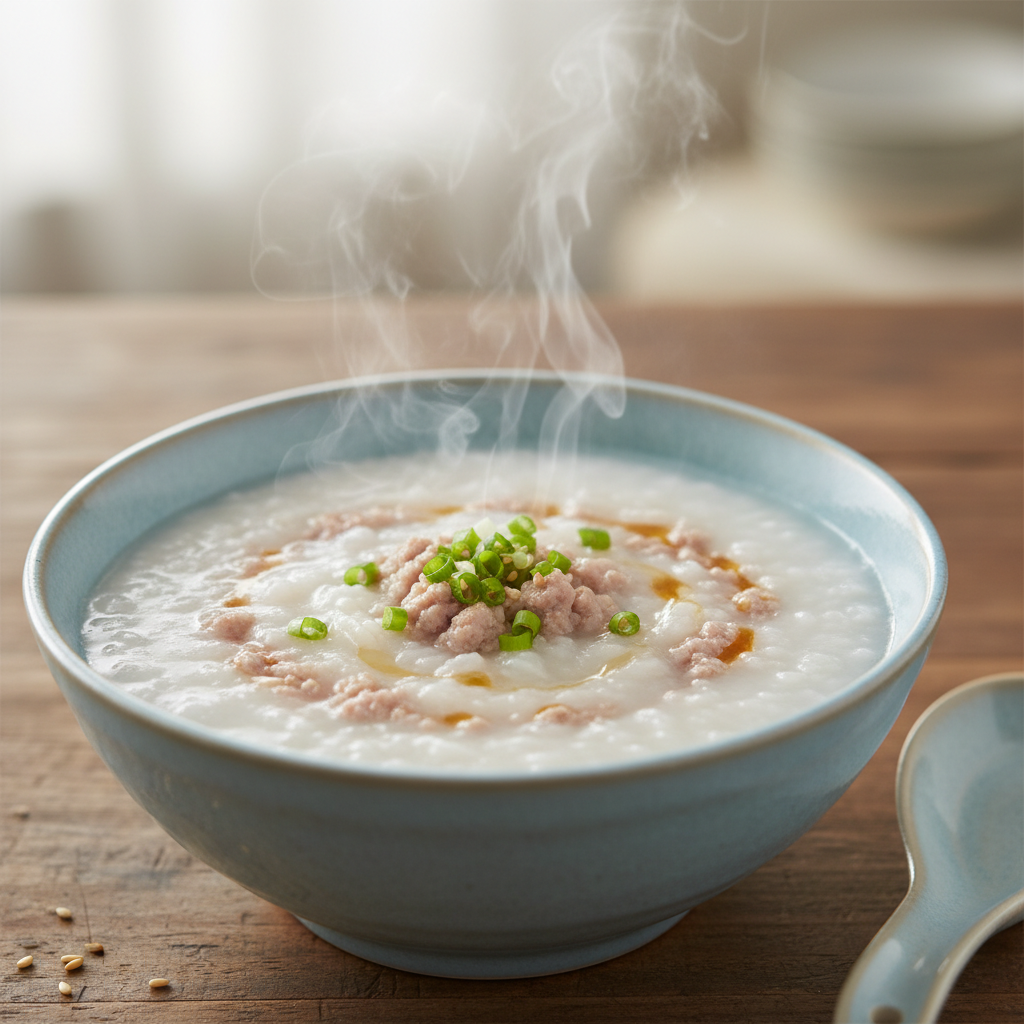
Congee is a rice porridge that is incredibly easy to digest. It’s a warming, hydrating meal perfect for a dog feeling under the weather.
Ingredient Spotlight: Overcooking the rice in a large amount of broth breaks it down into a digestible porridge, which is great for hydration and sensitive stomachs.
Ingredients:
- 1/2 cup white rice
- 5 cups low-sodium chicken or pork broth
- 1/2 lb ground pork, cooked
- Optional: 1 tablespoon of finely shredded cabbage
Instructions:
- In a large pot, bring the broth and rice to a boil.
- Reduce heat to a low simmer, cover partially, and cook for 1-1.5 hours, stirring occasionally, until the rice has broken down into a thick porridge.
- Stir in the pre-cooked ground pork and shredded cabbage (if using) during the last 10 minutes.
- Cool to a safe temperature before serving. It will be very hot.
Pros & Cons
| Pros | Cons |
|---|---|
| Maximizes hydration and is very easy to digest | Very long cook time |
| Excellent for sick or senior dogs | Has a soft, uniform texture that some dogs may not like |
Verdict: The ultimate meal for a dog in recovery or with a very sensitive stomach. It’s hydration and nutrition in one warm, comforting bowl.
20. Chicken & Cucumber ‘Salad’

A refreshing, no-cook (if using pre-cooked chicken) meal for hot summer days. Cucumber is extremely hydrating and virtually oxalate-free.
Ingredient Spotlight: Cucumber is over 95% water, making it a fantastic ingredient for urinary health. Rotisserie chicken (skin and bones removed, no seasoning) is a convenient option.
Ingredients:
- 1.5 cups shredded, cooked chicken
- 1 cup chopped cucumber (peeled and seeds removed)
- 1 cup cooked and cooled white rice
- 1 teaspoon flaxseed oil
Instructions:
- In a bowl, combine the shredded chicken, chopped cucumber, and cooled rice.
- Drizzle with flaxseed oil.
- Toss gently to combine.
- Serve chilled.
Pros & Cons
| Pros | Cons |
|---|---|
| Very hydrating and refreshing | May not be appealing to dogs in colder climates |
| Quick to assemble with pre-cooked ingredients | Cucumber doesn’t add many calories for active dogs |
Verdict: The perfect light lunch for a hot day. It helps keep your dog cool and hydrated while still providing a balanced meal.
21. The ‘Everything Low’ Scramble

This recipe is designed for when you need to use up leftover low-oxalate ingredients. It’s a versatile template you can adapt based on what you have on hand.
Ingredient Spotlight: This is a mix-and-match. The key is to only use approved low-oxalate ingredients from your vet’s list.
Ingredients:
- 1 part cooked protein (e.g., ground turkey, beef, flaked fish)
- 1 part cooked white rice
- 1/2 part chopped low-oxalate vegetable (e.g., zucchini, cabbage, green beans, cauliflower)
- A drizzle of a healthy oil (olive, flax, fish)
Instructions:
- Combine all your cooked and cooled ingredients in a bowl.
- Drizzle with your chosen oil.
- Mix well and serve.
Pros & Cons
| Pros | Cons |
|---|---|
| Great for preventing food waste | Nutritional content will vary with each batch |
| Highly customizable to your dog’s preferences | Requires you to be vigilant about using only safe ingredients |
Verdict: This is the go-to recipe for the end of the week. It ensures your dog gets a varied, safe, and delicious meal while you clean out the fridge.
A Guide to Low-Oxalate Cooking for Your Dog

Switching to a homemade diet can feel like a big step, but with a little knowledge, you’ll become a pro chef for your pup in no time. The goal is simple: limit the ingredients that contribute to the formation of calcium oxalate stones. Here’s what you need to know.
Understanding Oxalates
Oxalates are compounds found in plants. For most dogs, they’re harmless. But in certain breeds or individuals, the body can’t process them efficiently. When oxalates bind with calcium in the urine, they can form sharp crystals. Over time, these crystals can clump together to form bladder stones, causing pain, difficulty urinating, and potential blockages. A diet low in oxalates and high in moisture is the primary way to manage and prevent this condition.
Key Low-Oxalate Foods for Your Dog
Building your recipes around these ‘safe’ foods is the key to success. Always wash produce thoroughly.
- Proteins: Chicken, Turkey, Beef, Lamb, Pork, Eggs, White Fish (Cod, Haddock), Salmon.
- Vegetables: Cabbage, Cauliflower, Cucumber, Zucchini, Green Beans, Celery, Broccoli Florets (in moderation), Bell Peppers, Peas (in moderation), Pumpkin.
- Carbohydrates: White Rice, Tapioca, White Bread (in moderation).
- Fruits (in moderation): Apples (no seeds/core), Bananas, Melon.
Foods to AVOID (High in Oxalates)
This is just as important as what you include. Steer clear of these common high-oxalate ingredients:
- Vegetables: Spinach, Kale, Swiss Chard, Sweet Potatoes, Carrots, Beets, Rhubarb.
- Carbohydrates: Brown Rice, Whole Wheat, Oats, Barley, Quinoa.
- Legumes: Soy, Beans, Lentils.
- Nuts and Seeds: All nuts and seeds should generally be avoided.
Tips for Success
1. Batch Cook: Spend one afternoon a week preparing large batches of food. Portion them into daily servings and freeze. This saves a ton of time.
2. Ensure Balance: Homemade diets can lack certain vitamins and minerals. Talk to your vet about a good quality canine multivitamin or supplement formulated for homemade diets to ensure the meals are complete and balanced.
3. Promote Hydration: A low-oxalate diet works best when the urine is diluted. Always provide fresh, clean water. Adding water or low-sodium broth to meals is also a great way to increase fluid intake.
4. Consult the Experts: Your vet is your partner. They can recommend regular urine tests to monitor for crystals and ensure the diet is working effectively. A veterinary nutritionist can provide even more tailored recipes and guidance.
Frequently Asked Questions
Can I just buy low-oxalate kibble instead?
Yes, several prescription diets are formulated to be low in oxalates (e.g., Royal Canin Urinary SO, Hill’s Prescription Diet c/d). These can be an excellent, convenient option. The main benefits of a homemade diet are control over ingredient quality, the ability to cater to specific allergies or preferences, and higher moisture content. Many owners find a combination works well—using kibble for some meals and homemade for others. Discuss the best approach with your vet.
How do I know if my dog needs a low-oxalate diet?
A low-oxalate diet should only be started under veterinary supervision. This diet is specifically for dogs that have been diagnosed with calcium oxalate crystals or stones through a urinalysis or imaging (like an x-ray or ultrasound). Symptoms that might lead to this diagnosis include straining to urinate, blood in the urine, frequent urination in small amounts, or urinary accidents. Never switch to this restrictive diet without a proper diagnosis.
How much of this homemade food should I feed my dog?
Portion size is critical and depends on your dog’s age, weight, breed, activity level, and metabolism. A 10-pound lap dog has vastly different caloric needs than a 70-pound active retriever. As a very general starting point, many dogs eat about 2-3% of their ideal body weight in fresh food per day. However, the best and safest way to determine portion size is to calculate your dog’s daily caloric needs with your veterinarian and measure the food accordingly to meet that target.
Conclusion
Taking charge of your dog’s diet is one of the most powerful things you can do as a pet owner, especially when facing a health challenge like bladder stones. These 21 recipes show that a therapeutic diet doesn’t have to be boring. From simple chicken and rice to savory lamb stew, there are plenty of options to keep your pup happy, well-fed, and most importantly, comfortable.
Remember, consistency is key. Sticking to the low-oxalate plan is crucial for preventing the recurrence of stones. While it might seem like a little extra work, the peace of mind you’ll get from seeing your dog thrive is worth every moment spent in the kitchen.
Always keep the lines of communication open with your veterinarian. They are your best resource for ensuring your dog’s nutritional needs are met every step of the way. Happy cooking, and here’s to the long and vibrant health of your furry best friend!