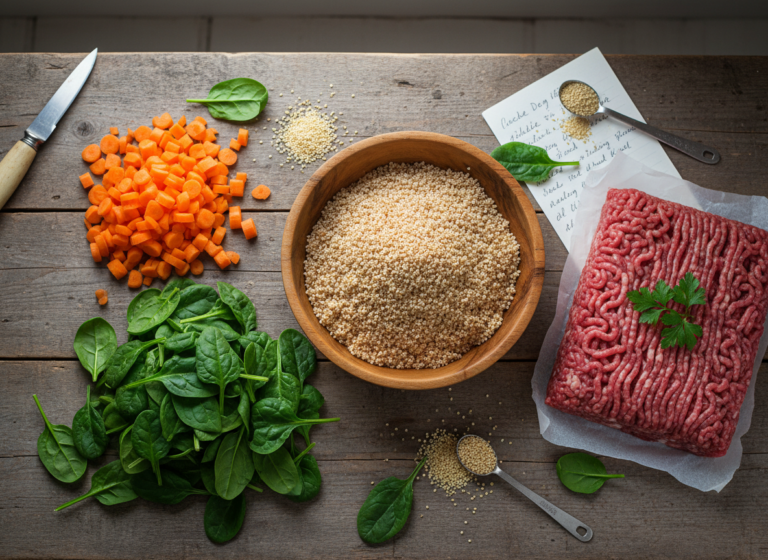

7 Wholesome Quinoa Dog Food Recipes for Sensitive Tummies
Hey there, fellow pet parent! If you’re reading this, chances are you know the struggle of dealing with a dog’s sensitive tummy. The sad puppy eyes, the digestive upsets, the constant search for a food that doesn’t cause a flare-up… it’s tough! We want nothing but the best for our four-legged family members, and that starts with what’s in their bowl.
That’s where the magic of quinoa comes in. This ancient grain (which is technically a seed!) is a fantastic, gluten-free source of complete protein, fiber, and essential amino acids. It’s often much easier for sensitive dogs to digest than common fillers like corn, wheat, or soy. Making your dog’s food at home allows you to control every single ingredient, ensuring there are no hidden irritants.
Ready to turn your kitchen into your pup’s favorite restaurant? We’ve cooked up 7 wholesome and delicious quinoa recipes designed specifically for sensitive stomachs. Let’s get started!
Quick Recipe Comparison
| Recipe | Main Protein | Best For | Prep & Cook Time |
|---|---|---|---|
| Classic Chicken & Quinoa | Chicken | All-around digestive health | 35 minutes |
| Soothing Turkey & Pumpkin | Turkey | Dogs with loose stools | 40 minutes |
| Gentle Salmon & Sweet Potato | Salmon | Skin & coat health | 45 minutes |
| Lean Beef & Spinach Power Bowl | Lean Ground Beef | Active dogs needing iron | 30 minutes |
| Simple Lamb & Carrot Mash | Ground Lamb | Dogs with poultry allergies | 40 minutes |
| Minimalist Fish & Zucchini | Cod or Tilapia | Limited ingredient diets | 30 minutes |
| Veggie-Packed Lentil & Quinoa | Lentils (Plant-based) | Protein rotation/meat-free meal | 50 minutes |
Important Note: Always consult with your veterinarian before making significant changes to your dog’s diet, especially if they have health issues. These recipes are intended as a guide, and your vet can help ensure they are nutritionally complete for your specific dog’s needs.
1. Classic Chicken & Quinoa Comfort Bowl
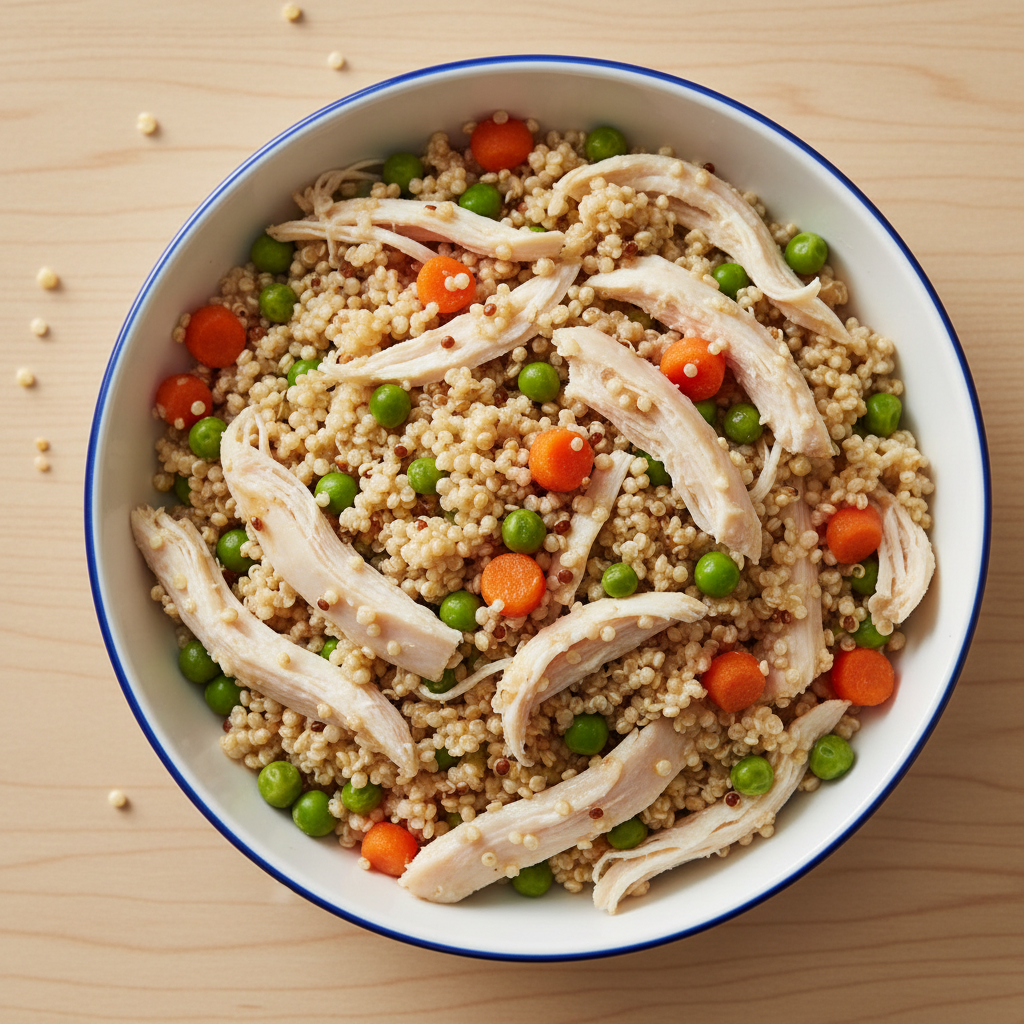
This is the go-to recipe for a reason. It’s simple, bland enough for an upset tummy, and packed with lean protein. Boiled chicken is incredibly easy for dogs to digest, making this a perfect starting point for your homemade food journey.
Ingredients:
- 1 cup uncooked quinoa, rinsed thoroughly
- 2 cups water or low-sodium chicken broth
- 1 lb boneless, skinless chicken breast, boiled and shredded
- 1 cup finely chopped carrots
- 1/2 cup peas (fresh or frozen)
- 1 tablespoon olive oil or coconut oil
Instructions:
- In a medium saucepan, bring the 2 cups of water or broth to a boil. Add the rinsed quinoa, reduce heat to low, cover, and simmer for 15-20 minutes, or until all the liquid is absorbed.
- While the quinoa cooks, boil the chicken breast until cooked through (about 15-20 minutes). Let it cool slightly, then shred it with two forks.
- In a separate pot, steam or boil the chopped carrots and peas until tender.
- In a large mixing bowl, combine the cooked quinoa, shredded chicken, carrots, and peas.
- Drizzle with the olive oil and mix everything together gently. Let it cool completely before serving.
Pros & Cons
| Pros | Cons |
|---|---|
| Extremely easy to digest. | Chicken is a common allergen for some dogs. |
| Uses simple, easy-to-find ingredients. | Lower in fat, may not be ideal for very active dogs without supplementation. |
| Great for transitioning to a homemade diet. |
Verdict:
This recipe is perfect for dogs who are currently experiencing digestive upset or as a foundational meal for any pup with a generally sensitive stomach. It’s the ‘chicken noodle soup’ of the dog world – comforting, simple, and effective.
2. Soothing Turkey & Pumpkin Purée
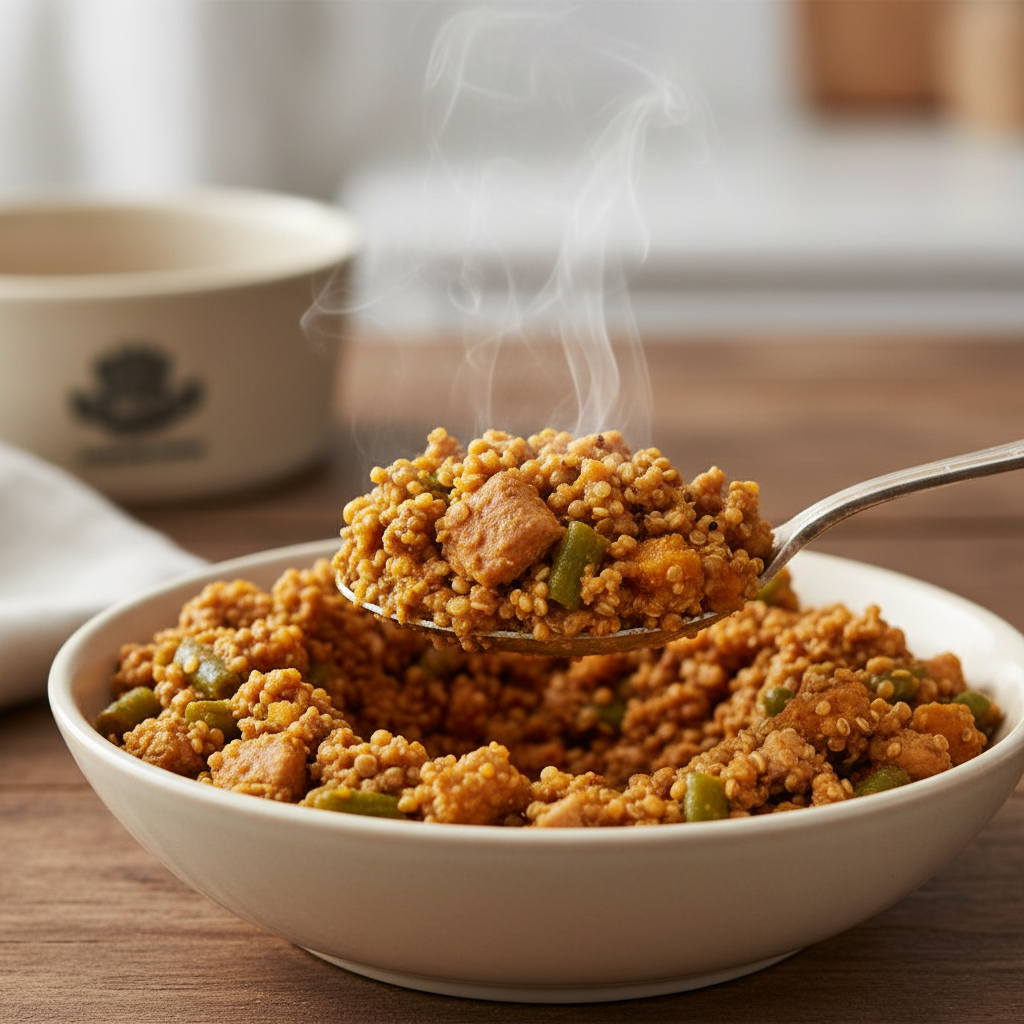
Pumpkin is a superstar ingredient for digestive health. It’s rich in soluble fiber, which can help with both constipation and diarrhea. Paired with lean turkey, another easily digestible protein, this recipe is a powerhouse for regulating your dog’s system.
Ingredients:
- 1 cup uncooked quinoa, rinsed
- 2 cups water or low-sodium turkey broth
- 1 lb ground turkey
- 1 cup 100% pure pumpkin purée (not pie filling!)
- 1/2 cup chopped green beans
- A pinch of ginger (optional, great for nausea)
Instructions:
- Cook the quinoa according to the package directions using water or broth.
- In a large skillet, cook the ground turkey over medium heat until browned. Drain off any excess fat.
- Steam or boil the green beans until tender-crisp.
- In a large bowl, combine the cooked quinoa, ground turkey, pumpkin purée, and green beans.
- If using, sprinkle a tiny pinch of ground ginger and mix well.
- Allow the mixture to cool to room temperature before serving.
Pros & Cons
| Pros | Cons |
|---|---|
| Excellent for firming up stools. | The texture can be a bit mushy for picky eaters. |
| Turkey is a leaner alternative to chicken. | Pumpkin purée can be high in Vitamin A, so portion control is key. |
| Ginger can help soothe an upset stomach. |
Verdict:
This is the ultimate recipe for a dog struggling with inconsistent stools or digestive irregularity. The pumpkin works wonders, and the lean turkey provides high-quality protein without excess fat.
3. Gentle Salmon & Sweet Potato Bake
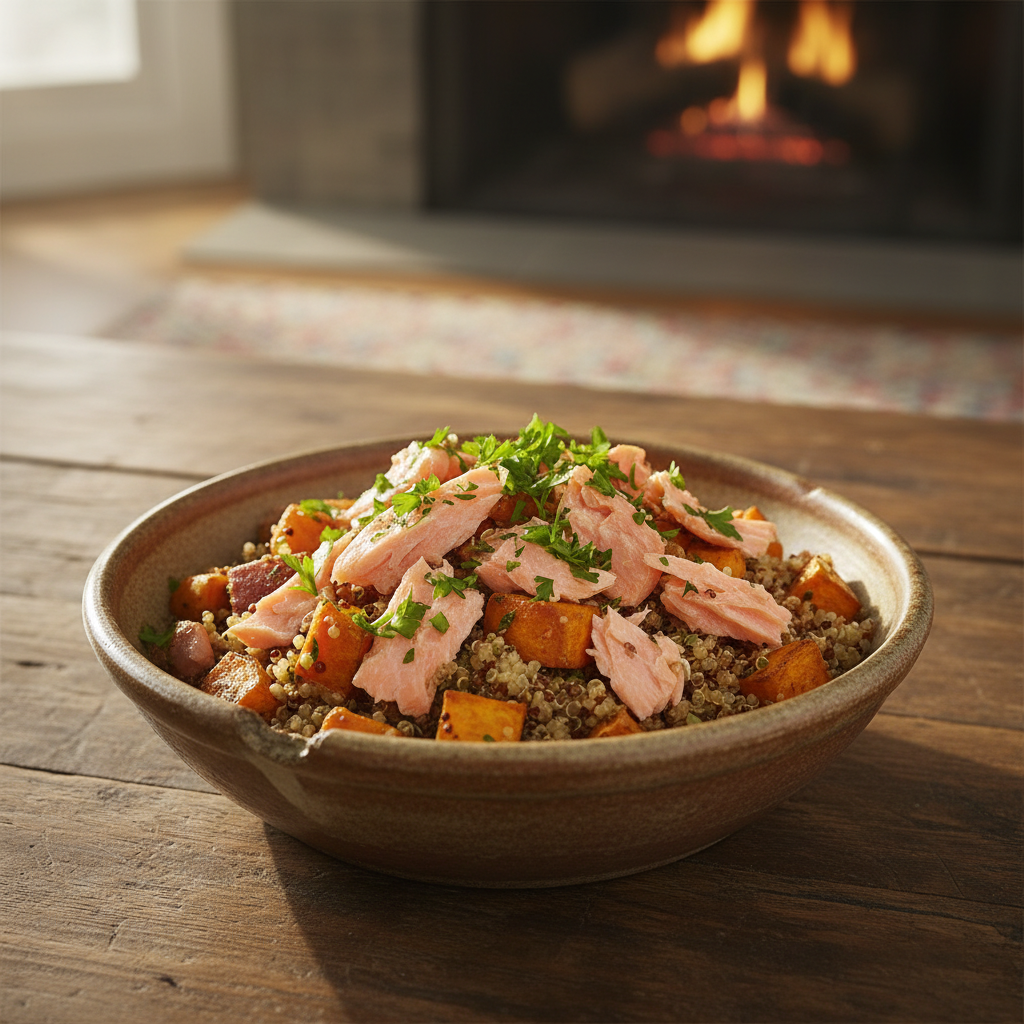
If your dog’s sensitivity also shows up as itchy skin or a dull coat, this recipe is for you. Salmon is loaded with Omega-3 fatty acids, which are fantastic for reducing inflammation and promoting healthy skin and fur. Sweet potato is a gentle, fiber-rich carbohydrate that most dogs love.
Ingredients:
- 1 cup uncooked quinoa, rinsed
- 2 cups water
- 1 lb salmon fillet, skin removed
- 1 large sweet potato, peeled and diced
- 1 tablespoon flaxseed oil or fish oil
- 1/2 cup finely chopped parsley (for fresh breath!)
Instructions:
- Preheat your oven to 400°F (200°C). Cook the quinoa as directed.
- Spread the diced sweet potato on a baking sheet and roast for 20-25 minutes, until tender.
- Place the salmon fillet on a separate piece of foil or parchment paper. Bake for 12-15 minutes, or until it flakes easily with a fork.
- Let the salmon and sweet potato cool. Flake the salmon into small pieces.
- In a large bowl, combine the cooked quinoa, flaked salmon, roasted sweet potato, and chopped parsley.
- Drizzle with the flaxseed or fish oil and mix gently. Serve once completely cooled.
Pros & Cons
| Pros | Cons |
|---|---|
| Rich in Omega-3s for skin, coat, and joint health. | Salmon can be more expensive than other proteins. |
| Sweet potato provides complex carbs and fiber. | The smell of cooked fish can be strong. |
| Great for dogs with poultry sensitivities. |
Verdict:
This is the ideal choice for dogs whose sensitive tummies are accompanied by skin issues. The powerful anti-inflammatory properties of the Omega-3s can provide relief from the inside out.
4. Lean Beef & Spinach Power Bowl
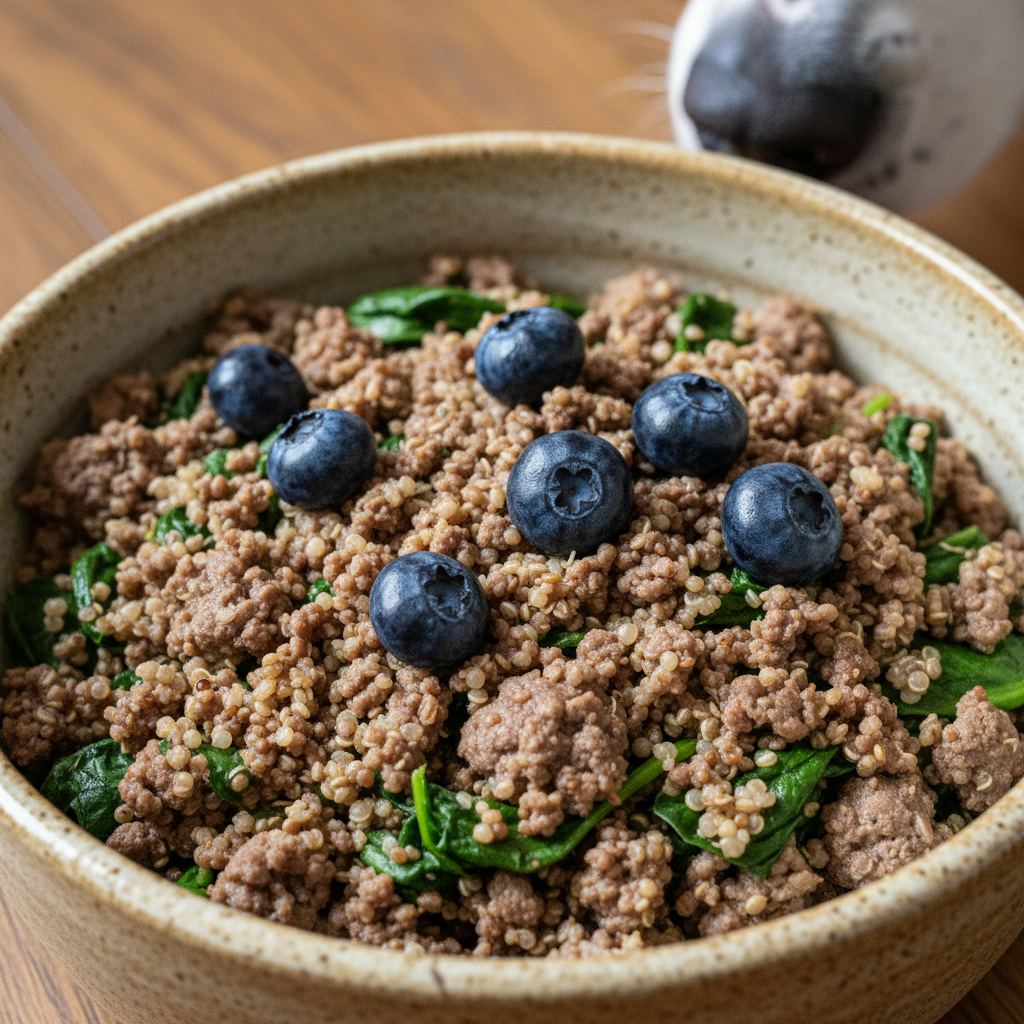
For the more active pup who needs a little extra iron and energy, this beef and spinach recipe is a winner. We use extra-lean ground beef to keep the fat content in a tummy-friendly range. Spinach is a nutrient-dense veggie that adds vitamins and minerals to the mix.
Ingredients:
- 1 cup uncooked quinoa, rinsed
- 2 cups low-sodium beef broth
- 1 lb 95% lean ground beef
- 2 cups fresh spinach, chopped
- 1/2 cup blueberries (a great antioxidant!)
- 1 tablespoon sunflower oil
Instructions:
- Cook the quinoa in the beef broth for added flavor.
- In a skillet, brown the lean ground beef over medium heat. Drain any fat thoroughly.
- Once the beef is cooked, turn off the heat and stir in the chopped spinach. The residual heat will wilt it perfectly.
- In a large mixing bowl, combine the quinoa, beef and spinach mixture, and blueberries.
- Stir in the sunflower oil. Let it cool completely before serving to your eager pup.
Pros & Cons
| Pros | Cons |
|---|---|
| High in iron and protein for active dogs. | Beef can be a trigger for some dogs with food sensitivities. |
| Spinach and blueberries add a powerful antioxidant punch. | Must use very lean beef to avoid digestive upset from fat. |
| Very palatable and appealing to most dogs. |
Verdict:
This recipe is best for energetic dogs without a known sensitivity to beef. It provides a fantastic source of sustained energy and muscle-building protein while still being mindful of a sensitive digestive system.
5. Simple Lamb & Carrot Mash
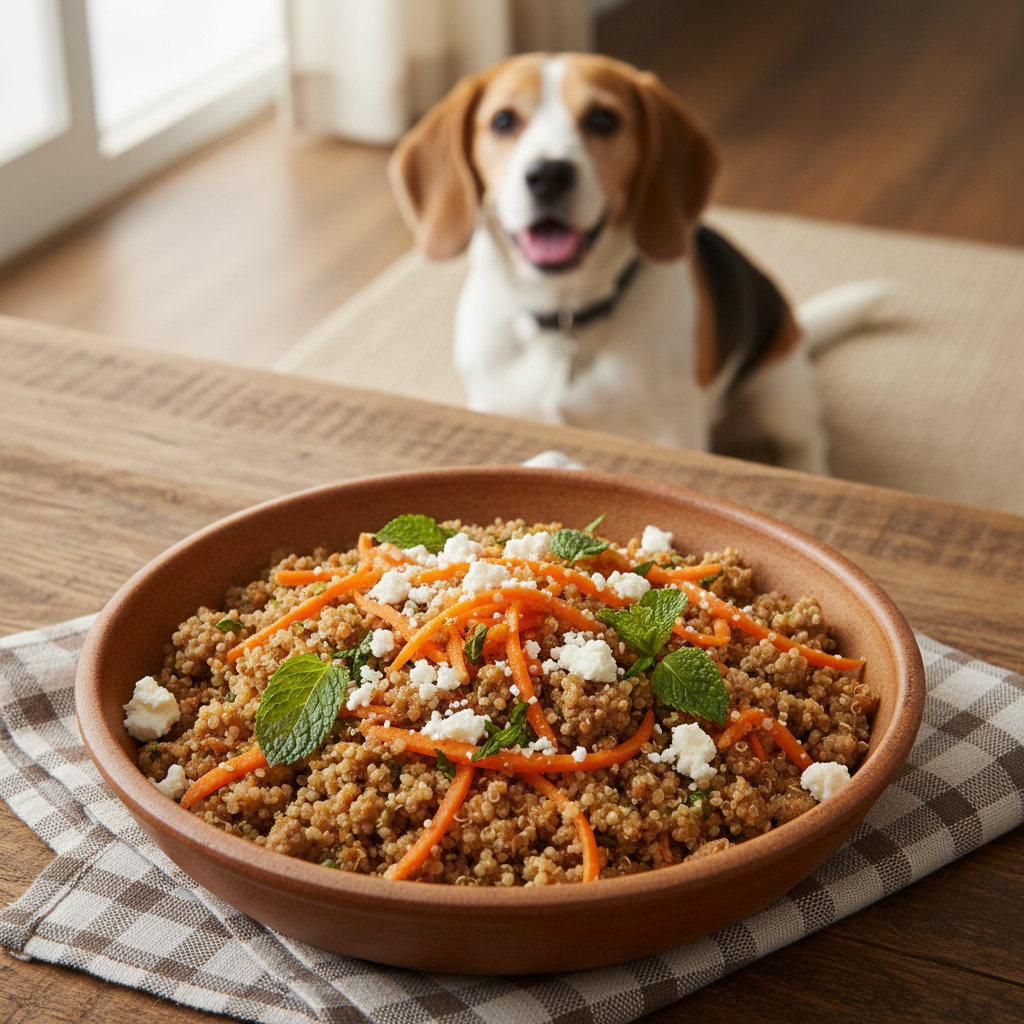
Lamb is often considered a ‘novel protein,’ meaning it’s a protein source that many dogs haven’t been exposed to. This makes it an excellent choice for dogs who have developed allergies to more common proteins like chicken or beef.
Ingredients:
- 1 cup uncooked quinoa, rinsed
- 2 cups water
- 1 lb ground lamb
- 2 medium carrots, grated
- 1/4 cup chopped fresh mint (aids in digestion)
- 1 tablespoon coconut oil, melted
Instructions:
- Cook the quinoa according to package directions.
- In a skillet, cook the ground lamb until browned. Lamb can be fatty, so it is crucial to drain all the rendered fat completely.
- While the quinoa and lamb are cooking, grate the carrots.
- In a large bowl, combine the cooked quinoa, drained lamb, and grated carrots.
- Add the chopped fresh mint and melted coconut oil, and mix until everything is well incorporated.
- Serve once cooled to a safe temperature.
Pros & Cons
| Pros | Cons |
|---|---|
| Excellent novel protein for dogs with common allergies. | Lamb can be higher in fat, so draining is essential. |
| Mint can help freshen breath and soothe the stomach. | Can be more expensive than chicken or turkey. |
| Simple recipe with few ingredients. |
Verdict:
This is the go-to recipe for the dog parent who suspects their pup has a poultry or beef allergy. The simple, novel protein base is less likely to trigger a reaction in sensitive systems.
6. Minimalist Fish & Zucchini Slices
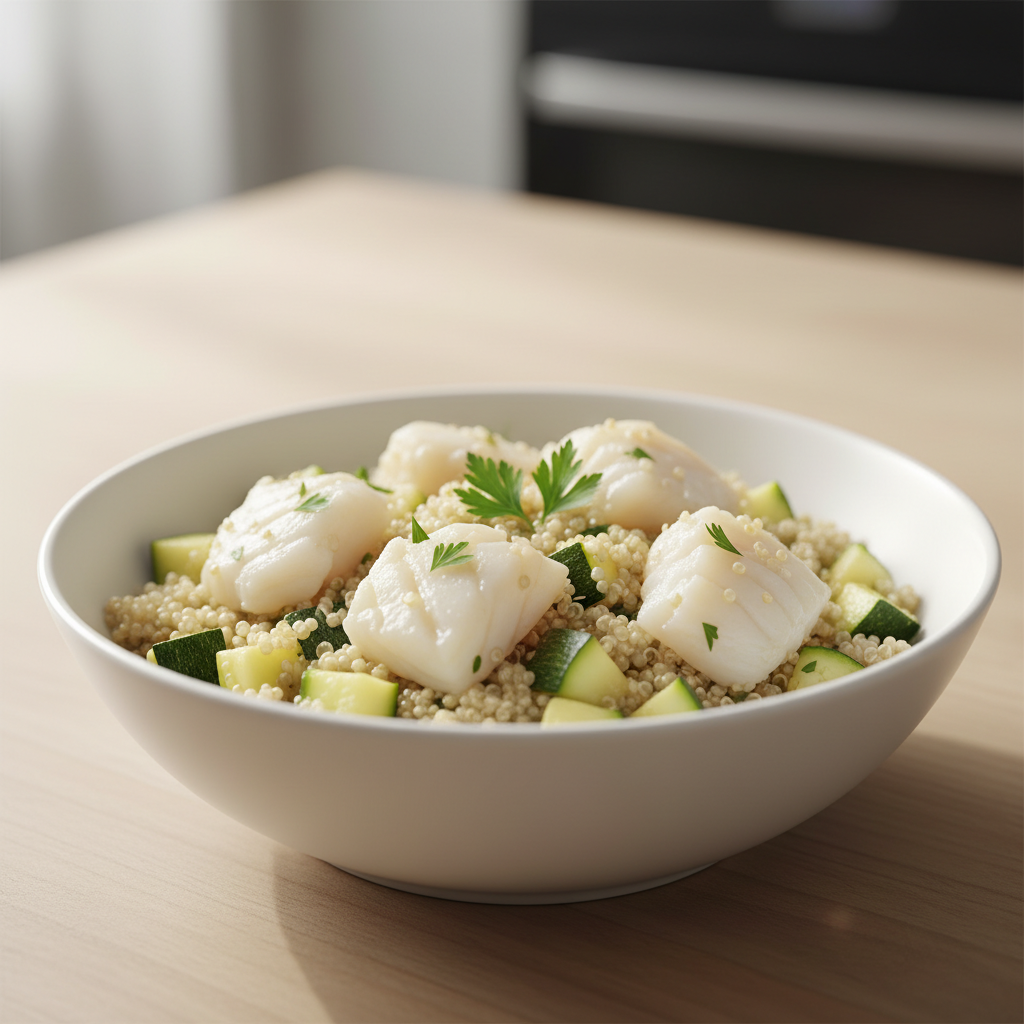
For dogs with extreme sensitivities, sometimes less is more. This recipe uses a very limited number of ingredients to minimize the chances of a reaction. Whitefish like cod or tilapia is exceptionally lean and easy to digest, and zucchini provides gentle fiber and hydration.
Ingredients:
- 1 cup uncooked quinoa, rinsed
- 2 cups water
- 1 lb cod or tilapia fillets
- 2 medium zucchinis, chopped
- 1 tablespoon olive oil
Instructions:
- Cook the quinoa as directed.
- You can either bake or poach the fish. To bake, place fillets on a baking sheet at 375°F (190°C) for 10-12 minutes. To poach, gently simmer in a shallow pan of water for 6-8 minutes. The fish should be opaque and flake easily.
- Steam the chopped zucchini until soft.
- In a bowl, flake the cooked fish. Add the cooked quinoa and steamed zucchini.
- Drizzle with olive oil and gently toss to combine. Let it cool before serving.
Pros & Cons
| Pros | Cons |
|---|---|
| Perfect for a limited ingredient diet (LID). | Lower in calories and fat; may not suit all dogs long-term without supplements. |
| Whitefish is very low in fat and highly digestible. | May not be as flavorful or appealing to very picky dogs. |
| Zucchini is hydrating and gentle on the stomach. |
Verdict:
This recipe is an excellent choice for an elimination diet or for dogs with severe allergies and sensitivities. Its simplicity is its greatest strength, providing core nutrition with a minimal risk of irritation.
7. Veggie-Packed Lentil & Quinoa Stew
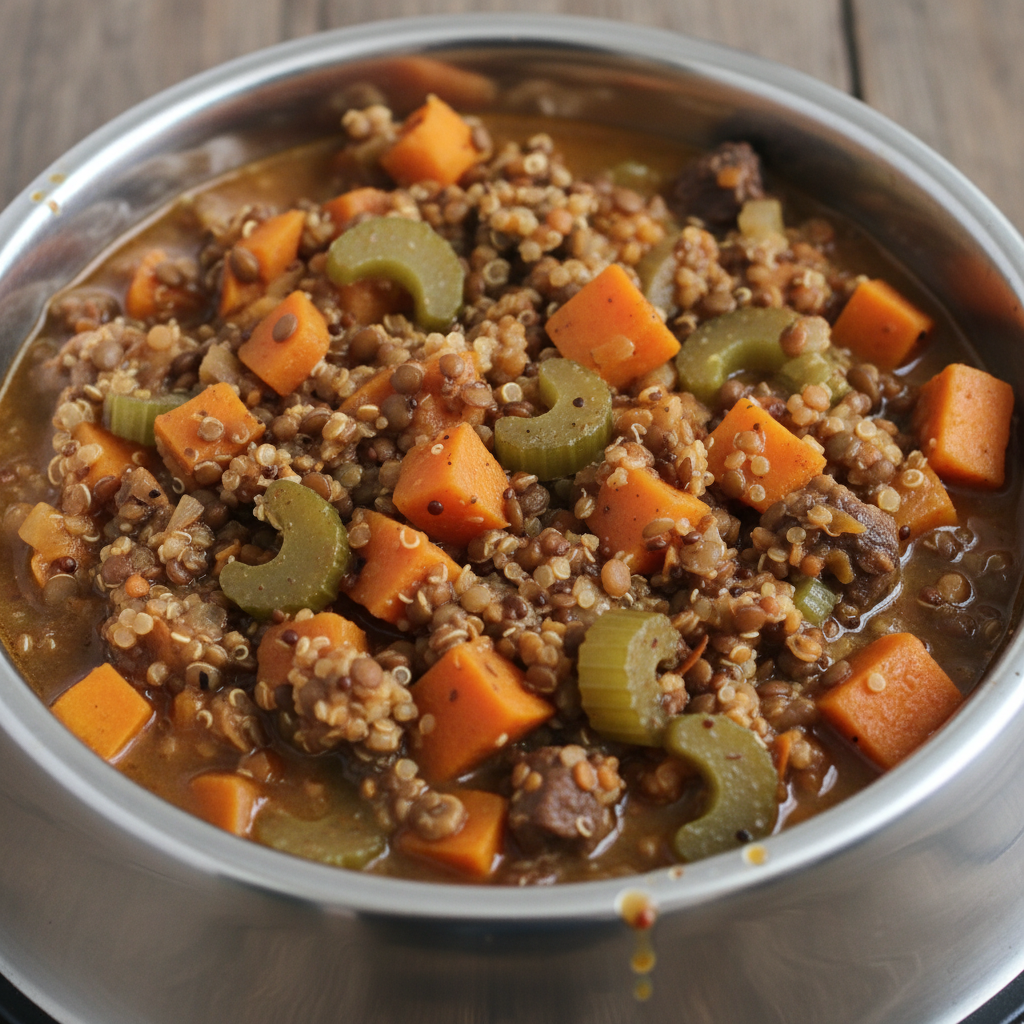
Looking to give your pup a break from meat for a meal or two? This plant-powered recipe is a great option. Lentils are a fantastic source of protein and fiber. Combined with quinoa, they create a complete protein profile. This is a great recipe to have in your rotation for variety.
Ingredients:
- 1 cup uncooked quinoa, rinsed
- 1/2 cup brown or green lentils, rinsed
- 4 cups vegetable broth (ensure it’s onion and garlic free!)
- 1 cup chopped sweet potato
- 1 cup chopped carrots
- 1/2 cup chopped celery
- 1 tablespoon coconut oil
Instructions:
- In a large pot or Dutch oven, combine the vegetable broth, quinoa, lentils, sweet potato, carrots, and celery.
- Bring the mixture to a boil, then reduce the heat to a simmer.
- Cover and cook for 30-40 minutes, or until the lentils and vegetables are tender and most of the liquid has been absorbed, creating a stew-like consistency.
- Stir in the coconut oil.
- Let the stew cool completely before serving. It will thicken as it cools.
Pros & Cons
| Pros | Cons |
|---|---|
| Excellent for protein rotation to avoid developing allergies. | Not intended as a full-time vegetarian diet without vet supervision and supplementation. |
| High in fiber, which is great for digestive regularity. | Some dogs may have difficulty digesting legumes like lentils. |
| Cost-effective compared to meat-based recipes. |
Verdict:
This recipe is a wonderful option for a ‘meatless Monday’ for your pup, or for owners who want to incorporate more plant-based variety into their dog’s diet. It’s not typically recommended as a sole food source but is a healthy, gentle addition to a weekly meal plan.
A Quick Buyer’s Guide to Homemade Dog Food
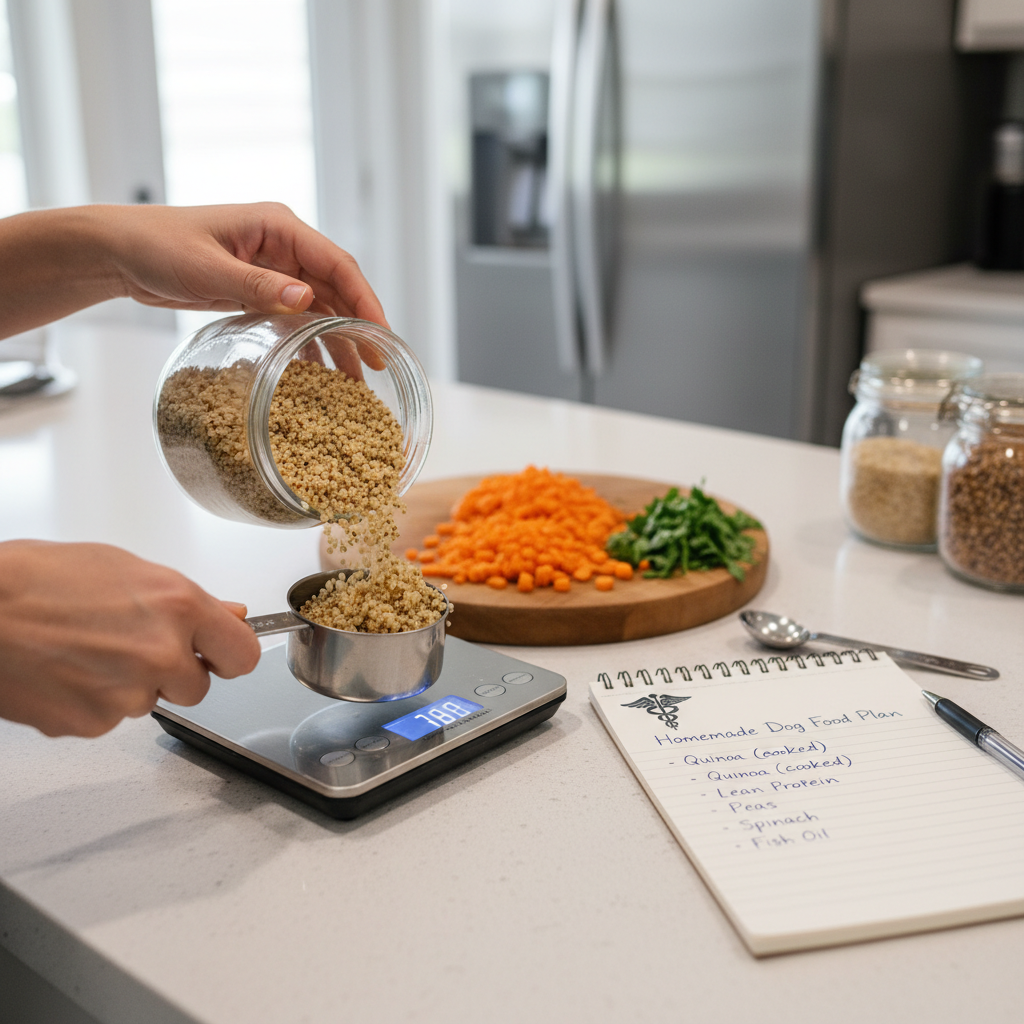
Switching to homemade dog food is a wonderful act of love, but it’s more than just mixing ingredients in a bowl. To ensure your dog gets everything they need to thrive, keep these key points in mind.
1. Talk to Your Vet or a Canine Nutritionist
This is the most important step. Every dog is an individual with unique nutritional needs based on their age, breed, activity level, and health status. A professional can analyze these recipes and help you add the necessary supplements (like calcium, vitamins, and minerals) to make them complete and balanced for long-term feeding.
2. Balance is Key
A balanced canine diet generally consists of:
- High-Quality Protein: The cornerstone of their diet. (Chicken, turkey, beef, fish, lamb).
- Complex Carbohydrates: For energy and fiber. (Quinoa, sweet potato, brown rice, oats).
- Healthy Fats: Crucial for brain, skin, and coat health. (Omega-3s from fish oil, flaxseed oil, coconut oil).
- Vitamins & Minerals: Found in vegetables and fruits, but often require supplementation.
- Calcium: Essential for bone health. This is often the biggest missing piece in homemade diets and must be supplemented correctly. Never use human calcium supplements without veterinary guidance.
3. Ingredient Quality Matters
Choose fresh, whole-food ingredients. Opt for lean meats and remove skin and excess fat. Thoroughly wash all fruits and vegetables. When using grains like quinoa, rinsing them well removes saponins, a naturally occurring coating that can sometimes cause irritation.
4. Foods to ALWAYS Avoid
Many human foods are toxic to dogs. This list is not exhaustive, but never include these in your dog’s meals:
- Onions, garlic, chives
- Chocolate
- Grapes and raisins
- Macadamia nuts
- Xylitol (an artificial sweetener)
- Alcohol or caffeine
- Cooked bones (they can splinter)
5. Proper Storage
You can make these recipes in batches to save time. Store portions in airtight containers in the refrigerator for up to 3-4 days. For longer storage, freeze individual portions. You can thaw them in the fridge overnight before serving. Always serve the food at room temperature or slightly warmed—never hot!
Frequently Asked Questions

Is quinoa really safe for all dogs?
For most dogs, yes! Quinoa is a healthy, gluten-free seed that provides all nine essential amino acids. However, like any food, some dogs might have an individual intolerance to it. The key is to rinse it thoroughly before cooking to remove the saponin coating. Always introduce any new food slowly and watch for signs of digestive upset.
How much homemade food should I feed my dog?
This varies greatly depending on your dog’s size, age, and activity level. A general guideline is to feed about 2-3% of their ideal body weight per day, split into two meals. For example, a 50-pound dog might eat 1 to 1.5 pounds of food daily. However, this is just a starting point. Your veterinarian is the best person to help you determine the correct portion size.
Can I just use these recipes without any supplements?
For short-term use, such as during a bout of digestive upset for a few days, these recipes are generally fine as-is. However, for long-term, daily feeding, they are not nutritionally complete. They lack specific ratios of vitamins and minerals, especially calcium, that are essential for your dog’s health. You must work with a veterinarian to find a good canine multivitamin or supplement blend to add to the food to make it balanced for everyday feeding.
Conclusion
There you have it! Seven simple, wholesome, and tummy-friendly recipes to bring joy and relief to your sensitive pup. Cooking for your dog is an incredible way to show your love and take control of their health. Seeing them enjoy a meal that you prepared, knowing every ingredient is chosen with care, is one of the most rewarding experiences a pet parent can have.
Remember, the journey to perfect digestive health can take time and patience. Start slow, observe your dog’s reaction, and don’t be afraid to experiment with different proteins and veggies. Most importantly, always keep your veterinarian in the loop. They are your best partner in ensuring your furry best friend lives a long, happy, and comfortable life. Happy cooking!