13 Low-Glycemic Homemade Dog Food for Diabetic Dogs
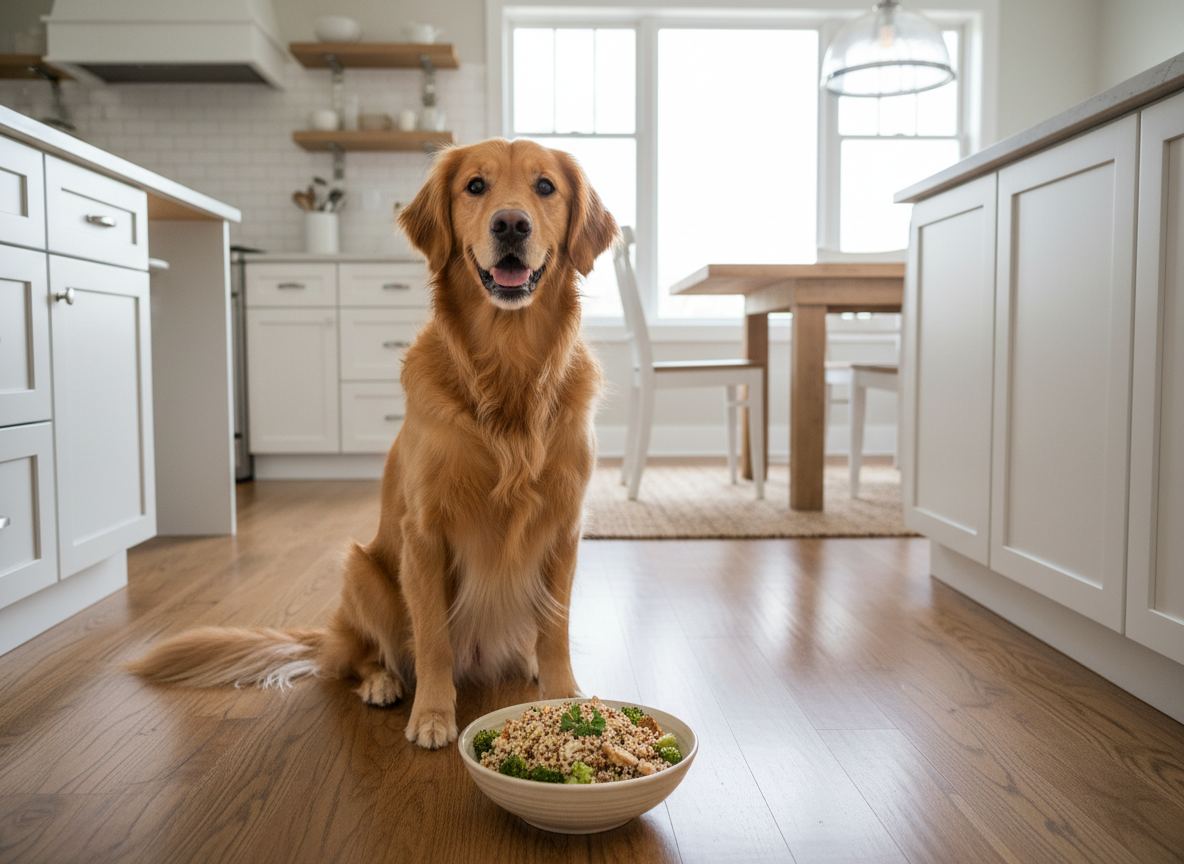
Hearing the words “your dog has diabetes” can feel overwhelming. Suddenly, you’re navigating a world of blood glucose curves, insulin shots, and dietary restrictions. It’s a lot to take in, but I want you to know you’re not alone, and you have more power than you think. One of the most impactful ways you can support your furry friend is through their diet. Commercial diabetic dog foods are an option, but crafting a low-glycemic homemade diet puts you in complete control of every single ingredient, ensuring your pup gets the best, most stable nutrition possible.
Low-glycemic foods are those that release sugar into the bloodstream slowly, preventing the sharp spikes and crashes that are so dangerous for a diabetic dog. By focusing on lean proteins, high-fiber vegetables, and healthy fats, you can create meals that are not only delicious but also a powerful tool in managing their condition. Below, we’ve compiled 13 fantastic, easy-to-make recipes to get you started on this rewarding journey. Let’s get cooking for your best friend!
Quick Comparison of Our Top Recipes
| Recipe Name | Main Protein | Key Veggies | Best For |
|---|---|---|---|
| 1. Lean Chicken & Broccoli Delight | Chicken Breast | Broccoli, Green Beans | Picky eaters & beginners |
| 2. Turkey & Quinoa Power Bowl | Ground Turkey | Spinach, Zucchini | Active dogs needing energy |
| 3. Hearty Beef & Barley Stew | Lean Ground Beef | Carrots, Celery | Dogs who love a classic stew |
| 4. Savory Salmon & Asparagus | Salmon | Asparagus, Bell Pepper | Boosting skin & coat health |
| 5. Cod & Cauliflower Mash | Cod Fillets | Cauliflower, Kale | Dogs with sensitive stomachs |
| 6. Lentil & Veggie Medley (Meat-Free) | Lentils | Pumpkin, Green Beans | A meat-free, high-fiber option |
| 7. Ground Lamb & Mint Medley | Ground Lamb | Zucchini, Mint | Dogs with poultry allergies |
| 8. Bison & Brussels Sprouts Bowl | Ground Bison | Brussels Sprouts, Spinach | A novel protein for food sensitivities |
| 9. Simple Sardine Scramble | Sardines (in water) | Eggs, Kale | An Omega-3 powerhouse |
| 10. Venison & Green Bean Casserole | Ground Venison | Green Beans, Mushrooms | A rich, flavorful alternative |
| 11. Rabbit & Root Veggie Mix | Rabbit | Turnips, Parsnips | Hypoallergenic protein source |
| 12. Egg & Spinach Breakfast Bowl | Eggs | Spinach, Cottage Cheese | A light, protein-packed start |
| 13. Chicken Giblet & Veggie Grind | Chicken Giblets | Celery, Cabbage | Nutrient-dense and budget-friendly |
1. Lean Chicken & Broccoli Delight
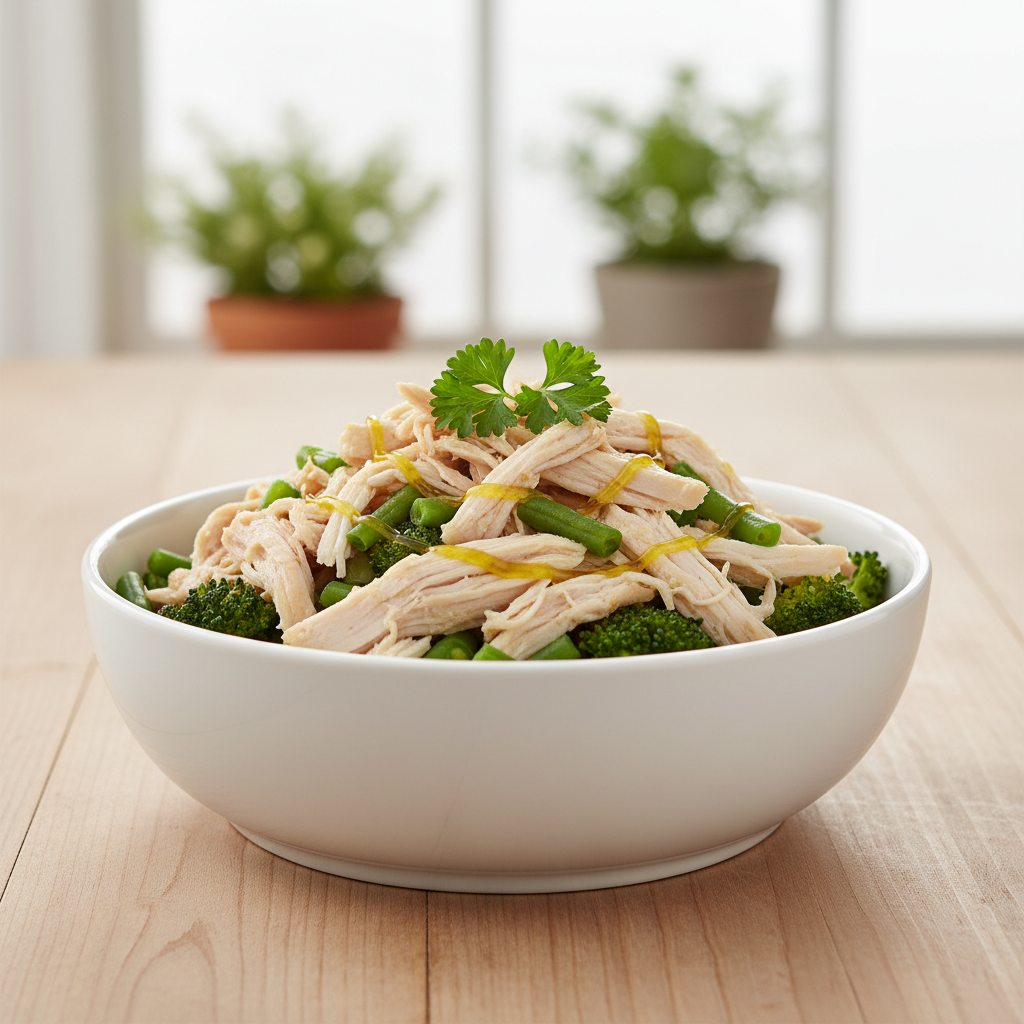
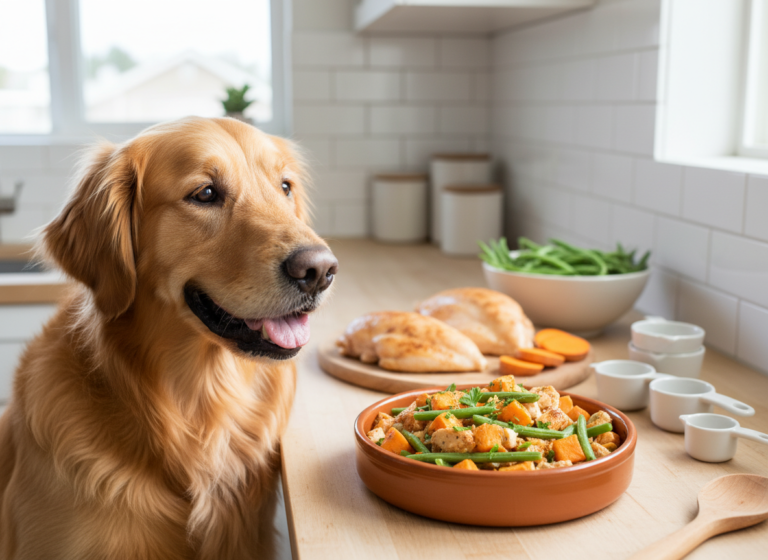
This recipe is a fantastic starting point for any pet parent new to homemade dog food. It’s simple, uses easy-to-find ingredients, and is a classic flavor combination that most dogs adore. Chicken breast is an excellent source of lean protein, crucial for maintaining muscle mass without adding unnecessary fat. Broccoli and green beans are packed with fiber, which slows down digestion and the absorption of sugar, helping to keep blood glucose levels stable.
Ingredients:
- 1 lb boneless, skinless chicken breast, cooked and shredded
- 1 cup cooked broccoli, chopped
- 1 cup cooked green beans, chopped
- 1/4 cup cooked quinoa
- 1 tablespoon olive oil or fish oil
Instructions:
- Cook the chicken breast by boiling or baking until it’s fully cooked. Let it cool and then shred or dice it into small, bite-sized pieces.
- Steam or boil the broccoli and green beans until tender-crisp. Avoid overcooking to retain nutrients. Chop them into small pieces.
- Cook the quinoa according to package directions.
- In a large bowl, combine the shredded chicken, chopped vegetables, and cooked quinoa.
- Drizzle with olive oil or fish oil for healthy fats and mix everything together thoroughly.
- Serve according to your vet’s portion size recommendations. Store leftovers in an airtight container in the refrigerator for up to 3 days.
Pros & Cons
| Pros | Cons |
|---|---|
| ✓ Easy to source ingredients | ✗ Some dogs may have poultry sensitivities |
| ✓ Excellent source of lean protein | ✗ Not as nutrient-diverse as other recipes |
| ✓ High in fiber for blood sugar control |
Verdict:
This is the perfect introductory recipe for pet owners just starting their homemade dog food journey. It’s gentle on the stomach, highly palatable for picky eaters, and provides the foundational nutrients a diabetic dog needs.
2. Turkey & Quinoa Power Bowl
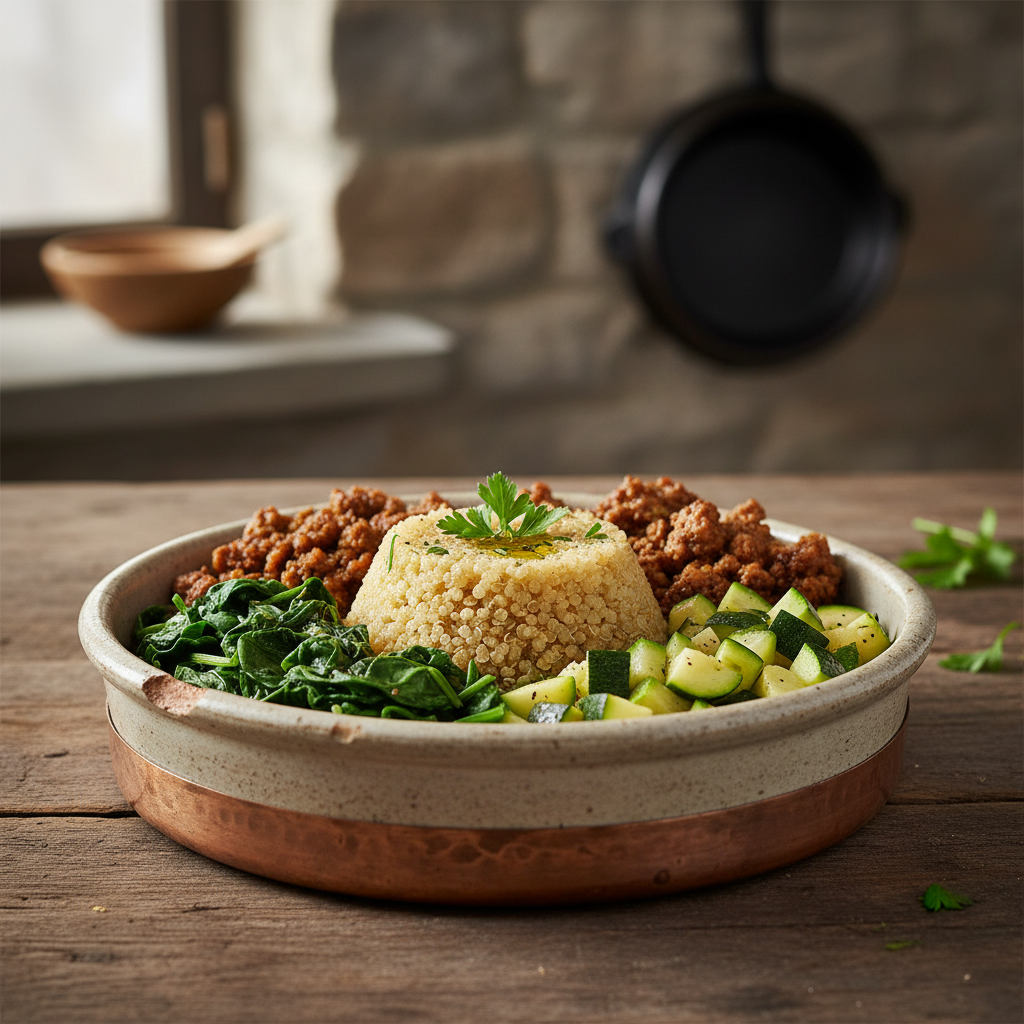
Ground turkey is another fantastic lean protein that’s often a little richer in flavor than chicken. We’re pairing it with zucchini and spinach, two low-carb, nutrient-dense veggies. The star here is quinoa, a complete protein and a complex carbohydrate that provides sustained energy without spiking blood sugar. This bowl is perfect for keeping your pup feeling full and energized throughout the day.
Ingredients:
- 1 lb lean ground turkey
- 1/2 cup cooked quinoa
- 1 cup chopped zucchini
- 1 cup fresh spinach
- 1 teaspoon coconut oil
Instructions:
- In a skillet, cook the ground turkey over medium heat until browned. Drain off any excess fat.
- While the turkey is cooking, steam or lightly sauté the chopped zucchini until just tender.
- Cook the quinoa according to package directions.
- Once the turkey is cooked, turn the heat to low and stir in the fresh spinach until it wilts.
- Remove from heat and mix in the cooked quinoa and zucchini.
- Stir in the coconut oil for a dose of healthy fats. Let it cool completely before serving.
Pros & Cons
| Pros | Cons |
|---|---|
| ✓ Turkey is a great alternative to chicken | ✗ Quinoa can be expensive |
| ✓ Quinoa provides complete protein and fiber | ✗ Ground meat can be higher in fat if not lean |
| ✓ Spinach is rich in iron and vitamins |
Verdict:
An excellent choice for more active dogs who need sustained energy. The combination of turkey and quinoa makes this a protein-packed meal that supports muscle health and stable energy levels.
3. Hearty Beef & Barley Stew
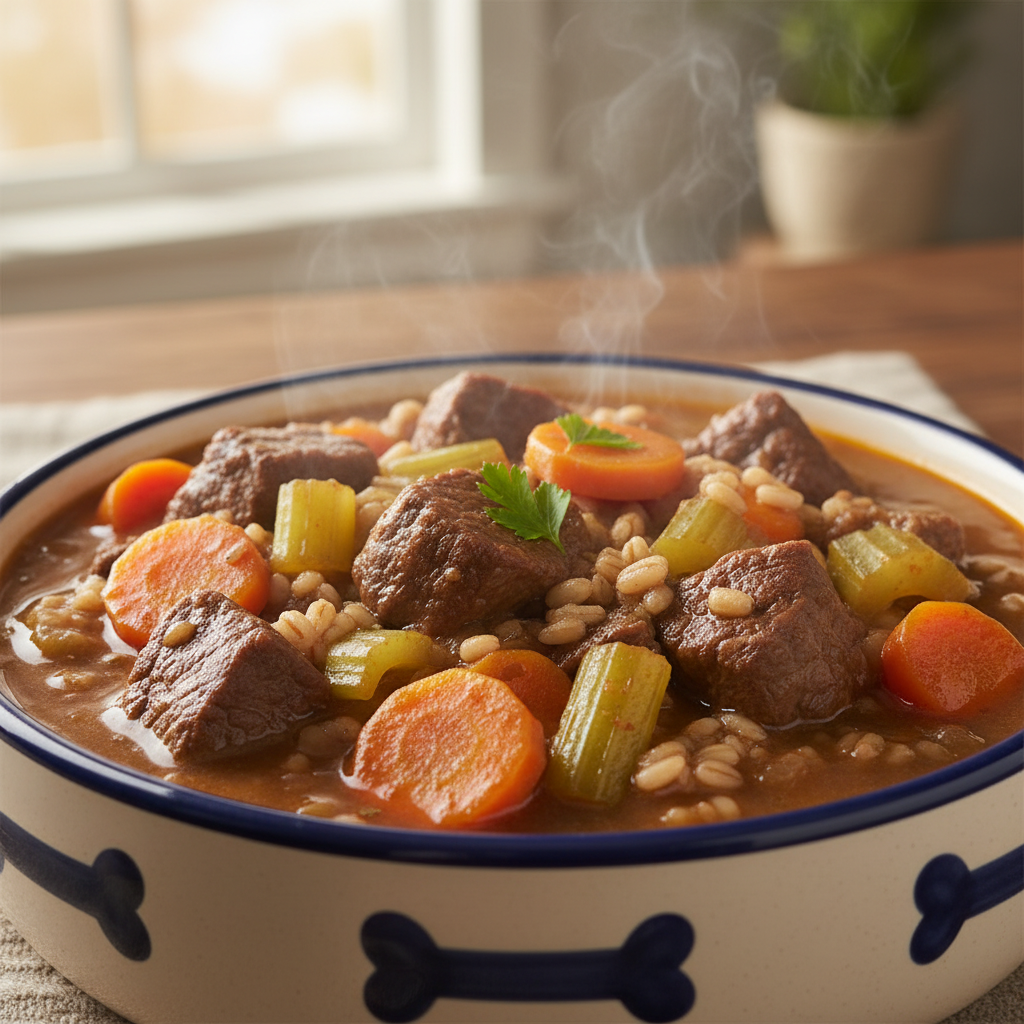
For dogs that love a rich, savory flavor, this beef and barley stew is a winner. We use lean ground beef to keep the fat content in check. Barley is a fantastic low-glycemic grain, full of soluble fiber that can help regulate blood sugar. Carrots and celery add essential vitamins and a satisfying crunch. It’s a comforting, hearty meal that feels like a special treat.
Ingredients:
- 1 lb lean ground beef (90/10 or leaner)
- 1/2 cup cooked pearl barley
- 1/2 cup chopped carrots
- 1/2 cup chopped celery
- 2 cups water or low-sodium beef broth
- 1 tablespoon flaxseed oil
Instructions:
- In a large pot or Dutch oven, brown the ground beef over medium heat. Drain the fat thoroughly.
- Add the carrots, celery, and water or broth to the pot. Bring to a boil, then reduce heat and simmer for 20-25 minutes, or until the vegetables are tender.
- While the stew simmers, cook the barley according to package directions.
- Once the vegetables are soft, stir the cooked barley into the stew.
- Remove from heat and stir in the flaxseed oil. Allow the stew to cool to a safe temperature before serving.
Pros & Cons
| Pros | Cons |
|---|---|
| ✓ Rich, savory flavor many dogs love | ✗ Beef can be a common allergen for some dogs |
| ✓ Barley is excellent for blood sugar regulation | ✗ Not a grain-free option |
| ✓ Very filling and satisfying |
Verdict:
Perfect for a cold day or for dogs who appreciate a richer, more traditional stew. The soluble fiber from the barley makes it particularly good for diabetic dogs who need help feeling full and maintaining stable glucose levels.
4. Savory Salmon & Asparagus
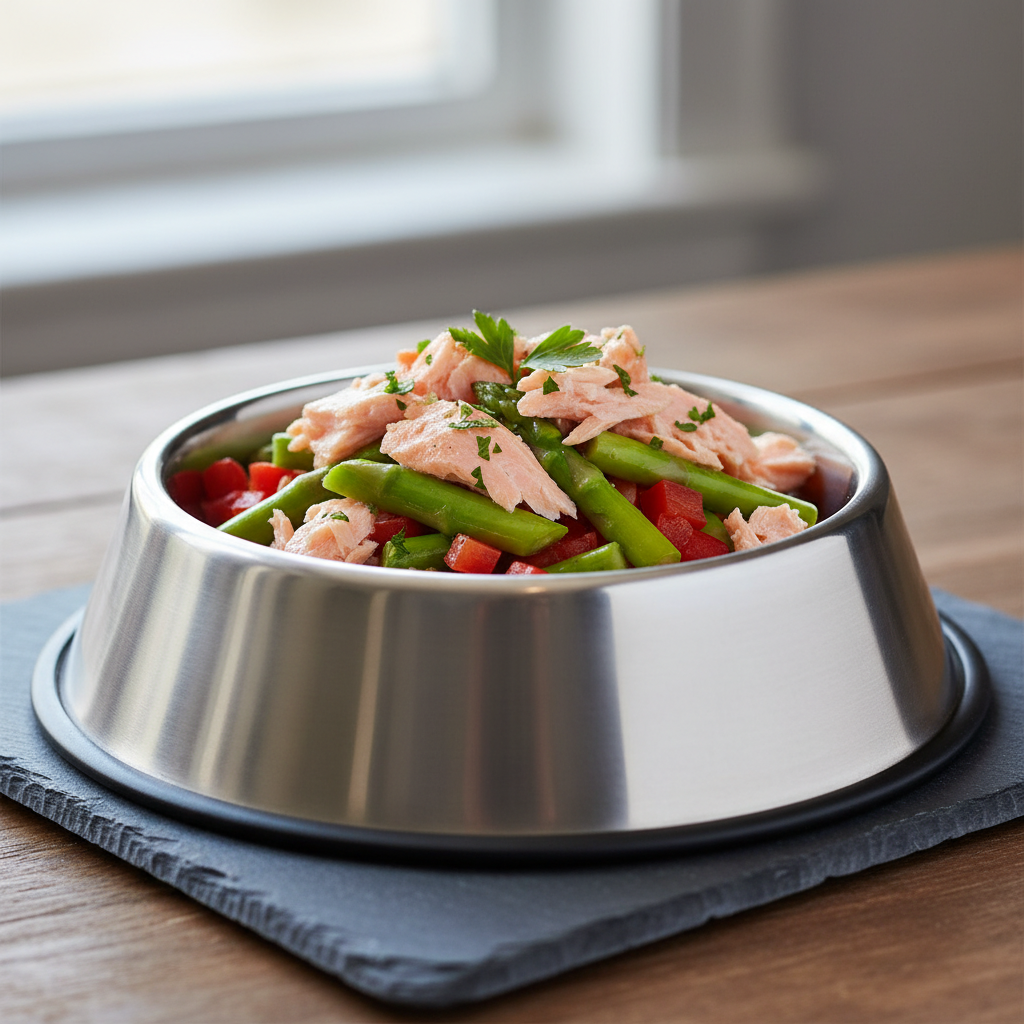
This recipe is an Omega-3 powerhouse! Salmon is packed with these incredible anti-inflammatory fatty acids, which are great for a dog’s skin, coat, joints, and overall health. Asparagus and bell peppers are low in calories and carbs but high in vitamins A, C, and K. This is a fantastic ‘beauty and wellness’ meal for your diabetic companion.
Ingredients:
- 1 lb salmon fillet, skin removed
- 1 cup chopped asparagus
- 1/2 cup chopped red bell pepper
- 1/4 cup cooked brown rice (optional, for active dogs)
- 1 teaspoon olive oil
Instructions:
- Bake or poach the salmon until it’s cooked through and flakes easily with a fork.
- While the salmon cooks, steam or lightly sauté the chopped asparagus and red bell pepper until tender-crisp.
- Flake the cooked salmon into bite-sized pieces, ensuring there are no bones.
- In a bowl, gently combine the flaked salmon, cooked vegetables, and optional brown rice.
- Drizzle with olive oil and toss to combine. Serve once cooled.
Pros & Cons
| Pros | Cons |
|---|---|
| ✓ Extremely high in anti-inflammatory Omega-3s | ✗ Salmon can be more expensive than other proteins |
| ✓ Great for skin and coat health | ✗ Has a strong smell that some owners dislike |
| ✓ Low in carbohydrates |
Verdict:
Ideal for dogs with dry skin, dull coats, or joint stiffness. The high concentration of Omega-3s offers health benefits that go beyond just diabetes management, making it a fantastic all-around wellness meal.
5. Cod & Cauliflower Mash
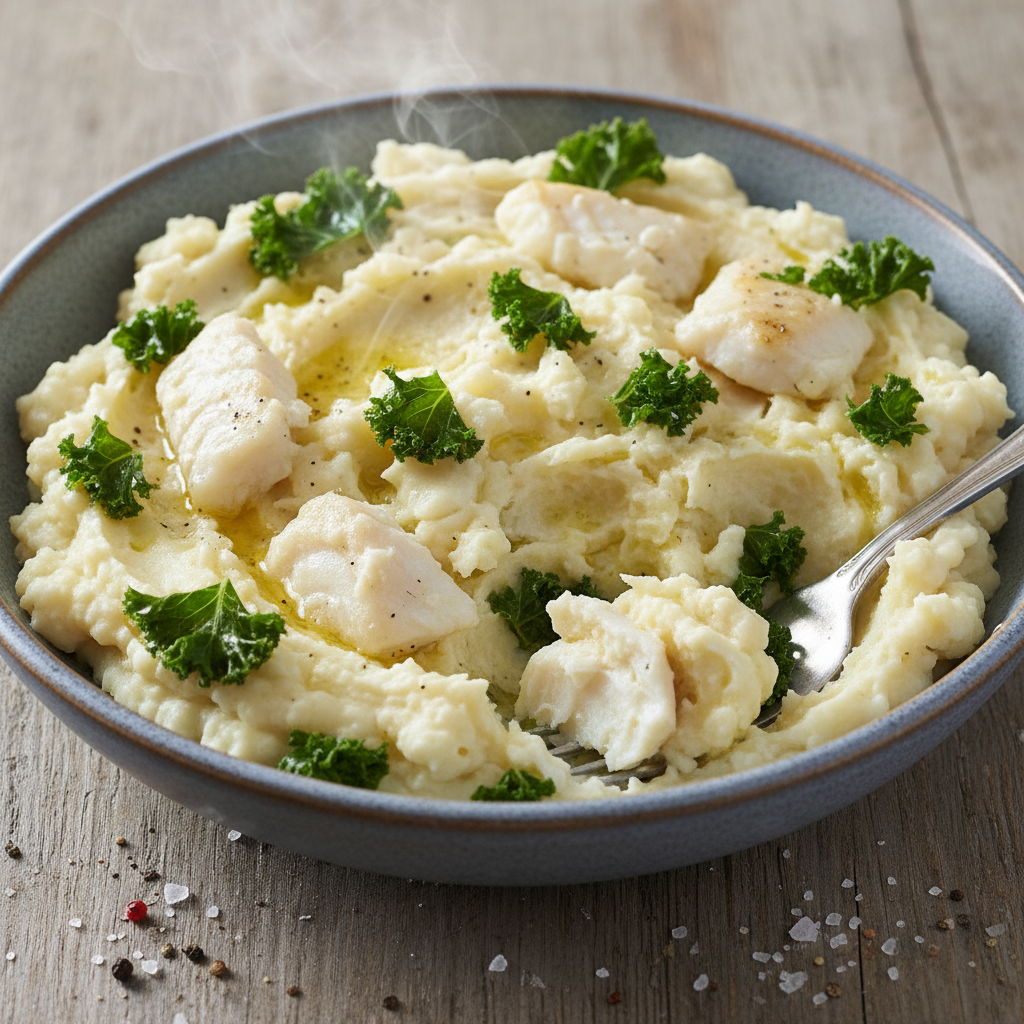
Cod is a wonderfully lean, mild-flavored white fish that’s easy to digest, making it a great choice for dogs with sensitive stomachs. Instead of high-glycemic potatoes, we’re creating a creamy mash from cauliflower, which is incredibly low in carbs and high in fiber. Kale adds a boost of vitamins and antioxidants. This meal is gentle, nutritious, and surprisingly satisfying.
Ingredients:
- 1 lb cod fillets
- 2 cups cauliflower florets
- 1 cup chopped kale, stems removed
- 1 tablespoon fish oil
Instructions:
- Steam or bake the cod fillets until they are opaque and flake easily.
- While the fish is cooking, steam the cauliflower florets until they are very tender.
- In a separate pan, lightly sauté the chopped kale with a splash of water until it’s wilted and bright green.
- Once the cauliflower is soft, mash it with a fork or a potato masher until it has a consistency similar to mashed potatoes.
- Flake the cooked cod and mix it into the cauliflower mash along with the wilted kale.
- Stir in the fish oil for an extra Omega-3 boost. Serve warm (but not hot).
Pros & Cons
| Pros | Cons |
|---|---|
| ✓ Very gentle and easy to digest | ✗ Some dogs may not like the texture of mash |
| ✓ Extremely low in carbs and fat | ✗ Cod provides fewer Omega-3s than salmon |
| ✓ Cauliflower is a great low-glycemic potato substitute |
Verdict:
This is the go-to recipe for dogs with sensitive digestive systems or those who need an ultra-low-fat diet. It’s comforting, easy on the tummy, and packed with nutrients without the carbs.
6. Lentil & Veggie Medley (Meat-Free)
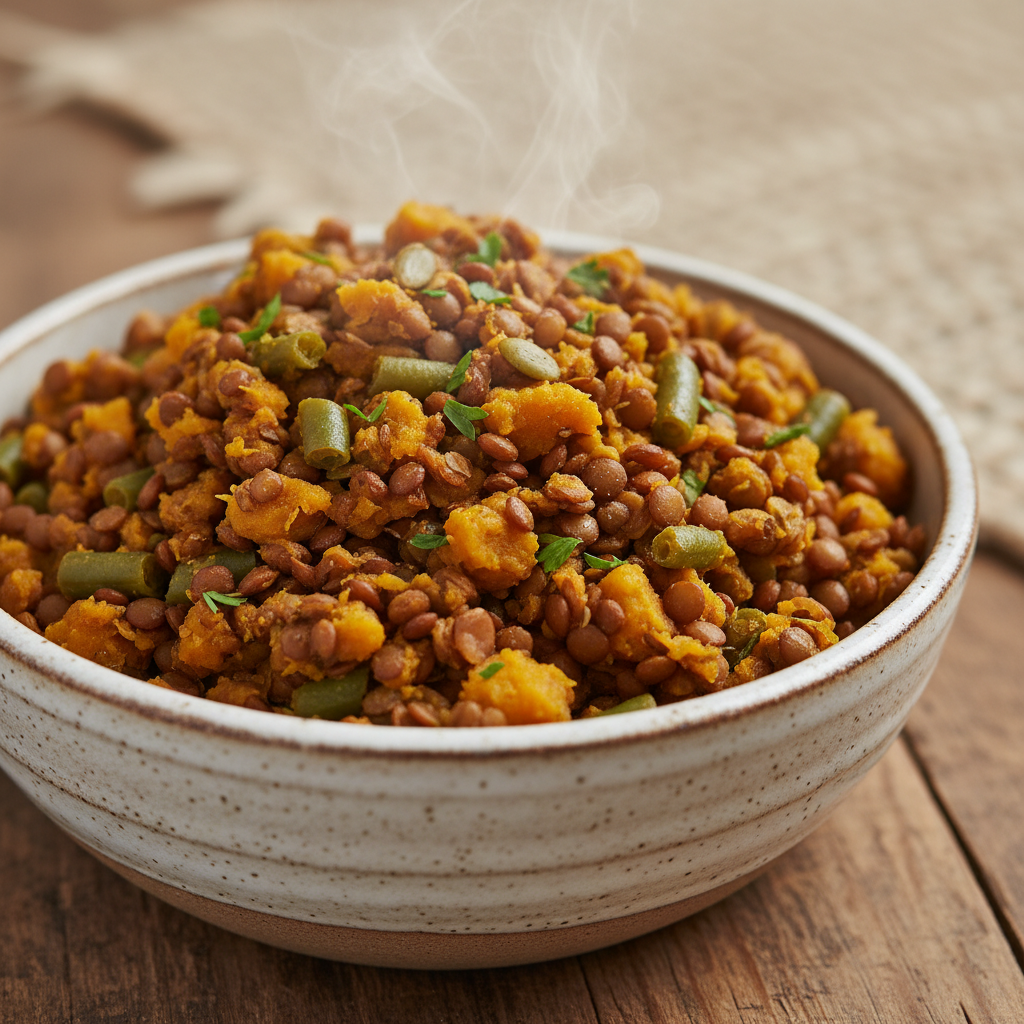
Yes, dogs can have meat-free meals! Lentils are a nutritional powerhouse, offering both protein and a significant amount of dietary fiber, which is a superstar for managing blood sugar. Combined with the natural sweetness and fiber of pumpkin puree and the goodness of green beans, this recipe is a fantastic, budget-friendly option for rotating into your dog’s diet.
Ingredients:
- 1 cup cooked brown or green lentils
- 1/2 cup plain pumpkin puree (NOT pie filling)
- 1 cup chopped green beans, cooked
- 1 cup chopped spinach
- 1 tablespoon ground flaxseed
Instructions:
- Cook the lentils according to package directions until they are soft. Drain well.
- Steam or boil the green beans until tender, then chop.
- In a large bowl, combine the cooked lentils, pumpkin puree, and chopped green beans.
- Stir in the fresh spinach until it begins to wilt from the heat of the other ingredients.
- Sprinkle with ground flaxseed for added fiber and healthy fats, and mix well.
Pros & Cons
| Pros | Cons |
|---|---|
| ✓ Excellent source of plant-based protein and fiber | ✗ Not all dogs digest legumes easily |
| ✓ Budget-friendly ingredients | ✗ Lacks certain amino acids found in meat |
| ✓ Pumpkin is fantastic for digestive health |
Verdict:
A great option for a ‘meatless Monday’ to give your dog’s digestive system a different kind of protein and fiber source. It’s particularly good for dogs who need extra help with digestive regularity, thanks to the pumpkin and lentils.
7. Ground Lamb & Mint Medley
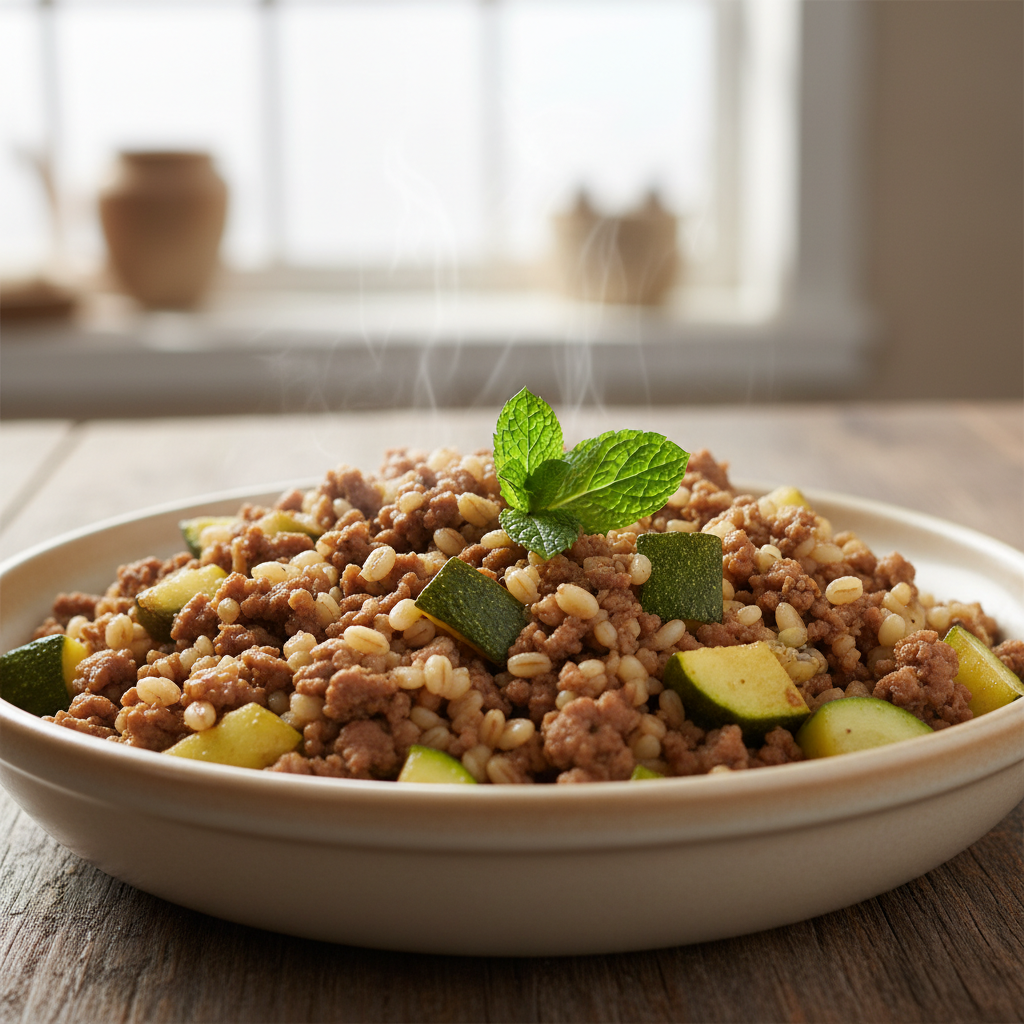
Lamb is a slightly richer protein that many dogs find irresistible. It’s also a great choice for dogs who have developed allergies to more common proteins like chicken or beef. We’ve paired it with zucchini for low-carb bulk and a tiny bit of fresh mint. Mint can aid in digestion and freshen your pup’s breath as a bonus! This recipe feels a little bit gourmet but is simple to whip up.
Ingredients:
- 1 lb lean ground lamb
- 1.5 cups chopped zucchini
- 1/4 cup cooked barley
- 1 teaspoon finely chopped fresh mint
- 1 tablespoon olive oil
Instructions:
- In a skillet, cook the ground lamb over medium heat until browned. Be sure to drain off all the rendered fat, as lamb can be fatty.
- While the lamb cooks, steam or sauté the zucchini until tender.
- Cook the barley as per the package instructions.
- In a bowl, combine the cooked lamb, zucchini, and barley.
- Stir in the chopped fresh mint and olive oil. Let it cool before serving this delicious meal.
Pros & Cons
| Pros | Cons |
|---|---|
| ✓ Excellent novel protein for dogs with allergies | ✗ Lamb can be higher in fat and more expensive |
| ✓ Highly palatable and flavorful | ✗ Requires careful draining of fat |
| ✓ Mint can aid digestion |
Verdict:
A fantastic choice for the discerning dog with food sensitivities. The unique flavor of lamb makes this a high-value meal for picky eaters who might be tired of the usual chicken or beef.
8. Bison & Brussels Sprouts Bowl
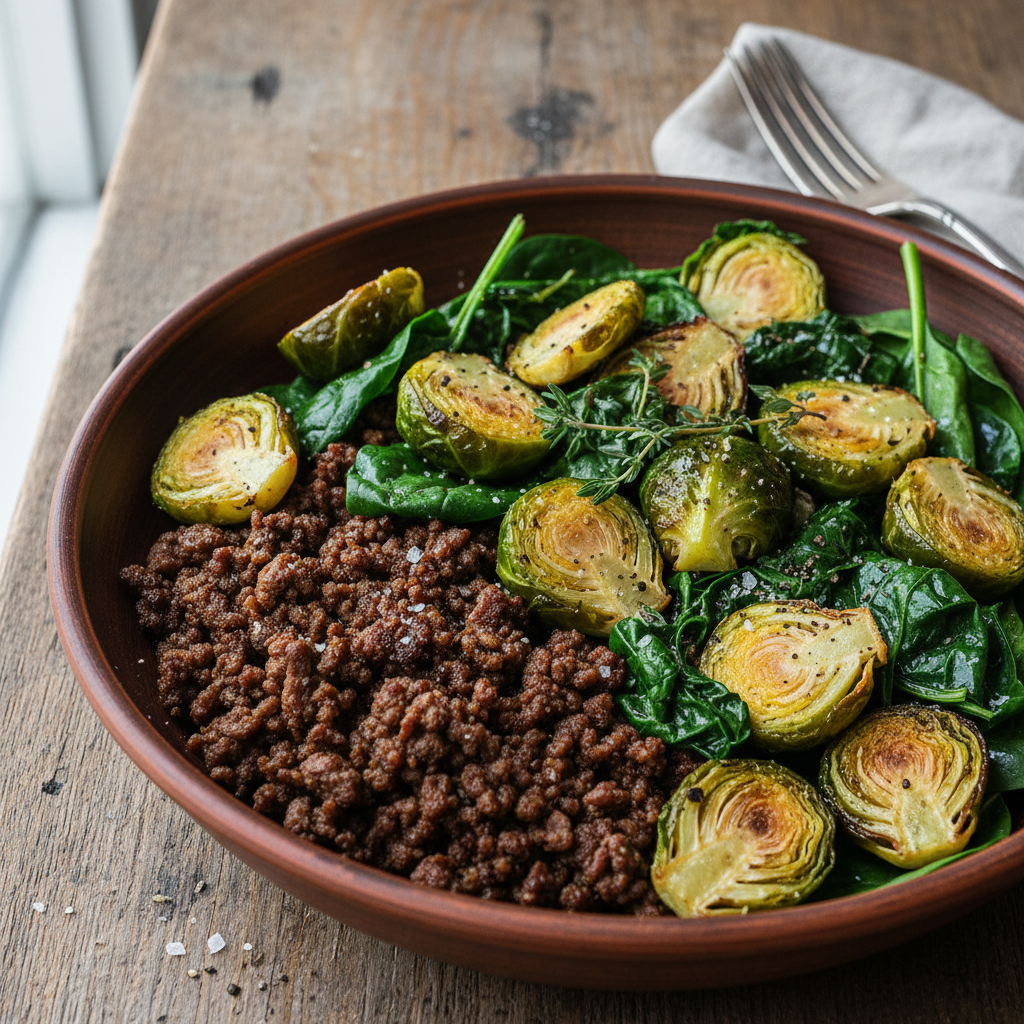
Ready to get adventurous? Bison is an incredibly lean, nutrient-dense red meat that’s lower in fat and calories than beef. It’s another excellent novel protein for dogs with allergies. Brussels sprouts are little green powerhouses of fiber and vitamins. This is a robust, nutrient-packed meal for the modern canine.
Ingredients:
- 1 lb ground bison
- 1 cup Brussels sprouts, trimmed and halved
- 1 cup fresh spinach
- 1 teaspoon coconut oil
Instructions:
- Cook the ground bison in a skillet over medium heat until fully browned. It’s very lean, so there will be little fat to drain.
- While the bison is cooking, steam the Brussels sprouts until they are tender enough to be pierced with a fork. Chop them into smaller, bite-sized pieces.
- Add the chopped Brussels sprouts and fresh spinach to the skillet with the bison over low heat. Stir until the spinach has wilted.
- Remove from heat and mix in the coconut oil. Let cool before serving.
Pros & Cons
| Pros | Cons |
|---|---|
| ✓ Bison is an extremely lean novel protein | ✗ Can be difficult to find and expensive |
| ✓ Brussels sprouts are very high in fiber | ✗ Brussels sprouts can cause gas in some dogs |
| ✓ Lower in fat than beef |
Verdict:
This recipe is perfect for dogs with multiple food allergies, particularly to poultry and beef. The lean nature of bison makes it an excellent choice for dogs who need strict fat restriction alongside their diabetes management.
9. Simple Sardine Scramble
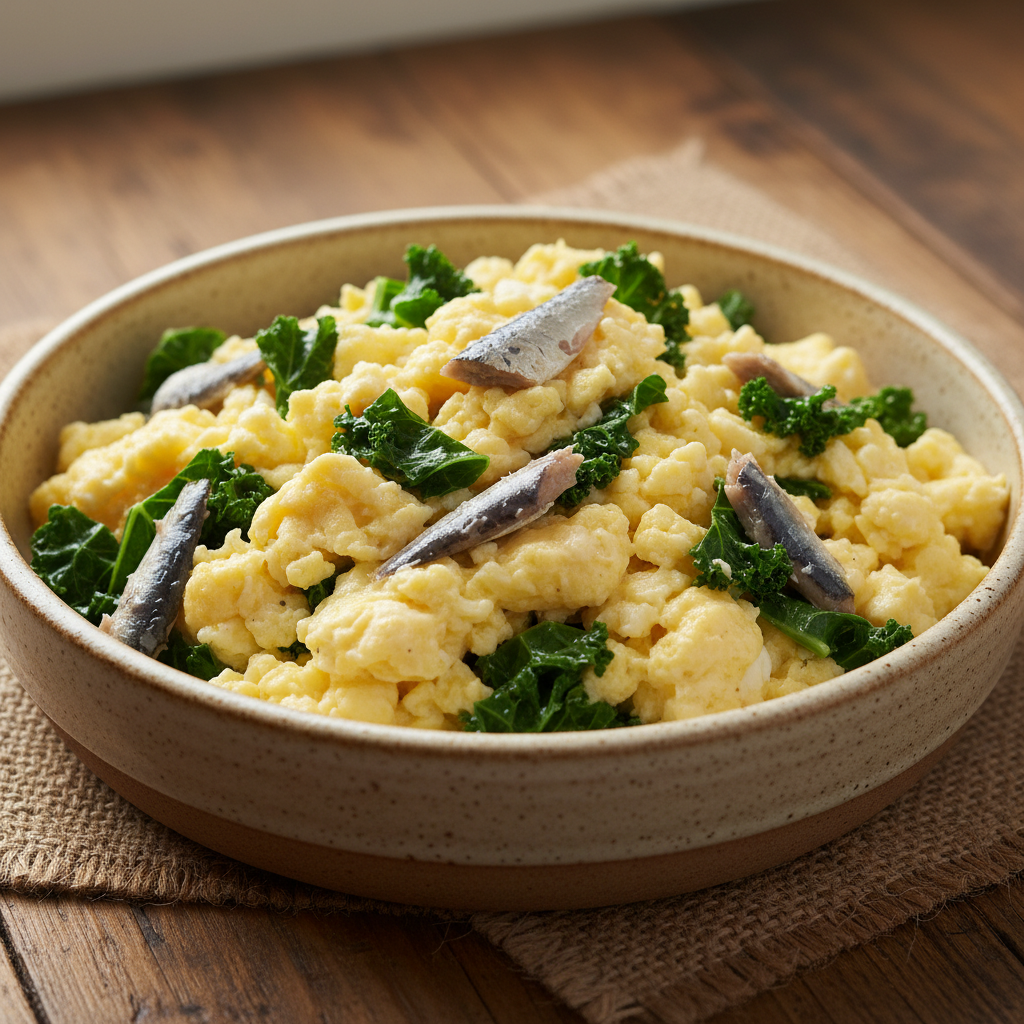
Don’t underestimate the humble sardine! These little fish are one of the best sources of Omega-3 fatty acids on the planet. They are also packed with calcium since the bones are soft and edible. We’re scrambling them with eggs for a protein boost and kale for fiber. This is a quick, potent, and incredibly healthy meal.
Ingredients:
- 1 can (3.75 oz) sardines packed in water, no salt added
- 2 large eggs
- 1/2 cup finely chopped kale
- A splash of water
Instructions:
- Drain the water from the can of sardines. Mash the sardines lightly with a fork in a small bowl.
- In another bowl, whisk the eggs with a splash of water.
- Heat a non-stick skillet over medium-low heat. Add the chopped kale and sauté for 1-2 minutes until it starts to wilt.
- Add the mashed sardines to the skillet and heat through for about a minute.
- Pour the whisked eggs over the sardines and kale. Scramble gently until the eggs are fully cooked.
- Let the scramble cool completely before serving. This is a smaller meal, perfect for smaller dogs or as a meal topper.
Pros & Cons
| Pros | Cons |
|---|---|
| ✓ Unbeatable source of Omega-3s and calcium | ✗ Very strong fishy smell |
| ✓ Quick and easy to make | ✗ Best for smaller dogs or as a supplement |
| ✓ Eggs are a complete and digestible protein |
Verdict:
An amazing supplemental meal or a primary meal for smaller breeds. The unmatched Omega-3 content is fantastic for reducing inflammation, a common issue in diabetic dogs.
10. Venison & Green Bean Casserole
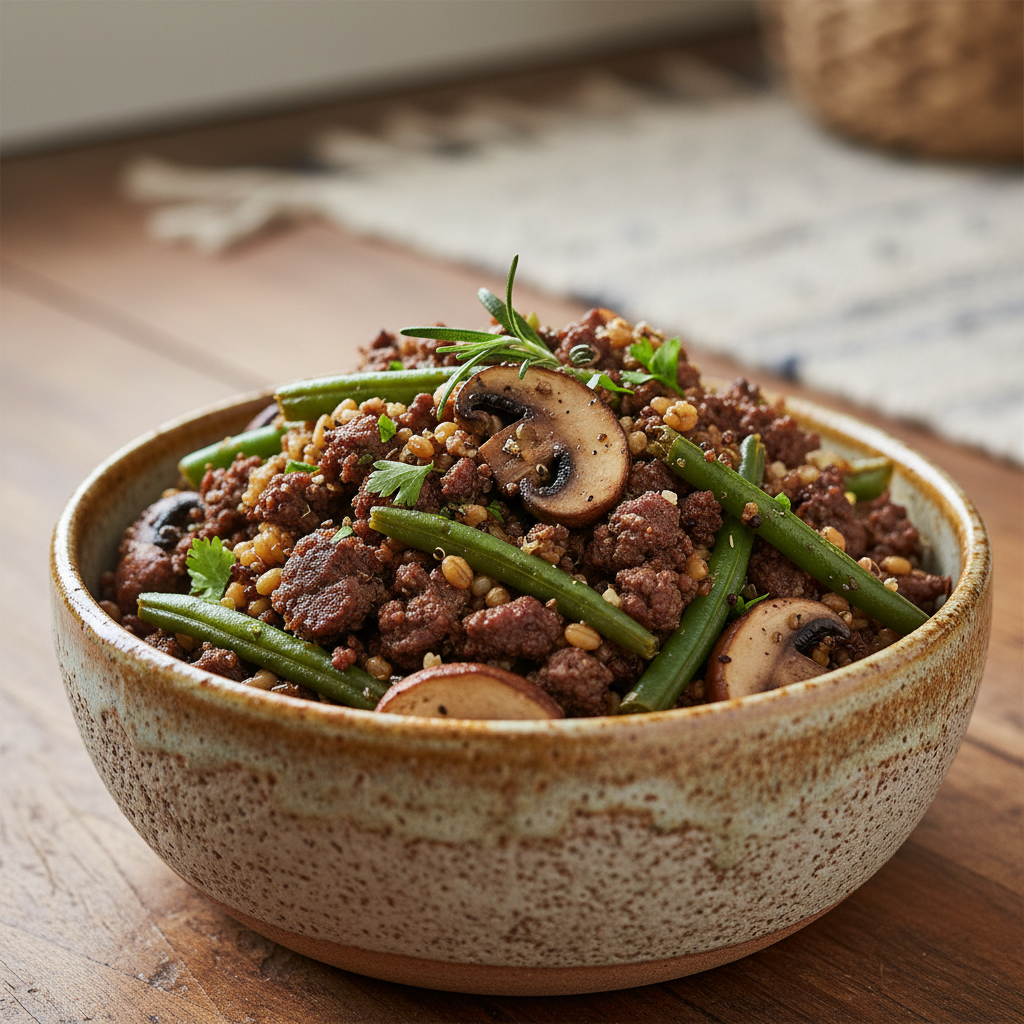
Venison, or deer meat, is another lean, novel protein that’s rich in iron and B vitamins. It has a robust flavor that many dogs enjoy. We’re creating a simple ‘casserole’ style dish by combining it with classic green beans and mushrooms, which provide fiber and a meaty texture without the calories. It’s a hearty, woodsy-flavored meal for your adventurous pup.
Ingredients:
- 1 lb ground venison
- 1.5 cups chopped green beans
- 1/2 cup sliced mushrooms (cremini or white)
- 1/4 cup cooked quinoa or barley
- 1 tablespoon fish oil
Instructions:
- In a skillet, brown the ground venison over medium heat. Drain any excess fat.
- While the venison cooks, lightly sauté the mushrooms until they release their liquid and start to brown. Steam the green beans until tender-crisp.
- Cook your chosen grain (quinoa or barley) according to package directions.
- In a large bowl, combine the cooked venison, sautéed mushrooms, steamed green beans, and cooked grain.
- Drizzle with fish oil and mix everything together. Serve once it has cooled down.
Pros & Cons
| Pros | Cons |
|---|---|
| ✓ Novel protein, good for allergies | ✗ Venison can be hard to source and pricey |
| ✓ Rich, gamey flavor that dogs often love | ✗ Some dogs may be sensitive to mushrooms |
| ✓ Leaner than beef |
Verdict:
A great choice for dogs who need a novel protein but prefer a richer, red-meat flavor. This meal is satisfying and provides a diverse range of nutrients not found in more common meats.
11. Rabbit & Root Veggie Mix
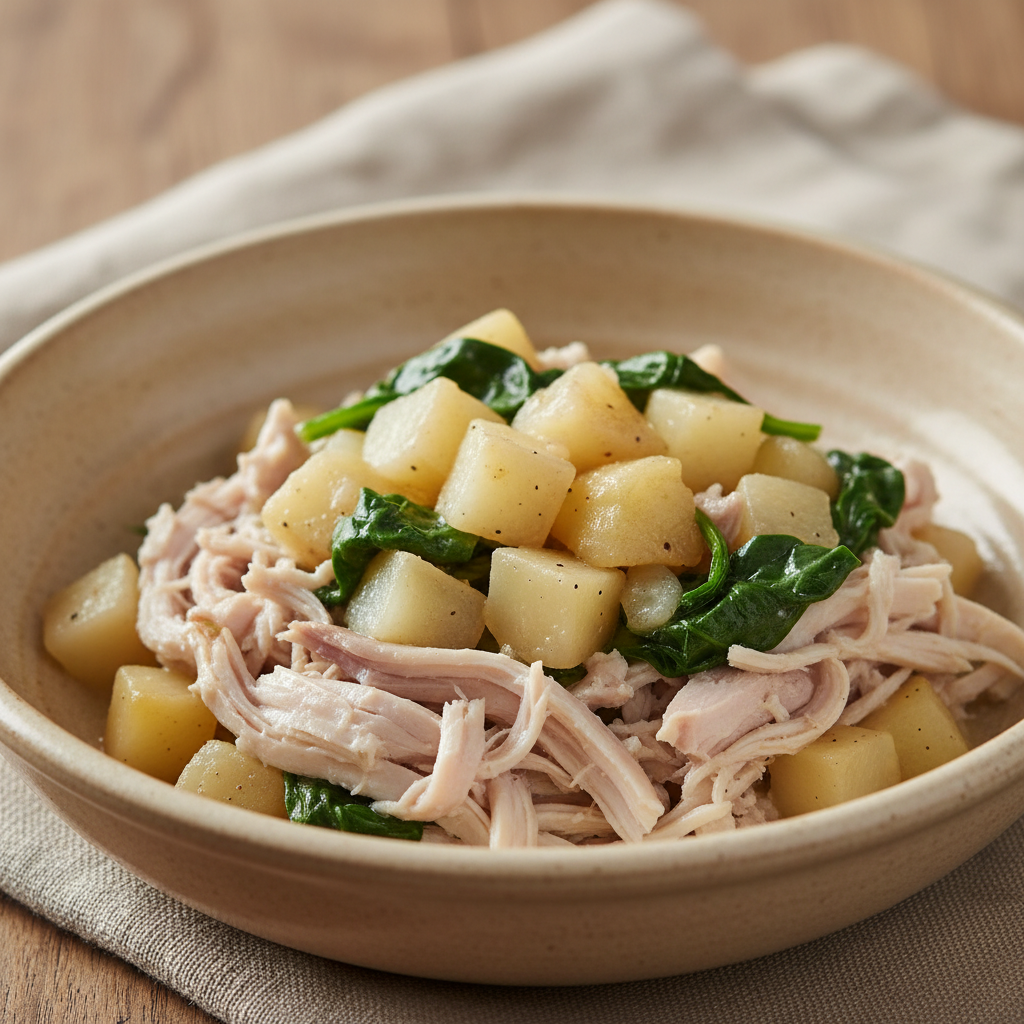
Rabbit is one of the most hypoallergenic proteins available for dogs, making it a lifesaver for pets with severe food allergies. It’s an all-white meat that’s low in fat and high in protein. We’re pairing it with low-glycemic root vegetables like turnips and parsnips, which offer a different nutrient profile than leafy greens. This is a unique meal for a unique pup.
Ingredients:
- 1 lb ground rabbit (or whole rabbit, cooked and deboned)
- 1/2 cup chopped turnips
- 1/2 cup chopped parsnips
- 1 cup chopped spinach
- 1 tablespoon coconut oil
Instructions:
- If using ground rabbit, cook it in a skillet until browned. If using a whole rabbit, boil or roast it until cooked through, then let it cool and meticulously remove all meat from the bones.
- Peel and chop the turnips and parsnips. Boil or steam them until they are fork-tender.
- In a large bowl, combine the cooked rabbit meat with the cooked root vegetables.
- Stir in the fresh spinach, allowing the residual heat to wilt it.
- Mix in the coconut oil for healthy fats. Ensure the meal is cool before serving.
Pros & Cons
| Pros | Cons |
|---|---|
| ✓ Extremely hypoallergenic novel protein | ✗ Rabbit can be very expensive and hard to find |
| ✓ Very low in fat | ✗ Deboning a whole rabbit can be time-consuming |
| ✓ Turnips and parsnips are good low-GI carbs |
Verdict:
This is the ultimate problem-solver recipe for dogs with significant allergies to nearly every other protein. It’s gentle, lean, and provides clean nutrition that’s unlikely to cause a reaction.
12. Egg & Spinach Breakfast Bowl

Who says dogs can’t have breakfast for dinner? Eggs are a source of ‘perfect protein,’ containing all the essential amino acids. They are also easy to digest and budget-friendly. We’re pairing them with fiber-rich spinach and a dollop of low-fat cottage cheese for a calcium and protein boost. It’s a light yet satisfying meal.
Ingredients:
- 3 large eggs
- 1 cup fresh spinach
- 2 tablespoons low-fat cottage cheese
- 1 teaspoon olive oil
Instructions:
- Gently scramble the eggs in a non-stick skillet over low heat.
- Just before the eggs are fully set, toss in the fresh spinach and continue to cook until the spinach is wilted and the eggs are cooked through.
- Remove from heat and let it cool down.
- Once cool, top the scramble with the low-fat cottage cheese before serving.
Pros & Cons
| Pros | Cons |
|---|---|
| ✓ Inexpensive and readily available ingredients | ✗ Some dogs are allergic to eggs |
| ✓ Eggs provide a complete protein profile | ✗ Not as calorie-dense for very active dogs |
| ✓ Cottage cheese adds protein and calcium | ✗ Dairy can cause issues for some dogs |
Verdict:
An excellent option for a lighter meal, for smaller dogs, or for a dog that might have a temporarily upset stomach. It’s packed with high-quality protein and is very easy to prepare in a pinch.
13. Chicken Giblet & Veggie Grind
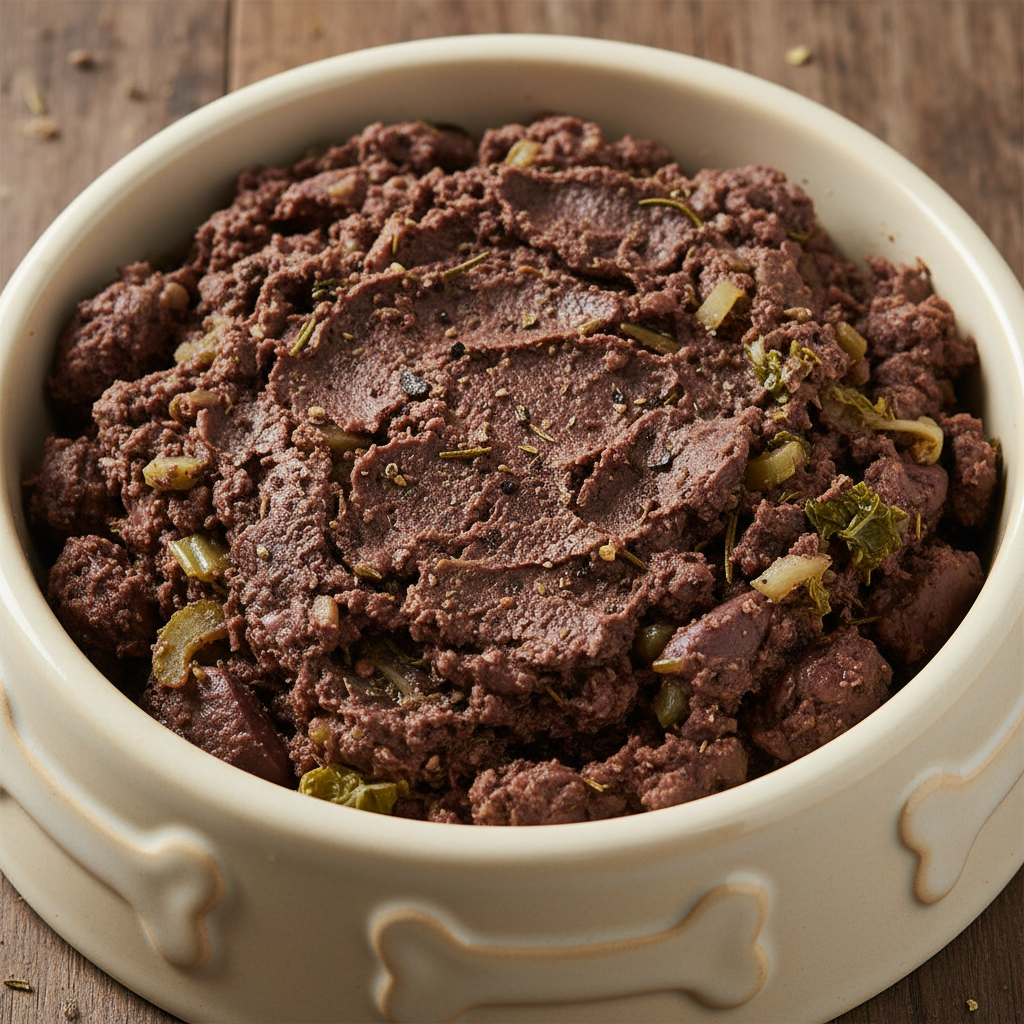
Don’t shy away from organ meats! Chicken giblets (hearts, gizzards, livers) are incredibly nutrient-dense, packed with taurine, iron, and essential vitamins at a fraction of the cost of muscle meat. When balanced with fibrous veggies like celery and cabbage, they make for a powerful, low-glycemic meal.
Ingredients:
- 1 lb chicken giblets (a mix of hearts, gizzards, and liver)
- 1 cup chopped celery
- 1 cup chopped cabbage
- 1/4 cup water
- 1 tablespoon fish oil
Instructions:
- Roughly chop the chicken giblets. If you have a meat grinder or sturdy food processor, you can grind them for a better texture.
- In a pot, combine the giblets, chopped celery, chopped cabbage, and water.
- Bring to a simmer over medium heat, then cover and cook for 15-20 minutes, or until the giblets are cooked through and the vegetables are tender.
- Remove from heat and let it cool. If the pieces are large, you can pulse the mixture a few times in a food processor for a more uniform consistency.
- Stir in the fish oil before serving.
Pros & Cons
| Pros | Cons |
|---|---|
| ✓ Extremely nutrient-dense and affordable | ✗ Liver should be fed in moderation |
| ✓ Great source of taurine for heart health | ✗ The texture or idea of organ meats can be off-putting for some owners |
| ✓ Very flavorful for picky dogs |
Verdict:
This is the budget-friendly, nutrient-superstar recipe. It’s perfect for owners who want to provide the absolute maximum nutritional bang-for-their-buck while keeping their dog’s blood sugar stable.
A Pet Parent’s Guide to Crafting Diabetic-Friendly Dog Meals
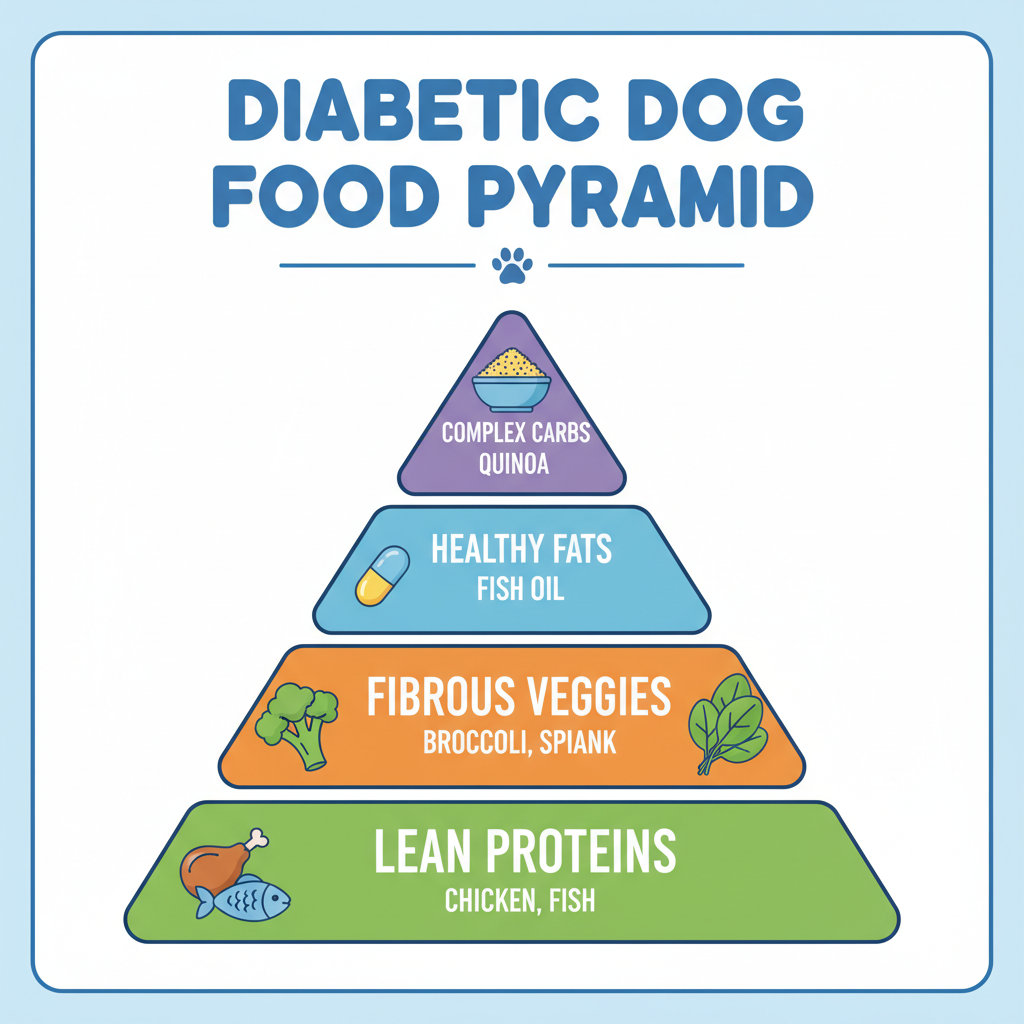
Switching to homemade food is a big step, but you’re already on the right path by reading this! To ensure you’re creating balanced and safe meals, keep these key principles in mind. And remember, your veterinarian or a veterinary nutritionist is your most important partner in this process.
Protein Power
Protein is the cornerstone of a diabetic dog’s diet. It helps maintain lean muscle mass and has a minimal effect on blood glucose levels. Focus on high-quality, lean sources like chicken breast, turkey, fish, and lean cuts of beef. Novel proteins like bison or venison are great for dogs with allergies.
Fabulous Fiber & Low-Glycemic Veggies
Fiber is your secret weapon! It slows the absorption of sugar, promotes a feeling of fullness, and aids in digestion. Load up your dog’s meals with low-glycemic vegetables.
- Excellent Choices: Broccoli, cauliflower, spinach, kale, green beans, asparagus, zucchini, celery, cabbage.
- Use in Moderation: Carrots and pumpkin can be beneficial but are slightly higher in sugar.
- Veggies to Avoid: Corn, peas, potatoes, and sweet potatoes are very starchy and can cause significant blood sugar spikes.
Healthy Fats are Your Friends
Fat doesn’t directly impact blood sugar and is a great source of energy. More importantly, certain fats, like Omega-3 fatty acids, have anti-inflammatory properties. Good sources include fish oil, flaxseed oil, and coconut oil. Always add fats after cooking to preserve their benefits.
Carbs to Choose Carefully
While many diabetic dogs do well on very low-carb diets, some may need a small amount of complex carbohydrates for energy, especially if they are very active. If you include carbs, stick to low-glycemic options in small quantities.
- Good Choices: Quinoa, barley, and rolled oats.
- Carbs to Avoid: White rice, pasta, and bread.
Consistency is Crucial
For a diabetic dog, routine is everything. Feed them the same amount of food at the same times each day. This consistency helps their insulin work more effectively and keeps their blood sugar levels as stable as possible. Avoid free-feeding.
ALWAYS Consult Your Vet
This cannot be stressed enough. Before making any changes to your dog’s diet, talk to your vet. They can help you calculate the precise number of calories your dog needs, recommend specific supplements, and adjust insulin dosages based on the new diet. Regular check-ups and blood glucose monitoring are essential to ensure the diet is working effectively.
Frequently Asked Questions

Can I switch my diabetic dog to homemade food immediately?
No, it’s best to transition gradually. A sudden switch can cause digestive upset. Start by mixing a small amount of the new homemade food (about 25%) with their old food (75%). Over the course of 7-10 days, gradually increase the proportion of homemade food until you’ve completely phased out the old food. Monitor your dog closely for any signs of stomach upset.
How do I know the right portion size for my dog?
Portion size is critically important and depends on your dog’s ideal weight, age, breed, and activity level. This is not something to guess. Your veterinarian is the best person to help you calculate the exact daily caloric needs for your dog. They can then help you translate that into specific portion sizes for the recipes you choose to make.
Are all grains bad for diabetic dogs?
Not necessarily. While simple carbohydrates and starchy fillers found in some commercial foods are bad, certain complex grains can be beneficial in moderation. Grains like barley and quinoa are high in fiber, which can help regulate blood sugar. The key is using them in very small quantities as part of a balanced meal, not as the main ingredient. Many diabetic dogs, however, do best on a grain-free diet. Always discuss this with your vet.
Can I give my diabetic dog treats?
Yes, but you must be extremely selective. Most commercial treats are full of sugar, grains, and fillers. The best treats are single-ingredient, low-glycemic options. Small pieces of cooked chicken, freeze-dried meat, or fresh veggies like green beans or broccoli florets make excellent, safe treats. Always factor treats into their total daily calorie count to avoid weight gain.
Conclusion
Taking charge of your diabetic dog’s nutrition is one of the most loving and empowering things you can do for them. By preparing fresh, low-glycemic meals, you’re not just feeding them; you’re actively participating in their therapy and their well-being. These 13 recipes are a wonderful starting point, offering variety in flavor and nutrients to keep your pup happy and interested in their food.
Remember, this journey is a partnership between you, your dog, and your veterinary team. Maintain open communication with your vet, monitor your dog’s health closely, and don’t be afraid to make adjustments as you learn what works best. Cooking for your dog is an act of love, and with these healthy, delicious meals, you’re giving them the best possible chance at a long, happy, and stable life. Happy cooking!