
9 Omega-3 Rich Canned Mackerel Dog Food Recipes for Shiny Coats
Hey there, fellow dog lover! Do you ever look at your furry best friend and wish their coat had just a little more… oomph? A bit more shine, a little less scratching? You’re not alone! A healthy, glossy coat is often a direct reflection of a dog’s internal health, and a huge part of that comes down to diet. While there are countless supplements and fancy shampoos on the market, one of the best-kept secrets for a radiant coat is hiding in your pantry: canned mackerel.
This humble little fish is an absolute powerhouse of Omega-3 fatty acids, particularly EPA and DHA, which are superstars for reducing inflammation, supporting skin health, lubricating joints, and even boosting brain function. Giving your dog a regular dose of this fishy goodness can lead to a noticeably softer, shinier coat and healthier skin. To help you get started, we’ve whipped up 9 delicious, easy-to-make recipes that your pup is sure to love. Forget bland kibble – it’s time to become your dog’s personal chef!
Quick Recipe Comparison
| Recipe Name | Best For | Prep Time | Key Ingredients |
|---|---|---|---|
| The Simple Mackerel Mixer | Quick Meal Topper | 2 mins | Mackerel, Kibble |
| Sweet Potato & Mackerel Mash | Sensitive Stomachs | 20 mins | Mackerel, Sweet Potato, Carrots |
| Sunrise Mackerel Scramble | Protein Boost | 10 mins | Mackerel, Eggs, Spinach |
| Oat-So-Good Mackerel Porridge | Fiber & Antioxidants | 15 mins | Mackerel, Rolled Oats, Blueberries |
| Grain-Free Pumpkin Pâté | Grain-Sensitive Dogs | 5 mins | Mackerel, Pumpkin Purée, Green Beans |
| Golden Years Mackerel Mix | Senior Dogs | 15 mins | Mackerel, Quinoa, Turmeric |
| Mackerel & Quinoa Power Bowl | Active Dogs | 20 mins | Mackerel, Quinoa, Kale |
| Frozen Mackerel Pupsicles | Hot Summer Days | 5 mins + freezing | Mackerel, Yogurt, Parsley |
| Baked Mackerel Bites | Training Treats | 30 mins | Mackerel, Coconut Flour, Egg |
1. The Simple Mackerel Mixer
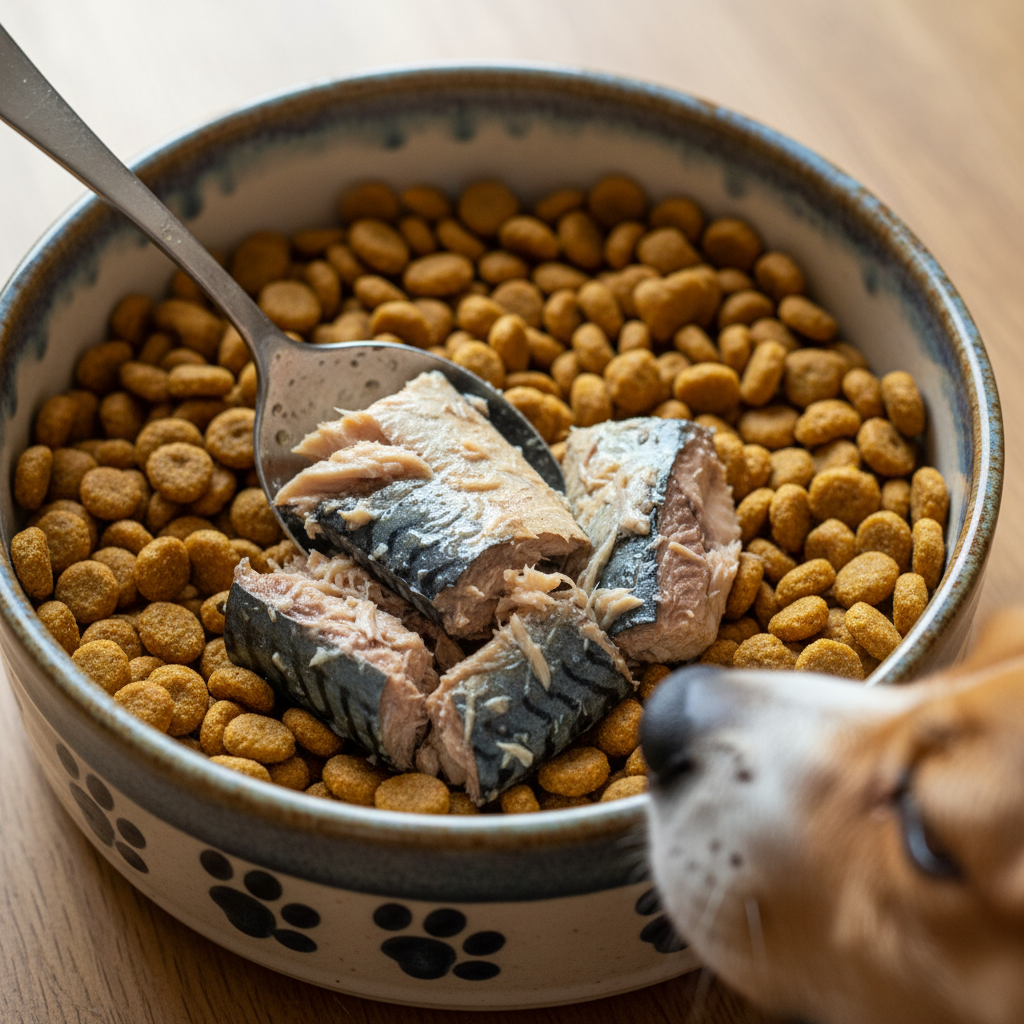
Let’s start with the easiest recipe on the list! This one is for the busy pet parent who wants to give their dog an Omega-3 boost without any fuss. It’s less of a full meal and more of a super-powered kibble topper that will make even the pickiest eaters clean their bowl.
Ingredients:
- 1 can (approx. 4 oz) of plain mackerel in water, no salt added
- Your dog’s regular portion of kibble
Instructions:
- Open the can of mackerel. Do not drain the water – it’s full of nutrients!
- Pour about a quarter of the can (including the water and fish) over your dog’s kibble.
- Use a fork to gently mash the mackerel and mix it into the kibble.
- Serve immediately and watch your dog go wild! Store the remaining mackerel in an airtight container in the fridge for up to 3 days.
Pros and Cons
| Pros | Cons |
|---|---|
| Incredibly fast and easy | Very fishy smell |
| Great for picky eaters | Not a complete meal on its own |
| Minimal cleanup |
Verdict:
This is the perfect starting point for introducing fish into your dog’s diet. It’s ideal for busy owners and for adding a burst of flavor and nutrition to your dog’s everyday meal.
2. Sweet Potato & Mackerel Mash
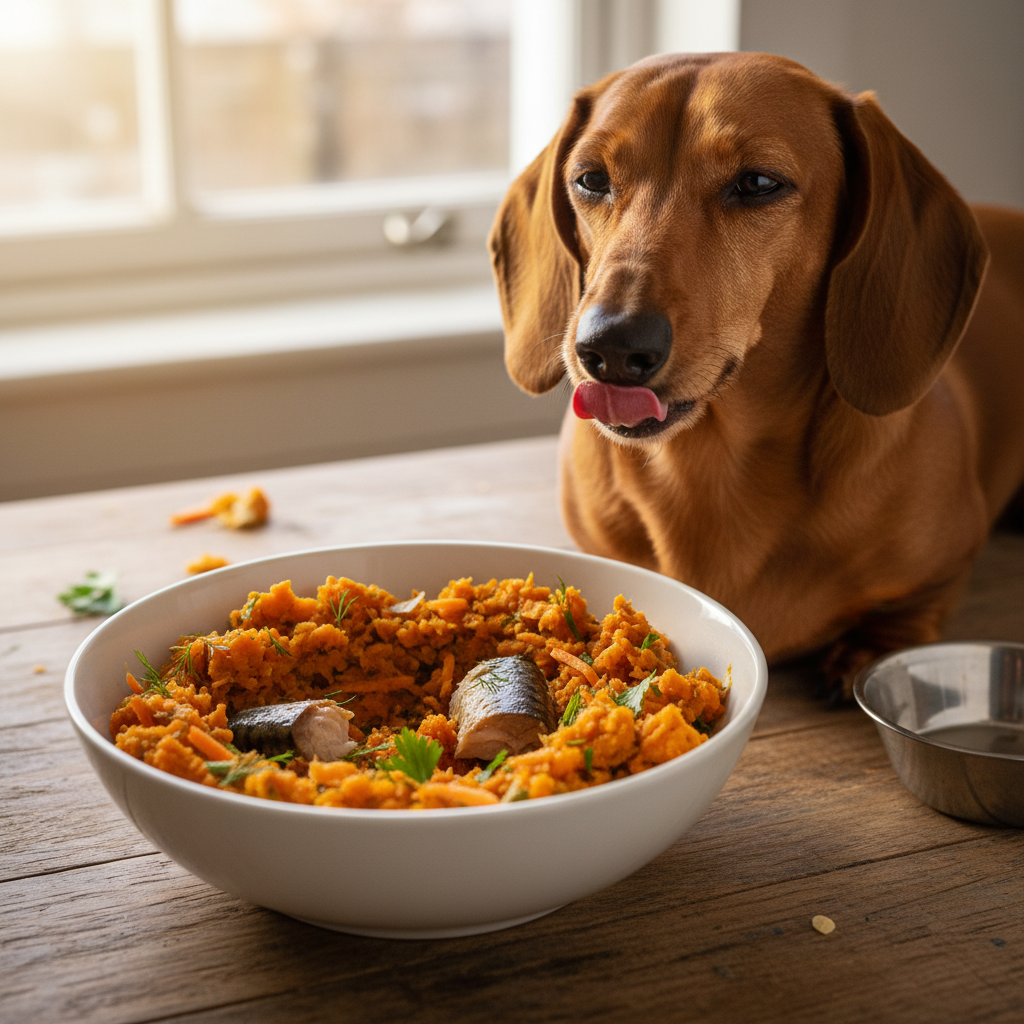
This recipe is a gentle, comforting mash that’s fantastic for dogs with sensitive stomachs. Sweet potato is a great source of dietary fiber, which aids in digestive health, while carrots provide a boost of beta-carotene. It’s a colorful, nutritious, and easy-to-digest meal.
Ingredients:
- 1 can (approx. 4 oz) of plain mackerel in water, no salt added
- 1/2 cup cooked and mashed sweet potato
- 1/4 cup finely grated carrot
Instructions:
- Ensure the sweet potato is cooked until very soft (you can bake, boil, or microwave it) and mashed. Let it cool to room temperature.
- In a bowl, combine the mashed sweet potato and grated carrot.
- Add the entire can of mackerel, including the water.
- Use a fork to thoroughly mix everything together until it forms a consistent, vibrant orange mash.
- Serve as a standalone meal or a kibble topper.
Pros and Cons
| Pros | Cons |
|---|---|
| Excellent for digestive health | Requires some cooking time for the sweet potato |
| Packed with vitamins A and C | The soft texture may not appeal to all dogs |
| Naturally sweet and appealing flavor |
Verdict:
An excellent choice for dogs with sensitive tummies or those who prefer a softer food texture. This wholesome mash is both a treat and a nutritionally balanced meal supplement.
3. Sunrise Mackerel Scramble
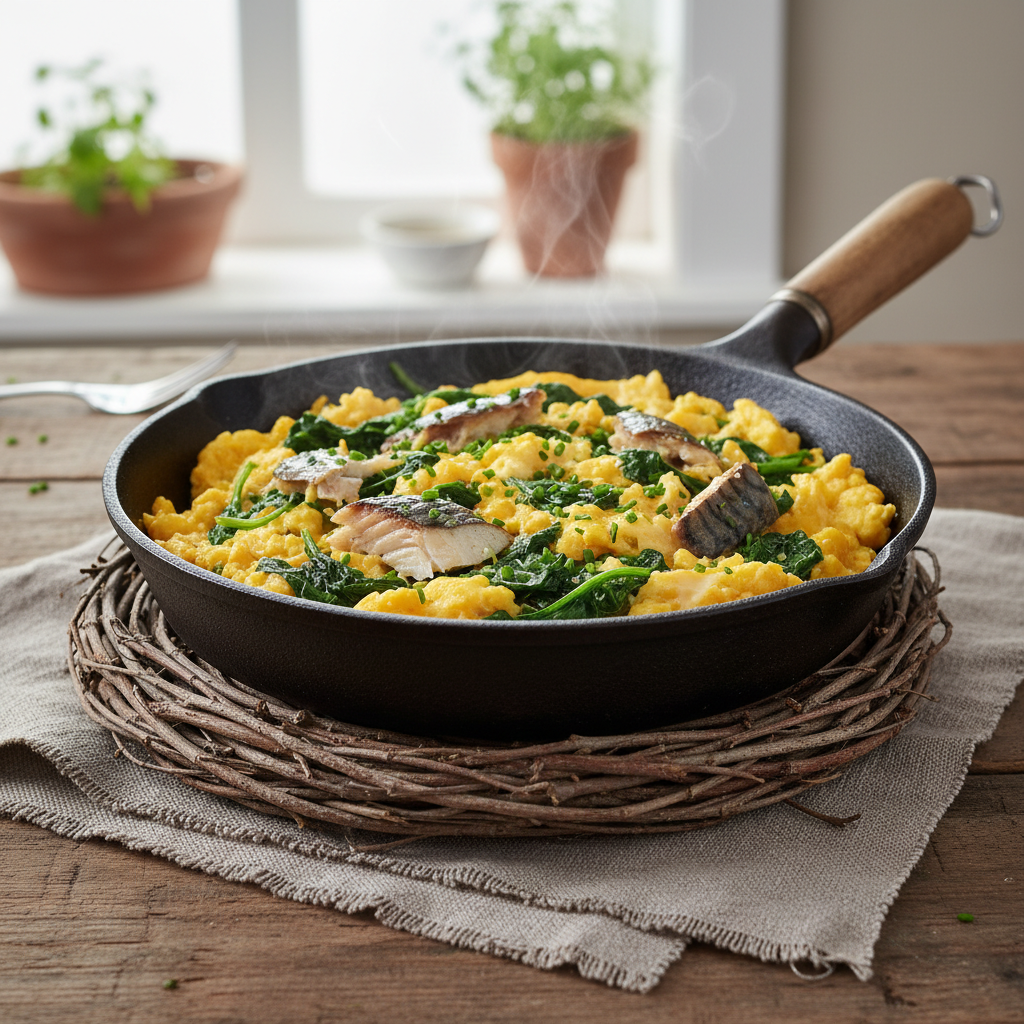
Who says eggs are just for humans? This protein-packed scramble is a fantastic way to start your dog’s day. Eggs are a great source of amino acids, and spinach adds a dose of iron and vitamins. It’s a breakfast of champions for your canine companion.
Ingredients:
- 1/2 can (approx. 2 oz) of plain mackerel in water, no salt added
- 1 large egg
- A small handful of fresh spinach, chopped
- 1 teaspoon of olive oil or coconut oil
Instructions:
- Heat the oil in a small non-stick skillet over medium heat.
- Add the chopped spinach and sauté for a minute until it wilts.
- In a separate small bowl, whisk the egg. Add it to the skillet with the spinach.
- Scramble the egg until it’s nearly cooked through.
- Turn off the heat. Add the mackerel (with its water) to the pan and gently break it up with a spatula, folding it into the eggs and spinach. The residual heat will warm the fish.
- Allow to cool completely before serving.
Pros and Cons
| Pros | Cons |
|---|---|
| High in protein for muscle health | Requires cooking and a skillet |
| Great for a special breakfast treat | Some dogs can have egg sensitivities |
| Nutrient-dense with added greens |
Verdict:
Perfect for a weekend special meal or for active dogs who need an extra protein punch. It’s a warm and savory dish that feels like a real treat.
4. Oat-So-Good Mackerel Porridge
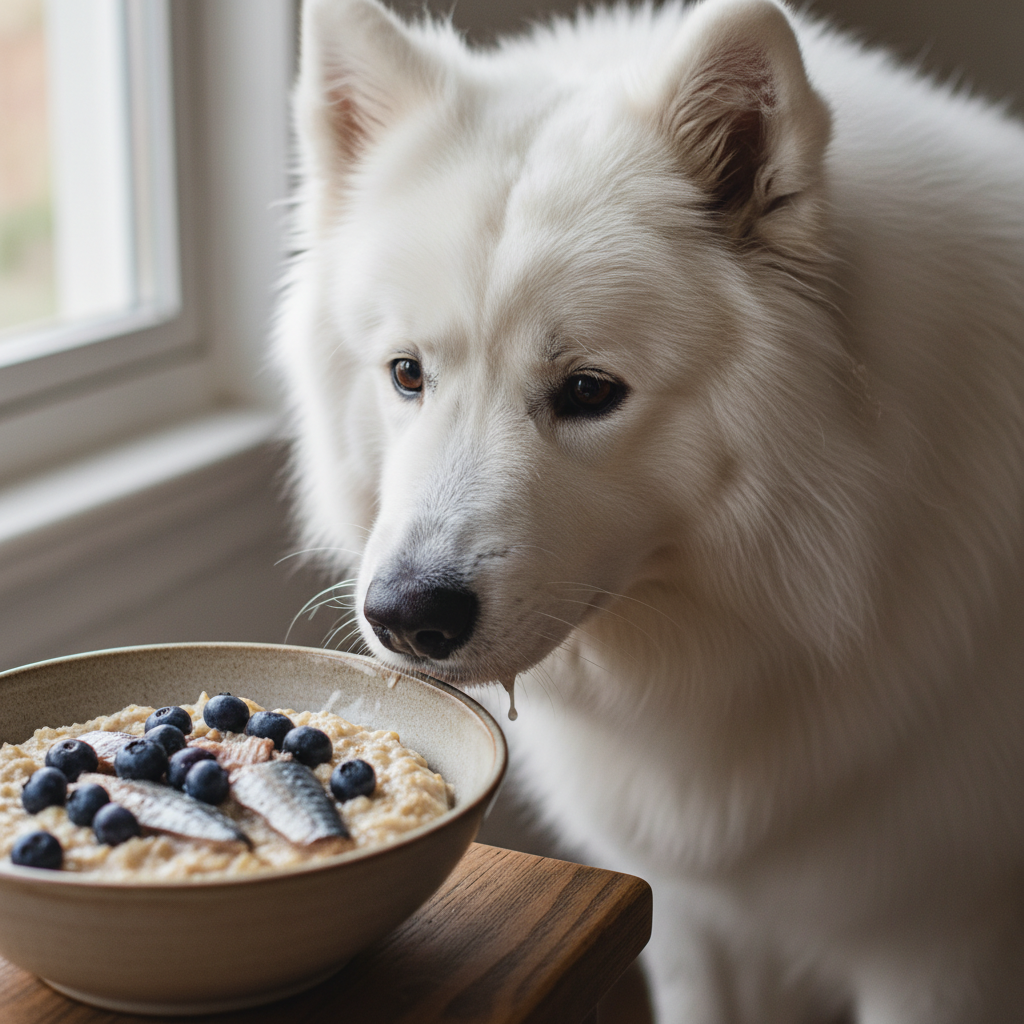
Oatmeal isn’t just a comforting human breakfast; it’s also great for dogs! It’s an excellent source of soluble fiber. Paired with antioxidant-rich blueberries and Omega-3-packed mackerel, this porridge is a health-boosting powerhouse that supports everything from digestion to skin health.
Ingredients:
- 1/4 cup rolled oats (not instant)
- 1/2 cup water
- 1/2 can (approx. 2 oz) of plain mackerel in water, no salt added
- 1 tablespoon of fresh or frozen blueberries
Instructions:
- In a small saucepan, bring the water to a boil.
- Add the rolled oats, reduce the heat, and simmer for about 5-7 minutes, stirring occasionally, until the oats are cooked and have absorbed the water.
- Remove from heat and let the oatmeal cool down completely. This is very important to avoid burning your dog’s mouth.
- Once cool, stir in the mackerel (with its water) and the blueberries.
- Serve this hearty and healthy porridge to your eager pup.
Pros and Cons
| Pros | Cons |
|---|---|
| High in soluble fiber, great for digestion | Oats need to be cooked and fully cooled |
| Blueberries add a powerful antioxidant boost | The texture might be unusual for some dogs initially |
| Very filling and satisfying meal |
Verdict:
This recipe is wonderful for dogs who need more fiber in their diet. The combination of savory fish and sweet berries is surprisingly popular with pups and offers a wide range of health benefits.
5. Grain-Free Pumpkin Pâté
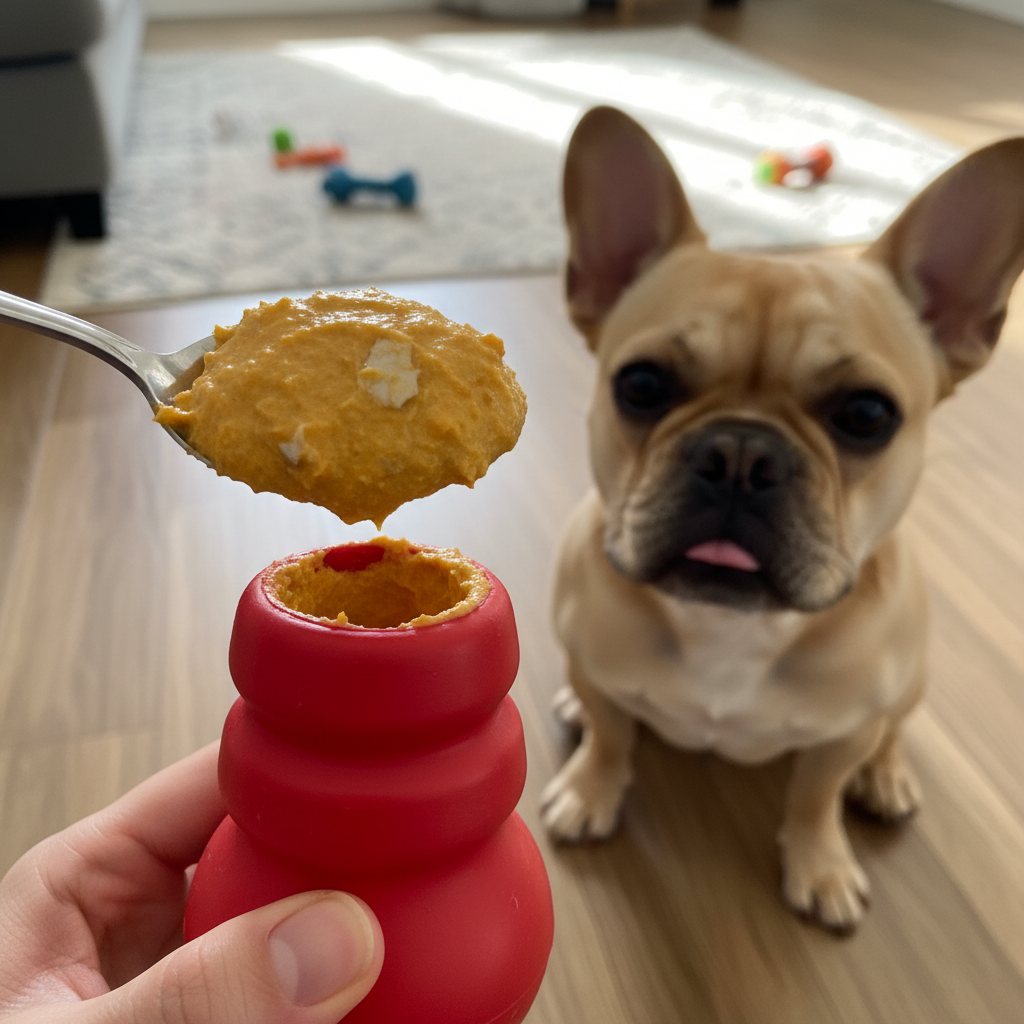
For our grain-sensitive friends, this recipe is a total winner. It uses pumpkin purée, famous for its ability to regulate digestion (it helps with both constipation and diarrhea), and finely chopped green beans for a bit of crunch and fiber. It’s a simple, gut-friendly, and delicious meal.
Ingredients:
- 1 can (approx. 4 oz) of plain mackerel in water, no salt added
- 1/4 cup 100% pure pumpkin purée (NOT pumpkin pie filling)
- 2 tablespoons finely chopped steamed or raw green beans
Instructions:
- In a bowl, combine the pumpkin purée and the chopped green beans.
- Add the entire can of mackerel, including the water.
- Mix thoroughly until you have a smooth, pâté-like consistency.
- This can be served on its own or used to stuff a KONG or other puzzle toy for extra enrichment.
Pros and Cons
| Pros | Cons |
|---|---|
| Completely grain-free | Must use pure pumpkin, not pie filling |
| Excellent for digestive regulation | The texture is very soft |
| No cooking required, very fast to make |
Verdict:
This is the go-to recipe for any dog with a sensitive or unpredictable stomach. It’s also a fantastic option for owners looking for healthy, grain-free ways to supplement their dog’s diet.
6. Golden Years Mackerel Mix
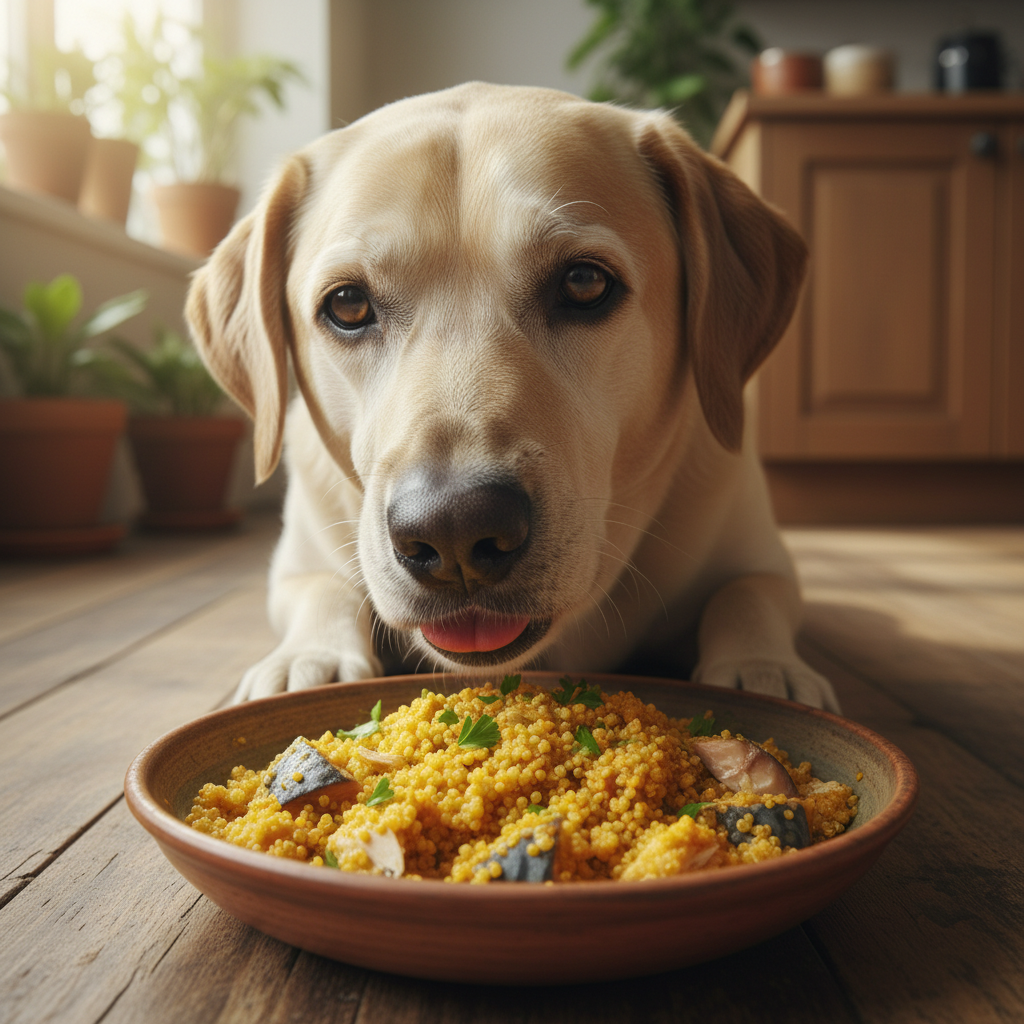
Our senior dogs deserve some extra TLC, and this recipe is designed just for them. It features turmeric, a natural anti-inflammatory that can help with joint pain, and soft-cooked quinoa for easily digestible energy. It’s a gentle, joint-supporting meal for your beloved old friend.
Ingredients:
- 1/2 can (approx. 2 oz) of plain mackerel in water, no salt added
- 1/2 cup cooked quinoa, cooled
- 1/8 teaspoon of turmeric powder
- A few drops of olive oil
Instructions:
- In a bowl, combine the cooked and cooled quinoa with the turmeric powder and olive oil. Mix well.
- Gently fold in the mackerel and its water, trying to keep some of the fish chunks intact.
- Serve this comforting and health-boosting meal to your senior pup. The soft texture is easy on older mouths.
Pros and Cons
| Pros | Cons |
|---|---|
| Contains turmeric for anti-inflammatory benefits | Turmeric can stain bowls and fabrics |
| Soft texture is great for senior dogs | Quinoa needs to be cooked and cooled in advance |
| Supports joint health and mobility |
Verdict:
An absolute must-try for any owner of a senior dog. This recipe specifically targets common aging issues like joint stiffness while still providing amazing benefits for their skin and coat.
7. Mackerel & Quinoa Power Bowl
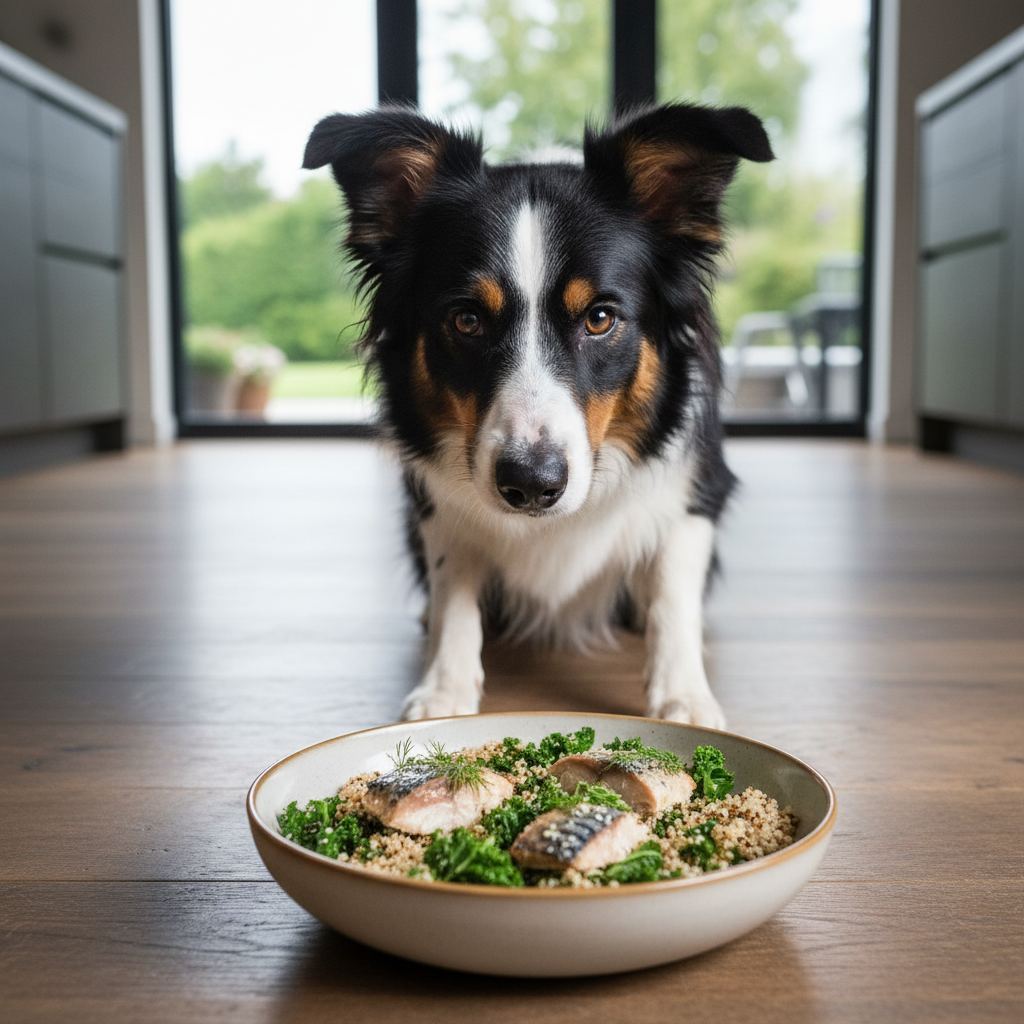
For the canine athlete or the dog that just never stops, this Power Bowl is designed to refuel and nourish. Quinoa is a complete protein, providing all the essential amino acids, and kale is a nutrient-dense superfood. This combination provides sustained energy and supports muscle recovery.
Ingredients:
- 1 can (approx. 4 oz) of plain mackerel in water, no salt added
- 1/2 cup cooked quinoa, cooled
- 1/4 cup finely chopped and lightly steamed kale
- 1 teaspoon of flaxseed oil for an extra Omega boost
Instructions:
- Start by lightly steaming the chopped kale until it’s tender and bright green. Let it cool.
- In a serving bowl, combine the cooked quinoa and cooled kale.
- Add the entire can of mackerel, water included, and the flaxseed oil.
- Mix everything together gently.
- Serve to your active dog after a long walk, run, or play session.
Pros and Cons
| Pros | Cons |
|---|---|
| Excellent source of complete protein | Requires cooking multiple components (quinoa, kale) |
| Packed with vitamins and minerals from kale | Some dogs may not like the taste of kale |
| Ideal for refueling after exercise |
Verdict:
This is the ultimate recovery meal for the dog-on-the-go. It’s packed with everything a busy body needs to stay strong, healthy, and full of energy, all while promoting a beautiful coat.
8. Frozen Mackerel Pupsicles
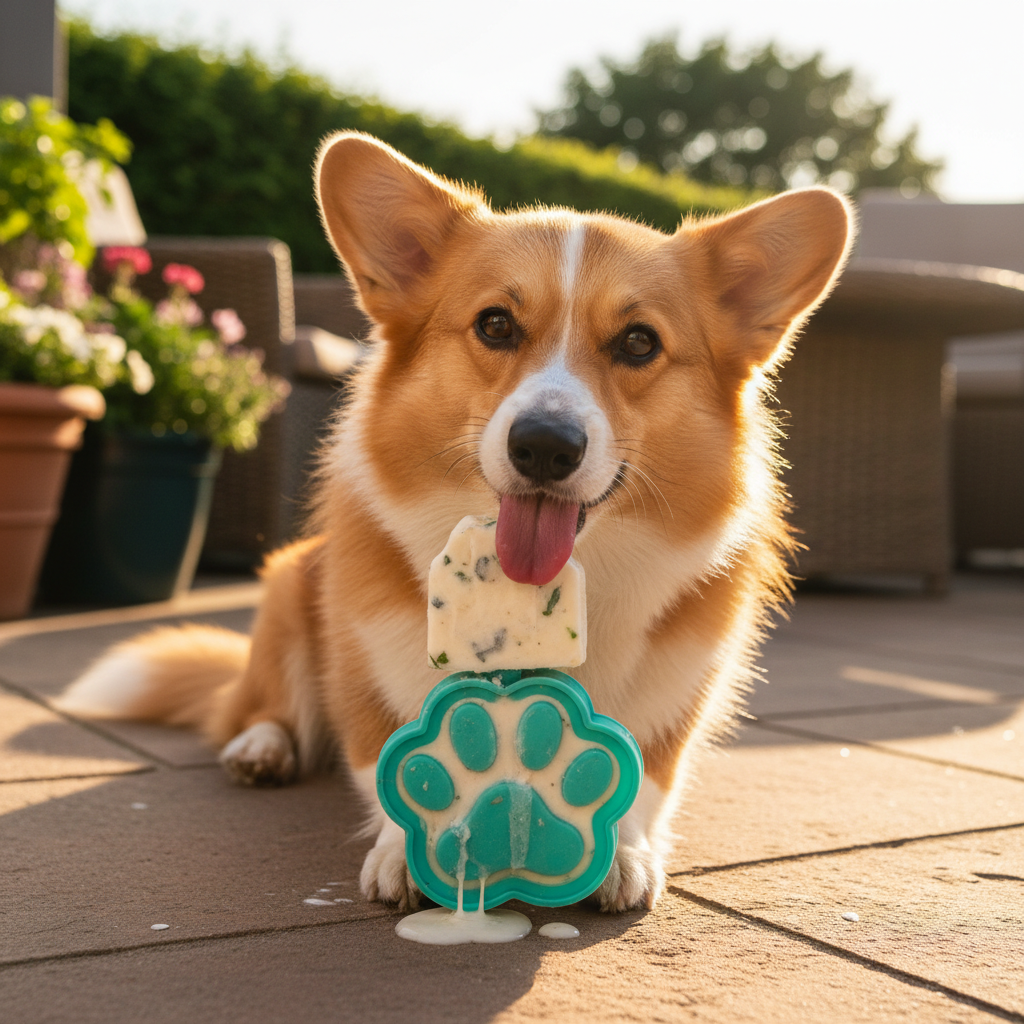
Beat the heat with these refreshing and healthy frozen treats! These ‘pupsicles’ are a fantastic way to cool your dog down on a hot day while delivering a dose of Omega-3s. The parsley also helps to combat that fishy breath!
Ingredients:
- 1 can (approx. 4 oz) of plain mackerel in water, no salt added
- 1/2 cup plain, unsweetened yogurt (ensure it contains no xylitol)
- 1 tablespoon of finely chopped fresh parsley
Instructions:
- In a small blender or food processor, combine the entire can of mackerel (with water), yogurt, and parsley.
- Blend until the mixture is smooth.
- Pour the mixture into an ice cube tray or silicone molds.
- Freeze for at least 4 hours, or until solid.
- Pop one out and give it to your dog on a hot day for a cool, tasty, and healthy treat.
Pros and Cons
| Pros | Cons |
|---|---|
| Perfect for cooling down in hot weather | Requires several hours of freezing time |
| Parsley helps freshen breath | Can be messy as it melts |
| Yogurt adds beneficial probiotics | Not suitable for lactose-intolerant dogs |
Verdict:
An amazing and fun recipe for the summer months. It provides mental stimulation and a welcome relief from the heat, all while sneaking in those vital nutrients for a shiny coat.
9. Baked Mackerel Bites
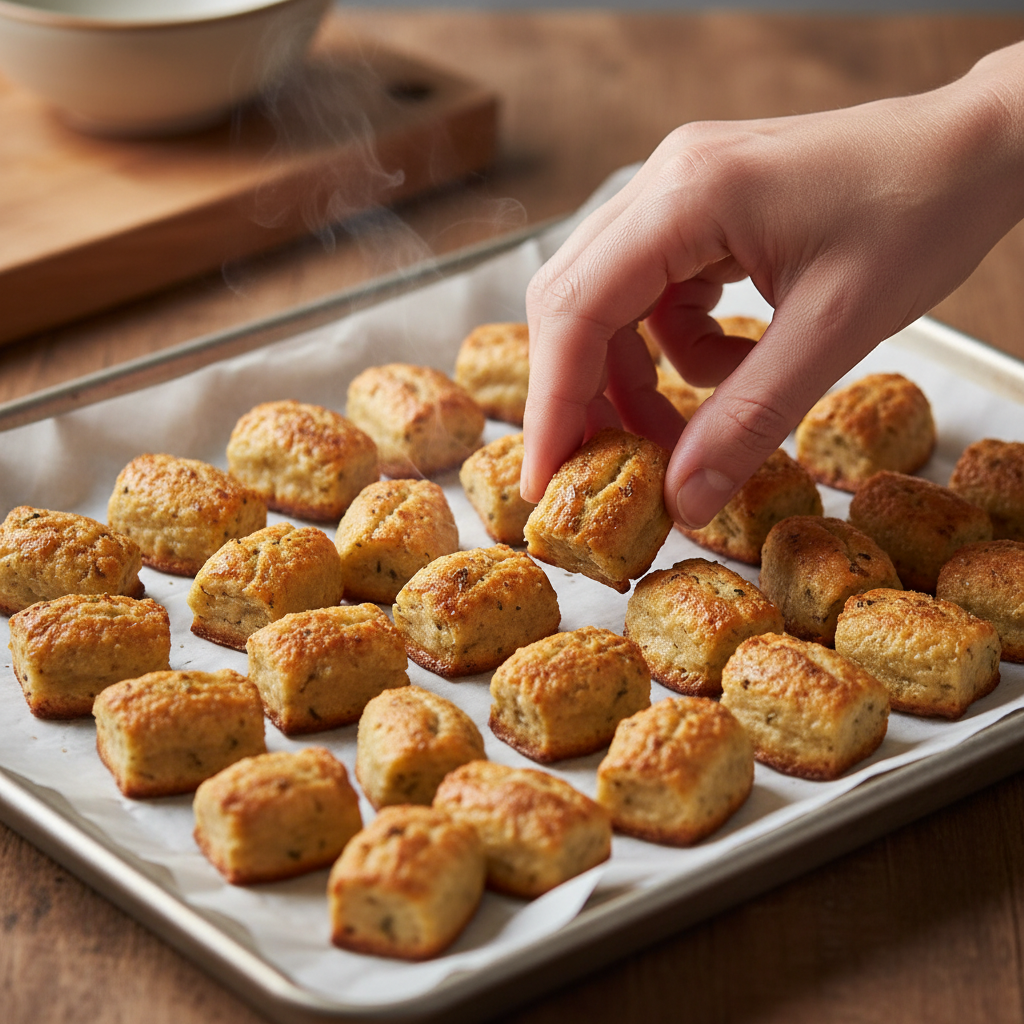
If you’re looking for a healthy, high-value training treat, look no further. These baked bites are easy to make in a batch and store for later. They are firm, less messy than wet food, and absolutely irresistible to most dogs, making them perfect for training sessions.
Ingredients:
- 1 can (approx. 4 oz) of plain mackerel in water, drained
- 1 large egg
- 1/2 cup coconut flour (or oat flour)
Instructions:
- Preheat your oven to 350°F (175°C) and line a baking sheet with parchment paper.
- In a bowl, flake the drained mackerel with a fork.
- Add the egg and flour to the bowl. Mix until a thick, slightly sticky dough forms.
- Roll the dough into small, bite-sized balls and place them on the baking sheet.
- Bake for 15-20 minutes, or until the bites are firm and lightly golden.
- Let them cool completely before serving. Store in an airtight container in the fridge for up to a week.
Pros and Cons
| Pros | Cons |
|---|---|
| Great for training; not messy | Requires baking and oven use |
| Can be made in a large batch | Your kitchen will smell very fishy while baking |
| Grain-free when using coconut flour |
Verdict:
For the dedicated owner who loves to bake for their pup, these treats are a game-changer. They provide all the benefits of mackerel in a convenient, portable form that’s perfect for rewarding good behavior.
A Pet Parent’s Guide to Buying Canned Mackerel
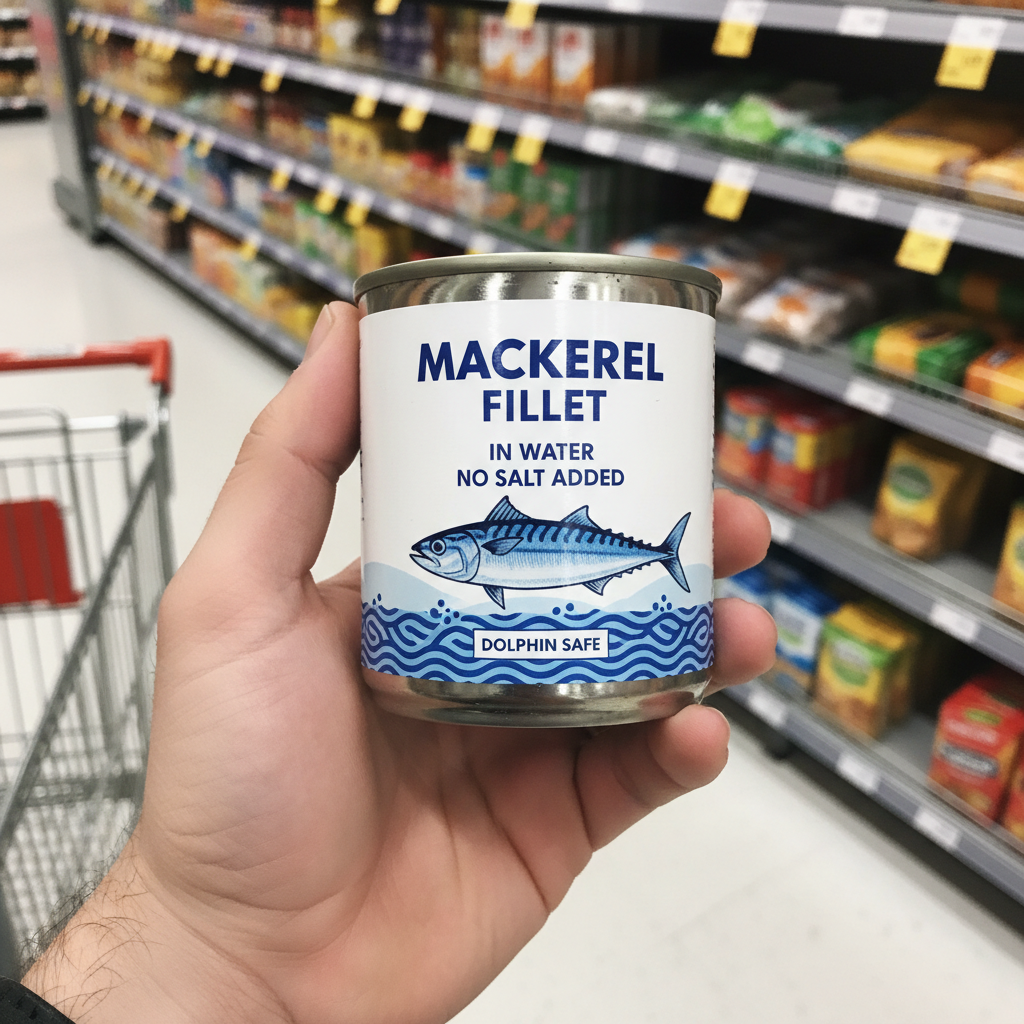
Walking down the canned fish aisle can be surprisingly confusing. Not all canned mackerel is created equal, especially when it’s for your dog. Here’s a simple guide to help you pick the perfect can for your pup’s new favorite recipes.
Look for Mackerel Packed in Water
This is the most important rule. Avoid mackerel packed in oil (like sunflower, soybean, or olive oil) or any kind of sauce (like tomato or mustard sauce). These add unnecessary fats and ingredients that can upset your dog’s stomach. The water it’s packed in, however, is full of those lovely Omega-3s, so you can add it right into their food!
No Salt Added is a Must
Dogs do not need the high levels of sodium that are often added to canned goods for human consumption. Always look for cans that explicitly state ‘No Salt Added’ or ‘Unsalted’. Too much sodium is bad for your dog’s heart and kidneys.
Check the Ingredients List
The simpler, the better. The ingredients list should ideally say just two things: ‘Mackerel, Water’. Avoid cans with added broths, spices, flavorings, or preservatives. You want pure, plain fish.
Bone-In vs. Boneless
This might surprise you, but mackerel with the bones in is often a great choice! The canning process makes the bones very soft and brittle, so they are completely safe for dogs to eat. They crumble easily and are a fantastic source of natural calcium. If you’re nervous, you can easily mash them with a fork, but there’s no need to pick them out.
Frequently Asked Questions About Mackerel for Dogs

How often can I feed my dog mackerel?
Mackerel is rich, so it’s best served as a supplement to a balanced diet rather than a daily staple. For a medium-sized dog, feeding them a portion of these recipes two to three times a week is a great frequency. For smaller dogs, start with a smaller portion size (like a tablespoon) a couple of times a week. Always monitor your dog for any digestive upset when introducing a new food.
Is canned mackerel better than fresh for dogs?
Both have their benefits! Canned mackerel is convenient, affordable, and the cooking process softens the bones, making them a safe source of calcium. Fresh mackerel is also great, but it must be deboned carefully and cooked thoroughly before serving. For ease and safety, canned is often the preferred choice for homemade recipes.
Can puppies eat mackerel?
Yes, puppies can benefit from the DHA in mackerel, which is crucial for brain and eye development. However, their digestive systems are more sensitive. Introduce it in very small amounts and consult with your veterinarian before making it a regular part of their diet.
What are the signs of an Omega-3 deficiency?
The most common signs of an Omega-3 deficiency are related to the skin and coat. You might notice a dry, dull coat, flaky skin (dandruff), excessive shedding, and hot spots. Other signs can include joint stiffness and slow wound healing.
Conclusion
There you have it – nine fantastic and easy ways to introduce the coat-shining, health-boosting power of mackerel into your dog’s life! From simple meal toppers to special baked treats, there’s a recipe here for every pup and every pet parent. Adding these Omega-3-rich meals into your dog’s routine can make a visible difference not just in their coat’s shine, but in their overall vitality and happiness.
Remember to always introduce new foods slowly and consult with your veterinarian if you have any concerns about your dog’s specific dietary needs. Now, go grab a can of mackerel and get ready to see your dog’s coat, and their excitement for mealtime, shine brighter than ever before!